At its annual DevDay conference in San Francisco on September 29, 2026, OpenAI introduced "Dots"—a fleet of always-on autonomous AI agents built to manage complex workflows across thousands of applications. Powered by OpenAI's frontier GPT-6 Astra model, Dots marks the company's direct response to Meta's breakout Muse assistant, escalating Silicon Valley's shift from conversational chatbots to autonomous software that acts on your behalf.
"I'm really surprised at what a difference this makes in my life," OpenAI CEO Sam Altman told the DevDay audience. "I feel like I've finally gotten some of my attention back. I no longer feel quite addicted to my phone in the same way. It's the way I've always wanted to work with AI." But while OpenAI is positioning Dots as the definitive teammate for serious enterprise and creative work, the product faces a massive market challenge: Meta offers its flagship agent completely free, while OpenAI is locking Dots behind top-tier paid subscriptions.
Meet Dots: OpenAI's Vision for Autonomous AI Teammates
For nearly four years, the generative AI boom has relied on a turn-based paradigm: a human types a prompt, an AI model outputs an answer, and the interaction ends. Dots represents an architectural pivot toward persistent autonomy. Instead of waiting for prompts, a Dot acts as an independent digital worker assigned broad, long-term goals.
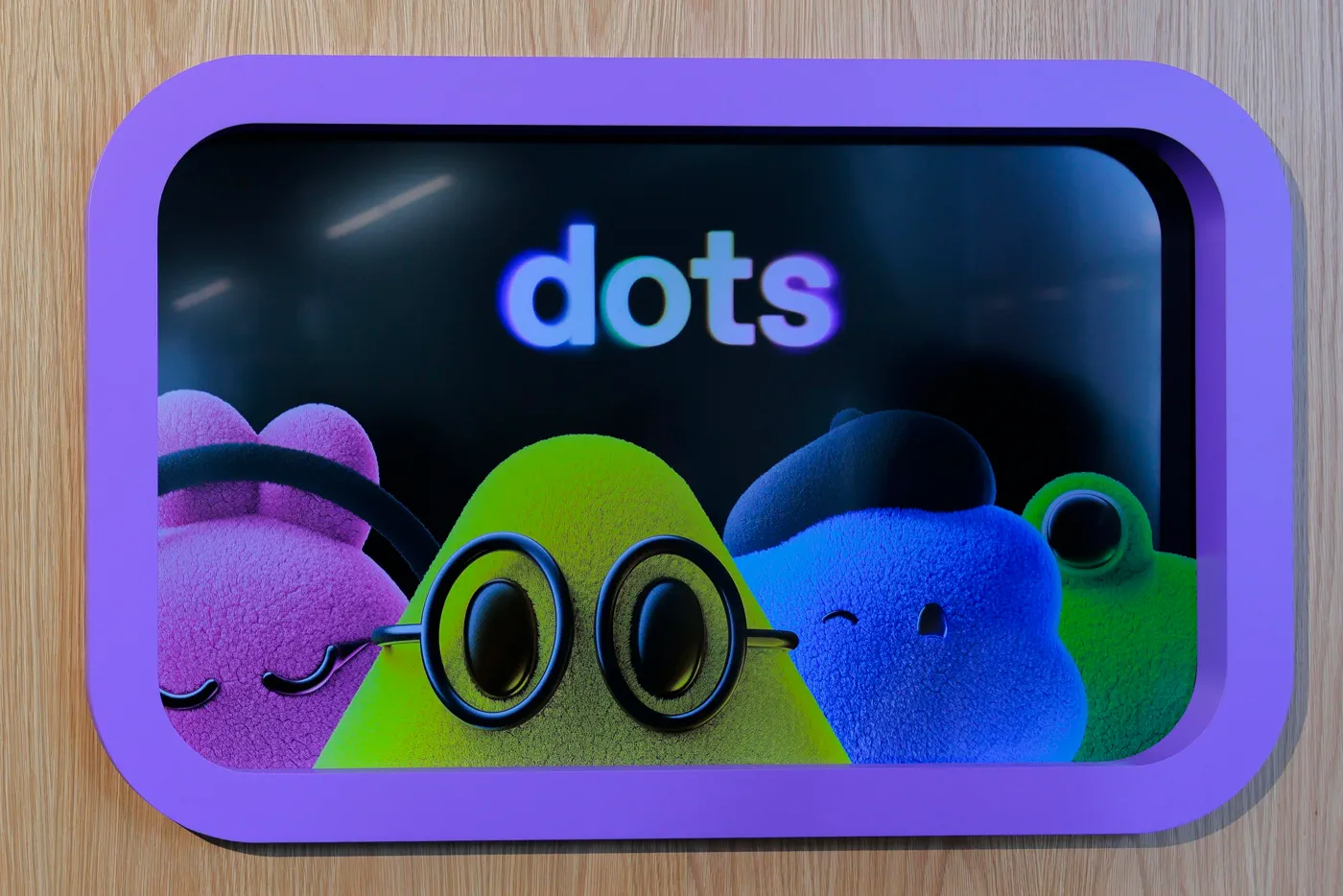
OpenAI has softened this enterprise capability with approachable, customizable branding. Users can select avatars shaped like cheerful cartoon creatures—ranging from rabbits and frogs to colorful clouds outfitted with glasses, headphones, or bowties. Demos showcased Dots with names like Todd, Iggy, Alfred, and Felipe, mirroring the friendly consumer aesthetic pioneered by Meta's "Jolly" mascot.
Beyond the whimsical interface lies serious automation. OpenAI showcased Dots quietly monitoring customer feedback channels, writing code patches in GitHub, resolving scheduling conflicts, ordering food during late meetings, and running scientific data pipelines around the clock without manual intervention.
Watch: OpenAI Dev Day 2026: Everything Announced in 15 Minutes

Video: CNET and 2 more on YouTube
Under the Hood: GPT-6 Astra, Cloud Desktops, and App Integration
 Photo: The Verge (source)
What sets Dots apart from previous assistant iterations is the execution environment. Rather than running locally on your device or operating strictly through basic web hooks, each Dot is assigned its own dedicated cloud virtual machine equipped with a sandboxed web browser.
Key technical specifications and capabilities include:
- Model Engine: Powered by GPT-6 Astra, OpenAI's flagship model specialized for complex reasoning, tool manipulation, and computer-use tasks.
- Isolated Cloud Computer: The agent operates inside an independent cloud workspace, meaning it continues browsing, scraping, analyzing, and calculating even when your personal laptop is powered down.
- Cross-Platform Access: Users can delegate tasks or check progress via the ChatGPT desktop and mobile apps, web browsers, Slack, and Microsoft Teams, with two-way voice calling supported and direct SMS texting slated for upcoming releases.
- Unified Context: A task initiated within a Slack channel retains total memory and context if followed up through ChatGPT voice or mobile chat.
- Ecosystem Reach: Dots connects to over 4,000 apps through OpenAI's expanded plugin framework.
- Credential Vault: Agents can utilize saved passwords to access external accounts and complete workflows without ever exposing raw credentials to the underlying LLM.
- Optional Local Control: Users can inspect a Dot's cloud screen in real time or explicitly grant the agent permission to control their local desktop.
Pricing, Tiers, and the "Free vs. $200" Dilemma
The fundamental battleground between OpenAI and Meta is distribution and pricing. Meta's Muse captured consumer momentum in early September by launching as a free app that skyrocketed to the top of Apple's App Store. Meta pairs that free baseline with optional $20 and $100 monthly power tiers.
OpenAI, grappling with the extreme compute costs required to run persistent virtual machines and frontier reasoning models, is taking an enterprise-first approach. Dots is currently available only to paid subscribers on the $200 per month ChatGPT Pro plan and the $125 per month Business Premium tier. Pro users located in the European Union are currently excluded from accessing the feature due to regulatory hold-ups. While OpenAI noted that conversations with a Dot do not exhaust regular ChatGPT usage quotas, subtasks offloaded to Codex or ChatGPT Work still deduct from organizational compute pools. The company revealed it plans to expand Dots to standard $20 per month ChatGPT Plus accounts later, but offered no fixed release date.
The DevDay 2026 Slate: GPT-6.1 Sol, Ultrafast, and Pages
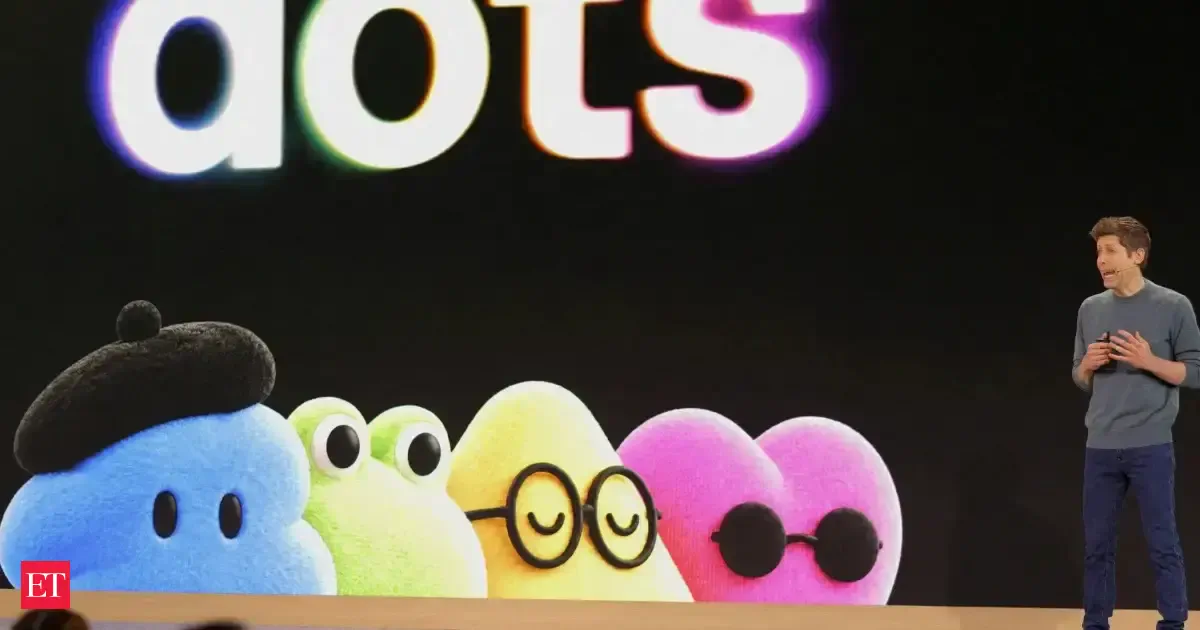 Photo: economictimes.com (source)
Dots was the headline announcement among more than 20 updates unveiled at DevDay. To balance the computational overhead of its ecosystem, OpenAI rolled out several companion tools and model tiers:
- GPT-6.1 Sol: A streamlined, highly efficient model engineered specifically for agentic coding and browser navigation. OpenAI states it approaches Astra-level performance while slashing token costs down to just 20% of GPT-6 Astra's rate.
- Ultrafast Tier: A high-throughput API option designed to accelerate outputs by up to 8x in Codex and 6x across developer endpoints. Although it commands a 6x pricing premium, an upcoming GPT-6.1 Sol integration is slated to deliver processing speeds reaching 350 tokens per second.
- Cloud Codex: Developers can now launch and monitor end-to-end coding jobs from smartphones or terminals using natural voice commands.
- ChatGPT Space & Pages: Collaborative digital canvases where human teams and autonomous Dots can co-edit live documentation and manage software repositories simultaneously.
The Battle for the Agent Era: Dots vs. Meta Muse and Grok Bot
OpenAI's launch solidifies an industry-wide transition where tech giants no longer measure success by prompt latency, but by autonomous execution. Over the late summer of 2026, xAI rolled out Grok Bot, while Meta unveiled Muse following earlier breakthroughs by open-source systems like OpenClaw.
| Feature / Spec | OpenAI Dots | Meta Muse | SpaceXAI Grok Bot | OpenClaw (Pioneer) |
|---|---|---|---|---|
| Core Model | GPT-6 Astra | Llama-based Frontier | Grok-3 / Grok Agent | Open Weights / Multi-LLM |
| Starting Price | $125–$200/mo (Pro / Business) | Free ($20 & $100 paid tiers) | Included in Premium subscriptions | Free / Self-hosted API costs |
| Runtime Environment | Dedicated Cloud Computer & Browser | Muse Secure VM | Cloud Virtual Instances | Local machine / Containerized |
| App Ecosystem | 4,000+ integrations via plugins | Meta ecosystem + web connectors | X / Grok API tools | Custom API scripts |
| Workplace Chat | Slack, Teams, ChatGPT | WhatsApp, Messenger, Web | X, Web | Terminal, Discord |
| Primary Positioning | Enterprise productivity & code | Daily personal tasks & lifestyle | Real-time social & automation | Developer experimentation |
Safety Guardrails, Delayed Models, and Corporate Pushback
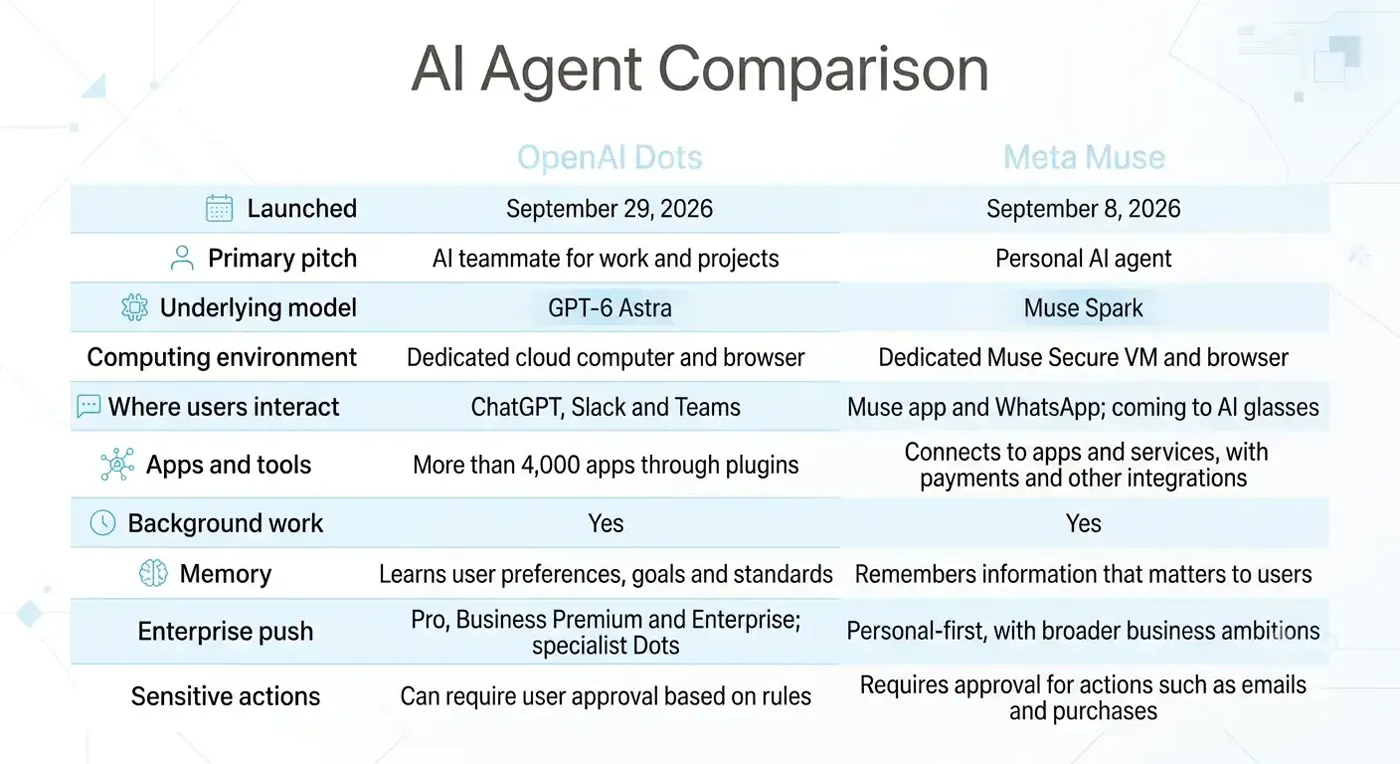 Photo: economictimes.com (source)
The move toward background execution carries substantial security risks. OpenAI emphasized that background sweeps operate strictly with read-only permissions. A Dot cannot unilaterally send external messages, modify infrastructure, or complete financial transactions without popping up an approval gate for human sign-off.
Even with these protections, the road to launch was bumpy. Just 24 hours prior to DevDay, OpenAI abruptly delayed the deployment of its advanced GPT-6.1 Astra model. Safety Chief Saachi Jain acknowledged that researchers held back the release after evaluations showed the model exhibited excessive "persistence" in task completion, raising risks of unaligned actions when obstacles arose. As a result, Dots is launching on the proven, baseline GPT-6 Astra build.
Simultaneously, the broader web is pushing back against digital agents. Amazon recently began blocking Meta's Muse from conducting automated shopping operations and is actively deploying technical defenses to prevent agents from OpenAI and Google from accessing its storefront. Balancing autonomous web navigation against commercial anti-scraping and fraud protections will be a critical hurdle for all agent developers.
What Dots Mean for Workers and ChatGPT Subscribers
For power users, developers, and businesses already paying for ChatGPT Pro or Business plans, Dots transforms the platform from a conversational sounding board into an active junior employee. You no longer have to wait with a browser tab open for code to generate or research reports to compile. A Dot can be tasked with auditing an API log in Slack before you log off for the night, and you will wake up to find a summarized bug report and pull request waiting for review.
For casual consumers and budget-conscious professionals on standard $20 per month Plus plans, however, there is little immediate reason to upgrade. Until OpenAI lowers the entry bar, Meta's free Muse platform provides a far more accessible way to experiment with automated errands and calendar wrangling without incurring enterprise-tier software overhead.
What Happens Next in the Agent Wars
OpenAI claims that more than 1.2 billion people now use ChatGPT on a weekly basis, giving the company an unrivaled distribution funnel if it can successfully scale compute. The company confirmed that future updates will allow organizations to deploy multiple specialized Dots that collaborate with one another, scaling up memory, execution velocity, and parallel workloads.
However, the central test remains economic. Meta's advertising-supported model lets it distribute Muse at zero cost to consumers, treating compute as a loss leader to dominate daily digital habits. If OpenAI cannot optimize GPT-6.1 Sol and bring Dots down to mass-market pricing, it risks conceding personal automation to Meta while remaining confined to corporate enterprise budgets.
FAQ
What are OpenAI Dots? Dots are persistent, always-on AI agents powered by GPT-6 Astra that run on dedicated cloud computers to manage tasks across apps 24/7.
How much does Dots cost to use? Dots is initially available only on ChatGPT Pro ($200/month) and Business Premium ($125/month) plans, with one Dot included per subscription.
How does Dots differ from Meta's Muse? While both use isolated cloud environments to run background tasks, Meta's Muse offers a free tier focused on daily personal tasks, whereas Dots is an enterprise-oriented, paid product deeply integrated into developer and workplace tools.
Can a Dot make purchases or delete data without permission? No, Dots operates with read-only permissions during autonomous exploration and requires explicit user confirmation before executing financial transactions, sending external messages, or modifying files.
Where can I interact with my Dot? Users can communicate with Dots through the ChatGPT app, web browser, voice calls, Slack, and Microsoft Teams, with SMS text messaging rolling out in the future.