SpaceX announced on Thursday an agreement to acquire a nationwide low-band spectrum license portfolio, formally declaring its ambition to turn Starlink Mobile into a major U.S. wireless carrier. The transaction gives Elon Musk’s aerospace firm the scarce radio airwaves required to penetrate buildings and eliminate dead zones, mounting a direct challenge to America’s entrenched cellular oligopoly.
Pending customary closing conditions and review by the Federal Communications Commission (FCC), the acquisition marks a decisive transition for SpaceX. What began as an orbital emergency backup system for basic text messaging is rapidly transforming into a full-fledged, vertically integrated mobile network designed to beam voice, data, and video straight to ordinary smartphones from both space and the ground.
SpaceX’s Play to Become America’s Next Wireless Giant
SpaceX confirmed that it has entered into a definitive agreement with private equity firm Grain Management to acquire 100% of a nationwide 800 MHz spectrum portfolio. The assets cover up to 14 megahertz of paired low-band frequencies across the United States. While the financial terms of the purchase were not publicly disclosed, the same portfolio was sold by T-Mobile to Grain in August 2026 for $2.9 billion in cash alongside paired 600 MHz spectrum licenses.
In its official announcement, SpaceX stated that the transaction will “pave the way” for Starlink Mobile to establish itself as a major telecommunications operator in the United States. Unlike previous satellite-to-phone efforts that relied entirely on spectrum leased from existing telecom giants, the acquisition hands SpaceX proprietary wireless real estate that it owns and controls outright.
The regulatory timing is hardly coincidental. Just 48 hours prior to the spectrum announcement, the FCC granted SpaceX authorization to construct, launch, and operate an initial constellation of 15,000 Gen2 direct-to-device satellites. Critically, the agency also granted SpaceX a pivotal waiver: the company is no longer required to operate as a secondary tenant or Mobile Virtual Network Operator (MVNO) leasing airwaves from a legacy terrestrial carrier. The FCC ruled that requiring SpaceX to lease spectrum from itself would represent an unnecessary regulatory burden, explicitly noting that the authorization promotes competition in the retail wireless market.
The 800 MHz Advantage: Why Low-Band Airwaves Matter
In cellular networking, physics dictates coverage. Higher frequencies deliver wide bandwidth and rapid download speeds, but their short wavelengths struggle to travel long distances or push through physical obstacles like concrete walls, drywall, and dense tree canopies. For years, satellite-based direct-to-device communications have been constrained by this exact limitation.
Low-band spectrum in the 800 MHz range represents the holy grail of mobile propagation. These longer radio waves travel extensive distances across rural geography and easily penetrate deep into buildings, office basements, and vehicles. By securing up to 14 MHz of nationwide 800 MHz spectrum, SpaceX addresses the single largest technical barrier holding back satellite connectivity.
Musk highlighted the strategic importance of the airwaves immediately after the deal was unveiled, stating on X that the acquisition is "the last critical piece of the spectrum puzzle needed for SpaceX to provide complete phone coverage in America."
SpaceX plans to blend this newly acquired low-band foundation with the 65 MHz of mid-band spectrum (including 2.0 GHz AWS-4 and H-block frequencies) it agreed to buy from EchoStar in a multi-billion-dollar transaction. Under this layered model, low-band frequencies will maintain persistent, reliable coverage indoors and in dense areas, while mid-band allocations provide high-capacity data pipes for mobile streaming and downloads.
From Text Backup to Full Carrier: How We Got Here
SpaceX first entered the direct-to-cell arena through a high-profile 2022 partnership with T-Mobile, using slivers of T-Mobile’s 1.9 GHz mid-band PCS G-block spectrum. That initial iteration—currently deployed across roughly 650 first-generation cellular Starlink satellites—was primarily designed as a supplemental safety net for text messaging in outdoor dead zones, offering modest throughput of roughly 2 Mbps to 4 Mbps per beam.
However, SpaceX’s long-term ambitions quickly shifted beyond serving as a junior partner to terrestrial carriers:
- EchoStar Mega-Deal: SpaceX moved to acquire 65 MHz of nationwide mid-band spectrum from EchoStar for roughly $17 billion to $19.6 billion, securing airwaves suitable for high-speed mobile broadband.
- Post-IPO Telecom Strategy: Following SpaceX’s initial public offering in June 2026, President and Chief Operating Officer Gwynne Shotwell announced during the company’s debut earnings call that Starlink Mobile would construct its own terrestrial mobile infrastructure to compete head-on with legacy operators.
- Big Three Pushback: When traditional carriers realized SpaceX’s intentions, AT&T, Verizon, and T-Mobile resisted leasing network access to the company, pushing SpaceX to pursue regulatory clearance as an independent provider.
- Carrier Defensive Alliance: On October 2, 2026, AT&T, Verizon, and T-Mobile announced a joint venture to coordinate satellite-to-phone connectivity—a defensive maneuver intended to counter Starlink’s direct-to-device momentum.
The Hybrid Architecture: 15,000 Satellites and Rooftop Cells
Rather than spending hundreds of billions of dollars to erect tens of thousands of traditional steel macro-towers, SpaceX is deploying an unconventional, decentralized network architecture that combines orbital platforms with micro-scale ground hardware.
Very Low Earth Orbit (VLEO) Constellation
The newly approved Gen2 satellite fleet will fly at exceptionally low altitudes between 326 kilometers and 335 kilometers (approximately 202 to 208 miles) above Earth. Flying this close to the ground reduces signal latency and improves link budgets with standard, unmodified smartphones. SpaceX targets downstream speeds of up to 150 Mbps per user once the constellation is fully functional.
Rooftop Femtocells and Small Base Stations
To solve suburban and urban capacity constraints, SpaceX plans to deploy small cellular base stations directly onto existing Starlink customer dish hardware. With millions of Starlink terminals already mounted on the roofs of homes, businesses, and rural infrastructure, these small cells will have unobstructed line-of-sight views of surrounding mobile devices, creating a dense, self-backhauled ground network without the zoning hurdles of legacy cell towers.
Starlink Mobile vs. US Wireless Providers
| Feature / Metric | SpaceX Starlink Mobile | Big Three Carriers (AT&T, Verizon, T-Mobile) | AST SpaceMobile |
|---|---|---|---|
| Primary Network Medium | Hybrid: 15,000 VLEO Satellites + Rooftop Ground Cells | Terrestrial Macro-Towers + Small Cells | Orbital Satellites (Partnered with carriers) |
| Low-Band Spectrum | Up to 14 MHz (800 MHz band) | 40–80+ MHz (600 MHz, 700 MHz, 850 MHz) | None owned (relies on partner licenses) |
| Mid-Band Spectrum | 65 MHz (EchoStar 2 GHz bands) | 150–250+ MHz (C-Band, 2.5 GHz, 3.45 GHz) | Uses partner terrestrial frequencies |
| Target Peak Speeds | Up to 150 Mbps (Gen2 system) | 300 Mbps – 1 Gbps+ (5G Ultra Wideband / Mid-band) | 30–120 Mbps (Direct-to-cell test targets) |
| Coverage Footprint | Complete US landmass, coastal waters, remote terrain | ~99% of populated US areas; persistent rural gaps | Targets nationwide coverage via carrier partners |
| Regulatory Status | Gen2 constellation FCC approved; 800 MHz sale pending | Fully licensed commercial operators | FCC experimental / commercial filings pending |
| Target Commercial Launch | Late 2027 to 2028 | Active nationwide networks | Commercial rollout starting 2025–2026 |
Market Shockwaves: Big Three Stocks Tumble
The prospect of an independent, well-funded fourth nationwide carrier shook Wall Street. Following the spectrum announcement, shares across the telecommunications sector dropped sharply in extended trading:
- AT&T (NYSE: T): Fell 7.9% to $22.90
- Verizon (NYSE: VZ): Dropped 7.2% to $43.20
- T-Mobile US (NASDAQ: TMUS): Slid 7.5% to $158.90
Investors recognized that if SpaceX successfully pairs satellite ubiquity with indoor low-band coverage, it can target high-margin consumers frustrated by lingering dead zones. Shotwell previously told investors that she expects Starlink Mobile to win "quite a few" subscribers away from the legacy giants, pointing out that an integrated space-ground network provides unmatched resilience during severe weather and natural disasters that routinely knock down terrestrial cell towers.
What This Means for Everyday Smartphone Users
For consumer smartphone owners, SpaceX's mobile network could fundamentally alter how cellular service works in the coming years:
- Zero Dead Zones: Traditional carrier dead zones in national parks, mountain passes, farmland, and offshore waters would be eliminated, as the phone automatically hands off between ground cells and low-orbit satellites.
- No Proprietary Hardware Required: Starlink Mobile operates over standard 3GPP cellular frequencies, meaning mainstream smartphones from Apple, Google, and Samsung will not need specialized satellite antennas, bulky dongles, or proprietary chips.
- Native Voice and Video: Unlike first-generation direct-to-device text messaging, the Gen2 network is engineered for native cellular calls, SMS, and broadband video streaming directly through phone dialers and operating systems.
- Increased Price Competition: If SpaceX prices Starlink Mobile aggressively or bundles it with residential Starlink broadband, consumers could see downward pricing pressure on unlimited wireless plans from AT&T, Verizon, and T-Mobile.
Roadblocks, Regulatory Timelines, and What Happens Next
Despite the significant breakthrough, SpaceX faces steep operational and regulatory hurdles before it can issue SIM cards or activate consumer lines.
First, the transaction with Grain Management requires formal public interest review and transfer authorization from the FCC. While the agency has shown growing enthusiasm for space-based direct-to-device connectivity under Chairman Brendan Carr—who previously characterized non-terrestrial direct-to-device networks as a vital tool to end cellular dead zones—legacy carriers are expected to lobby aggressively against the transfer.
Second, the closing of the EchoStar spectrum transaction is staged, with the final step not scheduled to consummate until November 30, 2027. Until then, SpaceX is legally restricted to testing frequencies rather than deploying commercial cellular services on those bands.
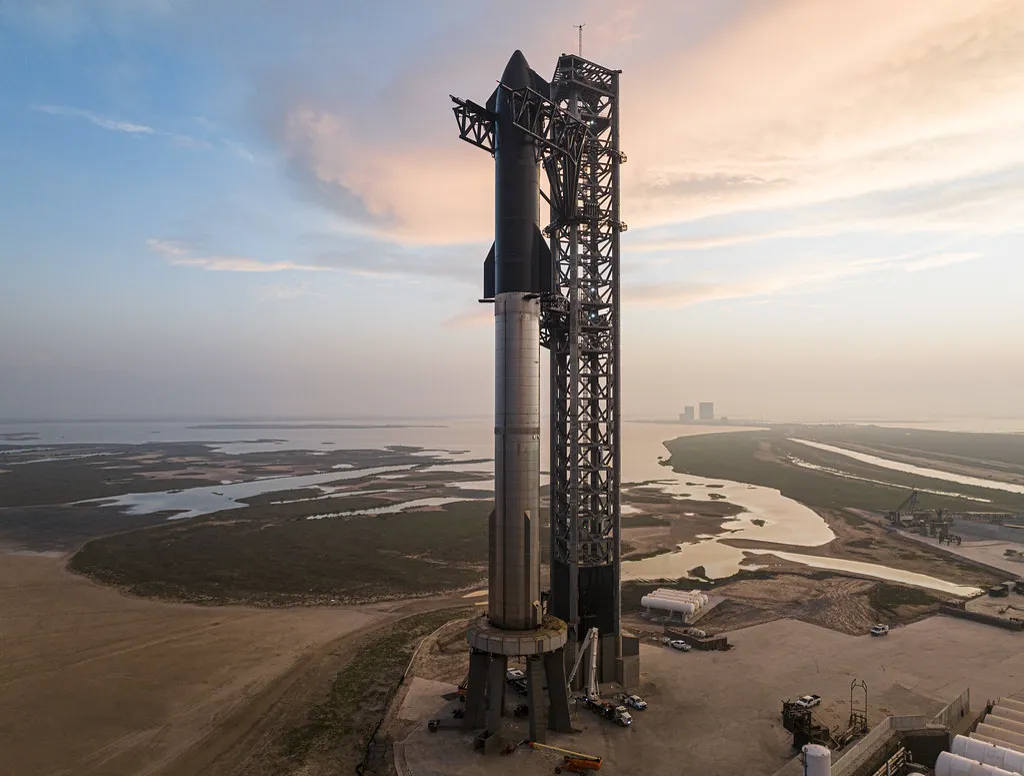
Finally, SpaceX must ramp up production and orbital deployment of its massive Gen2 satellites, an effort heavily reliant on regular flight operations of its next-generation Starship launch system. SpaceX executives project that initial Gen2 orbital launches will begin in 2027, with full commercial service targeted for late 2027 or early 2028.
FAQ
Will I need a new phone to use Starlink Mobile? No. Starlink Mobile uses standard cellular frequencies (800 MHz and 2 GHz), allowing existing 4G LTE and 5G smartphones from Apple, Samsung, and other manufacturers to connect without hardware modifications.
When will Starlink Mobile launch as an independent carrier? Commercial service is projected to begin rolling out in late 2027 or early 2028, following the scheduled completion of spectrum transfers and the initial orbital deployment of Gen2 satellites.
Can Starlink Mobile match the download speeds of 5G cell towers? Starlink targets speeds of up to 150 Mbps per user on its Gen2 network, which easily supports 4K streaming and high-bandwidth tasks, though traditional terrestrial 5G mid-band towers in dense cities can still exceed 500 Mbps.
Will Starlink Mobile replace SpaceX's partnership with T-Mobile? SpaceX currently supports T-Mobile’s T-Satellite direct-to-cell service using T-Mobile spectrum, but owning independent 800 MHz and 2 GHz licenses allows SpaceX to operate as its own standalone retail carrier.
Has the FCC fully approved the Grain Management spectrum sale? The FCC granted authorization for the 15,000 Gen2 satellites and approved rule waivers, but the specific transfer of the 800 MHz spectrum licenses from Grain Management remains pending regulatory review.