Apple is developing a prototype screenless health and fitness tracker designed to take on dedicated biometric wearables from Whoop, Google, and Garmin. Reported first by Bloomberg, the early-stage hardware project marks a potential departure from Apple’s display-first wearable strategy, exploring how Cupertino can capture users who want continuous biometric monitoring without the buzzing alerts of an Apple Watch.
While Apple dominates consumer smartwatches, a fast-growing cohort of fitness enthusiasts and sleep trackers has gravitated toward minimalist, screen-free form factors. A deep dive into the leak and subsequent analysis from 9to5Mac outlines why Apple is exploring the concept, what the device looks like behind closed doors, and the critical design pitfalls Apple must avoid if it hopes to disrupt the category.
The Leak: Inside Apple's Display-Free Wearable Project
According to reporting from Bloomberg's Mark Gurman, Apple engineers have spent months investigating the screenless wearable segment. The project is currently classified internally under the "technology investigation" phase, meaning Apple is assembling test hardware to validate user appeal and technical feasibility.
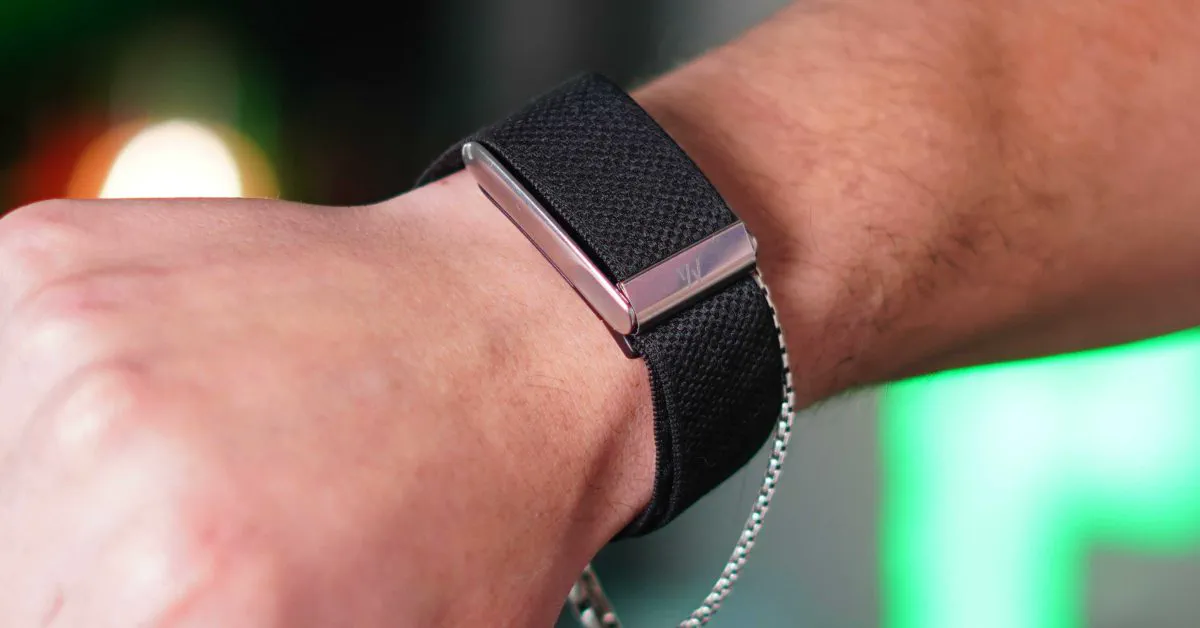
Prototypes described by people familiar with the initiative consist of a thin fabric band anchored by a compact, sensor-packed computing module that rests against the skin. Unlike the Apple Watch, the device features no digital display, no interactive touch glass, and no ambient screen illumination. Instead, the band quietly captures physiological signals and beams them via Bluetooth directly to the connected iPhone.
The initiative has garnered active backing from top leadership, including Executive Chairman Tim Cook and Senior Vice President of Services Eddy Cue. Notably, engineers from Apple’s Vision hardware team—the division behind the Apple Vision Pro—have contributed to early mechanical and sensor architecture.
Watch: Apple's NEW Screenless Fitness Tracker Is Coming: Everything We Know So Far

Video: 9to5Mac on YouTube
Prototype Specs, Features, and Competitive Landscape
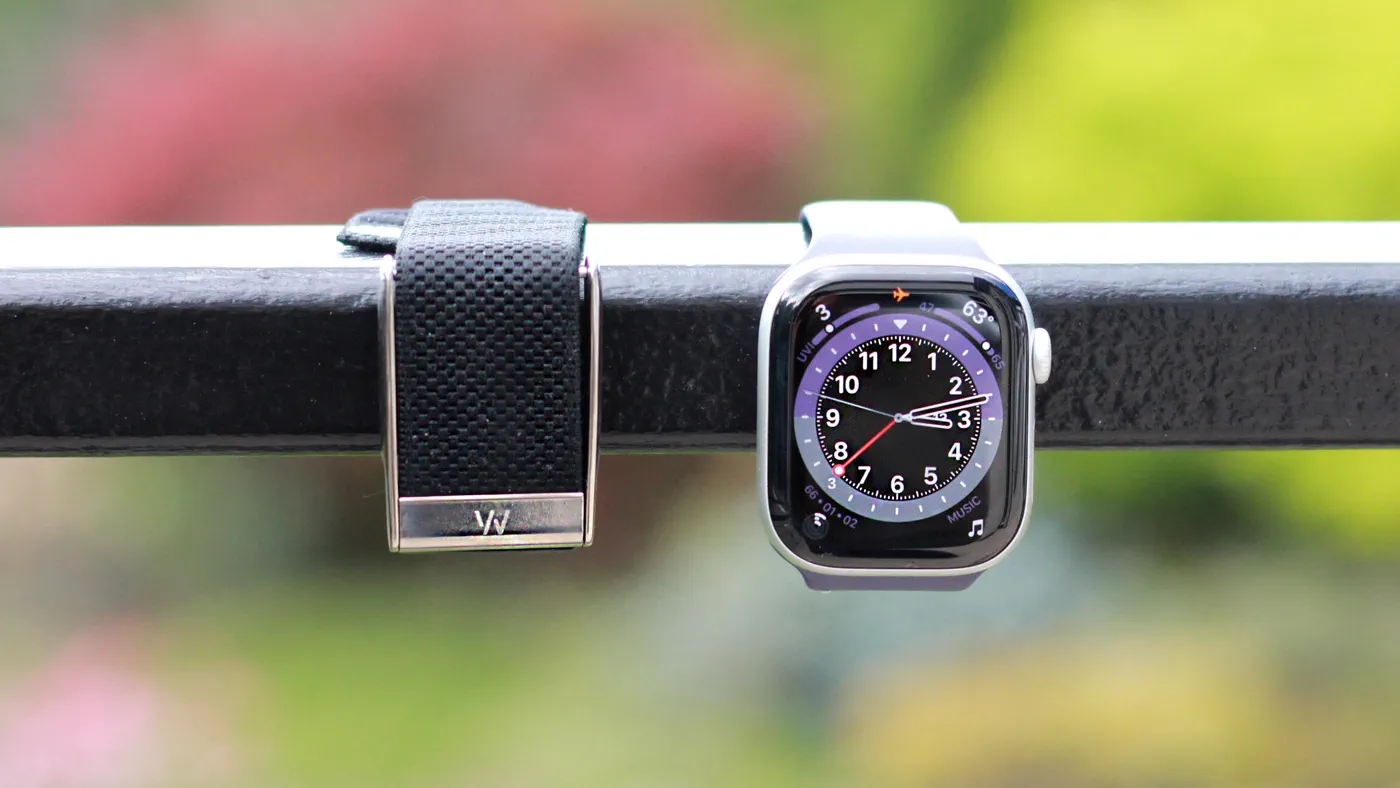 Photo: cnet.com (source)
Because the device is currently in prototyping, commercial hardware specifications remain fluid, but the core architecture mirrors the focused utility of continuous trackers. The band is designed to prioritize lightweight comfort, multi-day battery endurance, and continuous background data collection.
Key prototype characteristics reported from supply and engineering checks include:
- Chassis Design: A low-profile sensor module clipped into or woven within interchangeable elastic and woven fabric straps.
- Display: Zero display or touch panel, eliminating optical distractions and significant battery drain.
- Sensory Array: High-frequency photoplethysmography (PPG) optical heart rate sensors, skin temperature sensors, accelerometers, and blood oxygen hardware.
- Data Transmission: Continuous low-energy Bluetooth synchronization to the native Apple Health and Fitness platforms.
- Battery Target: Multi-day continuous operation between charges, overcoming the 18 to 36-hour recharge cycle typical of Apple Watch hardware.
| Device | Display | Primary Sensors | Battery Life | Business Model / Price |
|---|---|---|---|---|
| Apple Tracker (Prototype) | None | High-frequency PPG, skin temp, motion | Multi-day (targeted) | Unconfirmed (est. 2028 launch) |
| WHOOP 4.0 | None | 5-LED PPG, skin temp, pulse oximetry, skin conductance | 4–5 days | Hardware included, ~$30/mo subscription |
| Google Fitbit Air | None | Continuous optical HR, 3-axis accelerometer, temp | 6–7 days | $99 upfront, optional Fitbit Premium |
| Garmin Cirqa | None | Elevate Gen 5 optical sensor, Pulse Ox, skin temp | Up to 7 days | ~$199–$249 upfront, no subscription |
| Apple Watch Series 12 | Always-On OLED | Health Sensing System PPG, ECG, temp, depth | 18–24 hours | Starts at $399 upfront |
How We Got Here: Leadership Shakeups and Health Shifts
Apple’s pivot toward examining simpler form factors stems from a broader reorganization inside Cupertino’s health division. Following the retirement of long-time Chief Operating Officer Jeff Williams, Eddy Cue assumed oversight of Apple’s broader health initiatives alongside Dr. Sumbul Desai.
Cue has reportedly pushed Apple’s health and wellness engineering teams to move faster and look closely at nimble rivals. While the Apple Watch remains the world's best-selling smartwatch, its positioning as a multifaceted wrist computer—handling incoming calls, calendar pings, application navigation, and rich media—has created an opening for purpose-built trackers.
Competitors like Whoop (valued north of $10 billion after its 2026 fundraising round) and smart-ring pioneer Oura (which shipped 3.6 million rings in 12 months with $1.21 billion in revenue ahead of its IPO filing) demonstrated an appetite for invisible, screenless hardware. Cue’s strategy appears geared toward evaluating whether Apple should provide an official hardware alternative for users seeking pure biometric monitoring.
The Software Foundation Is Already Laid
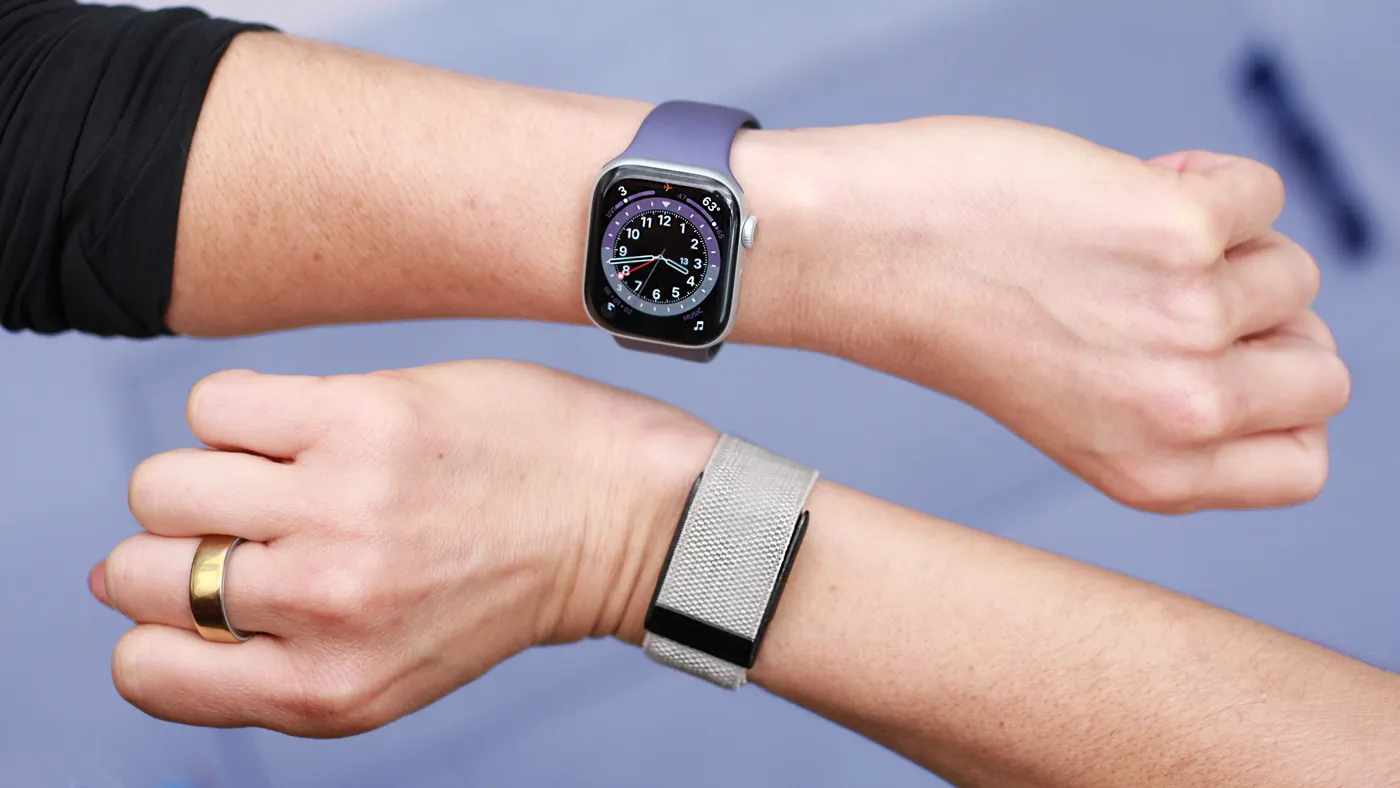 Photo: cnet.com (source)
Even without dedicated hardware on shelves, Apple has already deployed the software infrastructure necessary to power a screenless tracker. Across iOS 27 and recent watchOS updates, Apple introduced critical algorithms that mirror the proprietary metrics pioneered by Whoop and Oura:
- Readiness Score: A daily 1-to-10 composite index calculating physiological recovery based on Heart Rate Variability (HRV), resting pulse, skin temperature deviations, and sleep architecture.
- Biological Health Age: Cellular aging metrics derived from cardiorespiratory trends and historical biomarker patterns.
- High-Frequency Sampling: Apple updated its core Health Sensing System to record heart rate intervals once every 5 seconds throughout passive daily wear, narrowing the gap with Whoop’s second-by-second capture.
- Apple Intelligence Coaching: In the revamped Health app, Apple Intelligence summarizes health logs, spots systemic fatigue, and generates natural-language exercise recommendations.
Because this computational heavy lifting now happens on the iPhone and through cloud-synced Apple Intelligence models, the wrist device itself needs very little local compute power—making a barebones sensor band viable.
The Real-World Verdict: What Apple Must Get Right
While the concept of an Apple-branded screenless band has excited wearable enthusiasts, real-world experience reveals major pain points that Apple must solve. In an analysis published by 9to5Mac, reporter Michael Burkhardt detailed his six months testing Whoop alongside traditional timepieces and smartwatches, pointing out specific design traps.
The central frustration of screenless bands is workout friction. Because devices like Whoop lack physical buttons or displays, users must rely on automatic activity detection or launch a smartphone app to log workouts manually. Automatic detection frequently lags, struggles to identify casual bike commutes or walks, and requires retroactive categorization.
To make a screenless tracker practical, industry observers emphasize three vital features Apple must include:
- A Tactile Trigger or Action Button: Users should not have to unlock an iPhone with sweaty fingers mid-workout just to begin or end an exercise session. A low-profile, clicky physical switch on the sensor puck would allow immediate activity toggling.
- Status Indicator LEDs: A discrete multi-color micro-LED is essential to confirm whether tracking has engaged, checking Bluetooth sync, or flagging critical battery thresholds without consulting a phone.
- Frictionless Charging: Whoop’s popular slide-on battery pack allows charging while wearing the band; Apple would need to engineer a seamless magnetic puck or slide-on clip so users do not interrupt continuous sleep and recovery datasets.
Mechanical Watch Enthusiasts and Double-Wristing
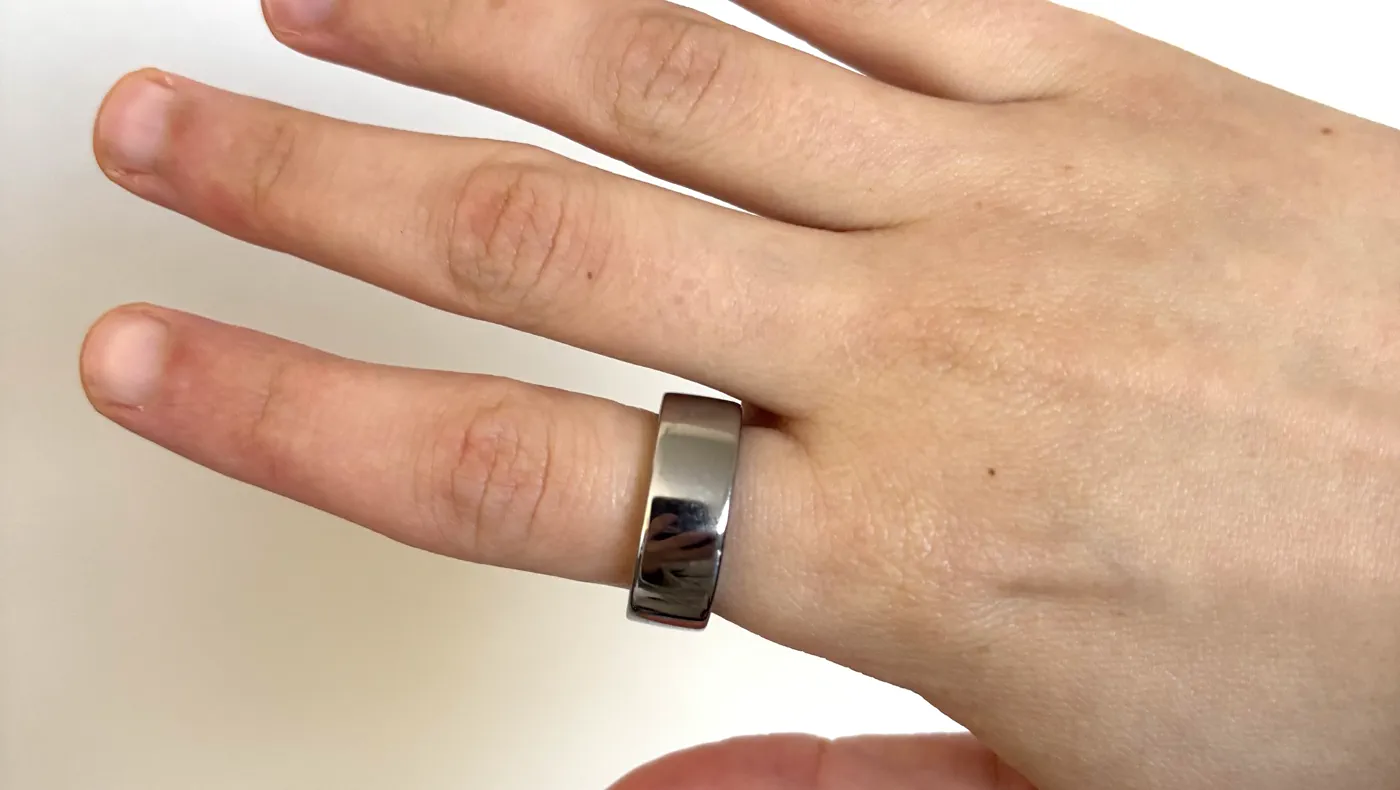 Photo: cnet.com (source)
Beyond pure fitness, a screenless band solves a major fashion dilemma: the "double-wristing" awkwardness. Horology enthusiasts and everyday professionals who prefer mechanical luxury watches—from Omega to Rolex—frequently avoid the Apple Watch because wearing a screen on each arm looks redundant and cluttered.
A screenless, fabric-bound strap can easily be worn on the opposite wrist, under a cuff, or higher on the bicep without resembling a smartwatch. It allows users to maintain complete activity and sleep data in their Apple Health ecosystem without sacrificing traditional wristwear.
Market Impact: Wall Street Reacts
Word that Cupertino is examining the screen-free tracker category sent ripples through the wearable market. Immediately following Bloomberg's initial report, shares of Garmin (GRMN) declined as much as 2.5%, reflecting investor unease about Apple encroaching on enthusiast fitness hardware. Conversely, Apple stock (AAPL) edged upward by 1%.
Wall Street analysts view the exploratory project as proof that the wearable landscape is fragmenting into distinct hardware tiers: high-end interactive computers (Apple Watch Ultra), everyday smartwatches (Apple Watch Series models), and passive biometric rings or bands.
What It Means for Buyers Today
For consumers currently deciding on wearable purchases, there is no reason to postpone a decision. Because the screenless tracker remains in an early "technology investigation" phase, internal timelines suggest the earliest a commercial device could debut is 2028—assuming Apple's executive committee greenlights production.
Users who want screenless tracking right now inside iOS have capable options: third-party bands like Whoop sync data directly into Apple Health, the Oura Ring captures sleep and recovery from the finger, and Google's $99 Fitbit Air offers bare-bones passive logging. Apple Watch Series 12 and Ultra 4 models remain Apple's sole native solution, carrying the newly added Readiness scoring and faster heart sampling.
What Happens Next and Unanswered Questions
Before any screenless wearable reaches production, Apple must resolve significant strategic questions:
- Pricing and Business Model: Will Apple sell the band as a one-time hardware purchase, or attempt a subscription model tied into Apple Fitness+ or Apple One premier tiers?
- Product Cannibalization: Would a lower-priced screenless strap depress entry-level Apple Watch SE sales, or expand the total active user base by onboarding analog watch fans?
- Roadmap Priorities: Apple's hardware roadmap is heavily weighted toward a planned 2027 Apple Watch chassis overhaul, augmented reality smart glasses, and sensor-enabled AirPods, leaving screenless hardware to compete for production resources.
Apple has not officially commented on the leaks. Whether the prototype graduates to an official "Apple Watch Air" or "Apple Band" will depend on consumer adoption of screenless hardware over the next 18 months.
FAQ
Has Apple officially announced a screenless fitness tracker?
No. The device is currently an internal prototype in the "technology investigation" phase, with reporting sourced from Bloomberg's Mark Gurman. Apple has declined to publicly comment.
When could an Apple screenless band launch?
If Apple chooses to move forward with commercial production, sources indicate the tracker would not be released before 2028.
How would the Apple tracker differ from an Apple Watch?
The prototype completely eliminates the display, touch glass, and notification system, using a fabric strap and small sensor module dedicated purely to background biometric and sleep tracking.
How will users view their fitness and recovery data?
All biometric information, including heart rate, sleep stages, Readiness scores, and activity levels, would sync automatically over Bluetooth to the Apple Health and Fitness apps on an iPhone.
Does the new Apple Health app already support these metrics?
Yes. In iOS 27, Apple introduced a native Readiness score, biological Health Age metrics, and high-frequency heart-rate tracking to its core software ecosystem.