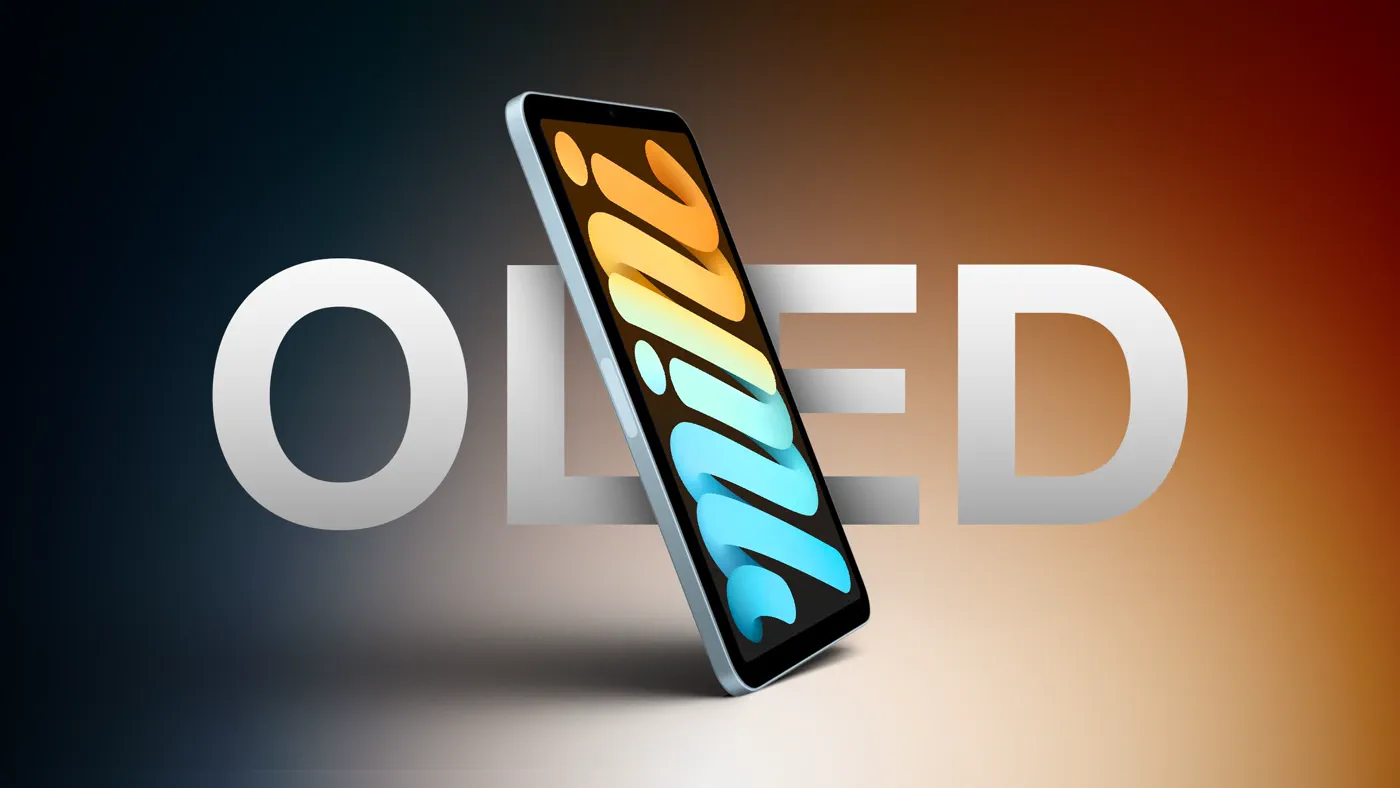
Apple's next compact tablet will reportedly make the long-awaited jump to an OLED screen, but power users hoping for high-refresh-rate animations are facing disappointment. Ahead of an expected late 2026 launch for the iPad mini 8, supply chain reports out of South Korea indicate that the device will remain locked at a standard 60Hz refresh rate rather than adopting 120Hz ProMotion.
The leak pours cold water on speculation that Apple would finally extend fluid 120Hz scrolling across its smaller form-factor slate. While the move from LCD to OLED promises dramatic upgrades in contrast, color accuracy, and battery efficiency, the decision to retain a 60Hz ceiling underscores Apple's rigid hardware segmentation between standard hardware and its flagship Pro lineup.
What Was Leaked: The 60Hz OLED Confirmation
The latest information originates from the Korean blogging account "yeux1122" on Naver, an Asian supply chain aggregator with an established track record on Apple hardware schedules. According to the leaker, Apple has finalized domestic production specifications in South Korea with display supplier Samsung Display, firmly ruling out a high-refresh panel for the upcoming compact tablet.
"There have been mentions of 120Hz in some overseas reports, but the domestic production quantity has already been confirmed to be LTPS at 60Hz," the tipster wrote. "That's it."
The leak confirms reports that first surfaced earlier this summer claiming Apple selected an 8.4-inch hybrid OLED panel manufactured on Samsung Display's A2 Generation 5.5 production line at its Asan campus. While that manufacturing facility is technically equipped to fabricate both basic panels and higher-end backplanes, sources confirm that the commercial run ordered for the next iPad mini consists entirely of fixed-rate 60Hz hardware.
Watch: OLED iPad Mini LEAKED: Is This Finally the 'Pro' We Wanted?

Video: Matt Talks Tech on YouTube
Display Tech Explained: LTPS vs. LTPO
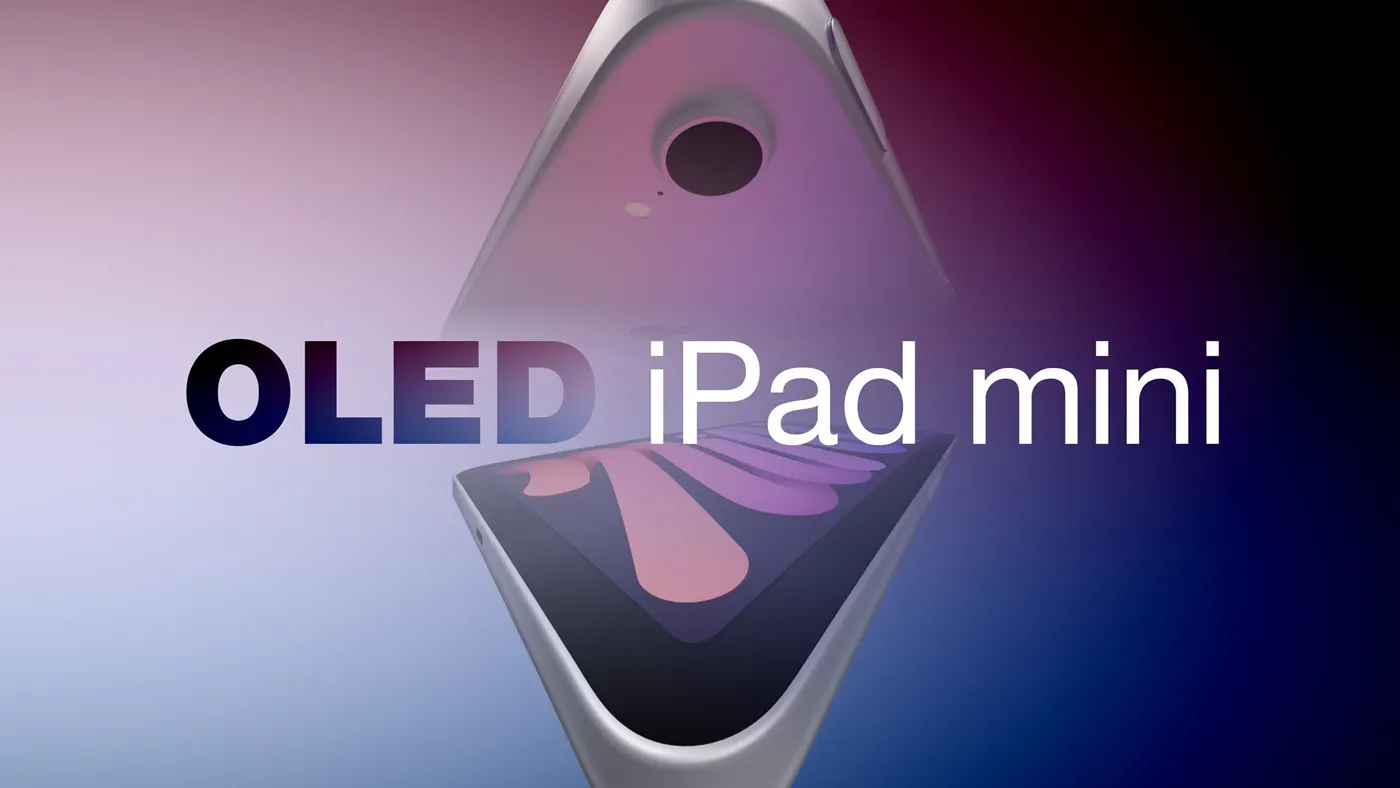 Photo: MacRumors: Mac News and Rumors - Front Page (source)
The fundamental difference between the iPad mini's rumored display and Apple's premium screens comes down to backplane architecture. The iPad mini 8 is said to rely on low-temperature polycrystalline silicon (LTPS) hybrid OLED technology. LTPS is an established, cost-effective method for creating high-resolution mobile panels, but it typically drives displays at a single, fixed refresh rate—in this case, 60Hz.
By contrast, Apple reserves low-temperature polycrystalline oxide (LTPO) panels for devices equipped with ProMotion, such as the iPad Pro. LTPO displays feature dynamic oxide thin-film transistors that allow the hardware to dynamically throttle its refresh rate from 120Hz down to 10Hz or lower depending on screen activity. This dynamic scaling is critical for high-refresh efficiency; without it, driving a tablet screen at continuous high frame rates drains compact batteries rapidly.
By selecting an LTPS panel, Apple reduces bill-of-materials costs and avoids severe battery life trade-offs in a device constrained by a small physical battery pack. However, it also means animations, interface transitions, and stylus input will remain visually capped at 60 frames per second.
Expected Specifications: Beyond the Display Panel
While the refresh rate may stay frozen in place, the iPad mini 8 is otherwise tracking to be one of the most substantial overhauls to the compact tablet lineup in years. Supply chain reports and industry reporting point to several architectural and exterior upgrades:
- Next-Generation Silicon: The tablet is expected to make a two-generation leap, trading the current A17 Pro processor for either an A19 Pro or A20 Pro chip, delivering significant graphics gains and full local acceleration for complex Apple Intelligence tasks.
- Increased Memory: System RAM is rumored to increase from 8GB to 12GB, providing extra headroom for multi-window multitasking and on-device generative AI models.
- Landscape Camera Repositioning: Following the design language introduced on the iPad Air and iPad Pro, the front-facing FaceTime camera is expected to move from the short portrait bezel to the long landscape edge.
- Vibration-Based Acoustic System: Apple has reportedly tested an acoustic transducer system that uses the tablet's casing to generate sound, allowing engineers to eliminate drilled speaker grilles.
- Enhanced Water Resistance: Removing traditional acoustic openings and redesigning external gaskets could allow the iPad mini to feature an official water-resistance rating for the first time, mirroring iPhones and dedicated e-readers.
The iPad Mini's Display Evolution: From Jelly Scroll to OLED
The display has historically been the iPad mini's most scrutinized component. When Apple redesigned the iPad mini 6 in 2021 with an 8.3-inch edge-to-edge Liquid Retina LCD, users quickly noticed "jelly scrolling"—a visible wobble where one half of the screen refreshed slightly faster than the other during vertical portrait scrolling.
When Apple released the iPad mini 7 in October 2024, it retained the same 60Hz LCD panel but redesigned the internal display controller assembly to synchronize line refresh timing and eliminate the jelly effect. However, the panel remained an ordinary LCD subject to backlight bleed, limited contrast ratios, and slower pixel response times.
Switching to OLED addresses those flaws directly. Because OLED pixels emit their own light, each pixel can shut off entirely, providing true blacks, infinite contrast, and instant pixel response times. Even at 60Hz, an OLED panel eliminates the ghosting and trailing inherent to budget LCDs.
Comparing Compact Slates: How the Rumored iPad Mini 8 Stacks Up
| Specification / Feature | iPad mini 7 (October 2024) | Rumored iPad mini 8 (Late 2026) | iPad Pro 11-inch (M4) |
|---|---|---|---|
| Display Panel | Liquid Retina IPS LCD | Hybrid LTPS OLED | Ultra Retina Tandem LTPO OLED |
| Screen Size | 8.3 inches | 8.4 inches | 11.1 inches |
| Refresh Rate | 60Hz fixed | 60Hz fixed | 10Hz–120Hz ProMotion |
| Processor | A17 Pro | A19 Pro / A20 Pro | Apple M4 |
| Memory (RAM) | 8GB | 8GB to 12GB | 8GB or 16GB |
| Front Camera Layout | Portrait top bezel | Landscape center bezel | Landscape center bezel |
| Audio Architecture | Dual stereo (cut grilles) | Transducer / vibration audio | Four-speaker audio array |
| Water Resistance | None | Redesigned sealed chassis | None |
| Starting Price | $499 (MSRP) | Expected $549–$599 | $999 |
Community and Market Reaction: Frustration Meets Pragmatism
News of the 60Hz limitation has sparked frustration across enthusiast forums and tech communities. Handheld gamers, digital artists, and tech enthusiasts have long requested an "iPad mini Pro," noting that compact 8-inch tablets make ideal portable gaming machines where 120Hz frame rates and low stylus latency offer immediate tangible benefits.
Critics also point out that high refresh rates are no longer an exclusively premium feature, with budget Android tablets and mid-range handhelds frequently offering 90Hz or 120Hz screens. Locking a device that starts near $500 to $600 at 60Hz feels anachronistic to spec-focused buyers.
Conversely, supply chain analysts view the decision as a calculated compromise. An 8.4-inch tandem LTPO display would dramatically drive up manufacturing costs, potentially pushing the iPad mini's retail price uncomfortably close to the $999 iPad Pro. For casual consumers who use the tablet primarily as an ultra-portable media viewer, digital notebook, or travel companion, vibrant OLED colors and pure blacks will likely matter more in daily use than refresh speed.
Buyer Advice: Should You Wait for the OLED iPad Mini?
If you currently own an iPad mini 5 or older, holding out for the OLED refresh makes immediate sense. The combination of modern Apple silicon, Apple Intelligence support, a sharp OLED screen, and potential water resistance will represent a generational leap in everyday usability.
However, if you purchased an iPad mini 7 within the last two years, an upgrade will be harder to justify. Unless rich black levels for late-night movie streaming or reading in dark mode are your top priorities, everyday navigation, web browsing, and app launches will feel fundamentally similar due to the identical 60Hz refresh rate. Anyone requiring 120Hz ProMotion for professional illustration or ultra-smooth UI animations should continue looking toward the 11-inch iPad Pro instead.
What Happens Next and Unanswered Questions
The primary remaining variable is pricing. OLED display assemblies carry higher production costs than traditional IPS LCD panels. When Apple shifted the iPad Pro to Tandem OLED in 2024, starting prices climbed by $200. Whether Apple absorbs the cost of the 8.4-inch hybrid panel to keep the iPad mini at its historical price band or introduces a price hike remains to be seen.
With domestic Korean mass production reportedly locked in and industry reporting pointing to an announcement window by late October, official details on price, battery longevity, and international availability should arrive in the coming weeks.
FAQ
Will the new iPad mini feature a 120Hz ProMotion display? No. According to supply chain reports and Korean production leaks, the upcoming iPad mini will feature an LTPS OLED display limited to a standard 60Hz refresh rate.
Why is Apple using OLED instead of LCD on the next iPad mini? OLED provides individual pixel lighting, resulting in true black levels, richer colors, higher contrast ratios, faster pixel response times, and improved power efficiency compared to older LCDs.
When is the new OLED iPad mini expected to launch? Industry insiders and supply chain reports point toward a release window in late October 2026, alongside other end-of-year hardware updates.
Will the OLED iPad mini cost more than the previous model? While Apple has not announced official pricing, the increased cost of manufacturing OLED panels could lead to a modest price increase over the previous generation's starting price.