A newly uncovered semi-custom AMD processor codenamed "Gainsborough" has surfaced in official driver files and shipping manifests, providing the strongest evidence yet of the silicon destined to power Valve's elusive Steam Deck 2. Handheld gaming enthusiasts have waited more than four years for a proper sequel to the category-defining portable PC, but Valve has repeatedly insisted that no successor will arrive without a dramatic, generational leap in both computational horsepower and thermal efficiency.
Now, hardware manifests, driver references, and internal design documents indicate that AMD and Valve are cooking up exactly that. Built on TSMC's bleeding-edge 3nm lithography and pairing next-generation CPU and GPU microarchitectures, Gainsborough appears purpose-built to deliver console-grade gaming to a low-wattage handheld without draining the battery in an hour.
The Final Fantasy Clue: How "Gainsborough" Broke Cover
The paper trail began deep inside AMD's recently deployed Adrenalin 26.9.2 display drivers, where AnandTech forum researcher SixPie spotted unexpected references to a trio of graphics identifiers: "ATlite3", "AT2", and "Gainsborough". While the former codenames correspond to AMD's upcoming RDNA 5 graphics family, Gainsborough stood out as an entirely unannounced piece of silicon. Shortly thereafter, prominent hardware leaker Olrak29 uncovered an export shipping manifest showing test wafers for a chip under the Gainsborough codename bound to a new "FF6" socket.
For gamers and hardware enthusiasts familiar with Valve's internal nomenclature, the name alone was an undeniable tell. When Valve designed the original 2022 Steam Deck with AMD, the semi-custom processor was codenamed "Aerith"—an homage to heroine Aerith Gainsborough from Square Enix's Final Fantasy VII. When Valve later produced the Steam Deck OLED refresh in late 2023 on a refined 6nm die shrink, that chip took the codename "Sephiroth", the game's iconic antagonist. Codenaming the next major processor "Gainsborough" fits AMD and Valve's private inside joke like a glove.
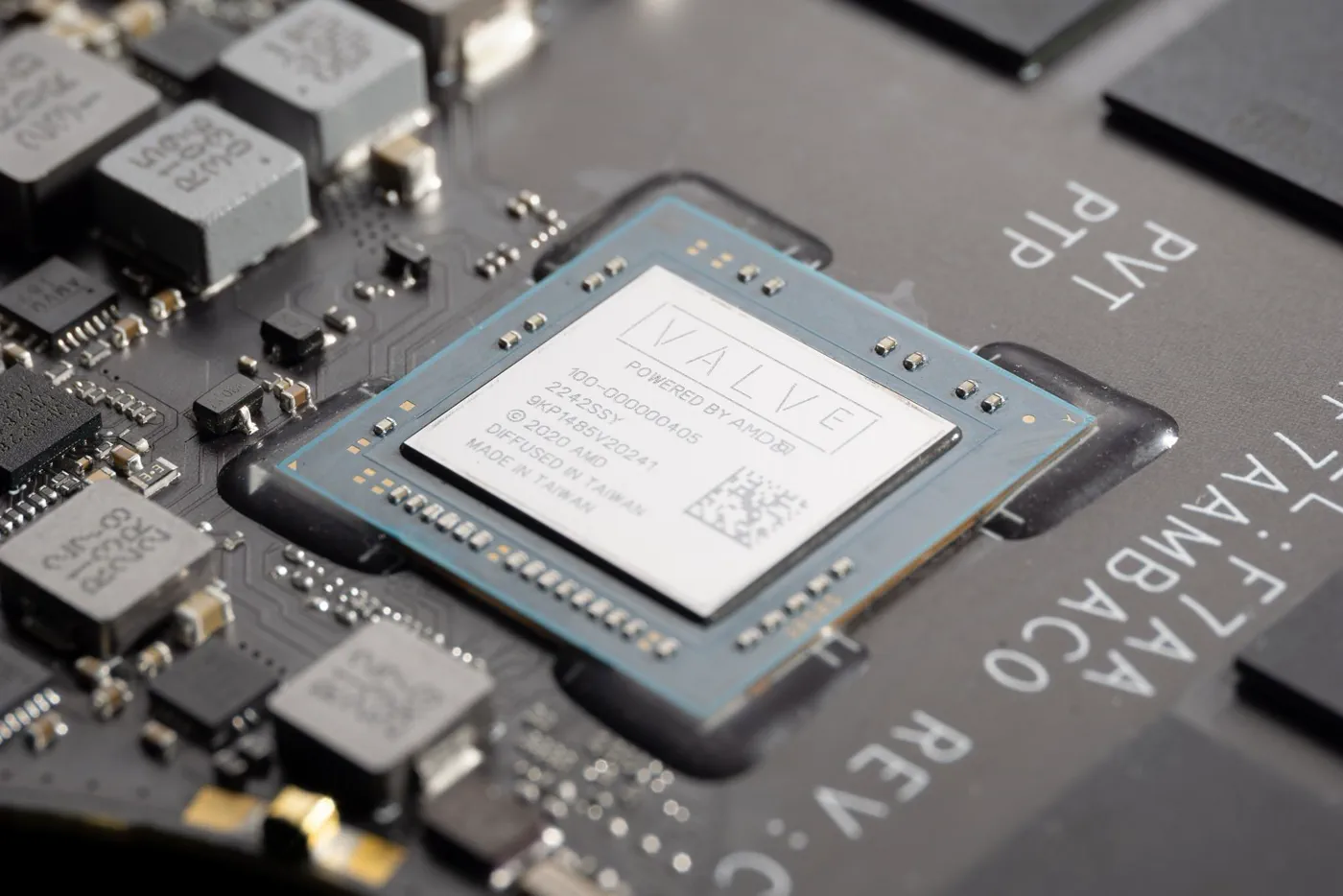
Hardware insider Moore's Law Is Dead further verified the silicon's lineage through internal AMD roadmaps. According to leaked documents, Gainsborough (often shortened to "GBR") is a semi-custom processor managed by AMD's specialized S3 division. Notably, the S3 engineering group is the exact bespoke unit responsible for crafting Sony's PlayStation 5 silicon and Valve's custom handheld processors, rather than the off-the-shelf APUs sold to PC vendors. Moore's Law Is Dead reported that mainstream OEM PC makers had zero visibility into Gainsborough, affirming that the chip belongs exclusively to a confidential client.
Watch: Steam Deck 2 Leak: AMD Gainsborough on 3nm! + PS6 Portable Specs

Video: Moore's Law Is Dead on YouTube
Architectural Blueprint: Zen 6, RDNA 5, and TSMC 3nm
 Photo: The Verge (source)
What makes Gainsborough particularly exciting is not merely its naming heritage, but the immense leap in architectural building blocks scheduled to inhabit its package. Whereas rival handhelds have relied on repurposed laptop chips with high power targets, Gainsborough is designed around custom low-power silicon.
According to technical leaks, the APU incorporates three foundational technologies:
- TSMC N3P Fabrication: Rather than utilizing the budget-oriented N3C process or previous-generation 4nm/5nm nodes, Gainsborough is slated for TSMC's refined N3P 3nm node. N3P offers marked improvements in transistor density, lower voltage requirements, and dramatically better energy efficiency—critical factors when trying to extract performance from a device operating between 15W and 25W.
- AMD Zen 6 / Zen 6c CPU Cores: Gainsborough is projected to house between 4 and 8 cores, leaning heavily into AMD's compact "c" core topology. These cores prioritize instructions-per-clock (IPC) throughput while slashing cache footprint and power consumption, matching the multi-threaded needs of modern game engines without wasting thermal margin.
- AMD RDNA 5 Graphics Compute Units: The graphics core makes a major leap, skipping directly past the RDNA 3 and 3.5 architectures used in competing Windows handhelds to AMD's forthcoming RDNA 5 architecture. Leaked documents indicate the GPU could feature anywhere between 12 and 24 Compute Units (CUs), paired with advanced ray tracing accelerators and modernized vector execution engines.
If these specifications hold, Gainsborough will deliver a massive uplift in floating-point performance and modern shader execution, providing raw rasterization capabilities that could exceed standard PlayStation 5 fidelity in portable settings.
By the Numbers: How Gainsborough Compares
To understand why this silicon represents the quantum leap Valve has spent years talking about, it helps to examine how Gainsborough stacks up against Valve's existing handhelds and typical contemporary competitors:
| Feature / Specification | Steam Deck LCD (2022) | Steam Deck OLED (2023) | Typical Windows Handheld (2025/2026) | Rumored Steam Deck 2 (Gainsborough) |
|---|---|---|---|---|
| APU Codename | Aerith | Sephiroth | AMD Ryzen Z1 Extreme / Intel Arc G3 | Gainsborough (GBR) |
| Manufacturing Node | TSMC 7nm | TSMC 6nm | TSMC 4nm / Intel 18A | TSMC 3nm (N3P) |
| CPU Architecture | 4-core / 8-thread Zen 2 | 4-core / 8-thread Zen 2 | 8-core Zen 4 / Zen 4c | 4 to 8-core Zen 6 / Zen 6c (Estimated) |
| GPU Architecture | RDNA 2 (8 CUs) | RDNA 2 (8 CUs) | RDNA 3 / 3.5 (12 to 16 CUs) | RDNA 5 (12 to 24 CUs) |
| Target TDP Window | 15W default (4W–15W) | 15W default (optimized) | 15W–30W (Plug-in turbo higher) | 15W–25W highly optimized |
| Memory Generation | LPDDR5-5500 | LPDDR5-6400 | LPDDR5X-7500+ | Next-gen LPDDR5X / LPDDR6 |
| Status | Discontinued (Feb 2026) | Available | Retail market | In development (Late 2027/2028 target) |
Valve’s High Bar: Why We Haven’t Seen a Steam Deck 2 Yet
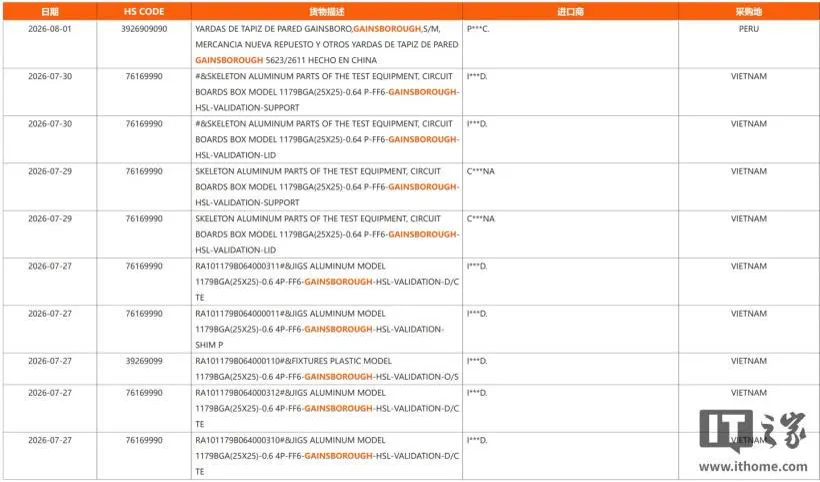 Photo: The Verge (source)
Valve has been uncharacteristically consistent regarding its hardware roadmap. While competitors like Asus, Lenovo, and MSI have rushed to push out iterative handheld revisions almost annually, Valve has held firm.
Valve software engineer Pierre-Loup Griffais and hardware designer Lawrence Yang have reiterated in multiple interviews that releasing a minor refresh makes little sense for the PC ecosystem. Speaking to IGN, Griffais stressed that the company is deliberately holding out for a clearly demarcated step-function in performance.
"We're not interested in getting to a point where it's 20 or 30 or even 50% more performance at the same battery life," Griffais explained. "We want something a little bit more demarcated than that. So we've been working back from silicon advancements and architectural improvements... right now there's no offerings in that landscape, in the SoC landscape, that we think would truly be a next-gen performance Steam Deck".
Griffais also criticized recent mobile chips, including Intel's Arc G3 platform, for failing to accommodate handheld boundaries. Most commercially available processors are designed primarily for thin-and-light laptops drawing 28W to 45W, falling apart when throttled down to the 10W-to-15W budget required to preserve acceptable handheld ergonomics and battery longevity. Gainsborough's custom N3P design would provide Valve with the exact wattage-to-compute curve it has refused to compromise on.
The Handheld Ecosystem and Looming PS6 Handheld Rivals
The emergence of Gainsborough also highlights an escalating shadow race across the portable computing world. While Windows devices have proliferated, their inconsistent battery life and clunky desktop interfaces continue to show the structural brilliance of Valve's SteamOS and Proton translation layer.
Interestingly, leaks surrounding Gainsborough also shed light on Sony's parallel ambitions. Rumors indicate Sony is actively engineering a portable PlayStation 6 device codenamed "Kynis" (or "Canis"). MLID's reports suggest that both AMD Gainsborough and Sony's portable APU share TSMC's N3P production node, though Valve is targeting higher GPU clocks and broader PC instruction support compared to Sony's fixed console architecture. If true, the late-2020s handheld arena will be an architectural battleground between custom AMD-powered ecosystems.
Supply Realities: Memory Shortages and Launch Timing
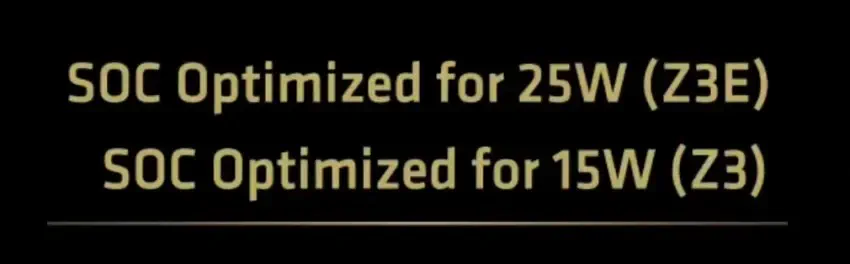 Photo: The Verge (source)
Even with Gainsborough appearing in initial driver packages and socket manifests, gamers should temper immediate expectations. Multiple semiconductor roadmaps point to Gainsborough tape-out and silicon production readiness around late 2027 or early 2028.
Broader macroeconomic headwinds in the component market also support a patient rollout. Ongoing shortages and skyrocketing contract pricing across high-density LPDDR memory and high-speed flash storage have driven up manufacturing costs across the industry. Valve designer Pierre-Loup Griffais noted that while component shortages have not altered the underlying architectural ambitions for Steam Deck 2, navigating component cost curves is essential before Valve can hit consumer-friendly price targets. Waiting until 2027 or 2028 allows both TSMC's 3nm line and global memory foundries to reach high-volume scale, ensuring Valve can launch a mainstream system rather than a niche, four-figure luxury gadget.
What This Means for Current Steam Deck Owners
For players currently deciding whether to purchase a Steam Deck or hold out for a successor, the emergence of Gainsborough offers clarity. With any potential Steam Deck 2 still at least two years from store shelves, the current Steam Deck OLED remains a premier choice for handheld PC gaming.
Furthermore, Valve’s disciplined approach ensures that developers will not abandon the baseline Steam Deck profile anytime soon. The millions of existing Steam Deck units continue to serve as the unified minimum-spec target for PC game developers optimizing on Steam. When the Steam Deck 2 finally does land with Gainsborough under the hood, players can rest assured it will represent a generational revolution, not just an expensive annual spec bump.
FAQ
What is AMD Gainsborough? AMD Gainsborough is an unreleased, semi-custom accelerated processing unit (APU) manufactured on TSMC's 3nm N3P process, featuring next-generation Zen 6 CPU cores and RDNA 5 graphics. Hardware leaks indicate it is being developed by AMD's custom S3 team for Valve's next-generation Steam Deck 2.
Why is the chip linked to Valve and the Steam Deck? The codename follows Valve and AMD's established Final Fantasy VII naming pattern: the original Steam Deck chip was codenamed "Aerith" and the OLED chip was codenamed "Sephiroth", making Aerith's surname "Gainsborough" the obvious successor. Additionally, AMD documentation confirms it is a bespoke, semi-custom processor rather than a standard commercial laptop chip.
When will the Steam Deck 2 release? Industry leaks and silicon roadmaps estimate that the Gainsborough APU will be ready for hardware integration in late 2027 or early 2028. Valve has not announced an official release window and has repeatedly stated it will take its time to achieve a genuine generational performance leap.
How much faster will the Steam Deck 2 be compared to the original? While formal benchmark figures do not yet exist, shifting from Zen 2/RDNA 2 to Zen 6/RDNA 5 on a 3nm process is projected to deliver multiple times the graphics compute performance, superior ray tracing capabilities, and vastly improved power efficiency at the same battery draw.
Should I buy a Steam Deck OLED now or wait for the Steam Deck 2? If you want a portable gaming system today, the Steam Deck OLED is still widely recommended, as a true Steam Deck 2 remains at least two years away. Valve's commitment to maintaining a uniform hardware baseline means current games will continue to target the original device for the foreseeable future.