Apple is reportedly planning two distinct product launch windows throughout October to roll out an unusually crowded pipeline of hardware. While Bloomberg's Mark Gurman previously revealed plans for an initial smart home hardware push on Tuesday, October 13, MacRumors has learned from multiple sources familiar with the matter that Apple has scheduled a second wave of announcements for the final week of October.
The dual-track strategy marks a departure from traditional mega-keynotes, giving the company room to spotlight its AI-infused living room ecosystem before turning consumer attention toward new personal computing devices. Spacing the announcements also prevents internal cannibalization during mid-October, when Apple's first foldable device—the iPhone Duo—officially opens for pre-orders and lands in retail stores.
The Two-Wave Launch Strategy
Apple’s late-fall calendar has frequently hosted hardware announcements, but attempting to fit a brand-new product category, long-overdue home entertainment updates, and next-generation Macs into a single showcase would overwhelm the news cycle.
According to reporting from Bloomberg and MacRumors, Apple's October timeline divides cleanly around its flagship hardware schedule:
- Wave 1 (Tuesday, October 13): Dedicated to the smart home, featuring Apple’s new smart display, a second-generation HomePod mini, and a refreshed fourth-generation Apple TV 4K.
- The Mid-Month Intermission (October 16–23): Reserved for the iPhone Duo rollout, with pre-orders beginning Friday, October 16, and in-store deliveries beginning Friday, October 23.
- Wave 2 (Final Week of October, approximately October 26–30): Focused on personal computing, tablet upgrades, and companion software, expected to encompass new Mac and iPad models.
Retail indicators are already falling into place. Apple Store locations reportedly received shipment crates marked with strict "Do Not Open Until October 8" instructions, which retail insiders believe contain visual merchandising materials and display graphics to prepare store floors for the initial mid-month reveals.
Watch: Apple October 13 Event Leaked! EVERYTHING We're Getting!

Video: AppleTrack on YouTube
Wave 1: The Smart Home AI Offensive on October 13
 Photo: macdailynews.com (source)
The October 13 product wave represents Apple's most concentrated effort to challenge Amazon and Google in the connected living space. The cornerstone of this push is a long-anticipated smart home hub, code-named J490. Built to act as the primary interface for Apple's newly overhauled Siri AI assistant, the device bridges home automation, communication, and ambient family widgets.
Accompanying the hub are two key living-room hardware refreshes that have sat untouched for multiple years:
- The All-New Home Hub: Features a roughly 6-inch square display with rounded corners and uniform borders. The tabletop edition mounts the display on an adjustable metal arm anchored to a hemispherical speaker base, evoking the nostalgic silhouette of the 2002 iMac G4. A secondary wall-mounted configuration sits flush against vertical surfaces. Both rely on tethered USB-C power without an internal battery, incorporate a front-facing 1080p FaceTime camera with facial recognition, and run a dedicated operating system widely referred to as homeOS.
- HomePod mini (2nd Generation): Retaining the spherical acoustic fabric design of the 2020 original, the updated mini incorporates upgraded processing silicon to handle Siri AI locally, a second-generation Ultra Wideband chip, Apple's custom N1 wireless chip, and fresh color choices including pink and green.
- Apple TV 4K (4th Generation): Maintaining its familiar black set-top chassis, the box replaces the aging A15 Bionic chip with modern silicon (rumored as an A17 Pro or A19-class chip), expands unified memory to 8GB or 12GB to process complex Apple Intelligence tasks, adopts Wi-Fi 7 via Apple's N1 networking silicon, and bundles an updated Siri Remote.
Comparing Wave 1: Smart Home Hardware Specs and Details
| Specification / Feature | Smart Home Hub (J490) | HomePod mini (2nd Gen) | Apple TV 4K (4th Gen) |
|---|---|---|---|
| Form Factor | Tabletop (iMac G4 style) or Wall Mount | Compact spherical fabric speaker | Square set-top box |
| Display | ~6-inch square touch panel | Backlit top touch surface | External TV output (up to 4K Dolby Vision) |
| Primary Chipset | Apple A18 or newer | Upgraded S-series or A-series silicon | Apple A17 Pro or A19-family chip |
| Memory (RAM) | 8GB (Apple Intelligence baseline) | Upgraded internal memory | 8GB to 12GB unified memory |
| Camera & Video | 1080p FaceTime camera; Face ID / user sensing | None | Continuity Camera / FaceTime integration |
| Operating System | homeOS (customized widget/dock UI) | HomePod Software (audioOS) | tvOS 27 |
| Networking | Wi-Fi 7 (Apple N1), Thread, Bluetooth 6 | Wi-Fi 7 (N1 chip), Thread, UWB Gen 2 | Wi-Fi 7 (N1 chip), Gigabit Ethernet, Thread |
| Power Setup | Tethered USB-C (no internal battery) | Integrated braided USB-C cable | Internal power supply / standard AC plug |
| Reported Pricing | Estimated ~$350 | Expected ~$99 | Rumored ~$149 to $199 |
The Mid-Month Intermission: iPhone Duo
 Photo: macdailynews.com (source)
The decision to decouple Apple's hardware waves prevents cross-talk with one of the most high-stakes hardware introductions in company history: the iPhone Duo.
Officially unveiled in early September, Apple's first book-style foldable smartphone is scheduled to open pre-orders on October 16, before making its retail debut on October 23. With retail stores juggling intricate display setups, carrier promotions, and supply allocations for a completely new form factor, dropping multiple unrelated computing lines during the exact same weekend would create retail bottlenecks. By putting smart home gear out front on October 13, Apple allows the connected-home ecosystem to stand on its own feet prior to the rush for foldable inventory.
Wave 2: What to Expect in Late October
For the final week of October, MacRumors’ sources point to product announcements centering on Macs, iPads, and supporting operating system updates. While Apple could opt for a condensed keynote video similar to 2023’s "Scary Fast" presentation, it has also historically used consecutive days of staggered press releases, as seen during late October 2024.
Leading candidates for the late-October wave include:
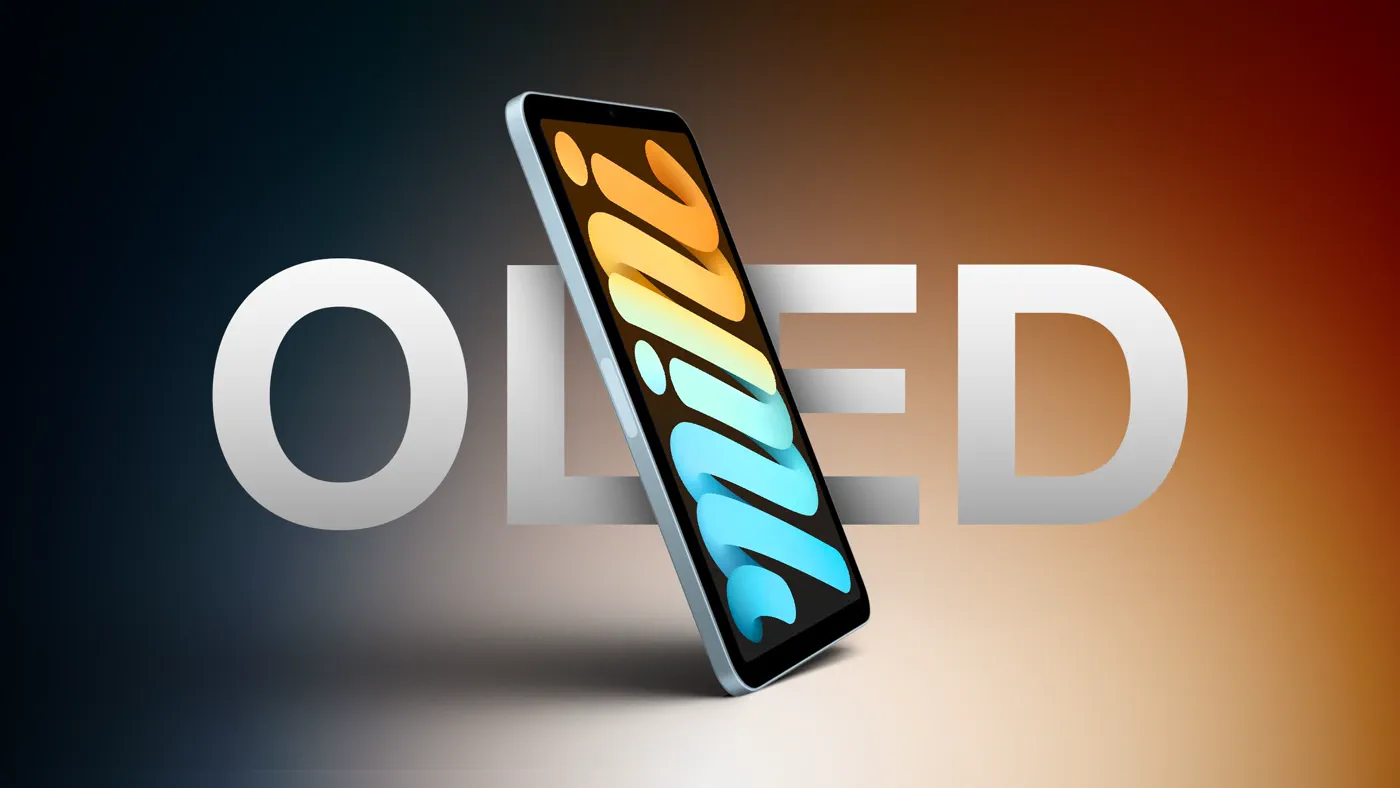
- iPad mini 8: The compact tablet is strongly rumored for an overhaul featuring an OLED display (potentially bringing ProMotion smoothness), water resistance, and an A19 Pro or A20 Pro chipset designed to deliver console-grade graphics and snappy local AI performance.
- Entry-Level iPad (12th Generation): Expected to gain an A18 or A19 chip, bridging the memory gap to at least 8GB of RAM and bringing native Apple Intelligence support to Apple's most budget-friendly tablet line.
- M6-Series Macs: Supply chain reports indicate baseline updates for the 14-inch MacBook Pro and 24-inch iMac powered by standard next-generation Apple Silicon (M6), maintaining existing physical chassis while accelerating neural processing units. Rumors also persist regarding higher-end MacBook Pro hardware redesigns experimenting with thinner enclosures and touch-enabled OLED screens.
- Public OS Releases: The second launch window will coincide with the rollout of iOS 27.1, iPadOS 27.1, and macOS updates, providing the operating framework for the newly introduced hardware.
The Background: John Ternus and Apple’s Cadence Shake-up
 Photo: macrumors.com (source)
This two-wave release blueprint reflects broader shifts taking place inside Cupertino following executive transitions. CEO John Ternus, who formally took the reins in September, has initiated efforts to streamline operational layers and break up rigid, monolithic product cycles.
Under previous regimes, fall hardware was frequently compressed into dense two-hour presentation marathons, or non-phone products were quietly delayed into the spring. Gurman noted in recent Bloomberg reports that Ternus favors a leaner engineering flow that releases products as soon as hardware and corresponding software models are ready, rather than holding inventory to satisfy arbitrary calendar blocks.
Furthermore, the delay of Apple's home hub—originally slated for internal targets as early as late 2024 or mid-2025—was driven entirely by the development cycle of Siri AI. With iOS 27 and Apple Intelligence foundation models finally deployed in the wild, the hardware foundation can now ship without missing its signature software experience.
Practical Buyer Advice: Upgrade or Wait?
Consumers holding older Apple devices should adjust their buying decisions based on the reported calendar:
- Hold off on Apple TV and HomePod purchases immediately: If you are shopping for an Apple TV 4K or HomePod mini, do not buy right now. The existing 2022 Apple TV 4K relies on an A15 Bionic processor that cannot support Apple Intelligence features or the next era of Siri. Waiting just a short time will either grant you access to far faster Wi-Fi 7 hardware or unlock heavy clearance discounts on older stock.
- Keep an eye on iPad mini deals: Current iPad mini units with liquid retina panels may see significant retailer markdowns ahead of an OLED successor. If OLED contrast and high-end gaming chips matter to you, hold off until the late-October announcements.
- Assess your smart home ecosystem: The home hub requires a persistent wall connection via USB-C and serves as a command center rather than a portable tablet. If you need a flexible media screen to carry between rooms, an entry-level iPad remains the more versatile choice.
What Happens Next and Unanswered Questions
Apple has not yet issued formal media invitations or confirmed whether October 13 will be an in-person event, a streamed broadcast, or an Apple Newsroom blitz, though Gurman's latest reports suggest an event format. Media event invitations typically go out approximately one week prior, meaning official word from Cupertino could surface at any time.
Several details remain unconfirmed. Supply chain sources are still divided over exact launch pricing for the smart home hub—estimates range from $299 to $350—and whether the higher-end Apple TV 4K will see a price bump beyond its traditional bracket. In addition, while Apple continues work on a luxury tabletop device featuring a robotic motorized arm, analysts emphasize that specific premium device is reserved for 2027 or beyond, making this October strictly about establishing Apple's baseline presence in the modern connected home.
FAQ
When are the two rumored Apple launch windows taking place? The first set of product announcements is scheduled for Tuesday, October 13, followed by a second wave of product unveils expected in the final week of October (between October 26 and October 30).
What hardware is expected on October 13? Apple is slated to introduce an all-new smart home hub running homeOS, a second-generation HomePod mini with new color options, and an upgraded fourth-generation Apple TV 4K featuring an Apple-designed N1 chip and Apple Intelligence support.
What products will launch in the late-October wave? The final week of October is expected to bring computing and tablet updates, including an OLED-equipped iPad mini, a refreshed budget iPad, and baseline M6 Macs, such as the 14-inch MacBook Pro and 24-inch iMac.
Why is Apple spacing out its October releases? Dividing the launches allows Apple to give its new smart home category dedicated attention while leaving a clear runway for the mid-October launch of the foldable iPhone Duo, which hits stores on October 23.
Will the new smart home hub run regular iPad apps? No; the smart home hub is reported to run a dedicated operating system named homeOS, featuring glanceable widgets, clock faces, FaceTime, HomeKit controls, and Siri AI rather than a full iPadOS App Store.