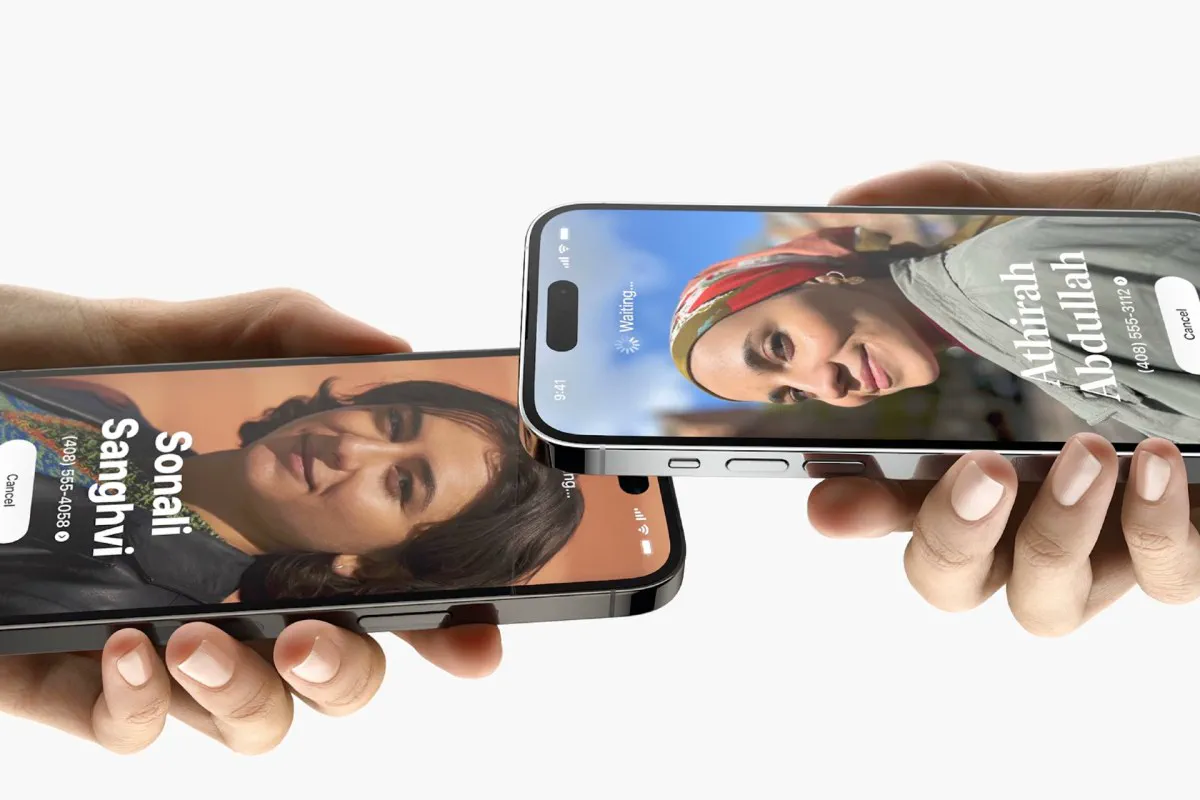
Apple is facing a massive patent infringement lawsuit in India after U.S.-based startup GG Technologies accused the tech giant of copying its proximity-based contact-sharing technology for iOS's NameDrop feature. Filed before the Bombay High Court, the legal action demands ₹15 billion (approximately $161.86 million) in damages and seeks an injunction that would halt the importation and commercial distribution of infringing iPhones and Apple Watches across the country.
GG Technologies, the Santa Monica-based company behind the contact-sharing application StayTouch, initiated the suit in October after mandatory pre-litigation commercial mediation sessions broke down without a resolution. The dispute has quickly escalated into a high-stakes, international showdown spanning Indian courts, U.S. federal courts, and the U.S. International Trade Commission (USITC).
The Bombay High Court Filing: Demands and Allegations
In its 781-page filing submitted to the Bombay High Court, GG Technologies claims Apple built its native tap-to-share system by utilizing proprietary methods protected under Indian patent law. Specifically, the startup points to Indian Patent No. 546169, titled around systems and methods for proximity-based contact transfer, which was granted to the firm in July 2024 following an application submitted in 2021.
The plaintiff asserts that Apple's native NameDrop feature directly infringes this patent by allowing devices to discover, pair, and transfer contact cards without requiring manual configuration or prior setup. Beyond seeking ₹15 billion in financial restitution, GG Technologies asked the court for immediate interim relief. If granted, the injunction would:
- Prohibit Apple from selling devices running iOS and watchOS preloaded with the NameDrop feature in the Indian market.
- Restrict customs authorities from clearing imports of supported iPhone and Apple Watch models.
- Bar the tech giant from marketing or promoting tap-to-share contact functionality within India.
As of late November, the case is awaiting listing for its preliminary judicial hearing in Mumbai.
The Tech in Question: NameDrop vs. StayTouch
 Photo: TechCrunch (source)
The dispute centers on the convenience of exchanging personal or professional contact details without typing numbers or trading paper business cards. GG Technologies was founded by Gaurav Goel, an Indian Institute of Technology (IIT) Delhi graduate and former Goldman Sachs investment banker. Goel developed the StayTouch concept in 2018 after experiencing recurring frustrations with physical networking and manual data entry in finance.
StayTouch officially debuted in July 2019 on iOS and Android. The application allowed two smartphone users to tap or hold their devices near each other to initiate contact exchange, record meeting locations, and automatically synchronize updated details over time. To protect the underlying workflow, Goel submitted initial patent applications in May 2019.
Apple introduced NameDrop four years later during WWDC 2023 as a headline feature of iOS 17. Built into the system-level AirDrop infrastructure, NameDrop uses Bluetooth, Ultra Wideband (UWB), and Near Field Communication (NFC) to detect when the top of one iPhone or Apple Watch is positioned within millimeters of another. Once triggered, devices present an animated glow and prompt users to either receive or share Contact Posters.
GG Technologies argues that Apple's frictionless device selection, background scanning, and automated credential handshake directly mirror the architecture patented by StayTouch years earlier.
Timeline of Events: How the Feud Unfolded
The collision between GG Technologies and Apple developed over several years across international intellectual property registries:
| Date | Milestone / Event |
|---|---|
| May 2019 | Gaurav Goel files initial priority patent application in the U.S. covering proximity-based contact exchange. |
| July 2019 | GG Technologies publicly launches the StayTouch application on app stores. |
| 2021 | GG Technologies files a corresponding patent application with the Indian Patent Office. |
| June 2023 | Apple announces NameDrop as part of iOS 17 at WWDC. |
| September–October 2023 | Apple releases iOS 17 and watchOS 10.1, bringing NameDrop to compatible iPhones and Apple Watches. |
| April 2026 | GG Technologies initiates commercial pre-litigation mediation in India and files an infringement suit in U.S. federal court. |
| July 2024 | The Indian Patent Office officially grants Indian Patent No. 546169 to GG Technologies. |
| September 2026 | Mediation in India concludes without a settlement; U.S. court pauses federal litigation pending ITC probe. |
| October 2026 | GG Technologies formally files its ₹15 billion infringement lawsuit before the Bombay High Court. |
| November 3, 2026 | GG Technologies receives U.S. Patent No. 12,784,009 and immediately files a second federal suit in Texas. |
The Multi-Front Battle: Texas Federal Court and the USITC
 Photo: indiatimes.com (source)
The Bombay High Court filing is not an isolated offensive; it forms one leg of an aggressive multi-jurisdictional legal campaign. In April 2026, GG Technologies filed suit against Apple in the U.S. District Court for the Western District of Texas, alleging infringement of U.S. Patent No. 12,022,369. Simultaneously, the startup petitioned the USITC under Section 337 to block imports of infringing hardware into the United States.
In September 2026, the Texas federal court placed that initial case on hold while the USITC moves forward with its trade investigation. As part of that probe, the ITC instituted a 100-day early disposition review to determine whether GG Technologies satisfies the "domestic industry" requirement—a statutory rule ensuring only businesses with meaningful U.S. investments can seek import blockades.
Undeterred by the stay, GG Technologies filed a second complaint in the same Texas federal court on November 3, 2026. That new lawsuit asserts U.S. Patent No. 12,784,009, which was issued by the U.S. Patent and Trademark Office on the very day the suit was registered.
Apple's Past Legal Battles and NameDrop Precedents
This is not the first time Apple has had to defend its tap-to-share software against patent holders. In October 2024, Michigan developer Ginko LLC filed suit alleging that NameDrop infringed U.S. Patent No. 11,025,573. Apple mounted a aggressive defense under Section 101 of the U.S. Patent Act, arguing that transmitting address card data over generic radio protocols constitutes an unpatentable abstract idea rather than an inventive technical leap.
Apple consistently maintains that its technologies are engineered independently. While the company has not yet published an official statement addressing the Bombay High Court complaint, court watchers expect Apple to pursue a familiar playbook: petitioning patent boards to invalidate GG Technologies' claims while arguing that iOS's hardware-level security, UWB calibration, and Bluetooth handshakes do not read onto the startup's patents. No court or administrative tribunal has ruled that Apple infringed GG Technologies' IP to date.
Why India Is a High-Stakes Battleground for Apple
 Photo: greyb.com (source)
Targeting Apple's commercial footprint in India places direct pressure on one of the tech giant's fastest-growing markets. Over the past three years, Apple has significantly diversified its manufacturing footprint away from mainland China, scaling domestic assembly in India through contract manufacturers like Foxconn, Pegatron, and Tata Electronics.
India serves not only as an increasingly vital retail market—with flagship Apple Stores open in Mumbai and Delhi—but also as an export hub supplying iPhones globally. An adverse court order or preliminary import restriction in the Bombay High Court could disrupt supply chain operations, impact device retail inventory, and create significant administrative headwinds for Apple's regional leadership.
What This Means for Everyday iPhone and Apple Watch Users
For consumers currently using iPhones or Apple Watches, the ongoing lawsuit does not bring any immediate disruption:
- No Feature Removal (For Now): NameDrop remains active on all devices running iOS 17 or later and watchOS 10.1 or later. Courts rarely issue emergency injunctions without thorough evidentiary hearings.
- Software Toggles: If Apple ever faced an enforceable court order, it would likely disable the tap-to-share contact handshake via an over-the-air iOS update for region-specific firmware rather than halting physical hardware sales entirely.
- Manual Contact Sharing Intact: Standard contact sharing via Messages, Mail, AirDrop file transfer, and QR codes operates independently of the proximity trigger and remains unaffected.
Next Steps and Unresolved Legal Questions
The Bombay High Court will decide whether to accept the lawsuit for full trial proceedings and whether to entertain GG Technologies' petition for temporary injunctive relief.
Simultaneously, the USITC's review in the United States will provide an early bellwether. If trade judges find that GG Technologies lacks the required domestic commercial presence, the startup's leverage could diminish significantly. Conversely, if Indian courts allow the injunction plea to proceed to oral argument, Apple may find itself under pressure to pursue cross-licensing discussions to protect its retail operations in one of the world's most lucrative consumer tech corridors.
FAQ
What is GG Technologies demanding from Apple in India? The startup is seeking ₹15 billion (around $162 million) in damages and an injunction from the Bombay High Court that would prohibit Apple from importing or selling devices featuring NameDrop in India.
Will NameDrop stop working on iPhones in India? No immediate changes will occur. The lawsuit is in its initial filing stages and has not yet been scheduled for a preliminary hearing, meaning all iOS and watchOS features remain operational.
What devices are named in the patent dispute? The complaint targets all Apple smartphones running iOS 17.1 or later and Apple Watches running watchOS 10.1 or later that support native tap-to-share contact transfer.
Has Apple been found guilty of patent infringement in this case? No. As of late 2026, no court or trade tribunal in India or the United States has ruled that Apple infringed GG Technologies' patents or that the startup's claims are legally valid.
Why did GG Technologies file lawsuits in both India and the United States? Patents are territorial, meaning patent holders must enforce their intellectual property rights in each country where the allegedly infringing products are imported, manufactured, or sold.