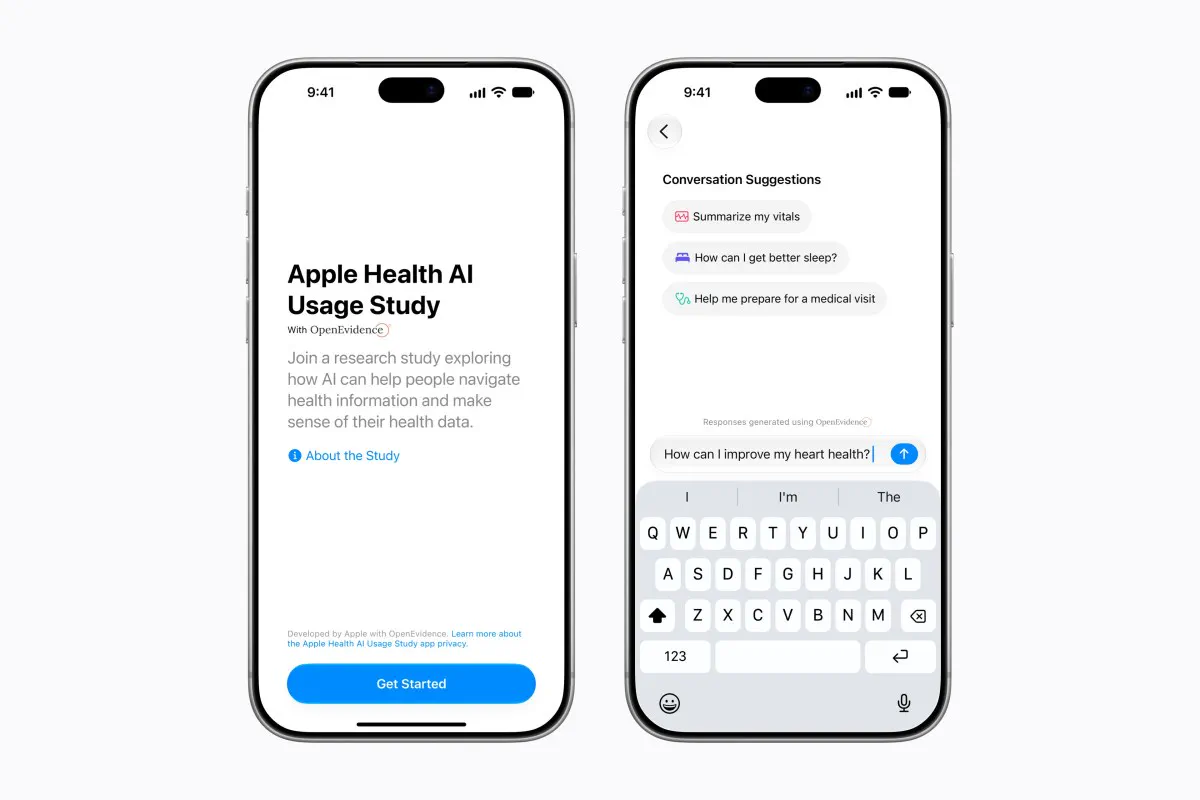
Apple has officially launched the Apple Health AI Usage Study, a nationwide virtual research initiative paired with a dedicated iOS app designed to test how everyday consumers understand and evaluate conversational AI for health guidance. Rolled out across the United States on November 15, 2026, the study examines user trust, answer accuracy, and medical decision-making by placing clinically grounded, plain-language answers into the hands of up to 200,000 adult participants.
Rather than hastily rolling out an unvetted chatbot feature inside Siri or the native Health app, Apple is treating conversational health technology as a formal human-subjects clinical trial. By teaming up with OpenEvidence—a specialized clinical AI platform widely used by medical doctors—Apple hopes to resolve one of the most persistent bottlenecks in modern digital medicine: transforming complex, peer-reviewed medical literature into accessible, trustworthy consumer guidance without introducing dangerous hallucinations or cognitive misunderstandings.
What Was Announced: The Apple Health AI Usage Study
Apple's initiative introduces a standalone research app, titled the Apple Health AI Study app, available to download from the iOS App Store for qualifying participants. Through the app, participants can type or dictate everyday health questions—ranging from puzzling physical symptoms and medication side effects to surgical recovery guidance and personalized nutrition planning.
Instead of generating answers from generalized internet crawls, the system processes inquiries through OpenEvidence's clinical engine. Every answer generated in the app links directly to peer-reviewed clinical citations from premier medical journals. Apple’s software stack then reformulates the technical clinician-oriented data into approachable, plain English.
The research protocol is designed to run for up to 12 months, during which participants will actively evaluate every response, record whether the guidance influenced their health actions, and complete periodic surveys.
Requirements, Eligibility, and Technical Specifications
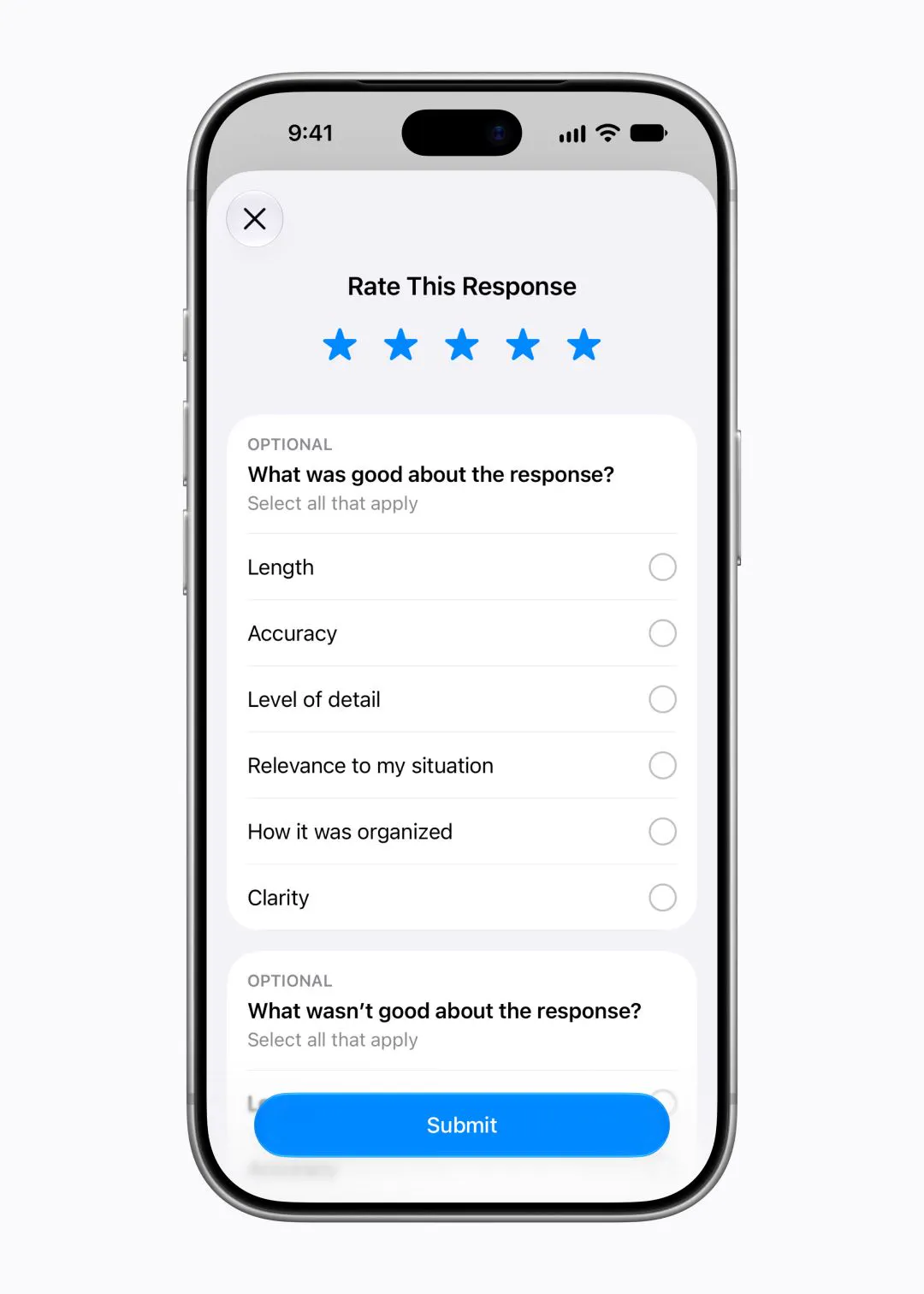 Photo: TechCrunch (source)
Enrollment in the study is strictly capped at 200,000 individuals across the United States. Because the app leverages on-device foundation models to classify question categories and handle local processing, hardware and software barriers are deliberately stringent:
- Participant Age: Must be 21 years or older.
- Geographic Availability: United States only.
- Hardware Requirements: Apple Intelligence-capable iPhones, specifically the iPhone 15 Pro, iPhone 15 Pro Max, or later devices.
- Software Requirements: iOS 26 or later.
- Study Duration: Up to 12 months of active engagement.
- Cost to Participate: Free (voluntary research program).
| Parameter | Apple Health AI Usage Study Specification |
|---|---|
| Enrollment Cap | Up to 200,000 US participants |
| Minimum Age | 21 years old |
| Supported Devices | iPhone 15 Pro, iPhone 15 Pro Max, and newer |
| Operating System | iOS 26 or later |
| Clinical Engine | OpenEvidence |
| Primary Sources | NEJM, JAMA, Nature, Cochrane Reviews, NCCN |
| Data Sharing | Optional HealthKit metrics (Sleep, Heart Rate, Labs) |
| Model Retention | Query/response purged after 24 hours; no AI training |
How the App Works: From Clinical Evidence to Doctor Visits
The Apple Health AI Study app operates as an interactive research conversationalist, but with guardrails uncommon in commercial consumer chat apps.
Plain-Language Evidence Translation
When a participant asks a question—such as interpreting a blood marker or navigating knee rehabilitation—the query routes through OpenEvidence. OpenEvidence indexes high-authority databases, including The New England Journal of Medicine, the Journal of the American Medical Association (JAMA), the Cochrane Database of Systematic Reviews, and the National Comprehensive Cancer Network. While OpenEvidence natively produces technical prose meant for physicians, Apple uses on-device and cloud intelligence models to rewrite the output into clear consumer terminology while appending tap-to-inspect scientific citations.
Optional HealthKit Integration
Participants can voluntarily grant the app read-access to personal Apple HealthKit data. Supported metrics include resting heart rate, sleep tracking stages, daily physical activity, and imported clinical laboratory panels. By introducing these data streams, participants test whether contextual personal data improves the relevance and utility of AI responses compared to generalized advice.
Clinical Visit Preparation
The app features dedicated modules to assist users in preparing for appointments with their personal healthcare providers. It helps synthesize symptoms into organized discussion points for doctors. After appointments occur, the app triggers specific follow-up surveys to evaluate whether the AI preparation actually improved the clinical encounter.
Clinical Guardrails and Emergency Routing
If a user enters symptoms indicative of an acute emergency (such as severe chest pain or stroke symptoms), the app initiates clinical triage guardrails, instructing the user to stop using the application and contact emergency services or their doctor immediately.
Strict Privacy Protections and Data Guardrails
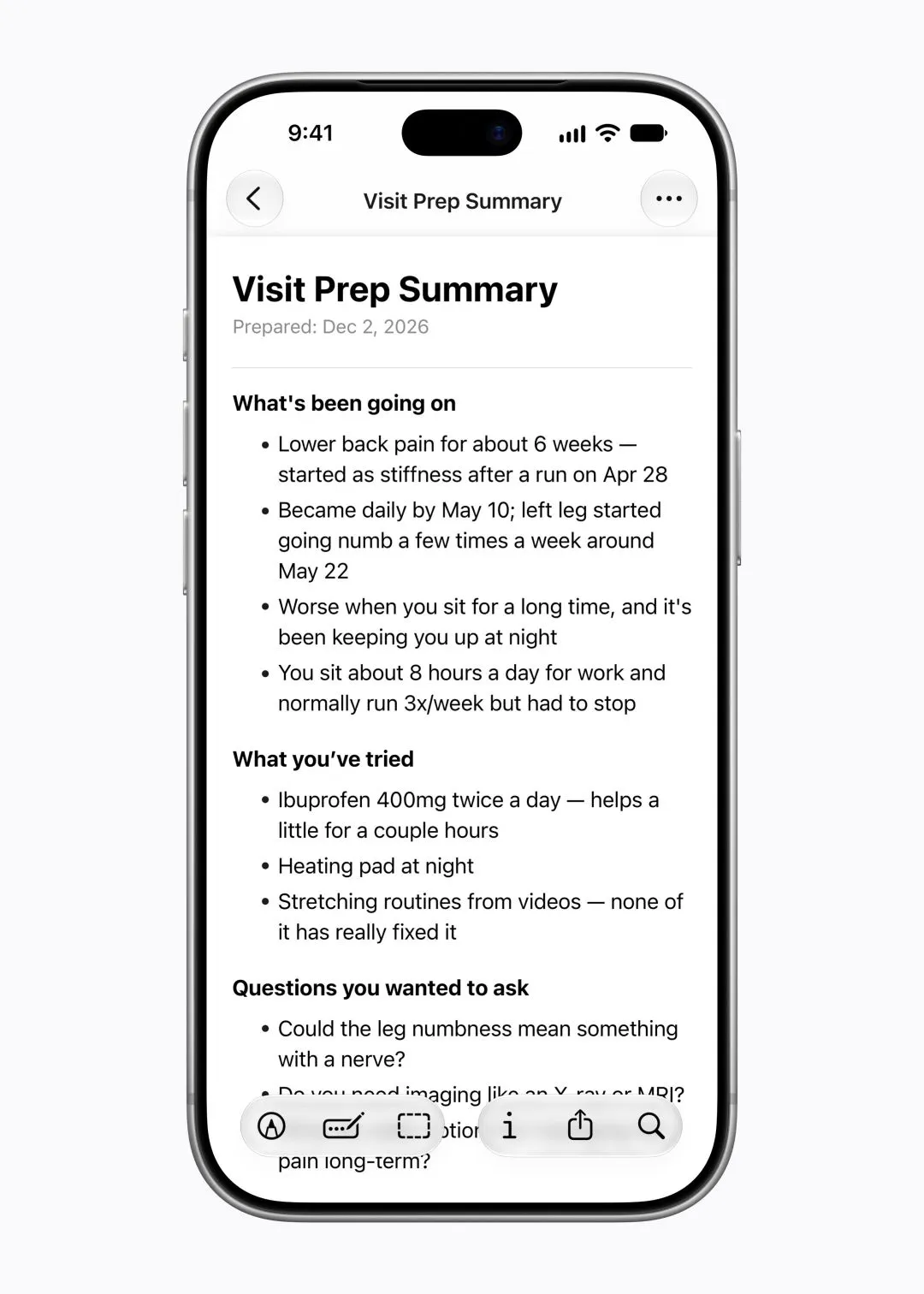 Photo: TechCrunch (source)
Because health queries involve sensitive personal disclosures, Apple and OpenEvidence have implemented stringent isolation policies:
- Zero AI Model Training: Apple confirmed that no user survey answers, typed medical questions, or HealthKit metrics collected during the study will be used to train artificial intelligence models.
- Data Anonymization: Inquiries sent for clinical processing are stripped of direct personal identifiers before transmission to a secure cloud backend.
- Rapid Data Deletion: OpenEvidence deletes user query and response payloads within 24 hours of execution.
- Voluntary Metric Control: Users maintain full granular control over which HealthKit parameters are visible to the study, with the ability to revoke access at any point.
The Background: Apple’s Pivot From Passive Sensors to Conversation
Since releasing ResearchKit in 2015 and its dedicated Apple Research app in 2019, Apple has collaborated with major universities and medical systems on massive passive observation studies. Past efforts include the Apple Heart Study with Stanford University, the Apple Women’s Health Study with Harvard T.H. Chan School of Public Health, and large-scale hearing and mobility programs.
Historically, Apple’s health ambitions focused on passive sensor data: measuring electrocardiograms (ECGs), detecting atrial fibrillation, monitoring blood oxygen levels, estimating wrist temperature trends, and identifying sleep apnea. However, conversational AI has created a new consumer habit: millions of people now use generative models as an informal second opinion. The Apple Health AI Usage Study marks Apple’s first major research foray transitioning from passive biometric tracking to active, conversational diagnostic literacy.
Industry Context: Chatbot Hype vs. Clinical Safety
 Photo: TechCrunch (source)
Apple's deliberate research approach contrasts sharply with the broader Silicon Valley AI arms race. Companies like OpenAI, Anthropic, and Google have incorporated health answering into general consumer models such as ChatGPT and Claude. However, consumer health AI faces a known "comprehension gap".
Medical experts have repeatedly highlighted that high benchmark scores do not equate to safe patient comprehension. A landmark February 2026 Oxford University study published in Nature Medicine revealed that while top conversational chatbots accurately identified clinical conditions in 95% of test vignettes, everyday consumers using those tools arrived at the correct clinical diagnosis less than 35% of the time. Laypeople often struggle with prompt wording, misinterpret statistical risk, or experience false reassurance that delays critical emergency care. By vetting user comprehension systematically, Apple aims to prevent those errors before deploying native features.
Expert and Executive Reactions
Apple executives and independent clinical leaders emphasize that health AI requires rigorous verification before entering mass deployment.
“At Apple, we believe responsible innovation starts with scientific rigor and clinical grounding. Health is deeply personal, and conducting a dedicated research study is the most thoughtful way to understand how people engage with, comprehend, and evaluate health AI in everyday life,” said Dr. Sumbul Desai, M.D., Apple’s vice president of Health and Fitness. She noted that the overarching goal is ensuring AI serves as “a bridge, not a barrier, to better care”.
Dr. Robert M. Wachter, M.D., chair of the Department of Medicine at the University of California, San Francisco (UCSF), highlighted the value of unifying doctor and patient information sources: “When patients and doctors draw on versions of the same trustworthy tools, patients arrive prepared, conversations improve, and next steps happen seamlessly”.
Dr. John Brownstein, an ABC News medical contributor and professor of pediatrics and biomedical informatics at Harvard Medical School, added cautionary context: “Millions of people are turning to AI for health advice, but accurate answers aren’t always useful. Confusing or incomplete information can create false reassurance or delay care”.
What It Means for iPhone Owners
For eligible iPhone users in the US, the launch offers immediate access to an enterprise-grade clinical database typically restricted to hospital staff and licensed clinicians. OpenEvidence's standard professional tool is used by hundreds of thousands of physicians; the study app provides consumers a free, vetted conduit to that same literature.
Users who enroll can use the app to translate baffling doctor notes, investigate side effects, or prepare structured questions for an upcoming physical. However, enrollees must recognize that the application is a research environment, not an approved diagnostic tool or substitute for direct medical diagnosis. Participants will be prompted frequently to grade responses and complete monthly check-in surveys.
What Happens Next
The Apple Health AI Usage Study will run for at least 12 months, gathering millions of structured rating points regarding clarity, relevance, and clinical utility. Findings will likely inform how Apple integrates generative health features into future iterations of iOS, Siri, and the Apple Health app.
Crucial questions remain regarding regulatory approval. AI platforms providing clinical advice face rigorous oversight from the U.S. Food and Drug Administration (FDA). By compiling an auditable, peer-reviewed dataset of 200,000 users, Apple is positioning itself to present robust clinical safety evidence before seeking commercial clearance for native, conversational health tools.
FAQ
Who can sign up for the Apple Health AI Usage Study?
Participation is open to adults aged 21 and older who reside in the United States and own an Apple Intelligence-compatible iPhone (iPhone 15 Pro, iPhone 15 Pro Max, or later) running iOS 26 or higher.
Is the AI health assistant built directly into Siri or Apple Health?
No. The tool exists exclusively inside the dedicated Apple Health AI Study app and is not integrated into Siri or the public Apple Health interface.
What makes OpenEvidence different from ChatGPT or Gemini?
OpenEvidence is a specialized clinical AI engine trained on and indexed to authoritative medical literature, including NEJM, JAMA, and Cochrane Systematic Reviews. Every response contains peer-reviewed citations rather than unverified web sources.
Will Apple use my personal medical questions to train future AI models?
No. Apple and OpenEvidence state that participant data is anonymized, questions and answers are deleted from OpenEvidence servers within 24 hours, and no study data will be used to train AI models.
Does the app charge any subscription or usage fees?
No, participation in the research study is completely free for up to 200,000 qualifying participants who download the app.