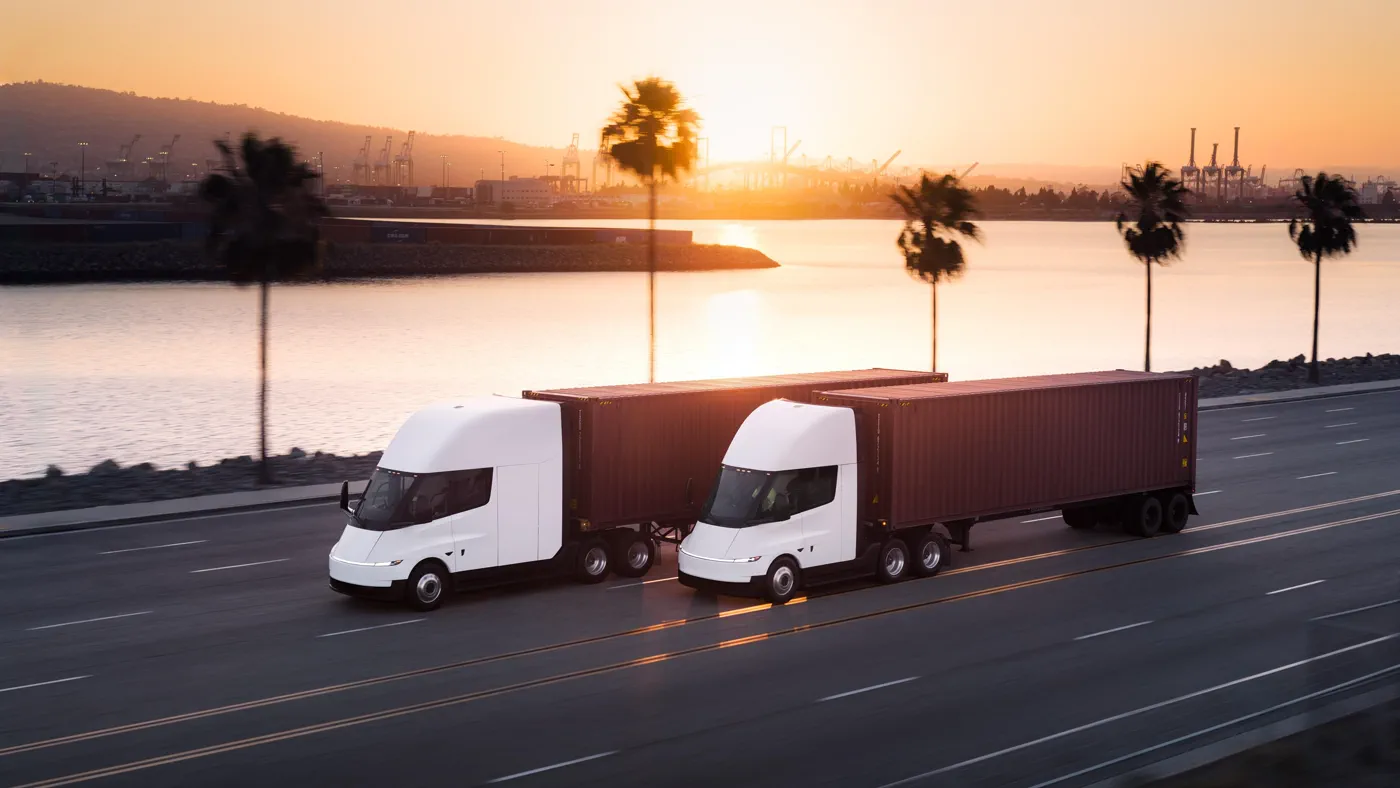
Tesla officially inaugurated its dedicated Class 8 Semi truck factory in Sparks, Nevada, hosting a customer rollout ceremony on Thursday evening, September 24, 2026, to prove to commercial fleets and Wall Street that its electric hauler is finally entering volume manufacturing. Nearly nine years after CEO Elon Musk first unveiled the concept in November 2017, the grand opening marks the transition of the long-delayed truck from experimental pilot fleets into a full-scale industrial program.
Inside the newly constructed facility, Tesla handed over newly assembled rigs to commercial freight partners, gave attendees factory floor tours, and provided ride-alongs in production-spec trucks. With high-volume assembly lines actively rolling since late April 2026, the company used the event to demonstrate that manufacturing bottlenecks have finally eased and that commercial freight electrification is moving beyond boutique pilot projects.
Sparks Factory Opening: What Happened in Nevada
The event took place at Tesla’s new 1.7-million-square-foot standalone Semi plant, located directly adjacent to Gigafactory Nevada. The dedicated structure was engineered from the ground up to support Class 8 commercial assembly rather than automotive unibody construction. At full capacity, Tesla states the facility will be capable of producing 50,000 trucks per year, which translates to approximately 1,000 trucks per week or roughly one finished Semi every seven to eight minutes.
On the factory grounds, Tesla lined up rows of production trucks wearing liveries of several confirmed corporate customers. In a pre-recorded address broadcast to attendees, Elon Musk emphasized the economic rationale behind electric Class 8 transport, stating that operational savings per mile compared to volatile diesel prices make adoption an inevitable mathematical conclusion for logistics operators. Tesla also showcased four generations of development prototypes, providing an evolutionary look at how the chassis and battery packaging matured from raw concept mules into mass-manufactured hardware.
Watch: Giga Nevada Battery and Semi Manufacturing Update

Video: Tesla on YouTube
Specifications, Powertrain, and Upgrades: Inside the 2026 Semi
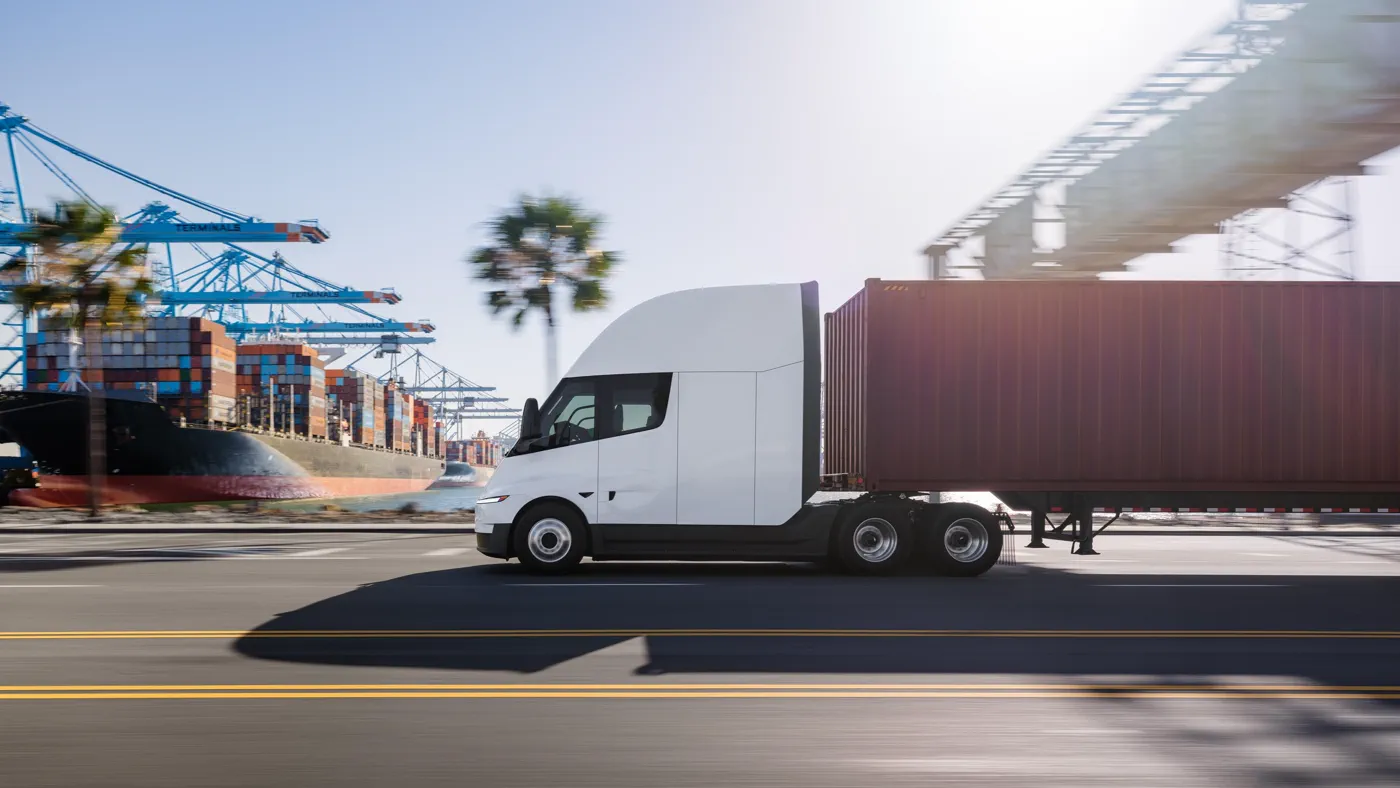 Photo: The Verge (source)
The commercial trucks rolling off the Nevada line incorporate significant hardware revisions compared to the pilot builds delivered to early partners in late 2022. Most notably, Tesla achieved a 1,000-pound weight reduction across the tractor. The weight savings stem largely from the adoption of Tesla’s internal 4680 cylindrical battery cells featuring dry-coated electrodes, packaged directly into a structural skateboard pack married to the chassis from underneath.
Other key mechanical updates on the 2026 production model include:
- Steering & Low Voltage: The truck eliminates legacy hydraulic steering pumps in favor of heavy-duty, Cybertruck-derived electric steer-by-wire assist actuators, integrated alongside a full 48-volt low-voltage auxiliary architecture.
- Powertrain: Propulsion relies on three independent electric drive units mounted across the rear axles, delivering up to 800 kW (roughly 1,072 hp) of peak system power.
- Visibility and Sensors: A suite of 10 external cameras gives drivers a comprehensive surround view on dual landscape touchscreens, eliminating blind spots during docking and maneuvering in tight warehouse bays.
- Megacharging: The electrical architecture accepts sustained DC charging power up to 1.2 megawatts (MW), replenishing roughly 60% of the battery in 30 minutes under optimal conditions.
| Specification | Tesla Semi Standard Range | Tesla Semi Long Range | Typical Class 8 Diesel Tractor |
|---|---|---|---|
| Estimated Range | 325 miles | 500 miles | 900–1,200 miles |
| Battery Capacity | ~548 kWh (2 modules) | ~800+ kWh (3 modules) | N/A (150–250 gal diesel tank) |
| Max Gross Weight (GCW) | 82,000 lbs (US EV allowance) | 82,000 lbs | 80,000 lbs |
| Energy Efficiency | ~1.7 kWh per mile | ~1.7 kWh per mile | 6.5–7.5 MPG diesel |
| Fast-Charging Speed | Up to 1.2 MW (60% in 30 min) | Up to 1.2 MW (60% in 30 min) | 10–15 minutes (liquid fuel) |
| Target Annual Capacity | Combined 50,000 units/year | Combined 50,000 units/year | ~250,000 total NA market |
| Base Price (Estimated) | ~$180,000 (unconfirmed) | ~$250,000 (unconfirmed) | $150,000–$180,000 |
The Long Road from 2017: Prototypes and Pilot Hell
The road to commercial production has been notoriously protracted. When Elon Musk originally drove a prototype Semi onto a stage in Hawthorne, California in November 2017, Tesla claimed deliveries would begin by 2019. Instead, the program stalled for years as Tesla grappled with the passenger car production ramp, global component shortages, and critically, a severe constraint on battery cell manufacturing.
Because a single 500-mile Semi requires roughly the same amount of battery chemistry as eight to ten Model Y crossovers, Tesla repeatedly deferred dedicated Semi manufacturing to protect vehicle volumes in its consumer lineup. A pilot assembly line outside Gigafactory Nevada eventually yielded hand-built units for beverage giant PepsiCo starting in December 2022. Between 2022 and early 2026, those pilot trucks served as an extended operational testing lab: Tesla reports the prototype fleet accumulated more than 13.5 million miles, with the single most active truck surpassing 440,000 miles of real-world freight duty while maintaining a 95% fleet uptime.
Customer Roster: From PepsiCo to Major Fleet Coalitions
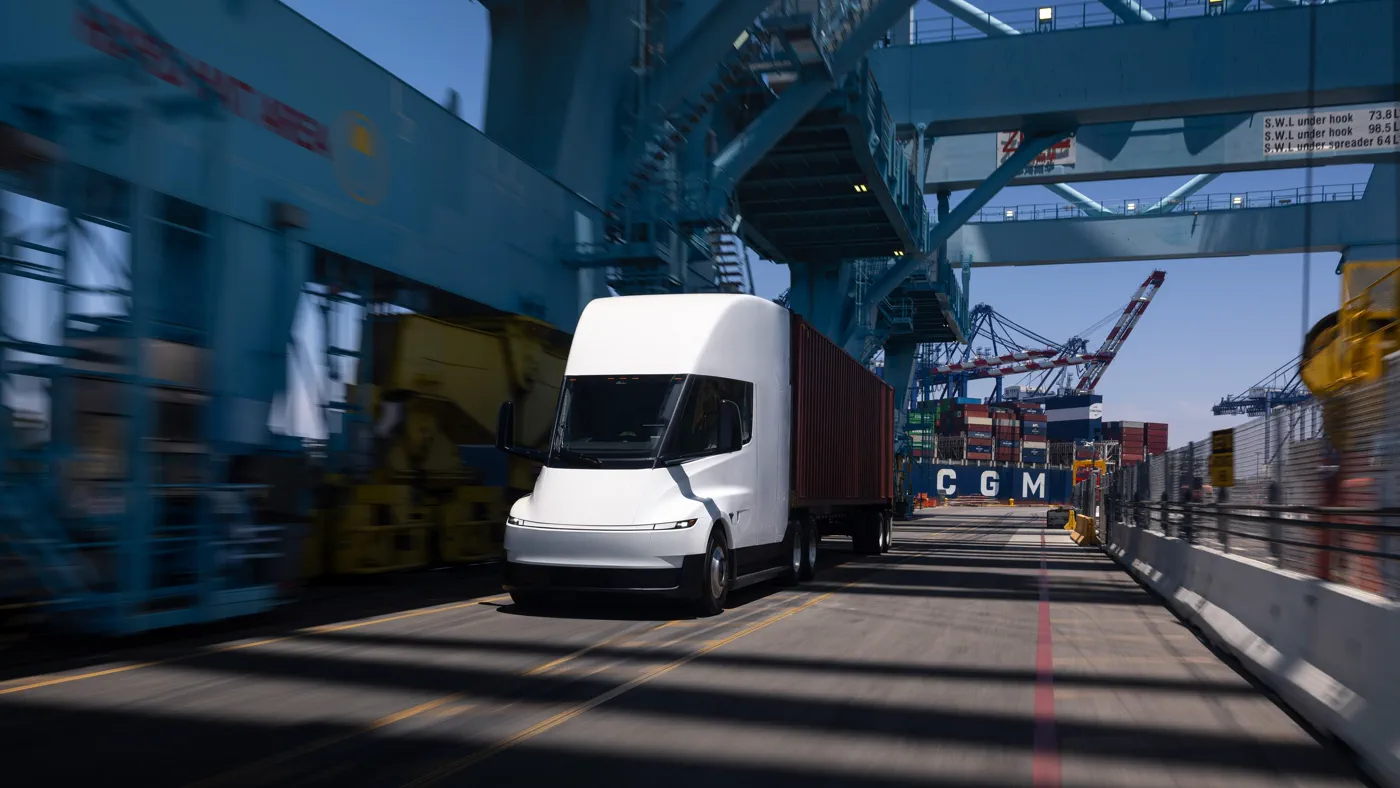 Photo: The Verge (source)
The Thursday event showcased an expanded roster of commercial buyers ready to transition from cautious testing to active fleet integration. Outside the Sparks plant, finished trucks sported the branding of established logistics and transport operators, including PepsiCo, US Foods, DHL, WattEV, ArcBest (ABF Freight), Einride, IMC Logistics, OK Produce, and LTS.
PepsiCo, which has run Semis from California distribution facilities for nearly four years, remains an anchor fleet partner. However, recent order volumes from third parties have scaled rapidly. Freight-technology specialist Einride committed to an order of 500 Tesla Semis. Drayage carrier IMC Logistics booked 50 trucks for port drayage routes in California. Earlier in the week, clean transportation initiative ZET SCALE announced an agreement selecting Tesla as an anchor supplier for an initial 2,500 electric trucks, backed by a coalition of major corporate cargo shippers including Microsoft and PepsiCo.
Tesla Semi vs. Legacy Diesel and Electric Competitors
Tesla’s push into heavy trucking enters a market where established manufacturers such as Daimler Truck (Freightliner eCascadia), Volvo Trucks (VNR Electric), and Paccar (Kenworth and Peterbilt EVs) have established commercial footholds. However, most existing electric Class 8 alternatives offer practical real-world operating ranges between 150 and 230 miles, restricting them almost strictly to localized, short-distance port drayage or hub-to-hub transfers.
By contrast, the Semi’s 325-mile standard range and 500-mile long-range envelopes allow operators to replace diesel tractors on regional and intermediate freight lanes. In fleet trials, third-party logistics firms validated Tesla’s efficiency figures: DHL recorded 1.72 kWh per mile under a 75,000-pound load over a 388-mile trip, while ArcBest's ABF Freight reported 1.55 kWh per mile during summer testing. While a standard diesel tractor can refuel in 15 minutes, electric tractors benefit from US federal gross combination weight rules that grant an extra 2,000 pounds (up to 82,000 lbs total) to zero-emission heavy-duty vehicles, offsetting the weight penalty of onboard energy storage.
Fleet Economics and Charging: Can Megawatts Replace Diesel?
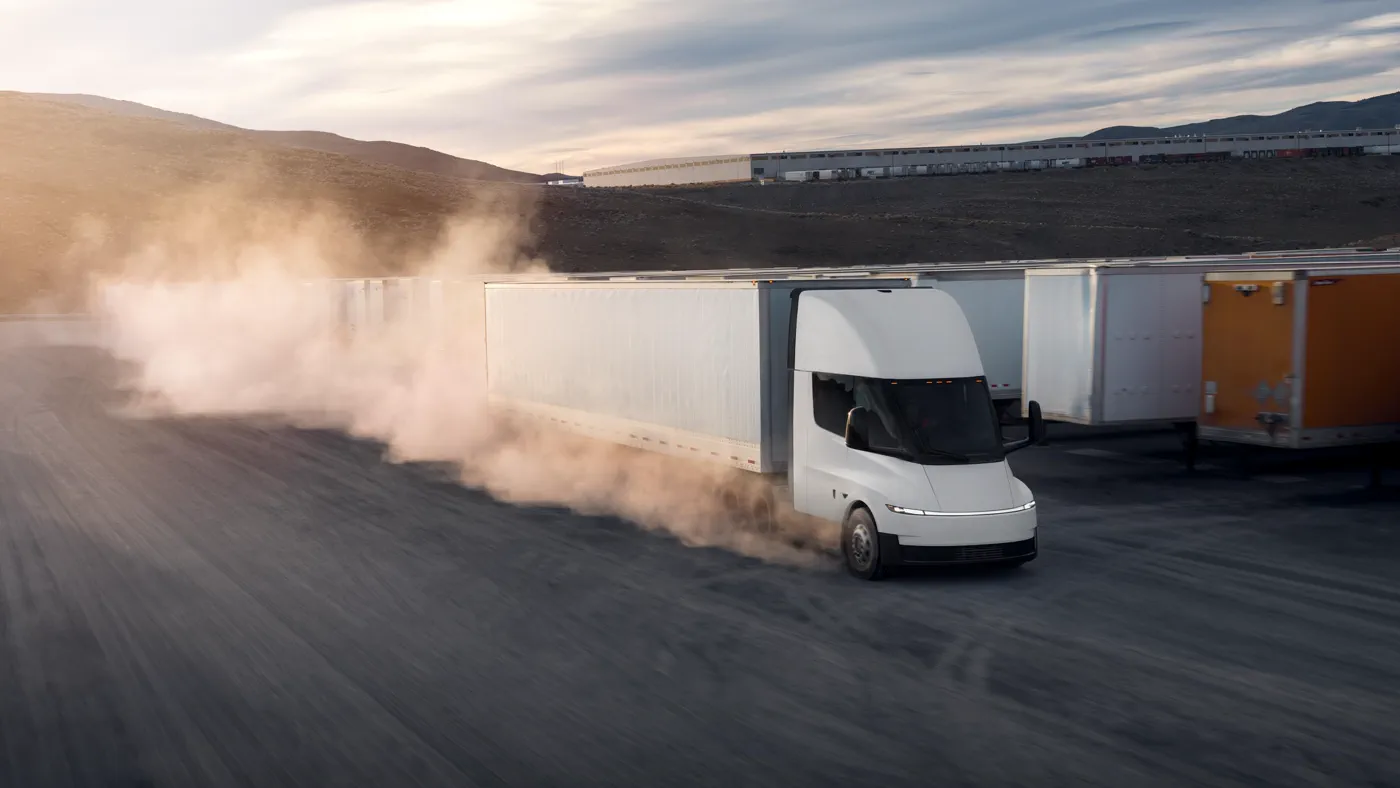 Photo: The Verge (source)
For commercial logistics operators, adopting the Tesla Semi comes down entirely to total cost of ownership (TCO). Commercial diesel prices have faced intense volatility, while electric drivetrains drastically reduce scheduled maintenance by eliminating internal combustion engines, multi-gear transmissions, diesel particulate filters, and selective catalytic reduction systems. Tesla claims fleets can achieve substantial six-figure operational savings per tractor over a multi-year operating lifecycle through reduced fuel and maintenance costs.
The primary barrier remains power infrastructure. Charging an electric semi requires a massive amount of electricity. To meet duty cycles without stranding assets, Tesla is rolling out its proprietary Megacharger network, with initial stations delivering between 750 kW and 1.2 MW of power. While private depots like PepsiCo’s Sacramento and Modesto hubs built out their own on-site multi-megawatt microgrids, broad regional adoption hinges on expanding public Megacharging corridors across major commercial interstate routes like the I-5 and I-10.
What Comes Next: Production Ramp, Autonomy, and European Expansion
Although the ribbon-cutting marks a symbolic milestone, Tesla faces a steep manufacturing ramp. Industry analysts estimate actual production deliveries will reach between 5,000 and 15,000 units in 2026 as the plant moves up its manufacturing curve, with full 50,000-unit annual run rates unlikely before 2027 or 2028.
Two critical milestones sit on the immediate horizon:
- European Launch: Tesla has confirmed development of a dedicated European specification Semi built to meet regional maximum axle weights (up to 40 metric tons) with an estimated range of roughly 550 kilometers (~340 miles), slated for initial customer deliveries in 2027.
- Autonomous Driving: Musk reiterated that Full Self-Driving (FSD) software features are planned for the commercial rig. While Tesla has previously targeted deployment by late 2024 or early 2025, regulatory approval and specialized software validation for multi-axle freight trailers remain in development.
FAQ
When did the Tesla Semi enter volume production? High-volume manufacturing officially commenced in late April 2026 at Tesla's dedicated Sparks, Nevada facility, following years of low-volume pilot production that began in late 2022.
How far can the Tesla Semi drive on a single charge? The 2026 production Semi is offered in two configurations: a Standard Range model offering roughly 325 miles and a Long Range model capable of driving up to 500 miles at a full 82,000-pound gross vehicle weight.
How fast does the Tesla Semi recharge? Connected to Tesla’s dedicated high-output Megachargers supplying up to 1.2 MW, the Semi can recover approximately 60% of its battery capacity in about 30 minutes.
What companies have ordered the Tesla Semi? Confirmed fleet operators include PepsiCo, US Foods, DHL, WattEV, ArcBest (ABF Freight), Einride, and IMC Logistics, along with a 2,500-truck framework agreement placed by clean logistics group ZET SCALE.
How many Semis does Tesla plan to build each year? The dedicated Sparks, Nevada manufacturing facility has an installed annual target capacity of 50,000 trucks, or roughly 1,000 units per week when running at full production.