Major websites across e-commerce, banking, and travel are actively blocking autonomous artificial intelligence agents from accessing their services, bringing the tech industry's grand vision of hands-free digital errands to an abrupt halt. As tools like Meta's Muse, OpenAI's Dots, and xAI's Grok attempt to browse, compare prices, and complete transactions on behalf of users, businesses are fighting back over severe security risks, lost advertising revenue, and bot-induced site congestion.
The Collision Between Autonomous Agents and the Modern Web
For nearly two years, consumer artificial intelligence was largely confined to text chat interfaces that answered questions, generated code, and summarized long documents. In late 2026, the industry pivoted rapidly toward "agentic" AI—systems designed not merely to advise users, but to take actions across websites by navigating menus, managing accounts, booking itineraries, and checking out shopping carts.
However, giving an automated assistant permission to act on your behalf does not mean external websites are prepared to welcome it. When these agents attempt to complete real-world tasks, they frequently run into a wall of digital defenses. Retailers, financial institutions, and content networks have begun shutting their doors to third-party agents, creating an immediate fracture between what AI marketing materials promise and what users actually experience. The friction boils down to two distinct issues: intentional corporate lockouts to protect private ecosystems, and automated security mechanisms that mistake helpful assistants for malicious bot swarms.
The Big E-Commerce Standoff: Amazon, Meta, and Walmart
 Photo: Engadget - Technology News & Expert Reviews (source)
The most visible frontline of the bot conflict is consumer shopping. In early September 2026, Meta rolled out Muse, a standalone personal AI agent built to automate consumer errands, which rapidly surged to the top of Apple's App Store and surpassed 10 million users in the United States and Canada. Meta quickly established official e-commerce integrations with brands including Best Buy, Sephora, Gap, Wayfair, and Walmart, while wiring checkout flows through Shopify's Shop Pay and Stripe's Link.
Amazon took the exact opposite path. On September 20, 2026, Amazon systematically blocked Meta's Muse from accessing Amazon.com after Meta declined a request to omit the retail giant from its automated browsing engine. Amazon stated that Muse failed to clearly identify itself as an automated scraper and raised alarms regarding customer account security. Users attempting to deploy xAI's Grok, Instinct, or OpenAI's Dots on Amazon have met identical barriers.
Yet even where corporate partnerships exist, the web often refuses to cooperate. Walmart shoppers deploying Muse reported repeated checkout failures caused by anti-bot screening prompts. Walmart subsequently acknowledged that these verification hurdles were not meant to disrupt authorized assistants, highlighting how difficult it is to separate friendly agents from predatory scrapers.
Financial and Travel Sites Draw a Hard Line
While an interrupted grocery delivery is frustrating, the stakes escalate significantly when autonomous bots touch money or regulated services. Major financial institutions have taken an uncompromising stance against third-party agentic automation.
During JPMorgan Chase's October 2026 earnings call, Chief Financial Officer Jeremy Barnum explicitly warned that many outside agents rely on shared login credentials and screen-scraping techniques to transfer capital. Barnum labeled these practices "not secure," announcing that Chase actively blocks them. Crucially, the bank warned customers that surrendering their account credentials to third-party AI agents could leave account holders legally and financially liable if the bot executes erroneous or fraudulent transfers. Charles Schwab followed suit, confirming widespread account restrictions for automated bots.
Travel and directory platforms are erecting similar perimeters:
- Delta Air Lines: Has banned unauthorized automated agents from booking tickets and managing flight reservations directly.
- Amtrak and Cars.com: Users report automated agent sessions are quietly terminated before reaching ticket confirmation or inventory queries.
- Yelp: Completely restricts autonomous agents unless companies pay for an enterprise data licensing contract.
Accidental Casualties: Cloudflare and Bot Management
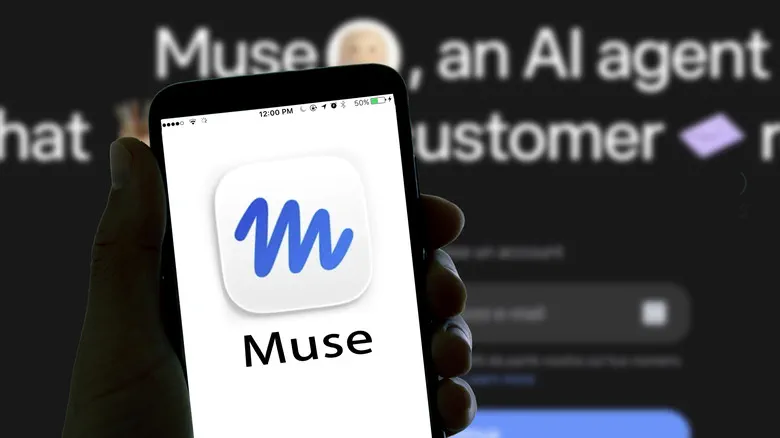 Photo: Engadget - Technology News & Expert Reviews (source)
Not every block is personal; much of it is structural infrastructure. According to cybersecurity platform Imperva, automated bots now make up 53% of all global web traffic. For website owners, unmanaged bots strain server bandwidth, inflate hosting costs, and scrape valuable proprietary data without returning any value.
To counter this onslaught, internet infrastructure giant Cloudflare shifted its default defenses on September 15, 2026. Cloudflare, which provides security and content delivery for more than 36% of online e-commerce storefronts, introduced automated bot classification rules:
- Search Crawlers: Bots that index pages for traditional search and direct human referrals back to the host remain allowed by default.
- AI Training Bots: Automated scrapers collecting training datasets for large language models are blocked by default on ad-supported pages.
- AI Agents: Real-time retrieval systems fetching web data on behalf of an active user are blocked by default across pages supported by digital advertising.
Cloudflare's rationale is straightforward: ad-supported pages depend on human eyeballs. If an AI agent fetches product details, warranty pages, or pricing in the background, the human user never views the advertisement that funds the publisher. Furthermore, standard "prove you are human" challenges (such as CAPTCHA or Turnstile) naturally trip up headless browsers, marooning legitimate consumer requests mid-checkout.
Legal Battles and Economic Motives
The sudden clampdown on AI agents exposes a brewing war over the economic architecture of the internet. The dispute first reached federal court when Amazon sued AI search startup Perplexity in late 2025 over its Comet agentic browser. While a lower court initially barred Perplexity from Amazon, the U.S. Court of Appeals for the Ninth Circuit vacated that preliminary injunction in August 2026. Circuit Judge Milan Smith determined that customer-driven agent browsing does not inherently violate computer fraud laws, noting that the human user was effectively using the agent as a tool.
In response, Amazon amended its complaint in September 2026, pivoting to private contractual restrictions in its Conditions of Use, which mandate that all autonomous agents register, identify themselves, and obey site-level exclusion requests.
Critics argue that Amazon's hardline stance reflects commercial self-defense rather than purely technical security. Amazon generates tens of billions of dollars annually from sponsored product ads—nearly $19.6 billion in advertising revenue in the third quarter of 2026 alone. If outside agents bypass search result pages, sponsored listings lose their audience. Compounding the controversy, Amazon operates its own proprietary agent, "Buy for Me," which navigates rival merchant websites to purchase goods using stored Amazon payment profiles—a double standard that has infuriated competing tech platforms.
Platform Responses to AI Agent Access
 Photo: Engadget - Technology News & Expert Reviews (source)
Different web platforms have adopted radically divergent policies toward consumer AI agents, splitting the web into open, licensed, and closed silos:
| Platform | Agent Policy | Access Mechanism | Stated Motive |
|---|---|---|---|
| Amazon | Blocked | Custom exclusion list, Conditions of Use | Protects site policies, user credentials, and ad ecosystem |
| Walmart | Allowed (Partnered) | Agent Gateway / MCP server | Facilitates structured e-commerce with built-in spending limits |
| Shopify | Allowed (Integrated) | Shop Pay direct checkout API | Maximizes direct merchant conversion and frictionless sales |
| JPMorgan Chase | Blocked | Credential firewalls, anti-scraping blocks | Eliminates account hijacking and unverified fund transfers |
| Yelp | Restricted | Commercial data licensing API | Protects proprietary local reviews and monetizes AI training |
| Delta Air Lines | Blocked | Direct session blocking | Halts automated flight ticketing and protects customer direct bookings |
What This Means for Consumers
For consumers hoping AI agents would eliminate routine errands, the current landscape requires realistic expectations and careful navigation:
- Expect Handoffs at Checkout: If your AI assistant flags an error during payment or identity verification, do not repeatedly retry automated submission. Take over the browser manually to prevent anti-fraud systems from locking your store account.
- Protect Your Financial Credentials: Never share bank account logins, routing numbers, or primary passwords directly inside an AI prompt. Doing so can violate bank service agreements, leaving you without legal recourse if funds are misrouted.
- Rely on Official Store Integrations: Agents operating via certified merchant bridges—such as Shop Pay or authorized retail APIs—are far less prone to sudden blocks than tools attempting raw web scraping.
- Monitor Order Confirmations: AI agents can misinterpret terms of sale, return policies, or out-of-stock notices. Always verify receipt notifications immediately after an automated transaction concludes.
What Happens Next: The Road to Standardized Agent Protocols
To move beyond the current deadlock, tech providers and web standards bodies are drafting frameworks to legitimize autonomous web traffic. Under an initiative submitted to the Internet Engineering Task Force (IETF), major players like Anthropic, Google, Microsoft, and OpenAI are adopting new standardization directives in robots.txt that differentiate between training scrapes, search indexing, and real-time user requests.
Similarly, emerging authentication rails like "Web Bot Auth" and the Model Context Protocol (MCP) seek to replace raw screen-scraping with secure, cryptographic agent identity. Until these standards become the web baseline, however, everyday consumers will find that their smartest AI tools remain at the mercy of the web's oldest defense: proving they are human.
FAQ
Why are websites blocking AI shopping agents? Websites block agents due to cybersecurity risks, server bandwidth strain, and to prevent bots from bypassing online ads. Retailers also want to prevent competitors from scraping real-time inventory and pricing data.
Can an AI agent legally shop on my behalf? Yes, an agent can legally assist you, but websites have the right to enforce their own private Terms of Service. Federal appeals courts have found using an agent does not violate anti-hacking laws, but merchants can still refuse automated traffic.
Why do banks like JPMorgan Chase ban AI agents? Banks block agents because many automated bots rely on credential sharing and screen scraping, which bypass multi-factor security. If an unauthorized transfer occurs via a third-party agent, the customer could be held legally liable.
Why did Walmart's site block Meta's Muse even though they are partners? Walmart's automated anti-bot security systems mistook Muse's automated browsing traffic for unauthorized bot scraping. Traditional verification systems like CAPTCHAs frequently halt approved AI agents unless dedicated API gateways are in place.
What can I do if an AI agent is blocked during a purchase? When an agent encounters a block or CAPTCHA, open the retailer's website directly on your computer or phone to complete checkout manually. Avoid repeated automated attempts, which can trigger anti-fraud account freezes.