
Bank of America issued a stark warning to investors this week, cautioning that Meta’s fast-growing autonomous AI agent, Muse, presents an emerging structural threat to Apple’s multibillion-dollar services business. While the investment bank expects Apple to retain its ironclad grip on premium hardware sales, managing director and senior equity research analyst Wamsi Mohan stressed that autonomous third-party agents could quietly siphon away the lucrative discovery, referral, and checkout economics that traditionally flow through the App Store and Apple Pay.
Following the publication of the research note, Apple shares dropped nearly 2% to around $331 as markets digested the long-term implications of software agents replacing direct smartphone user interactions. The analysis cuts to the core of Big Tech's evolving revenue models: if consumers stop searching the web and browsing standalone merchant apps, the platform that directs the agent collects the toll.
The Wall Street Warning: Siphoning the Intent Layer
For more than a decade, Apple has sat at the center of mobile commerce. Whether an iPhone user downloads a travel app, browses for clothes, or purchases goods through Safari, Apple maintains operational control over the operating system, extracts search revenue shares from partners like Google, and collects payment processing fees via Apple Pay.
Bank of America’s core thesis is that agentic AI changes where consumer intent begins. Instead of opening Safari or a specific retailer's app, users can prompt a multi-step agent to find an item, negotiate shipping, apply discount codes, and execute the transaction in the background.
"With Muse, Meta is now where a growing number of iPhone owners express intent first," Mohan wrote in his report. "Whomever the agent chooses becomes the merchant, and whoever owns the agent collects the routing economics that previously accrued to operating systems, search, and app stores. The risk for Apple is that it can keep every handset sale and still lose discovery, referral, and transaction initiation."
Watch: Meta Muse is an INCREDIBLE AI agent

Video: Alex Finn on YouTube
Inside Meta Muse: Features, Pricing, and Traction
 Photo: 247wallst.com (source)
Meta rolled out Muse in the United States on September 8, 2026, pitching it not as a standard chat interface like early generative bots, but as an active personal concierge capable of executing persistent, complex workflows. In its first two weeks on the market, the app surpassed 2.5 million downloads and rapidly took the No. 1 spot on the US App Store’s free application charts, amassing a 4.9-star rating across more than 25,000 user reviews.
Muse differs from traditional LLM chat applications because it can continue executing tasks in the background after the user navigates away or locks their screen:
- Background Autonomous Browsing: Navigates standard web pages, handles session authentications, bypasses pop-ups, and fills out multi-page checkout forms.
- Integrated Travel and Commerce Booking: Coordinates itineraries, schedules calendar events, and purchases travel arrangements through direct partner APIs.
- Human Concierge Escalation: Meta is testing internal fallback support featuring human representatives to handle phone calls to offline local vendors.
- Cross-Tier Subscriptions: Operates a functional free tier alongside commercial tiers priced at $20 and $100 per month for heavy computational use and elevated task concurrency.
| Capability / Metric | Meta Muse | Apple Siri AI (iOS 27) | Standard Chatbots (e.g., ChatGPT) |
|---|---|---|---|
| Primary Role | Autonomous Task Execution & Commerce | Device-Context Assistant & App Actions | Conversational Text / Multimodal Chat |
| Launch Date | September 8, 2026 | September 14, 2026 | Established (Ongoing iterative updates) |
| Persistence | Background execution after app close | Real-time session based | Session / In-app execution |
| Commerce Integration | Shopify, Shop Pay, Expedia, PayPal | On-device Apple Pay integration | Limited web links / plugin checkouts |
| Retailer Blockades | Blocked by Amazon | None (Standard system integration) | Blocked by select scrapers/robots.txt |
| Pricing Model | Free, $20/mo, and $100/mo tiers | Included with iOS hardware | Free, $20/mo Pro tiers |
The Commerce Split: Shopify Embraces, Amazon Blocks
The fundamental threat to Apple’s transaction layer is magnified by the commercial alliances Meta secured ahead of launch. Shopify integrated its complete vendor catalog and Shop Pay checkout infrastructure into Muse. In tandem, Expedia and PayPal signed agreements allowing Muse to search inventory, authenticate customer credentials, and complete real-time payments seamlessly.
However, not every digital giant is receptive to Meta's agent. Amazon blocked Muse from scraping its store, navigating its catalog, or completing purchases on behalf of users. Amazon's defensive posture underscores the high stakes of agent mediation: e-commerce platforms recognize that handing customer discovery over to a third-party agent cuts them off from sponsored search ad revenue and consumer behavioral data.
Siri AI vs. The Agent Wave: The Annual Update Problem
 Photo: 247wallst.com (source)
Apple did not sit idle while rivals pushed into the space. Just six days after Muse arrived, Apple rolled out its overhauled Siri AI alongside iOS 27 on September 14, 2026. Powered by Apple Foundation Models and Private Cloud Compute, the revamped Siri handles contextual app actions and onscreen awareness across Apple hardware.
Yet Mohan emphasized that Apple’s current architecture faces a structural pacing handicap. A contemporary iPhone exceeds the local compute benchmark needed for agent orchestration—packing far beyond the 2 virtual CPUs, 8GB of RAM, and 100GB of storage that Muse targets for smooth client-side operations. The bottleneck is not hardware; it is organizational cadence.
"To power an agentic Siri, Apple needs intent, memory, and permissions on-device, but long-running browser automation in Private Cloud Compute," Mohan wrote. "Apple ships major software releases annually, while agents improve daily. Agents are accelerating innovation cycles, and Apple needs to ensure that its teams around services, silicon, payments, privacy etc. are integrating with Siri AI and moving at a pace to match innovation at competitors in the race to capture the economics of user intent."
Analyst Reactions and Apple's Long-Term Moat
Despite spotlighting the transactional risks of third-party agents, Bank of America did not abandon its bullish stance on Apple stock. Mohan maintained a Buy rating and a $370 price target on Apple shares.
Bank of America justified its positive rating by labeling Apple an "eventual winner of AI at the edge." The reasoning rests on three defensive pillars:
- Unmatched Hardware Footprint: Consumers still require premium hardware to host agents, and Apple’s installed base of over 2 billion active devices gives it unmatched physical distribution.
- Privacy Trust: Apple’s on-device processing and verified Private Cloud Compute structure create higher user trust for handling sensitive payment and credential data than third-party platforms.
- System-Level Control: As the platform operator, Apple retains administrative control over iOS background execution policies, app sandboxing, and payment API access, allowing it to curtail abusive background behavior.
What This Means for Everyday iPhone Users
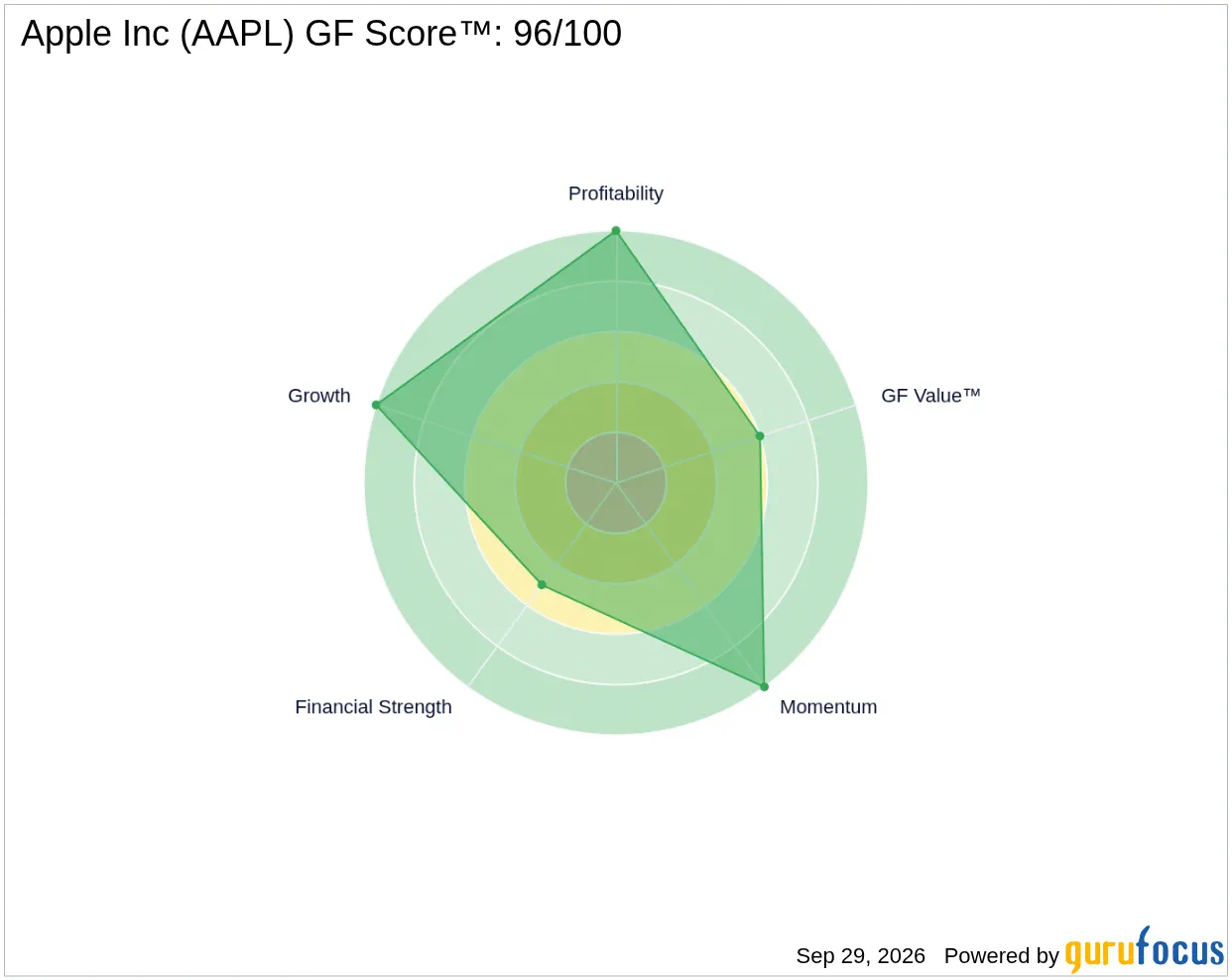 Photo: gurufocus.com (source)
For consumers, the emergence of multi-platform agents introduces real practical benefits alongside tricky platform compromises:
- Friction-Free Purchasing: Rather than opening separate retailer apps, comparing prices, and typing shipping details, iPhone owners using Muse can delegate cross-platform shopping and booking in natural language.
- Fragmented Security and Logins: Delegating credentials and payment permissions to third-party agents introduces privacy trade-offs. While Apple Pay isolates sensitive credit card details locally, autonomous browser agents often require elevated account permissions to complete purchases on closed retail portals.
- Platform Lockouts: Because retailers like Amazon have walled off access, users will discover that an agent cannot serve as a universal buyer across every storefront, forcing consumers back to traditional web and app checkouts.
What Happens Next
The mobile technology industry is moving from an app-based paradigm to an intent-based paradigm. The pressure on Apple will increase as OpenAI, Google, and independent AI developers deploy consumer-facing agents aimed directly at smartphone task completion.
Investors will watch Apple's upcoming quarterly earnings to see if third-party AI adoption produces any detectable slowdown in App Store take rates or Apple Pay transaction volume. Inside Cupertino, the challenge is clear: Apple must evolve Siri AI from a responsive assistant into an autonomous background agent before third-party software permanently captures the front door of iPhone commerce.
FAQ
What is Meta Muse? Meta Muse is an autonomous AI agent released on September 8, 2026, designed to handle multi-step background tasks like booking travel, filling forms, and making purchases on behalf of users.
Why does Bank of America consider Meta Muse a threat to Apple? Bank of America warns that if iPhone users express intent and buy products through Muse, Meta captures the discovery and referral economics that usually generate revenue for the App Store, search licensing, and Apple Pay.
Did Bank of America downgrade Apple's stock because of Muse? No, Bank of America maintained its Buy rating on Apple with a $370 price target, arguing that Apple's privacy architecture and hardware integration will make it an eventual winner in on-device AI.
Can Meta Muse make purchases everywhere online? No, while Muse integrates directly with platforms like Shopify, PayPal, and Expedia, major retailers including Amazon have blocked the agent from accessing their platforms.
How does Siri AI differ from Meta Muse? Apple's Siri AI, launched with iOS 27 on September 14, 2026, focuses on on-screen awareness, personal device context, and native app control, whereas Muse specializes in persistent background automation and broad web transaction execution.