Cal AI, the photo-based nutrition app founded by teenagers in 2024, generated over $30 million in annual revenue in less than two years by relying on a meticulously coordinated army of social media creators. The startup’s rapid ascent culminated in an acquisition by health-tracking giant MyFitnessPal in March 2026 for an undisclosed sum, cementing creator-led distribution as one of the most lucrative go-to-market strategies of the generative artificial intelligence boom.
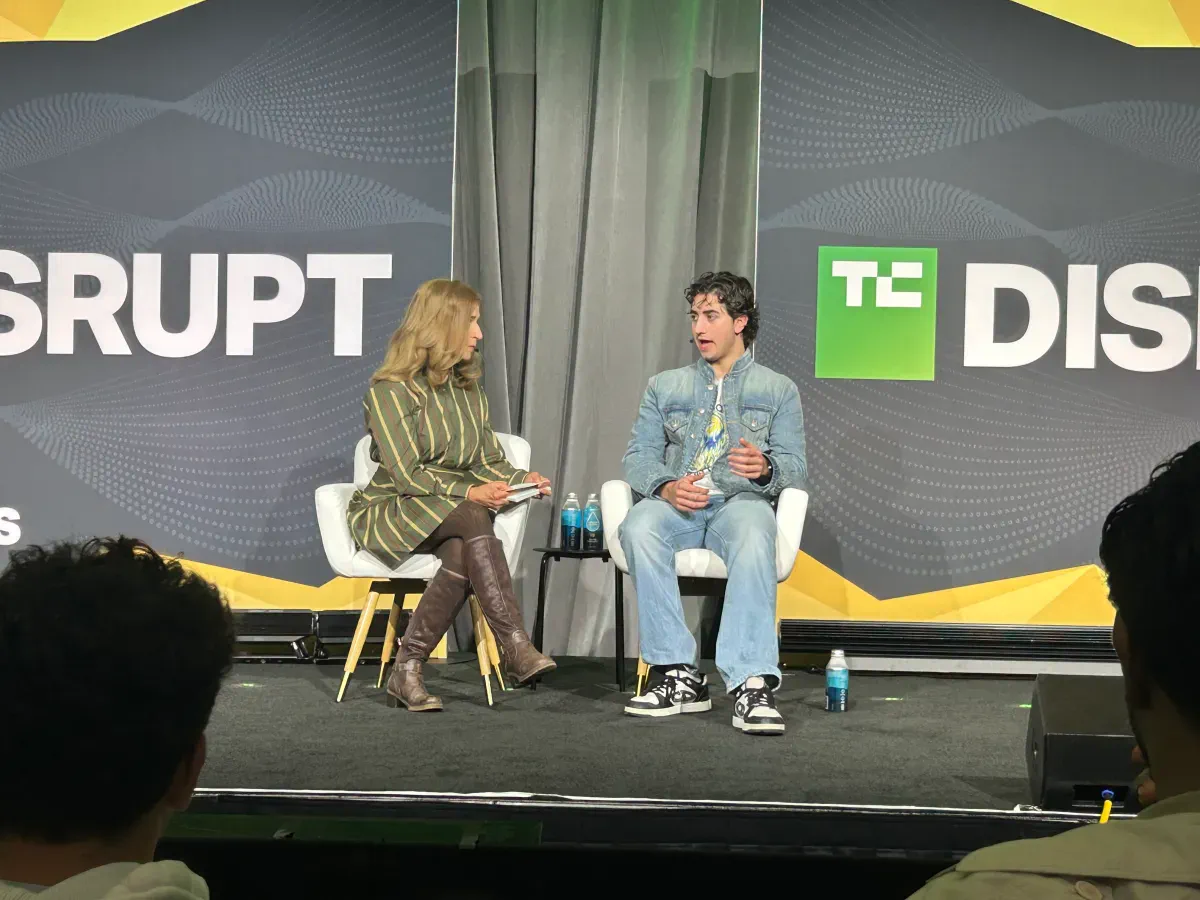
Speaking at TechCrunch Disrupt 2026, 19-year-old co-founder Zach Yadegari detailed how his lean team bypassed traditional marketing playbooks to amass more than 15 million downloads. Rather than depending solely on app store search algorithms or venture capital subsidies, Cal AI combined off-the-shelf vision APIs with high-volume, native creator sponsorships to turn simple plate scans into tens of millions of dollars.
The Anatomy of an Influencer-Led Growth Machine
At the core of Cal AI’s growth was a refusal to treat influencer marketing as a secondary brand-awareness experiment. Instead, the founders built an operational engine designed to seed product demonstrations across TikTok and Instagram at massive volume.
Rather than paying influencers variable commissions or relying on affiliate links—which often fail to incentivize top creators—Cal AI signed roughly 250 influencers to flat, recurring monthly retainers. At its peak in mid-2025, the startup was deploying mid-six-figure budgets every month directly to digital talent.
The outreach was calculated and manual:
- Algorithmic scouting: Yadegari trained dedicated TikTok accounts strictly on fitness, gym, and nutrition feeds to surface creators whose audiences matched the target demographic.
- Direct outreach volume: The team sent hundreds of direct messages per day, discovering that approximately 500 inquiries yielded only two or three workable agreements.
- Fixed retainers over commissions: Creators were paid guaranteed monthly fees in exchange for agreed post frequencies (e.g., four videos a month), removing financial risk for the creators.
- Native, friction-free integration: Instead of canned ad reads, influencers naturally integrated calorie scans into what they were already doing: filming meals, meal-prepping, or eating out.
How Cal AI Turned Meal Snaps into Tens of Millions
 Photo: TechCrunch (source)
Cal AI addressed the single biggest friction point in dietary tracking: tedious manual text search. In legacy apps, logging a lunch of roasted chicken, sweet potato, and olive oil required multiple searches, weight entries, and database confirmations. Cal AI reduced the interaction to pointing a smartphone camera at the dish.
Under the hood, the company did not build or train its own foundation models from scratch. Instead, Cal AI chained together multimodal vision models from OpenAI and Anthropic, leveraging Retrieval-Augmented Generation (RAG) and open-source nutrition databases to evaluate volume, food identity, and macronutrients.
| Operational Metric | Cal AI Milestone / Spec |
|---|---|
| Launch Date | May 2024 |
| Cumulative Downloads | Over 15 million |
| Reported Revenue | $30M–$40M+ trailing revenue ($50M peak ARR) |
| Core Team Size at Exit | 7 employees |
| Monthly Paid Marketing Peak | $1M+ per month (January 2026) |
| Pricing Tiers | ~$29.99/year (billed annually) or ~$9.99/month |
| Acquisition Date | Closed December 2025; Announced March 2026 |
| Acquiring Entity | MyFitnessPal (owned by Francisco Partners) |
The Founders: High School Hustle Meets AI Timing
Cal AI was founded by teenagers Zach Yadegari and Henry Langmack when both were just 17 years old. Yadegari had already experienced entrepreneurial success: at 16, he built Totally Science, an unblocked web-game portal for students on school-administered Chromebooks, which reached 5 million users before he sold it for approximately $100,000.
He reinvested that capital directly into new software ventures. Yadegari and Langmack initially planned to spin up a portfolio of consumer micro-apps, quickly testing concepts to see what would stick. They soon joined forces with viral product strategist Blake Anderson, who had previously engineered virality for apps like PlugAI (formerly RizzGPT) and looksmaxxing tool Umax. When early versions of Cal AI gained explosive traction, the team abandoned the multi-app thesis to commit all resources to the nutrition tracker.
Despite running an enterprise on track for tens of millions in revenue, Yadegari made headlines in mid-2025 when he revealed that 15 of the 18 universities he applied to—including Harvard, Stanford, and Yale—had rejected him. He briefly enrolled at the University of Miami before dedicating himself full-time to tech.
Influencer Playbook: Flat Retainers, MrBeast, and Direct-Response Ads
 Photo: mealthinker.com (source)
While organic creator UGC initiated the flywheel, the team quickly realized that organic virality eventually hits a saturation ceiling. To scale beyond $2 million in monthly revenue, Cal AI introduced performance marketing, spending upwards of $1 million per month across Meta, TikTok, and Instagram by January 2026.
After hiring an external agency whose polished, corporate-looking ads flopped, the founders brought performance advertising in-house. The rule was straightforward: demonstrate the core utility of the app in three seconds or less.
The team also took calculated swings on high-profile creator endorsements. Cal AI paid $500,000 for a sponsorship integration in a MrBeast video. Although Yadegari noted that direct attribution only recouped roughly $350,000 to $400,000 immediately, the immense mainstream credibility paid off by boosting conversion rates across all other digital ad channels.
The Nutrition App Race: How Cal AI Compares
When Cal AI entered the market, established giants like MyFitnessPal had dominated calorie tracking for nearly two decades. However, the legacy giants struggled to pivot their interfaces away from database searches toward effortless visual logging.
| App | Primary Logging Method | Database Size | Ideal User | Pricing |
|---|---|---|---|---|
| Cal AI | AI camera photo & barcode scan | Backed by MyFitnessPal post-sale | Casual trackers, speed-focused users | ~$29.99/year (3-day trial) |
| MyFitnessPal | Manual text search, barcode, Meal Scan | 20M+ food items | Broad fitness audience, diet management | $19.99/mo or $79.99/yr Premium |
| MacroFactor | Manual entry & expenditure algorithm | Verified nutrition catalog | Serious lifters, bodybuilders | $11.99/mo or $71.99/yr |
| Cronometer | Text search, lab-grade micronutrient data | Laboratory-analyzed foods | Users tracking 80+ vitamins and minerals | Free tier; $9.99/mo Gold |
| SnapCalorie | Depth-sensing camera photo scan | Proprietary visual algorithm | Visual-first trackers wanting portion depth | Free tier; subscription option |
Scrutiny, App Store Clashes, and the March Acquisition
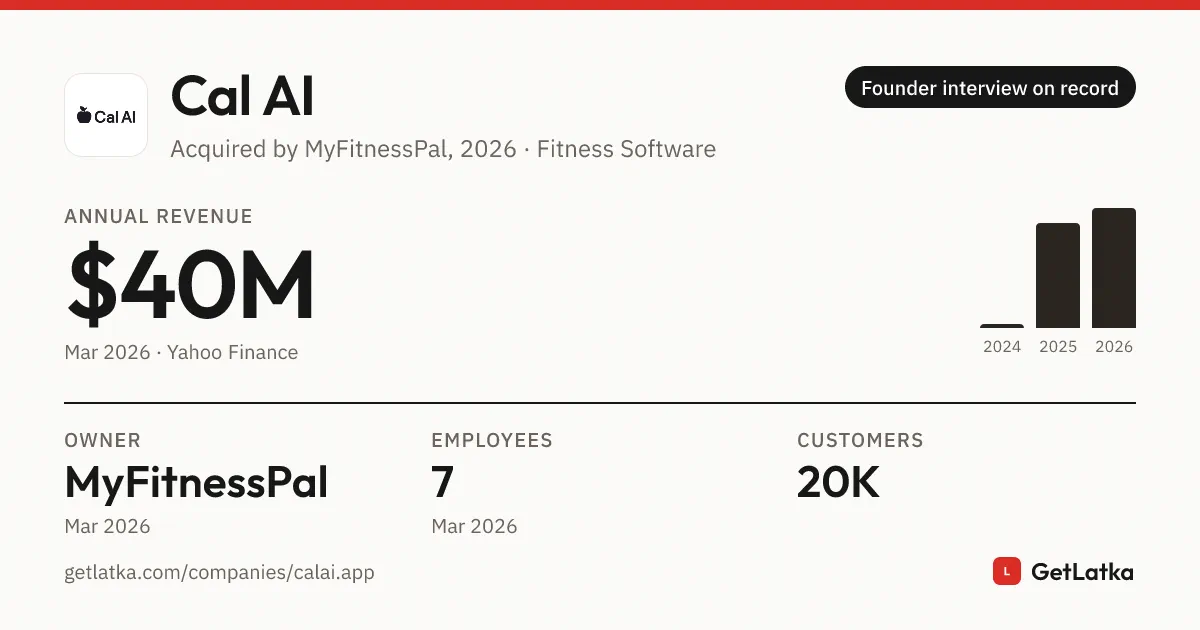 Photo: getlatka.com (source)
Cal AI’s swift expansion did not come without turbulence. In April 2026, Apple temporarily removed Cal AI from the iOS App Store. The removal stemmed from violations concerning subscription paywall transparency and alternative in-app billing integrations. Critics and user reviews had long pointed out aggressive paywall prompts, short three-day trials that automatically rolled into annual charges, and confusing cancellation paths. Cal AI rapidly adjusted its subscription presentation to comply with Apple’s guidelines, returning to the App Store shortly after.
By that point, the exit was already secured. MyFitnessPal—backed by private equity firm Francisco Partners—quietly closed a deal to buy Cal AI in December 2025, formally announcing the acquisition on March 2, 2026. MyFitnessPal CEO Mike Fisher confirmed that Cal AI would continue to operate as an independent, standalone app, citing its younger demographic appeal and distinct camera-native design.
What This Means for Users and App Builders
For consumers, Cal AI offers rapid meal tracking, but it comes with known computer-vision caveats. While the app excels at identifying clean plates like grilled chicken breast, broccoli, and rice, camera scans cannot reliably detect hidden cooking oils, butter, sodium, or sugar mixed into sauces. Users should treat AI calorie numbers as reasonable ballpark estimates rather than clinical measurements.
For software entrepreneurs and mobile marketers, Cal AI offers clear strategic takeaways:
- Distribution beats proprietary algorithms: Cal AI did not build a proprietary model; it packaged third-party LLMs into a seamless user experience and dominated distribution.
- Creator alignment matters: Giving creators creative freedom while securing flat monthly contracts yields higher-converting, native-feeling content than stiff corporate scripts.
- Audit your subscription funnels: Fast-growing apps must prioritize clear pricing terms, as platform gatekeepers like Apple are increasingly cracking down on ambiguous trial disclosures.
What’s Next: Persona, Wearables, and the Next Wave
Yadegari remained with MyFitnessPal through the initial integration before departing in June 2026. He immediately transitioned to his next venture, Persona, an AI assistant company. In October 2026, Persona announced a $10 million seed funding round led by Vine Ventures, with participation from Z Fellows founder Cory Levy and Collective Global.
Persona is pairing conversational software via iMessage with an upcoming $179 screenless wearable band scheduled to ship in December 2026. Unlike always-on audio gadgets, Persona uses physical button taps and wrist gestures for proactive assistance. As for Cal AI, the service remains live under MyFitnessPal ownership, leveraging the parent platform’s massive 20-million-item verified food repository to enhance scanning accuracy.
FAQ
How much did MyFitnessPal pay to buy Cal AI?
The specific financial terms of the transaction were never publicly disclosed by either company. However, based on the app's reported $30 million to $50 million annualized revenue run rate at the time of the sale, industry reports characterized the acquisition price as being in the high eight figures.
How accurate is Cal AI's photo food scanner?
Cal AI's photo logging accuracy is generally estimated around 80% for simple, distinct foods. It struggles with complex dishes, mixed stews, and unseen ingredients like added cooking butter, oils, and sauces, making it better for general calorie awareness than strict clinical tracking.
Is Cal AI completely free to use?
While the app is free to download, full access to AI photo food scanning requires an active paid subscription. The app typically offers a 3-day free trial that automatically converts into an annual plan (around $29.99/year) or a monthly plan unless canceled in device settings.
Why was Cal AI temporarily removed from the App Store in 2026?
Apple briefly removed Cal AI in April 2026 due to violations regarding payment flow rules and deceptive paywall design. The developers updated their subscription screens and billing options to meet Apple's App Store Review Guidelines, and the app was promptly restored.
Who originally created Cal AI?
Cal AI was co-founded in 2024 by teenage developers Zach Yadegari and Henry Langmack, who were later joined by viral growth strategist Blake Anderson. Yadegari had previously built and sold the browser gaming portal Totally Science at age 16.