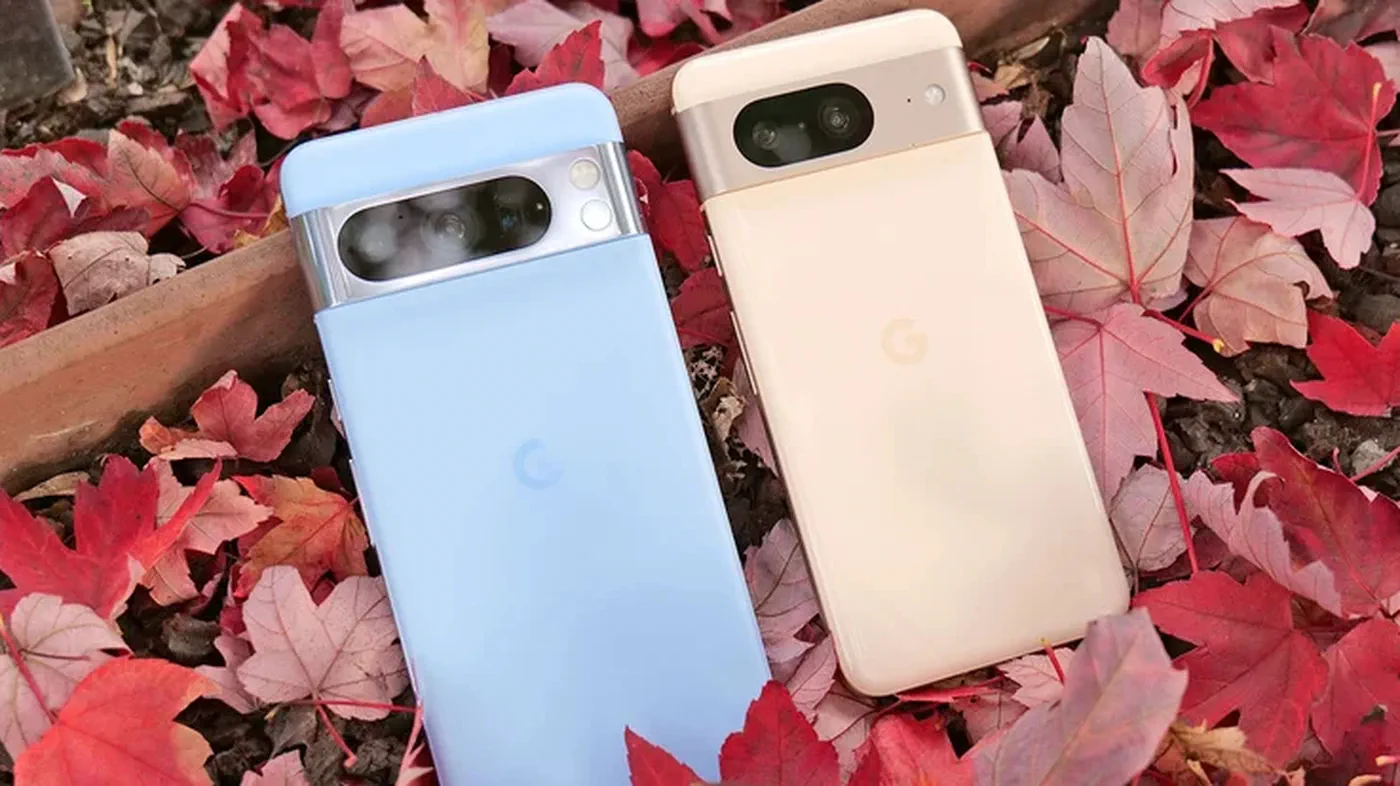
Smartphones rarely maintain their relevance years after debut, but the Google Pixel 8 has emerged as one of the most practical budget alternatives on the secondhand market. Released in late 2023 at a flagship starting price of $699, the device now regularly appears across certified refurbished storefronts and carrier clearance racks for less than half that cost. Thanks to Google's groundbreaking commitment to seven years of software support, buying a Pixel 8 today does not carry the obsolescence penalty that used to plague older Android hardware.
Yet purchasing older consumer electronics requires weighing cost savings against genuine hardware wear. While modern processors and display panels age gracefully, batteries degrade and chip architectures fall behind newer standards. Here is an exhaustive breakdown of how the Pixel 8 holds up across performance, camera reliability, battery endurance, and long-term value.
The Secondhand Flagship Sweet Spot
When Google unveiled the Pixel 8 in October 2023, it positioned the handset as an AI-first flagship designed to challenge the Apple iPhone 15 and Samsung Galaxy S23. By introducing a more compact 6.2-inch footprint, curved aluminum edges, and an ultra-bright Actua display, Google struck an appealing balance between pocketability and screen real estate.
Today, the device occupies a dramatically different tier. Refurbished and open-box models routinely sell for between $200 and $280 on verified marketplaces such as Back Market, Plug, and Amazon Renewed, while official Google Certified Refurbished inventory surfaces around $489 with fresh manufacturer warranties. For shoppers searching for a reliable daily driver below the $300 threshold, the Pixel 8 offers flagship-grade materials, IP68 water resistance, wireless charging, and class-leading cameras that budget-oriented phones fundamentally lack.
Watch: Google Pixel 8 in 2026 - A Real Day in Life

Video: Upwards. on YouTube
Specifications and Price Comparison: Pixel 8 Then and Now
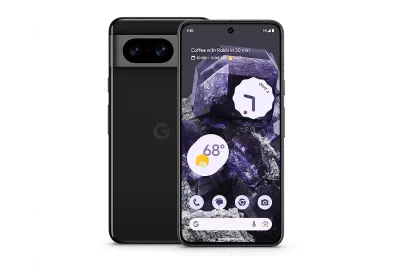 Photo: uptradeit.com (source)
To understand where the Pixel 8 sits against modern budget and mid-tier alternatives, consider how its hardware specifications and market pricing have transitioned over time:
| Specification / Feature | Google Pixel 8 (Launch) | Google Pixel 8 (Current Used/Refurb) | Modern $300 Mid-Ranger (Typical) |
|---|---|---|---|
| Launch Date | October 2023 | Late Life-Cycle Secondary Market | Current Generation |
| Original MSRP | $699 (128GB) / $759 (256GB) | $200 – $280 (Third-party) / $489 (Google Store) | ~$300 – $350 |
| Display | 6.2-inch Actua OLED, 120Hz, 2,000 nits | 6.2-inch Actua OLED, 120Hz, 2,000 nits | 6.5–6.7-inch OLED/LCD, 90–120Hz, ~1,000 nits |
| Processor | Google Tensor G3 (4nm) | Google Tensor G3 (4nm) | Qualcomm Snapdragon 6 Gen / MediaTek Dimensity |
| Memory & Storage | 8GB LPDDR5X RAM / 128GB, 256GB | 8GB LPDDR5X RAM / 128GB, 256GB | 6GB–8GB RAM / 128GB storage |
| Main Camera | 50 MP wide (f/1.68, OIS) + 12 MP ultrawide | 50 MP wide (f/1.68, OIS) + 12 MP ultrawide | 50 MP budget sensor + 2 MP macro/depth |
| Build / Protection | Gorilla Glass Victus front/back, IP68 | Gorilla Glass Victus, IP68 | Plastic frame/back, IP54 or IP67 |
| Wired / Wireless Charging | 27W wired / 18W Qi wireless | 27W wired / 18W Qi wireless | 25W–33W wired / Wireless rarely included |
| Software Support | 7 years (until October 2030) | 4 years remaining (until October 2030) | 2 to 4 years of updates |
The 7-Year Update Promise: Why Longevity Defines the Pixel 8
Historically, purchasing a two- or three-year-old Android phone was a gamble. Most manufacturers dropped software upgrades after two major releases, leaving secondhand owners stranded on outdated Android builds with mounting security vulnerabilities. The Pixel 8 was the turning point that reshaped the industry.
Google pledged seven full years of operating system updates, quarterly Feature Drops, and monthly security patches for the Pixel 8 generation, committing support through October 2030. That timeline means anyone purchasing a Pixel 8 today still receives roughly four years of active, direct support from Google. The handset runs current Android versions seamlessly, enjoying modern privacy controls, background security updates, and system-level interface upgrades that budget phones released this season may never see.
Camera Performance: Flagship Optics at a Budget Price
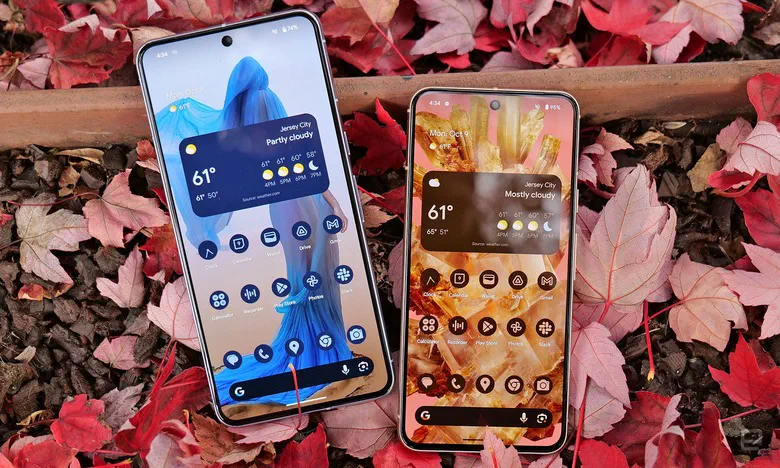 Photo: engadget.com (source)
The most compelling argument for the Pixel 8 remains its photographic capability. Budget smartphones routinely cut corners by relying on small image sensors paired with low-grade secondary lenses. The Pixel 8, by contrast, uses a premium 50-megapixel main camera sensor with optical image stabilization and an f/1.68 aperture.
Key imaging strengths include:
- Real Tone & Dynamic Range: Google’s image processing delivers accurate skin tones, shadow retention, and controlled highlight clipping that easily outshine modern entry-level competition.
- Night Sight & Astrophotography: Low-light performance remains a benchmark, capturing usable, detailed shots in conditions where budget cameras dissolve into noise.
- Macro Focus: The 12-megapixel ultrawide lens features autofocus, allowing it to double as an effective macro camera for sharp close-up photography.
- AI Editing Suite: Magic Editor, Best Take, and Audio Magic Eraser process smoothly, giving owners advanced manipulation tools directly inside Google Photos.
While the Pixel 8 lacks a dedicated optical telephoto periscope lens—a feature reserved for the Pixel Pro series—its 2x sensor-crop mode produces remarkably crisp portraits that satisfy casual photo and video needs.
Tensor G3 in Everyday Life: Power, AI Smarts, and Thermal Limits
Google built the Tensor G3 processor around customized machine learning accelerators rather than synthetic benchmark supremacy. For general day-to-day operations—scrolling social feeds, operating split-screen productivity tools, and processing on-device voice transcription—the Pixel 8 feels fluid. Features like Call Screen, Gboard voice typing, and live language translation execute with speed and precision.
However, prospective buyers must understand the chip's known trade-offs:
- Sustained 3D Gaming: The Tensor G3 throttles under extended sessions of demanding games like Genshin Impact or heavy ray-traced titles, causing frame rates to dip.
- Thermal Buildup: Under heavy outdoor cellular workloads or during prolonged 4K video recording, the device can feel distinctly warm.
- Modem Efficiency: While noticeably superior to the troubled modems in the Pixel 6 and Pixel 7, the Pixel 8’s modem draws more battery power in areas with fringe 5G signals than contemporary Qualcomm modems.
For general productivity and media consumption, the Tensor G3 remains responsive, but it is not intended for hardcore mobile gaming enthusiasts.
Pixel 8 vs. Pixel 9 and Budget Contenders
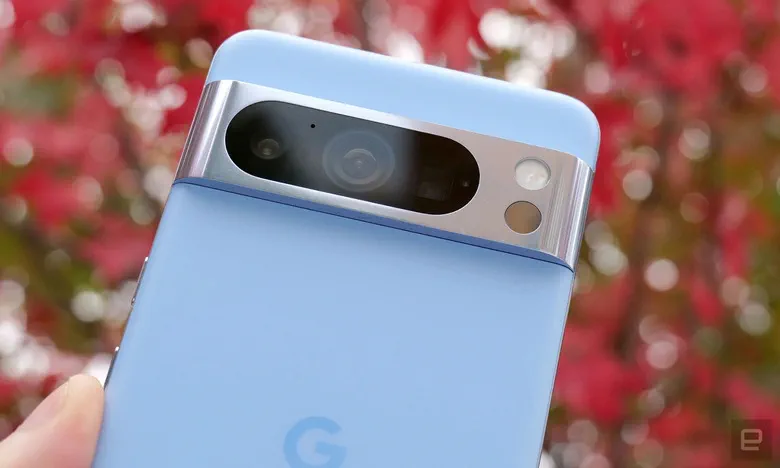 Photo: engadget.com (source)
Consumers considering the Pixel 8 will naturally cross-shop it against newer models like the Pixel 9 or midrange devices like the Samsung Galaxy A-series. The Pixel 9 brings a boxier, flat-rail industrial design, improved ultrasonic fingerprint reading, and 12GB of base RAM that enhances local AI processing. However, brand-new Pixel 9 models command significantly higher prices.
When placed against brand-new sub-$300 budget phones, the refurbished Pixel 8 dominates in hardware refinement. Most budget phones feature plastic chassis, mono speakers, inferior vibration motors, and lackluster cameras. The Pixel 8 provides a glass-and-aluminum build, stereo speakers, vivid haptics, fast 120Hz refresh rates, and flagship computational photography, making it feel like a substantially more expensive piece of hardware.
Battery Degradation and Hardware Wear: What Used Buyers Must Check
The primary danger when purchasing any pre-owned smartphone is lithium-ion battery wear. The Pixel 8 shipped with a 4,575 mAh cell that originally supported roughly 6 to 8 hours of active screen-on time. Over two to three years of daily charge cycles, typical battery capacity drops toward 80% to 85%.
If you are purchasing a used Pixel 8, follow these evaluation steps:
- Inspect Battery Health: Check the battery health readouts in system settings or use reputable third-party diagnostic apps to confirm that the battery retains sufficient maximum capacity. Budget around $50 to $80 for a battery replacement if capacity has degraded substantially.
- Screen Scratches and Burn-In: Because the Actua OLED panel pushes up to 2,000 nits peak brightness, verify that navigation bars or static interface elements have not created permanent image retention.
- USB-C Port and Buttons: Ensure the physical USB-C port charges securely without wiggling, and verify the tactility of the volume and power toggles.
The Verdict: Who Should (and Shouldn't) Buy the Pixel 8
The Google Pixel 8 remains one of the smartest value purchases on the refurbished market. If you want a compact, beautifully designed Android device with extraordinary camera performance, clean software, and guaranteed updates through 2030 for under $300, the Pixel 8 has few legitimate rivals.
It is not the right choice, however, for competitive mobile gamers, users who demand multi-day battery endurance without top-offs, or creators needing long optical zoom ranges. But for everyday users looking to escape the cycle of cheap, disposable budget phones, the Pixel 8 proves that an older flagship is almost always a wiser investment.
FAQ
How much longer will the Google Pixel 8 receive software updates? Google committed to seven years of support from the device's release date, guaranteeing OS upgrades and security patches through October 2030. That leaves four full years of official software updates.
Does the Google Pixel 8 have wireless charging? Yes, the Pixel 8 supports Qi wireless charging up to 18W with compatible Pixel Stand hardware, as well as reverse wireless Battery Share for accessories.
How does the Pixel 8 camera compare to new budget phones? The Pixel 8’s 50MP primary sensor and Google computational image processing outperform almost all current budget phones under $400, especially in low-light and high-contrast environments.
Does the Pixel 8 overheat? The Tensor G3 chip runs cooler than earlier Tensor models, but it can still warm up and throttle during intensive 3D gaming, prolonged outdoor summer use, or continuous 4K video recording.
Is the Pixel 8 waterproof? The Pixel 8 carries an IP68 water and dust resistance rating, meaning it can survive immersion in up to 1.5 meters of fresh water for up to 30 minutes, though water resistance on used phones can degrade over time.