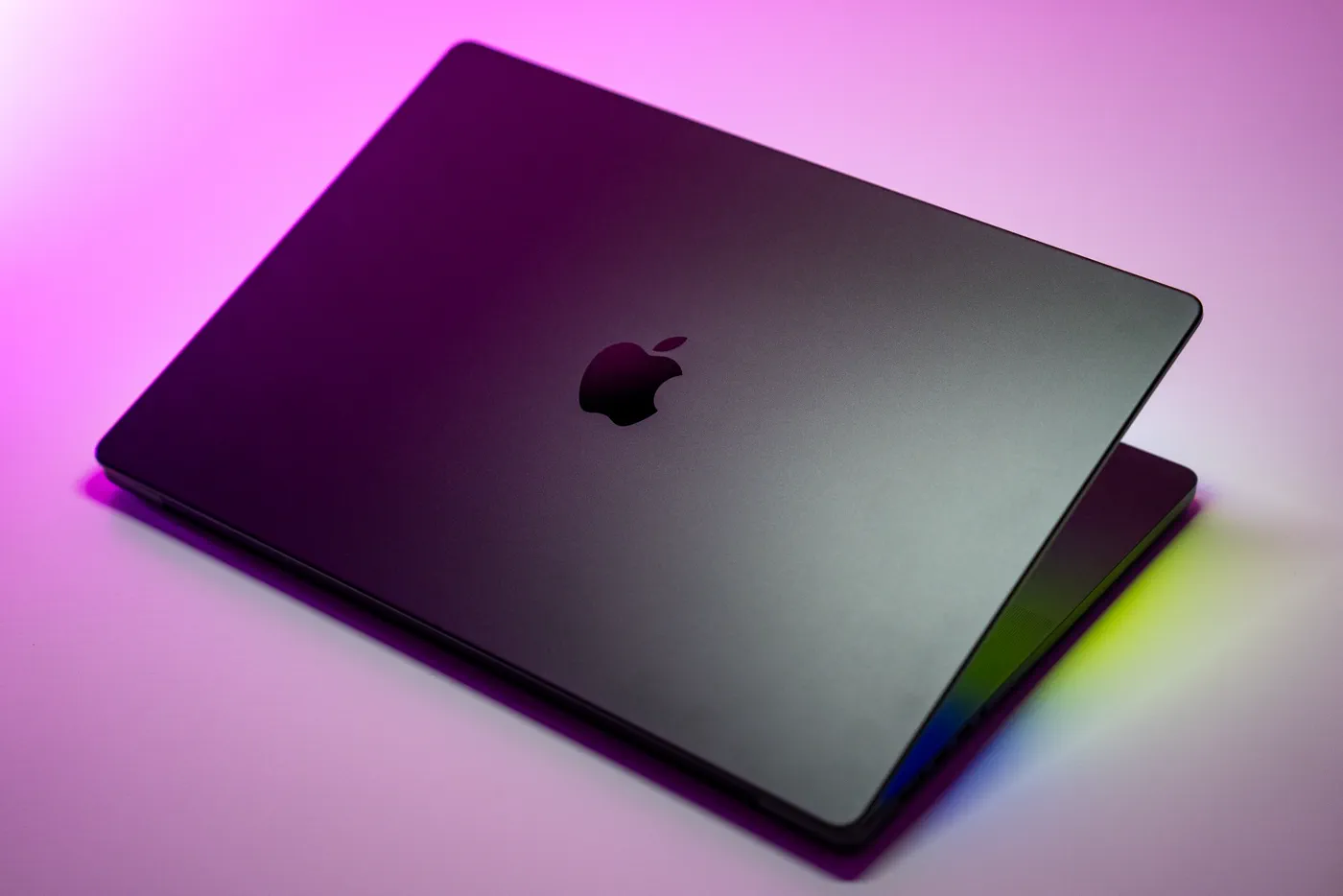
Apple made history on Wednesday, October 28, 2026, at its "Pro and Tell" media showcase in Los Angeles, officially unveiling its first-ever touchscreen MacBook Pro models to cap off an aggressive fall hardware sprint. By outfitting 14-inch and 16-inch laptops with touch-sensitive OLED displays, a Dynamic Island, and a reinforced hinge, Apple has formally reversed nearly two decades of resistance against touch-based clamshell computers to keep pace with evolving consumer expectations.
The announcement arrived at the end of a packed three-day product rollout. Apple kicked off the week by announcing a redesigned iPad mini 8 with an OLED panel and A20 Pro chip on Monday, followed by quiet, iterative updates to the 24-inch iMac and entry-level 14-inch MacBook Pro powered by the standard M6 chip on Tuesday. The headlining gathering in Los Angeles, however, was reserved for the biggest philosophical shift in the Mac's modern era.
Inside Apple's 'Pro and Tell' Showcase in Los Angeles
Unlike traditional pre-taped keynote livestreams broadcast from Apple Park, Apple opted for an intimate, hands-on press experience held at 10:00 a.m. Pacific Time in Los Angeles. The event, teased by marketing chief Greg Joswiak under the moniker "Pro and tell," gathered journalists and digital creators for hands-on demos following an initial batch of online newsroom announcements.
The gathering carried added corporate significance as one of the first major hardware rollouts under Apple's new Chief Executive Officer, John Ternus, who officially took over executive leadership on September 1, 2026. Ternus previously led Apple's hardware engineering division and oversaw the development of the touchscreen Mac project. According to internal reports, Ternus championed the move, arguing internally that "touch screens had become table stakes for laptops, making it time for the company to embrace the technology".
Touchscreen Hardware: OLED Displays, Dynamic Island, and Stiffened Hinges
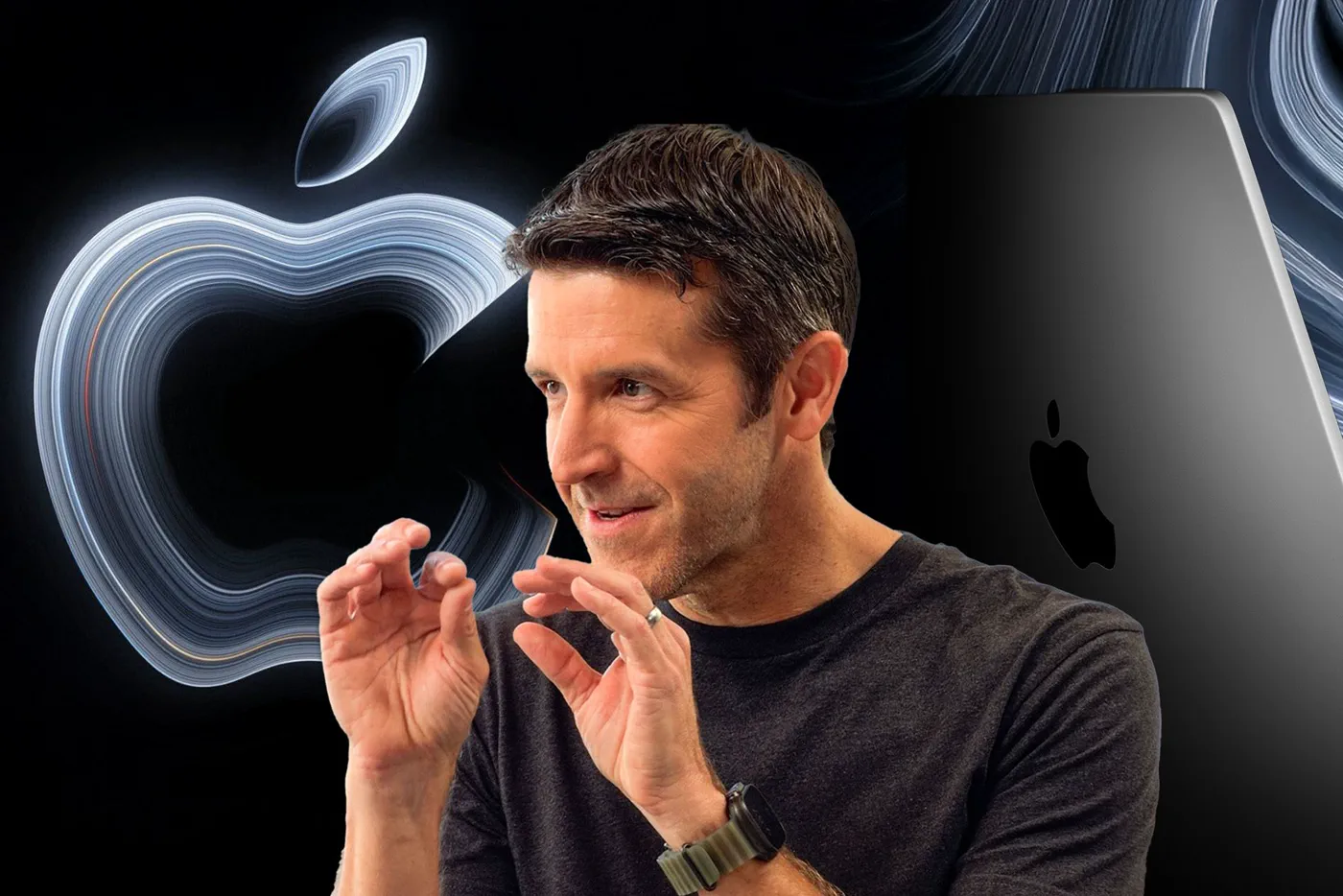 Photo: tomsguide.com (source)
The new touchscreen MacBook Pro is built from the ground up to prevent the physical ergonomic flaws that Apple once publicly criticized. Rather than simply slapping a digitizer over an existing chassis, Apple executed a complete physical overhaul across both the 14-inch and 16-inch form factors:
- Tandem OLED XDR Displays: The machines switch from mini-LED backlights to cutting-edge OLED panels, offering individually lit pixels, true black levels, richer contrast, and reduced power consumption. The display borders have been trimmed down for a higher screen-to-body ratio.
- Dynamic Island Integration: The controversial display notch introduced in 2021 has been eliminated. In its place sits an interactive Dynamic Island borrowed from modern iPhone models, expanding and contracting to display live timers, media playback, background rendering status, and AirDrop alerts.
- Reinforced Hinge Assembly: A recurring complaint with traditional touchscreen laptops is display bounce when poked. Apple engineered a stiffer, high-resistance hinge assembly that holds the screen completely steady under direct finger pressure while still allowing users to open the laptop lid with one finger.
- Slimmer, Lighter Chassis: The overall enclosure is thinner and weighs measurably less than previous MacBook Pro iterations. Weight savings were achieved through a redesigned cooling architecture that channels airflow directly through the reinforced hinge.
Under the Hood: M5 Silicon, Cooling Architecture, and macOS Golden Gate
While the entry-level 14-inch MacBook Pro received the standard M6 chip on Tuesday, the new touchscreen flagships do not use M6 silicon. Instead, Apple chose to ship the touchscreen lineup with the existing M5 Pro and M5 Max processors. Supply chain reports indicate that Apple plans to skip what would have been the M6 Pro and M6 Max tiers entirely, shifting its high-end silicon development cycle to target M7 Pro and M7 Max processors in late 2027.
On the software side, the laptops ship with an updated build of macOS Golden Gate (macOS 27). The operating system features an adaptive, dual-mode interface:
- When users navigate with the built-in Force Touch trackpad or a mouse, macOS maintains its traditional, high-density pointer interface.
- When hands approach or tap the glass, interface elements dynamically expand. Tapping and holding summons radial, dial-like contextual tools directly around the finger, allowing users to scrub video timelines, manipulate 3D models, or trigger formatting shortcuts without reaching for menus.
- Full desktop apps, terminal windows, and professional creative suites remain intact, avoiding any forced merge with mobile operating systems.
Specifications, Pricing, and Configurations
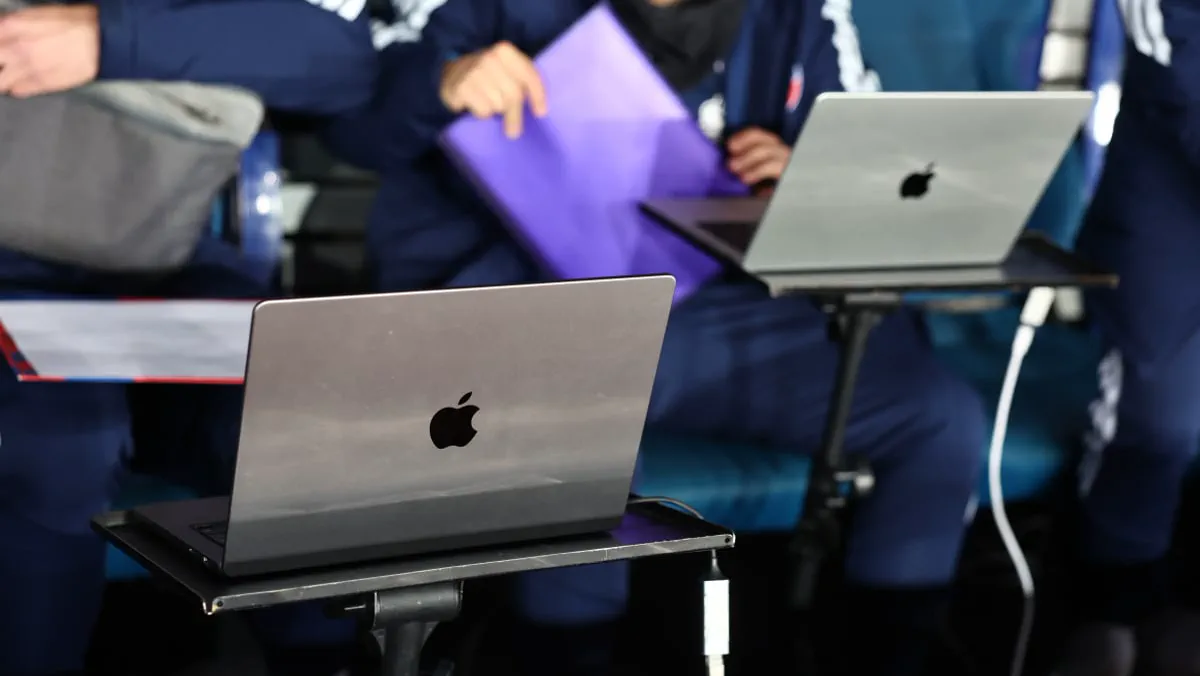 Photo: mashable.com (source)
Apple is positioning the touchscreen MacBook Pro as an ultra-premium addition that sits above its standard portable lineup. Rather than replacing the current mini-LED models, the touchscreen versions carry a $400 price premium.
| Model / Spec | 14-inch MacBook Pro (Touch OLED) | 16-inch MacBook Pro (Touch OLED) | 14-inch MacBook Pro (Base M6) |
|---|---|---|---|
| Display Type | Touchscreen OLED XDR | Touchscreen OLED XDR | Non-touch Liquid Retina XDR (mini-LED) |
| Top Bezel Feature | Dynamic Island | Dynamic Island | Camera Notch |
| Processor Options | M5 Pro / M5 Max | M5 Pro / M5 Max | Standard M6 (12-core CPU / 12-core GPU) |
| Input Methods | Multi-Touch Display, Trackpad, Keyboard | Multi-Touch Display, Trackpad, Keyboard | Trackpad, Full-Height Magic Keyboard |
| Starting Price | $2,899 | $3,399 | $1,999 |
| Pre-Order Date | October 28, 2026 | October 28, 2026 | October 28, 2026 |
| In-Store Availability | November 6, 2026 | November 6, 2026 | November 6, 2026 |
Preorders opened across 35 countries at 10:10 a.m. Pacific Time on Wednesday, October 28, 2026, with official in-store retail availability and deliveries scheduled to commence on Friday, November 6, 2026.
The Two-Decade Pivot: From 'Ergonomically Terrible' to Table Stakes
The arrival of a touch-capable Mac is one of the most prominent strategic reversals in Apple history. For almost two decades, company leadership mocked the idea of vertical laptop touchscreens. In 2010, Steve Jobs famously proclaimed that touch surfaces should not be vertical, saying: "We've done tons of user testing on this and it turns out it doesn't work. Heads up display touchscreens are ergonomically terrible. After a short period of time, your arm wants to fall off."
In 2012, Tim Cook similarly dismissed hybrid Windows convertibles, quipping that one could combine a toaster and a refrigerator, but that "those things wouldn't be pleasing to the user." Apple instead sought compromises, introducing the OLED Touch Bar above the keyboard in 2016, only to scrap the divisive feature five years later after universal pushback from professional developers and creatives.
Under John Ternus, Apple's marketing framing has changed from defensive denial to additive convenience. Instead of declaring touch the primary input for the Mac, Apple positions it as a supplemental interaction model: the keyboard and trackpad remain the primary productivity drivers, while the screen is there when users instinctively want to pinch-zoom, scrub, sign a document, or tap an interactive button.
Touchscreen Mac vs. Windows Convertibles and iPad Pro
 Photo: mashable.com (source)
While Windows PC makers like Lenovo, HP, and Dell have spent over a decade refining 2-in-1 designs with 360-degree folding hinges or detachable displays, Apple is pursuing a conventional clamshell design. There is no tablet fold-back mode and no detachable screen. In that sense, Apple is not directly mimicking machines like the Lenovo Yoga 9 series or Microsoft Surface Pro.
Instead, the touchscreen MacBook Pro answers a growing customer preference among younger professionals and mobile creatives who grew up tapping glass and find non-touch laptop displays unnatural. By retaining a strict clamshell design, Apple also protects its high-end iPad Pro lineup, which remains the company’s dedicated slate for freehand Apple Pencil illustration, extreme portability, and touch-first iPadOS workflows.
Buyer's Dilemma: Should You Pay the Touchscreen Premium?
For potential buyers, the new lineup creates a stark value calculation:
- Who should buy: Video editors, digital illustrators, audio producers, and live presenters who rely heavily on direct timeline manipulation, color grading, or fast tactile scrub controls will benefit substantially from the OLED panel and responsive touch integration.
- Who should wait: If your workflow revolves around heavy text processing, software coding, spreadsheets, or terminal maintenance, paying a $400 to $700 premium over previous price points makes little financial sense. Furthermore, because these machines rely on the M5 Pro and M5 Max architecture, buyers looking for Apple's newest M-series generation will have to wait for the M7 Pro updates in 2027.
What's Next: The M7 Horizon and Unanswered Questions
As demo units make their rounds with reviewers in Los Angeles, several practical questions remain. Early attendees noted the persistent challenge of visible fingerprint smudges across glossy OLED glass, raising questions about how well Apple's anti-reflective oleophobic coating holds up under daily studio lighting.
Furthermore, third-party software optimization will dictate the long-term success of the platform. While native apps and creative suites updated for macOS Golden Gate feature dial-based touch mechanics, legacy Mac software built around precise two-pixel cursor targets could prove cumbersome for unassisted fingers. With retail units shipping November 6, developers have a brief window to push updates before the touch Mac lands on consumer desks.
FAQ
Does the new MacBook Pro support Apple Pencil? No. Apple has designed the display specifically for multi-touch finger navigation, gestures, and on-screen radial menus, keeping dedicated stylus and Apple Pencil support exclusive to the iPad lineup.
Can the screen fold completely backwards into a tablet? No. The touchscreen MacBook Pro retains Apple's traditional clamshell notebook form factor with a high-resistance hinge engineered to stay rigid when touched, rather than a 360-degree convertible hinge.
Which processors power the touchscreen MacBook Pro? The laptops feature Apple's M5 Pro and M5 Max chips. Apple skipped the M6 Pro generation for these high-end models, reserving the standard M6 for the non-touch entry-level MacBook Pro and iMac.
How much does the touchscreen MacBook Pro cost? The 14-inch touchscreen model starts at $2,899, while the 16-inch version starts at $3,399, representing a $400 premium over the existing non-touch versions.
When can I buy the touchscreen MacBook Pro? Pre-orders opened on Wednesday, October 28, 2026, with official deliveries and Apple Store retail availability beginning on Friday, November 6, 2026.