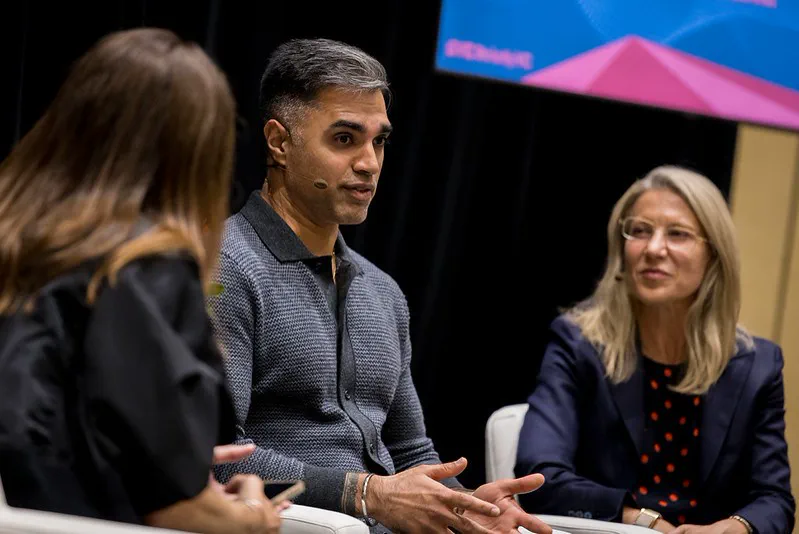
Institutional limited partners—the pension funds, endowments, and sovereign asset managers that provide the capital for venture capitalists—are speaking out candidly about the intense structural pressures reshaping startup finance. In extensive discussions with TechCrunch, veteran fund-of-funds leaders Beezer Clarkson of LGT Capital Partners and Amit Bhatti of TrueBridge Capital Partners detailed how aggressive AI deal pile-ins, stalled cash payouts, and rapid deployment pacing are altering their relationship with venture firms. Their overall verdict is clear: while the money behind the money remains genuinely thrilled by underlying technological breakthroughs, deep anxieties over liquidity and fund governance are forcing a historic reset.
Inside the LP Reckoning: What the Money Behind Venture Capital Is Saying
While general partners (GPs) at prominent Silicon Valley venture firms spend their days promoting ten-figure valuation markups, their institutional backers—known as limited partners (LPs)—operate on a very different scoreboard. LPs do not pay pensions or fund university endowments with paper valuations; they rely on distributions of cold, hard cash.
Speaking on the sidelines and stages of industry gatherings including StrictlyVC at TechCrunch Disrupt, institutional leaders explained that the venture asset class is experiencing a profound psychological split. On one side, the emergence of generative artificial intelligence and frontier computing represents one of the most compelling technological paradigm shifts since the commercial internet. On the other side, the mechanics of venture investing—pacing, fund sizes, entry multiples, and paths to liquidity—are showing acute strain as billions of dollars chase a small cohort of high-profile startups.
The Core Pressure Points: Pile-Ins, Payouts, and Pacing
 Photo: ecosistemastartup.com (source)
The current venture climate is defined by three interconnected friction points between institutional allocators and fund managers:
- Valuation Pile-Ins: Mega-rounds in foundation AI labs are absorbing unprecedented shares of total venture capital. When traditional venture firms, sovereign wealth funds, and corporate balance sheets all pile into the same handful of consensus deals at astronomical valuations, LPs end up inadvertently overexposed to identical company risks across multiple fund commitments.
- Payout Deficits (DPI vs. TVPI): A lingering drought in initial public offerings (IPOs) and a scrutinized corporate acquisition market mean that the gap between "Total Value to Paid-in Capital" (paper marks) and "Distributions to Paid-in Capital" (realized cash returns) has widened significantly. LPs are increasingly refusing to commit to new funds until managers return capital from prior vintages.
- Pacing Pressure: Historically, venture capital funds deployed capital across 3 to 4 years, allowing managers to average out market cycles. In the race to back AI category winners, many firms have accelerated their deployment pacing to burn through fund pools in 18 to 24 months, prompting premature fundraising cycles that test institutional budgets.
By the Numbers: How the Current Venture Cycle Compares to Past Eras
To understand why LPs are adopting a more rigorous posture, it helps to examine how the current environment contrasts with previous venture capital cycles:
| Cycle Metric | Dot-Com Era (1999–2000) | ZIRP Boom (2020–2021) | AI Expansion (Current Era) |
|---|---|---|---|
| Primary Tech Catalyst | Early consumer internet, telecom | Cloud software, mobile, remote work | Generative foundation models, physical AI |
| Fund Deployment Cadence | 12–18 months | 12–24 months | 18–30 months (highly bifurcated) |
| Primary Liquidity Mechanism | Rapid public listings (speculative IPOs) | High-volume IPOs, SPACs, mega-M&A | Secondary transactions, continuation funds |
| Dominant Check Sizes | Tens of millions | Hundreds of millions | Billions (for frontier labs) |
| LP Primary Focus | Access to brand-name GPs | Maximizing fund allocation size | Cash distribution velocity (DPI) & pacing |
| Capital Source Diversity | High-net-worth, early institutions | Crossover hedge funds, mutual funds | Tech balance sheets, sovereign wealth, family offices |
How We Got Here: From Zero-Interest Peaks to Foundation Model Hype
 Photo: ecosistemastartup.com (source)
The road to today’s liquidity squeeze began during the zero-interest rate policy (ZIRP) era of 2020 and 2021. During that window, institutional allocators dramatically increased their commitments to venture capital, chasing yield as technology stocks surged to all-time highs. Venture firms raised record-shattering mega-funds, leading to inflated late-stage valuations that subsequently collapsed when central banks tightened monetary policy.
Just as venture firms began marking down software portfolios and preaching fiscal discipline, the rapid ascension of large language models completely scrambled the board. Rather than enduring a quiet period of capital preservation, venture investors felt intense competitive pressure to re-accelerate deployment. However, unlike prior software booms where capital was dispersed across thousands of lean application startups, frontier AI demanded massive upfront capital expenditures for data center compute and specialized hardware, creating massive funding rounds that rapidly drained fund reserves.
The Manager Dilemma: Mega-Funds vs. Emerging AI-Native Specialists
A critical takeaway from LP allocators is that institutional capital is no longer flowing uniformly across the venture ecosystem. Instead, a severe market bifurcation has emerged:
- Established Mega-Firms Under Scrutiny: Brand-name multi-stage firms continue to secure commitments due to their historical track records, but LPs are actively pressing them on fee structures and capital efficiency. When a fund manages $5 billion to $10 billion, achieving a standard 3x net return requires returning tens of billions of dollars—an outcome that only a microscopic fraction of tech exits can deliver.
- The Emerging Manager Paradox: Simultaneously, institutional allocators are actively searching for hungry, specialized managers who possess deep technical fluency in machine learning and data infrastructure. However, as fundraising volumes contract overall, first-time and emerging managers face prolonged fundraising timelines unless they can demonstrate proprietary deal access outside of crowded Silicon Valley consensus rounds.
LP Perspectives: Clarkson and Bhatti on Finding Signal Amid the Noise
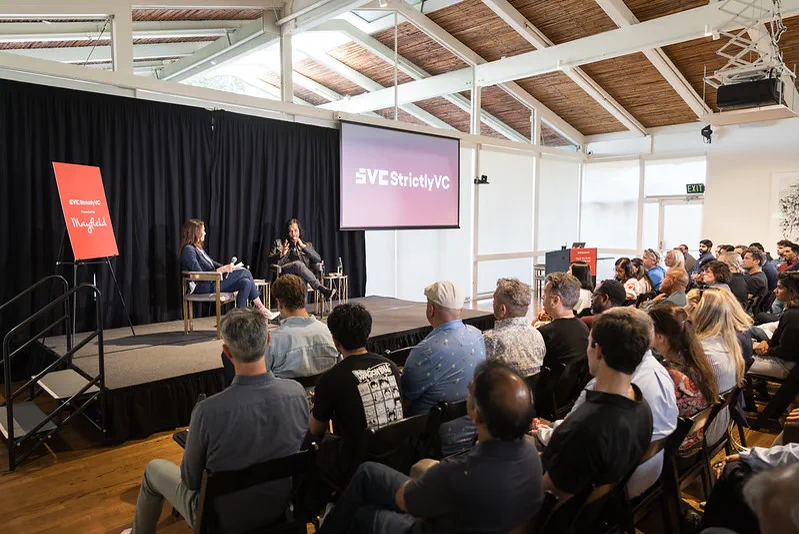 Photo: justpaste.in (source)
Both Beezer Clarkson, who joined Zurich-headquartered LGT Capital Partners to lead early-stage venture fund investing, and Amit Bhatti, partner at Chapel Hill-based TrueBridge Capital Partners, emphasize that experienced allocators are not running for the exits. Having navigated multiple market cycles—including the dot-com crash, the 2008 global financial crisis, and the 2022 tech reset—both investors maintain that market turbulence is where generational venture returns are traditionally forged.
The defining difference today is a demand for discipline. Allocators are urging venture capitalists to resist fear-of-missing-out (FOMO) when negotiating round terms and to avoid assuming that revenue multiples from previous software waves apply directly to capital-intensive AI companies. The underlying technology is seen as transformative, but fund managers must still demonstrate sound unit economics and clear governance rather than relying solely on narrative momentum.
What This Means for Startup Founders and Venture Capitalists
For startup founders, the shifting attitudes of LPs have direct, practical consequences that dictate how funding rounds are structured on the ground:
- Valuations Face Downstream Reality: While early-stage AI funding remains robust, founders who raise capital at astronomical forward multiples without proportional revenue will encounter severe hurdles in later rounds when growth investors demand proven unit economics.
- Secondary Liquidity Becomes Standard: With public market exits moving slowly, secondary share sales and tender offers are becoming the primary tool for early employees and early-stage funds to realize returns without forcing a premature initial public offering.
- Burn Multiples Matter Again: VCs are under strict orders from their LPs to enforce capital efficiency; founders who demonstrate high capital productivity—generating strong annual recurring revenue with lean teams—will command far better terms than those burning millions on unproven compute clusters.
What Happens Next: The Road to Real Liquidity
As the venture industry heads toward its next vintage cycle, the relationship between LPs and GPs will hinge on exit execution. Venture firms cannot live on paper gains indefinitely. If the IPO pipeline remains restricted and regulatory friction continues to dampen large-scale technology acquisitions, the industry will see an acceleration of GP-led secondary continuation funds, where firms sell portfolio stakes to secondary buyers to return cash to their original backers.
Ultimately, the investors behind the venture capitalists are signaling a return to structural fundamentals. The enthusiasm surrounding artificial intelligence is genuine, but institutional allocators have made their stance plain: venture capital remains a business of returning cash distributions, and the firms that survive the next decade will be those that balance technological ambition with strict financial discipline.
FAQ
What is the difference between a GP and an LP in venture capital? A General Partner (GP) is the venture capitalist who manages the fund, sources startups, and makes investment decisions. A Limited Partner (LP) is the institutional or individual investor—such as an endowment, foundation, or pension fund—that provides the capital for the GP to invest.
What does "DPI" mean, and why are LPs focused on it? DPI stands for Distributions to Paid-in Capital, representing the actual cash returned to investors relative to the capital they invested. LPs prioritize DPI because paper markups (TVPI) cannot be spent until investments are successfully exited through an IPO, acquisition, or secondary sale.
Why are LPs concerned about AI mega-rounds? LPs worry that when multiple venture firms pile into the same multi-billion-dollar AI deals at steep valuations, it creates severe concentration risk and valuation inflation across institutional portfolios.
How does fund deployment pacing affect venture performance? Deploying a fund too rapidly (e.g., in under 18 months) concentrates investments at a single point in a market cycle, increasing the risk of overpaying at market peaks. A measured 3-year pacing cadence allows managers to diversify entry valuations across different economic environments.
Are institutional investors pulling back from venture capital entirely? No; institutional LPs are largely maintaining allocations to venture capital because they view artificial intelligence as a generational shift. However, they are becoming far more selective about which managers they back, favoring disciplined pacing and proven cash return strategies.