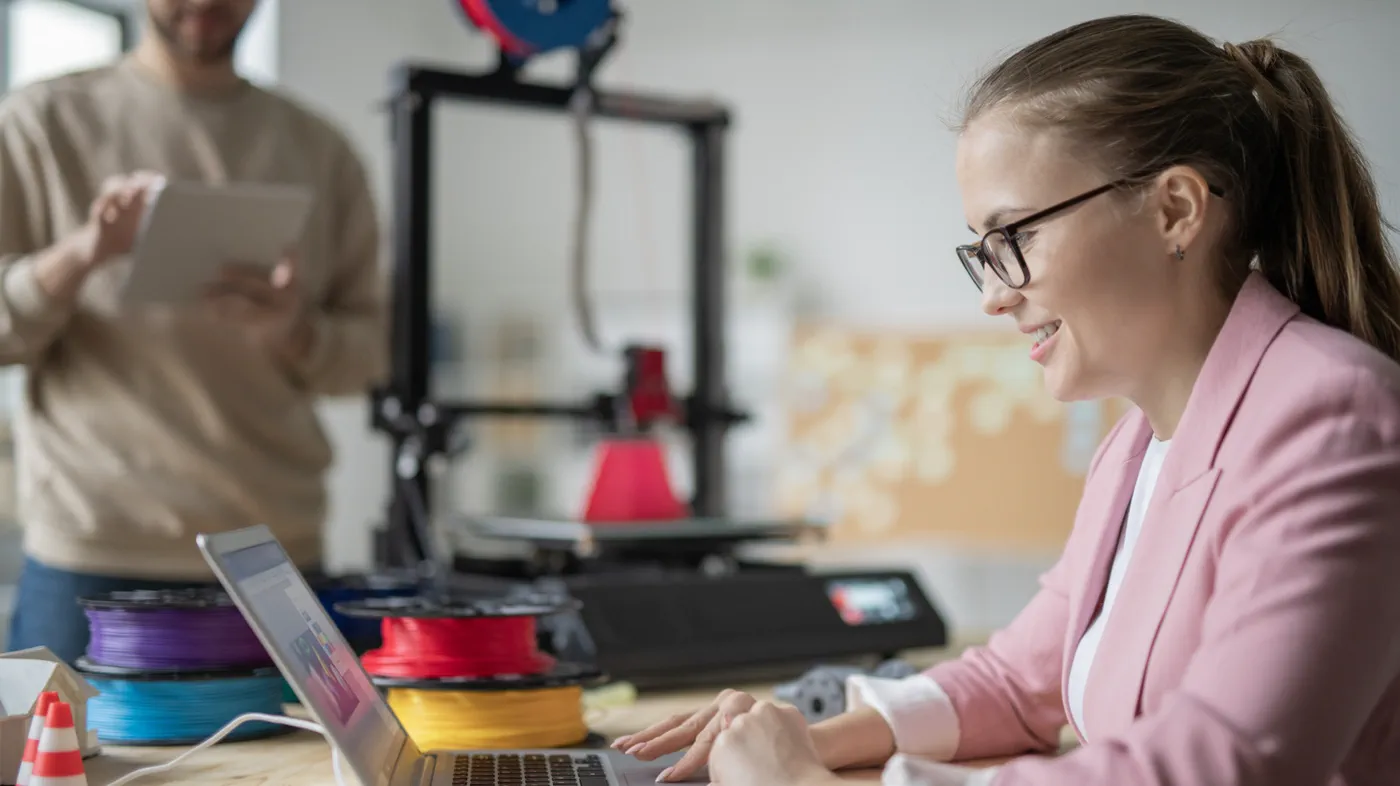
Consumer 3D printers have become affordable, compact desktop staples, but placing a machine running heated thermoplastics or liquid resins inside your bedroom or home office carries serious indoor air-quality and health risks. While modern desktop units can easily fit on a desk or bedside table, scientific findings from environmental agencies and recent testing show that even common, plant-based filaments emit airborne ultrafine particles and chemical gases that can accumulate in unventilated living spaces.
For hobbyists, remote workers, and makers balancing limited square footage, deciding where to locate a 3D printer is no longer just an aesthetic or spatial question. Understanding what happens when filaments melt and resins cure is essential to safeguarding your living environment.
The Hidden Airborne Hazards of Desktop 3D Printing
A 3D printer can alter the air quality of a sealed room within minutes without producing any visible smoke. During the fused deposition modeling (FDM) process, printers heat solid plastic filament to temperatures ranging from 190°C to well over 300°C to extrude successive layers. This thermal processing produces two primary categories of airborne contaminants: ultrafine particles (UFPs) and volatile organic compounds (VOCs).
Ultrafine particles are microscopic airborne fragments measuring between 1 and 100 nanometers in diameter. Because of their microscopic scale, the U.S. Environmental Protection Agency (EPA) notes that UFPs bypass the body's natural respiratory defenses, settling deep into pulmonary tissue and potentially crossing into the bloodstream. Concurrently, the melting process vaporizes chemical additives and base polymers, emitting VOCs—gaseous chemicals that linger in poorly ventilated spaces and can induce headaches, dizziness, and mucous membrane irritation.
In a standard workshop or garage, these contaminants disperse or exhaust naturally. In a small bedroom or enclosed home office, where an individual may spend 8 to 16 hours working or sleeping adjacent to the machine, contaminant concentrations can rise substantially.
Watch: 3D printers are worse than I thought. Time to do something about it!

Video: Made with Layers Thomas Sanladerer on YouTube
Not All Plastics Are Created Equal: From PLA to ABS
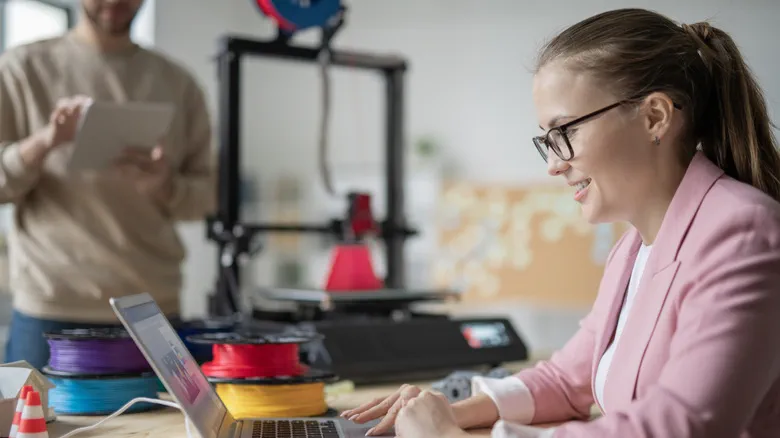 Photo: Engadget - Technology News & Expert Reviews (source)
The chemical risk profile of desktop printing depends heavily on the chosen consumable. Polylactic Acid (PLA) has long been marketed as a non-toxic, eco-friendly option derived from renewable resources like cornstarch. While PLA does release significantly fewer hazardous emissions than petrochemical-derived plastics, it is not emission-free. A 2026 test evaluating 17 commercial filaments demonstrated that while ABS emitted far higher particle counts and hazardous volatile compounds, all PLA brands still released measurable UFPs and volatile organic compounds like lactide.
Polyethylene Terephthalate Glycol (PETG) sits in a moderate middle ground. It prints at higher temperatures (220°C to 250°C) and releases relatively low levels of VOCs, but it still emits noticeable ultrafine particle loads during lengthy print jobs.
At the high-risk end of the spectrum are Acrylonitrile Butadiene Styrene (ABS), Acrylonitrile Styrene Acrylate (ASA), and Polyamide (Nylon). ABS and ASA release large volumes of styrene, a sharp-smelling VOC classified as an occupational irritant and a suspected carcinogen. Extruding ABS without sealed negative-pressure ventilation in a bedroom or office can rapidly cause acute eye, nose, and throat irritation, dizziness, and persistent headaches.
Material Breakdown: Emissions, Temperatures, and Safe Placement
The following table summarizes standard consumer 3D printing materials, their thermal requirements, primary airborne byproducts, and workspace suitability:
| Material / Technology | Extruder / Bed Temp | Primary Emissions | Odor Intensity | Bedroom / Office Suitability |
|---|---|---|---|---|
| PLA (FDM) | 190°C–220°C / 40°C–60°C | Ultrafine particles, Lactide, light VOCs | Mild / Sweet | Caution: Requires ventilation; avoid running near desks or beds |
| PETG (FDM) | 220°C–250°C / 70°C–85°C | Ultrafine particles, low VOCs | Low | Caution: Do not run in unventilated sleeping areas |
| ABS / ASA (FDM) | 240°C–270°C / 90°C–110°C | Styrene, dense UFPs, aromatic VOCs | Strong / Harsh | Never indoors without sealed exhaust |
| Nylon / PA (FDM) | 250°C–300°C / 70°C–100°C | Caprolactam, UFPs, volatile gases | Moderate / Burnt | Never in living areas; requires workshop ventilation |
| Standard Resin (SLA) | Ambient / 25°C–35°C vat | Acrylates, photoinitiators, vaporized IPA | Strong / Chemical | Never in living or sleeping areas; dedicated space only |
Resin 3D Printers: Why SLA Belongs Far Away From Living Quarters
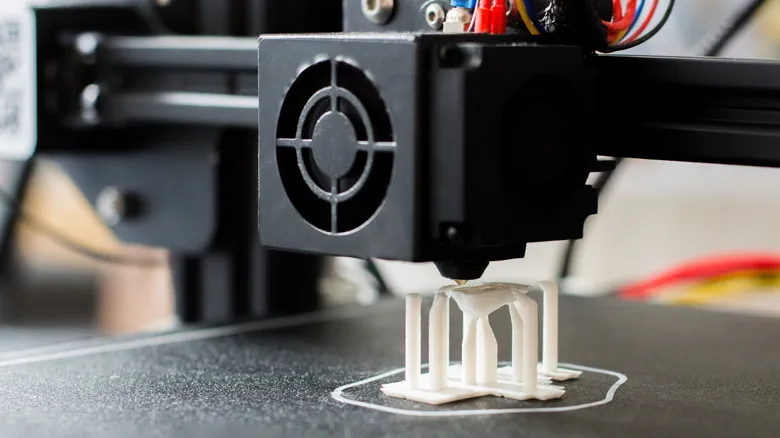 Photo: Engadget - Technology News & Expert Reviews (source)
While FDM filament printers present manageable air-quality challenges, stereolithography (SLA) and masked stereolithography (MSLA) resin printers represent a completely different chemical category. Liquid resin relies on photopolymerization, using ultraviolet light to cross-link liquid monomers into solid acrylic structures.
According to warnings from the National Institute for Occupational Safety and Health (NIOSH), uncured liquid resin is a severe contact hazard and skin sensitizer that can trigger contact dermatitis, allergic reactions, and occupational asthma. The resin constantly off-gases volatile acrylates from the open vat, even when idle.
Furthermore, resin 3D printing requires multi-stage post-processing: washing uncured prints in high-purity isopropyl alcohol (IPA) or tripropylene glycol monomethyl ether (TPM), followed by secondary UV curing. The evaporation of concentrated alcohol combined with resin fumes fills an enclosed room with heavy VOC vapors. Running an SLA setup in a bedroom or standard home office violates fundamental chemical safety practices and should only occur in dedicated workshops, well-ventilated garages, or lab settings with nitrile gloves and eye protection.
What the Research Says: EPA, NIOSH, and Laboratory Findings
Concerns regarding 3D printing safety are supported by a mounting body of scientific literature. The EPA's Office of Research and Development has spent multiple years evaluating commercial 3D printer emissions. EPA findings confirm that desktop extrusion devices emit billions of particles per minute, predominantly falling in the nanoscale spectrum where pulmonary clearance mechanisms are least effective.
In controlled laboratory studies, researchers exposed cultured human airway epithelial cells to emissions harvested from active PLA and ABS printing. The exposed cells demonstrated measurable markers of cellular oxidative stress and inflammatory responses. Although researchers emphasize that laboratory cell cultures do not mirror a living human lung, and no definitive epidemiological threshold has established the exact chronic dosage required to cause long-term disease, medical experts advise following the precautionary principle: minimize involuntary, prolonged exposure.
Fire Risks, Noise, and Physical Hazards in Sleeping Spaces
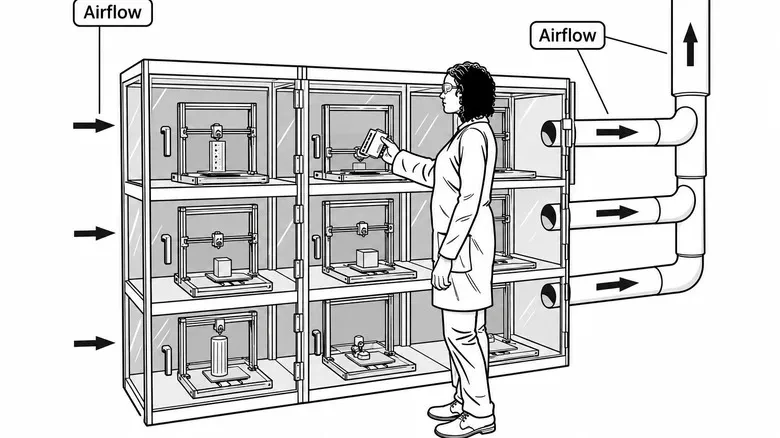 Photo: Engadget - Technology News & Expert Reviews (source)
Beyond air quality, operating a 3D printer inside a bedroom presents immediate mechanical and fire safety concerns:
- Thermal Runaway Risks: Extruder hot ends reach 200°C to 300°C, and heated print beds regularly hover between 60°C and 110°C. If a thermistor detaches or firmware fails without thermal runaway protection active, heating elements can trigger localized fires.
- Combustible Environments: Bedrooms are filled with flammable soft goods—including mattresses, bed linens, rugs, and curtains. A print head malfunction or electrical short near fabrics presents a substantial hazard.
- Sleep Architecture Interruption: 3D printers rely on high-RPM cooling fans, stepper motors, and belt assemblies. Operating a printer overnight in a bedroom exposes occupants to persistent high-frequency mechanical noise that disrupts circadian cycles and restorative sleep.
How to Make a Home Office or Spare Room Safe for Printing
If you lack an external garage or detached workshop and must operate an FDM printer in a home office or utility room, implementing strict containment and airflow measures can mitigate the risks:
- Use an Airtight Enclosure with Active Exhaust: An enclosure alone merely traps particles until opened. To safely run prints, equip the enclosure with a negative-pressure exhaust fan ducted directly out a sealed window port.
- Combine True HEPA and Activated Carbon: If outdoor venting is structurally impossible, an indoor air scrubber must utilize a two-stage system. A True HEPA filter captures microscopic ultrafine particulate matter, while a dense bed of activated carbon adsorbs gaseous VOCs.
- Maintain Physical Distance: Do not place the printer on the desk next to your monitor or keyboard. Keep the machine several yards away across the room to reduce near-field plume concentration.
- Schedule Prints Smartly: Initiate print jobs when you plan to vacate the room, allowing the air filtration or HVAC system to exchange the room volume before re-entering.
- Verify Safety Hardware: Ensure your machine runs modern, open firmware with active thermal runaway protection, and install an independent smoke detector directly above the workstation.
The Path Forward: Standards, Testing, and Unanswered Questions
The desktop 3D printing industry is gradually moving toward standardizing safety. Organizations like UL Solutions and ANSI have established testing methods (such as ANSI/CAN/UL 2904) to standardize how manufacturers measure particle and chemical emissions from additive manufacturing equipment. Some premium consumer printer manufacturers now integrate internal charcoal and HEPA filters into closed-frame models.
However, major questions remain. Regulators have yet to establish standardized indoor air thresholds specifically calibrated for consumer desktop 3D printing in domestic spaces. Furthermore, filament manufacturers are not legally required to publish comprehensive safety data sheets (SDS) detailing proprietary dyes, plasticizers, and flame-retardant additives that alter chemical emissions. Until manufacturers deliver certified zero-emission closed systems, keeping desktop 3D printers out of sleeping spaces remains the safest approach.
FAQ
Is it safe to sleep in the same room while a 3D printer is running?
No, operating an active 3D printer in a bedroom while sleeping is not recommended. Even common materials like PLA release ultrafine particles and chemical gases that accumulate over an 8-hour print job, and the hot end and electrical components present an unnecessary thermal and fire hazard around bedding.
Does opening a window make bedroom 3D printing safe?
Opening a window helps disperse odors, but it does not reliably clear ultrafine particles or heavy VOCs from the breathing zone. Depending on outdoor wind direction, an open window can actually blow emissions directly across your desk or bed rather than exhausting them outside.
Can a standard HEPA air purifier remove 3D printer fumes?
A standalone HEPA purifier only captures solid ultrafine particles down to 0.3 microns and does not remove volatile organic compounds or chemical fumes. To capture both particles and gases, you must use a dual-stage filtration system that pairs a True HEPA filter with an activated carbon filter.
Are resin (SLA) 3D printers safe for a home office?
Resin 3D printers should never be operated in a home office or living space. Liquid photopolymer resins release airborne acrylates and require toxic solvent baths (such as isopropyl alcohol) during post-processing, demanding a dedicated, well-ventilated workshop or garage and full personal protective equipment.