Google’s newly launched Pixel Tag Bluetooth tracker will arrive on store shelves across mainland Europe "pretty soon," according to a leak from veteran tech tipster Roland Quandt. The disclosure brings long-awaited relief to European Android users who were baffled when Google officially released its first-party AirTag rival on November 11, 2026, while limiting availability to just eight countries worldwide.
When Google rolled out the device alongside its November Pixel Drop, shoppers across the European Union noticed an immediate problem: the Google Store simply would not let them buy one. Despite Pixel smartphones and smartwatches launching across dozens of European markets, the Pixel Tag was nowhere to be found on the continent outside of the post-Brexit United Kingdom. Now, reputable reporting indicates that this geographical snub is merely temporary.
The Leak: Relief for European Android Users
Writing on Bluesky, prominent industry insider Roland Quandt pushed back directly against rumors that Google planned to skip the European market indefinitely. "I have no idea why ppl think Pixel Tag isn't going to come to Euroland, but it is. Pretty soon," Quandt posted, dismissing widespread consumer frustration over the tracker’s localized rollout.
The leak, quickly spotlighted by 9to5Google, aligns with early retail evidence that surfaced months before the device launched. Distribution databases and retail catalog entries had already laid the groundwork for an EU release long before Google's official product unveiling. While Quandt did not provide an exact calendar date for the European launch, his track record on Google hardware supply chains gives considerable weight to the prospect of an imminent rollout.
Watch: Pixel Tag hands-on: Google finally makes an AirTag.

Video: 9to5Google on YouTube
The Baffling Eight-Country Launch
 Photo: bsky.app (source)
When Google opened sales for the Pixel Tag on November 11, the official support documentation listed an unusually tiny distribution footprint. The tracker was made available in only eight territories:
- United States (excluding Puerto Rico)
- Canada
- United Kingdom
- Australia
- India
- Japan
- Singapore
- Taiwan
The decision to exclude 27 European Union member states provoked widespread criticism among tech analysts and consumers alike. Flagship products like the Pixel 11 series and the Pixel Watch 5 regularly launch across more than two dozen global markets, including France, Germany, Italy, Spain, and the Nordics.
Excluding mainland Europe made even less strategic sense given regional operating system dynamics. While iOS maintains a commanding market share in North America, Android dominates mainland Europe with roughly 64% of active mobile devices. Because Bluetooth tracking networks rely directly on a dense mesh of participating smartphones, Europe is arguably the single region where Google’s crowdsourced Find Hub network could perform at its absolute best.
Pixel Tag Specs, Hardware, and Design
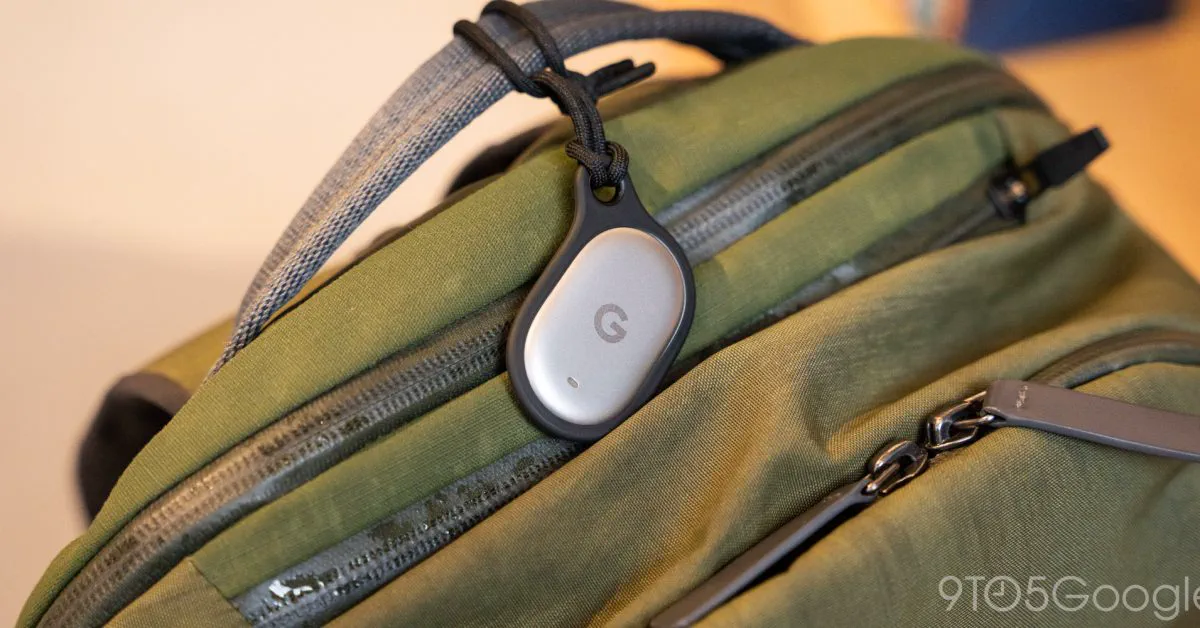
Google designed the Pixel Tag to function as the reference-grade hardware benchmark for its Find Hub ecosystem. Unlike the flat, circular puck design popularized by Apple’s AirTag, the Pixel Tag features an oblong, pill-like silhouette reminiscent of a bandless fitness tracker core.
Constructed from stainless steel and durable polycarbonate, the tracker measures approximately 5.4 mm in thickness and weighs just 11 grams. Its shell carries an IP67 rating, allowing it to withstand dust ingress and submersion in up to one meter of water for 30 minutes.
Key hardware and software specifications include:
- Dual Connectivity: Bluetooth 6.0+ alongside an Ultra-Wideband (UWB) chip paired with Bluetooth Channel Sounding for meter-by-meter precision directional guidance.
- User-Replaceable Battery: Powered by a standard CR2032 coin-cell battery estimated to last over one year under typical usage conditions.
- Audible Alerts: A built-in high-output speaker concealed behind a bottom grille lets users ping the tag when searching nearby rooms.
- Two-Way Physical Button: A physical hardware button allows users to double-press the tag to ring their misplaced Android smartphone or tap once to silence active chirps.
- Safety & Privacy: End-to-end encrypted tracking reports, proactive unwanted tracking alerts shared across Android and iOS platforms, and automated Left Behind alerts.
- Form Factor Caveat: The smooth outer shell lacks an integrated keyring cutout, meaning users must purchase separate sleeves, loops, or adhesive holders—such as official accessories made by partner Bellroy—to clip it to keys or luggage.
| Specification / Feature | Google Pixel Tag | Apple AirTag | Motorola Moto Tag | Samsung Galaxy SmartTag2 |
|---|---|---|---|---|
| Starting Price (US) | $29.99 (4-pack: $99.99) | $29.00 (4-pack: $99.00) | $29.99 (4-pack: $99.99) | $29.99 (4-pack: $99.99) |
| Expected EU Price | ~€34.90 – €39.99 | €35.00 – €39.00 | ~€39.99 | ~€39.99 |
| Tracking Network | Android Find Hub | Apple Find My | Android Find Hub | Samsung SmartThings Find |
| Precision Finding | UWB + BT Channel Sounding | Ultra-Wideband (U1/U2) | Ultra-Wideband (UWB) | Ultra-Wideband (UWB) |
| Water/Dust Rating | IP67 | IP67 | IP67 | IP67 |
| Battery Type | CR2032 (Replaceable) | CR2032 (Replaceable) | CR2032 (Replaceable) | CR2032 (Replaceable) |
| Built-in Keyring Hole | No | No | No | Yes |
| Physical Button | Yes (Two-way finding) | No | Yes | Yes |
Groundwork in Europe Was Already Set
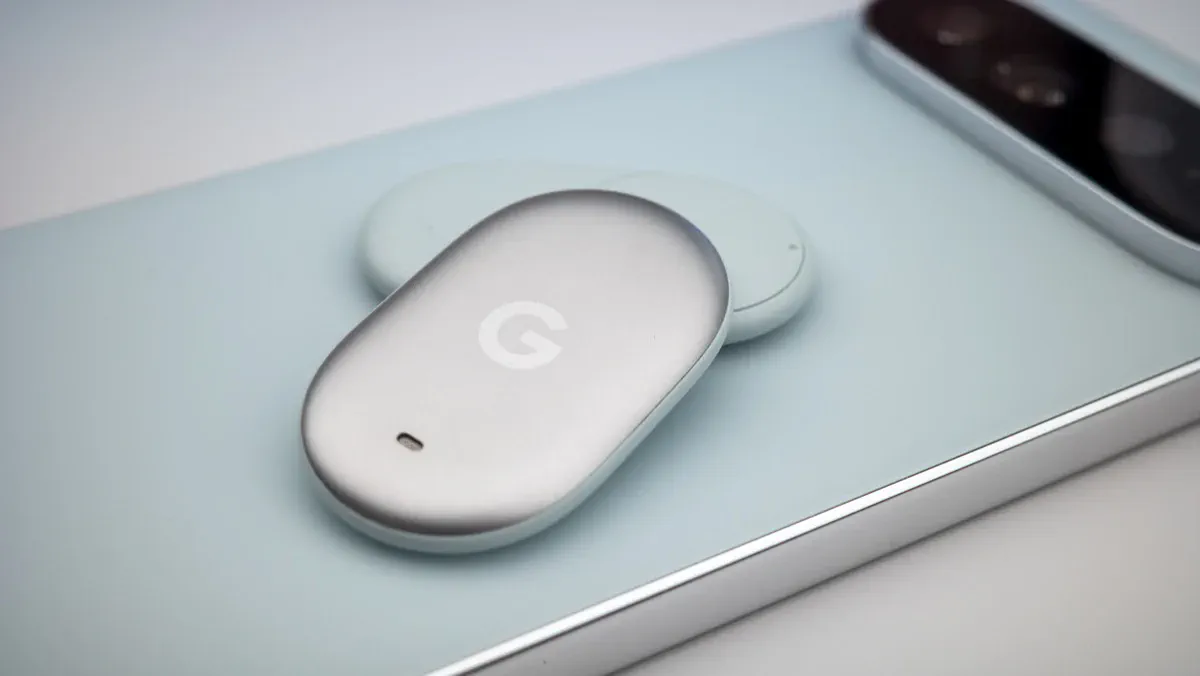 Photo: ukrmedia.news (source)
Quandt’s claim that European availability is coming soon aligns directly with breadcrumbs discovered across Europe over the summer. In late July and early August 2026, European distributor catalogs and retailer portals inadvertently leaked Google’s internal listings.
A Slovenian distributor, Big Partner, previously published product pages for the "Pametni sledilnik GOOGLE Pixel Tag" with EAN barcode 840353964334 and model number GA12506 / GA12506-WW, quoting a recommended retail price of €39.99. Concurrently, prominent French deal aggregator Dealabs reported that Google planned to price the tag at €34.90 across key eurozone markets to match the single-unit price of Apple’s AirTag. Both listings identified the hardware colorway as "Fog Light" (or "Fog").
Because the universal "WW" model number signifies a worldwide variant with European regulatory compliance filings, the product was clearly certified for distribution across European jurisdictions well in advance.
The Stakes for Android Find Hub
Google launched its modern Find Hub network (formerly Find My Device) in 2024 to leverage more than one billion active Android phones as crowdsourced location beacons. However, early iterations faced performance hurdles. To protect user privacy, Google initially configured the network to aggregate signals only in high-traffic commercial zones, which severely delayed updates for lost items located in suburban or rural settings.
While software refinements rolled out throughout 2025 and 2026 noticeably sped up detection times, the lack of an official Google-branded tracker left a void. Third-party devices from Motorola, Chipolo, and Pebblebee kept the network afloat, but Google’s hardware integration brings crucial platform-level advantages. On Pixel devices, the Pixel Tag supports seamless Fast Pairing, quick-toggle audio adjustments, tight Gemini voice assistant integration through Pixel Buds, and on-screen spatial radar guidance on phones equipped with UWB hardware.
Rolling out the tracker in Europe is essential if Google wants Find Hub to stand as a genuine peer to Apple’s Find My ecosystem. Without the tag widely available in markets where Android leads in phone volume, the ecosystem risks leaving significant platform value on the table.
What This Means for Consumers Right Now
 Photo: ukrmedia.news (source)
For European Android users eager to equip luggage, backpacks, and keychains with first-party tracking tags, the leak provides clear actionable advice:
- Hold off on importing: While travelers can physically bring a Pixel Tag purchased in the UK or US into Europe—where it will communicate normally with nearby Android phones—importing carries serious downsides. Hardware warranties are generally locked to the country of official purchase, meaning Google may refuse RMA claims or hardware replacements outside authorized sales territories.
- Verify phone compatibility: To take full advantage of meter-level precision directional finding, users need an Android device that supports Ultra-Wideband. This includes modern flagship devices like the Pixel Pro, Pixel Fold, or select Samsung Galaxy Ultra devices. Budget devices running standard Bluetooth can still pinpoint approximate locations on a map and trigger audio ringers, but will lack directional on-screen arrows.
- Budget for holders: Prospective buyers should remember that the Pixel Tag cannot be attached directly to a keyring out of the box. Factoring in the cost of a dedicated silicone or leather holder is essential when calculating total costs.
What Happens Next
Google has not formally explained why it bypassed the European Union during the November 11 retail rollout. Industry observers suspect the brief delay may stem from localized regulatory clearance processes, supply constraints during initial manufacturing runs, or logistics coordination surrounding multilingual packaging and documentation.
With Roland Quandt signaling that the European launch will happen "pretty soon," retail watchers expect Google could quietly open European Google Store pre-orders in the coming weeks, potentially ahead of the peak holiday travel and shopping surge. Until Mountain View issues an official press release, European consumers will be watching their local Google Store pages closely.
FAQ
Why wasn't the Google Pixel Tag available in Europe at launch? Google has not provided an official reason for excluding mainland Europe from its November 11 launch. Analysts attribute the gap to regional supply chain allocations, packaging logistics, or final local regulatory certifications.
How much will the Pixel Tag cost when it arrives in the EU? Early European trade listings and Dealabs reports indicate single tags will retail between €34.90 and €39.99, placing them directly in line with Apple’s single AirTag pricing.
Does the Pixel Tag work with an iPhone? No, the Pixel Tag is built strictly for the Android Find Hub ecosystem and requires an Android phone running Android 9.0 or later for setup and tracking. However, iPhones will alert users if an unknown Pixel Tag is detected traveling with them to prevent stalking.
Can I buy a Pixel Tag in the UK or US and use it in Europe? Yes, the tracker relies on standard Bluetooth and global Android Find Hub network relaying, meaning it will function across borders. However, Google’s standard hardware warranty and official customer support may not be honored outside authorized launch markets.
Does the Pixel Tag have a rechargeable battery? No, the device uses a standard CR2032 coin-cell battery that users can replace themselves. Google estimates one battery will last for over a year of everyday use.