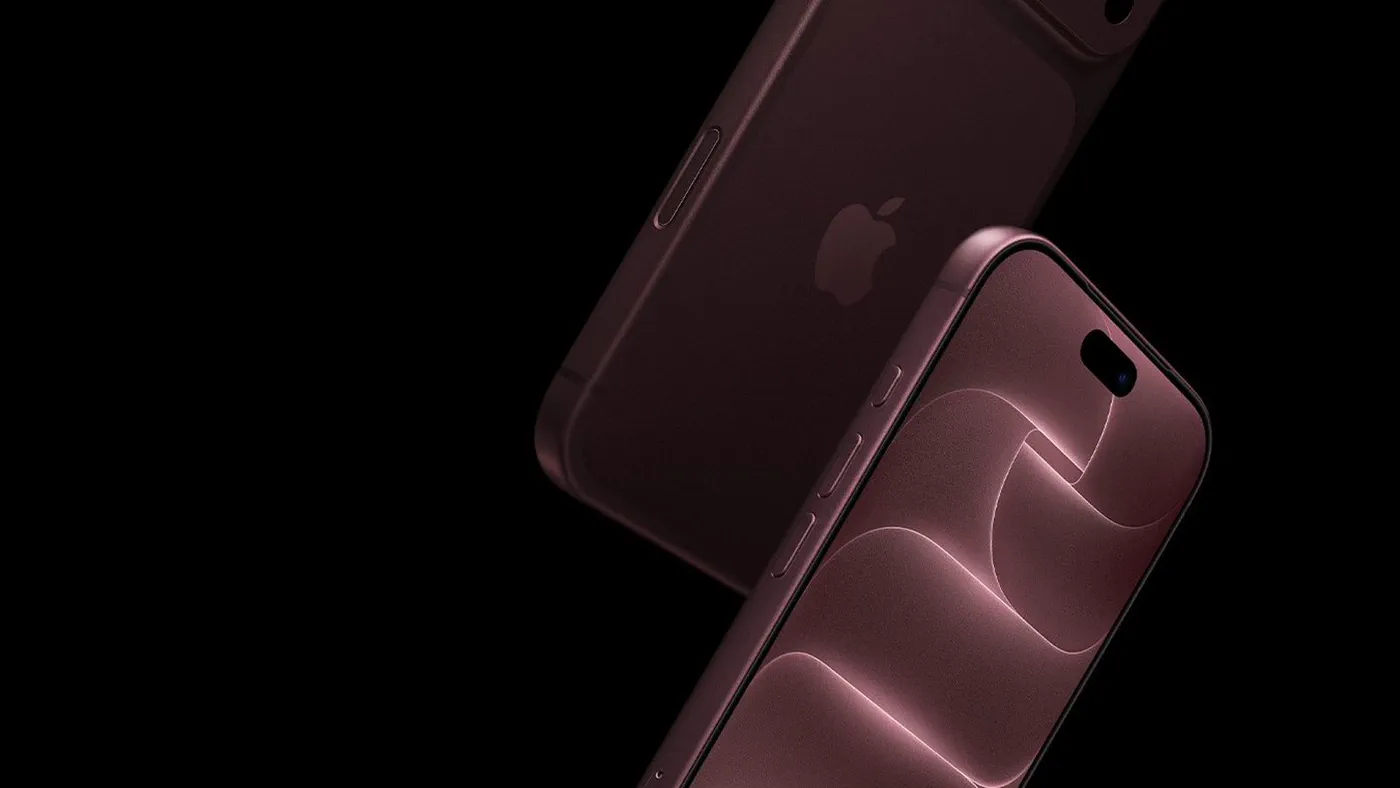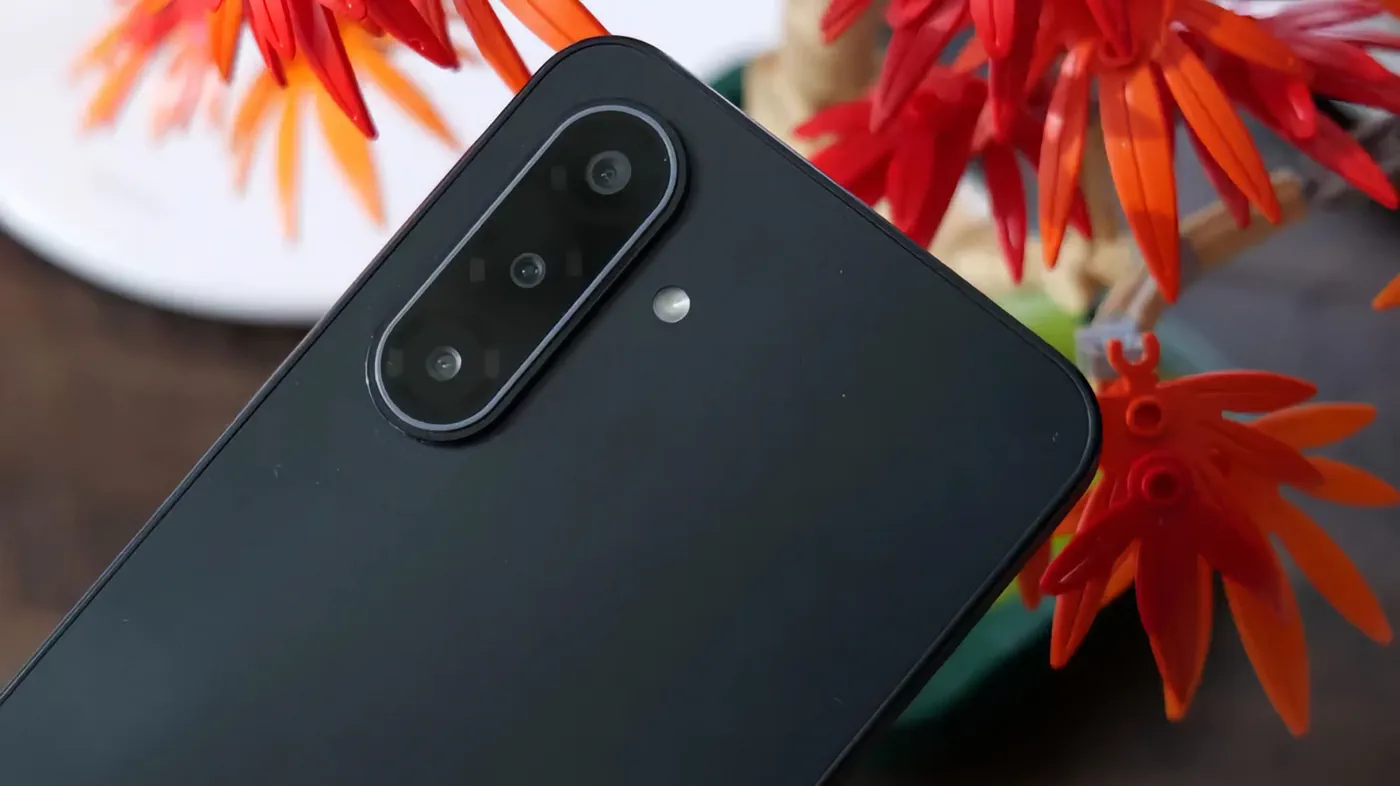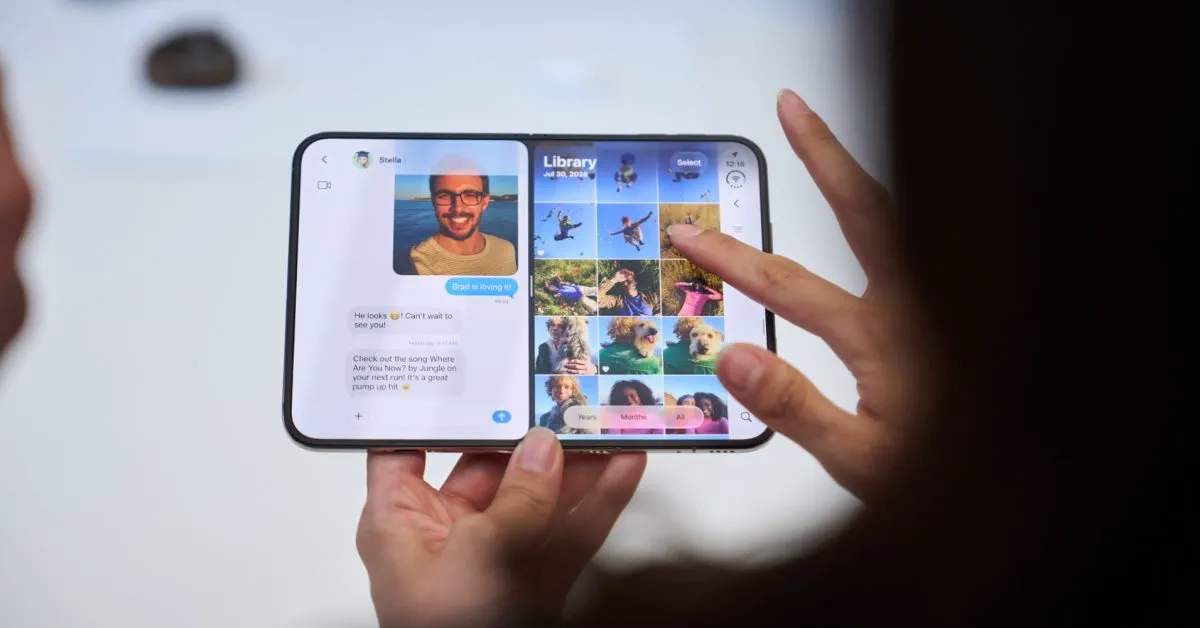
Apple’s first foldable smartphone, the iPhone Duo, commands a staggering starting price of $1,999, but a newly revealed design detail could make that investment far easier for prospective buyers to stomach. The company has confirmed that the 7.6-inch inner folding screen features a renewable, peelable protective cover layer that can be swapped out for a fresh one once wear and tear begin to show. Instead of forcing customers to live with an increasingly deep crease or spend a small fortune on an entirely new flexible OLED panel, Apple has introduced an official service option to restore the inner display's surface finish for as little as $19 with AppleCare+ or $49 out of warranty.
For an ultra-premium device designed to push the boundaries of Apple's hardware lineup, the move directly targets the single most notorious anxiety surrounding foldable phones: long-term screen fatigue. Here is a comprehensive look at how Apple’s renewable display layer works, what it costs to maintain, and why it changes the calculus for anyone considering the iPhone Duo.
What Apple Revealed: The Peelable Screen Solution
The existence of the replaceable cover layer came to light following interviews by Apple executives detailing the intensive durability engineering behind the device. Speaking about the foldable panel, Apple Vice President of Hardware Engineering Kate Bergeron confirmed that the inner display system was purposefully constructed to allow surface rejuvenation.
“The matte display coating does a really nice job of, I'll say minimizing the crease,” Bergeron noted. “But there's a cover layer on top, and we've done a significant amount of engineering work to help that wear in as long of a manner as we can, and to make sure that you get the most out of that layer's performance. It's actually replaceable, which is a really nice thing for the customer, that you can peel off that layer and get a new one.”
In practical terms, the cover layer is a custom-engineered nano-textured polymer sheet applied across the top of the internal folding assembly. It serves as the primary tactile interface whenever the device is opened, bearing the brunt of finger oils, repetitive bending friction, and fingernail micro-scratches. Because repeated folding naturally causes mechanical stress to build up over months and years of use, the layer eventually softens or distorts at the fold axis. By designing the layer to be removed and cleanly reapplied using certified tools, Apple provides owners with a mechanism to recapture a factory-fresh surface appearance without disturbing the delicate underlying display panel.
Watch: Introducing the new iPhone Duo

Video: Apple on YouTube
The Cost Equation: Official Repair and Replacement Pricing
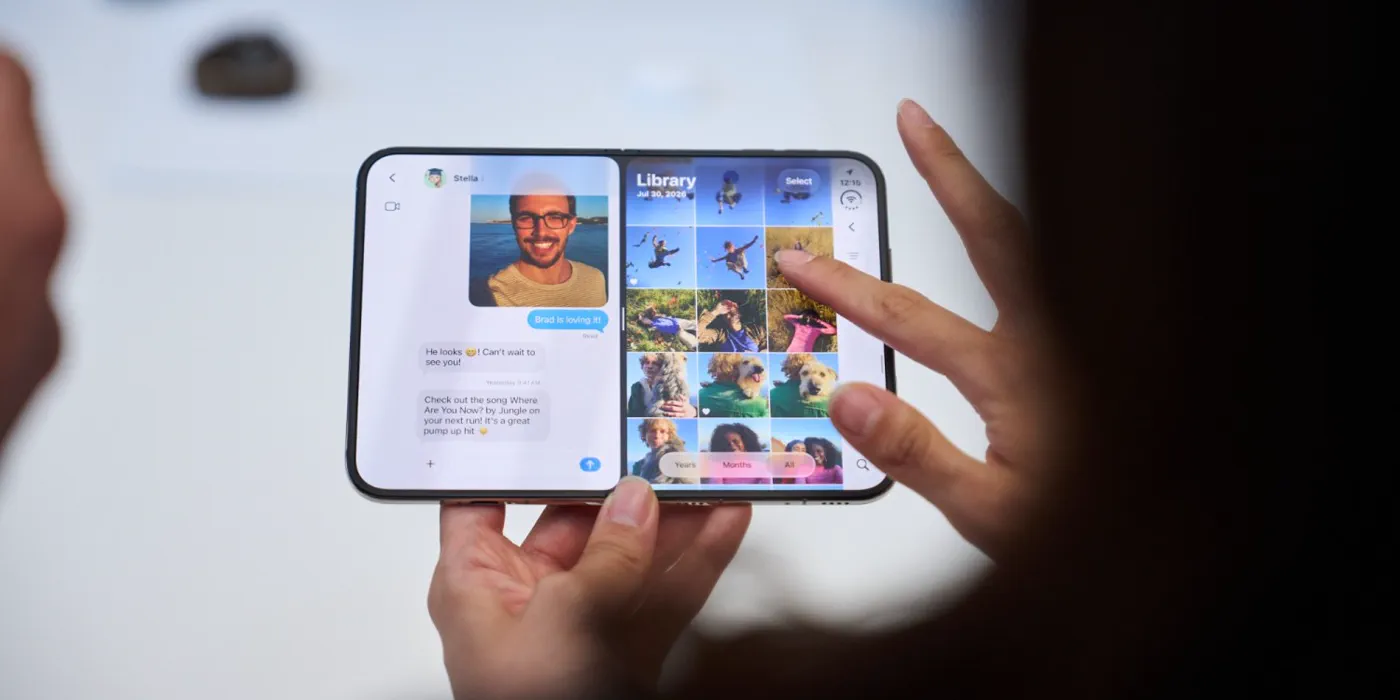 Photo: 9to5mac.com (source)
Repair fees for foldable hardware have historically been astronomical, often hovering near half the retail price of the handset. Apple’s official estimated service pricing for the iPhone Duo initially alarmed shoppers when full display replacements were tallied, but the separate line item for the cover layer stands out as an unexpected bargain.
According to Apple’s published repair tier schedules, replacing damaged or aged cover layers costs $19 for customers enrolled in AppleCare+ and $49 for those paying out of pocket. To put those figures into perspective, having to replace the full internal display out of warranty costs $999.
| Service / Component | AppleCare+ Fee | Out-of-Warranty Cost |
|---|---|---|
| Cover Layer Replacement | $19 | $49 |
| Outer Display Repair | $29 | $379 |
| Back Glass Repair | $29 | $199 |
| Outer Display + Back Glass | $58 | $509 |
| Inner Display Damage | $99 | $999 |
| Battery Replacement | $0 (Included) | $229 |
| Rear Camera Repair | $99 | $229 |
| Other Structural Damage | $99 | $1,499 |
For a device that spans from $1,999 for the base 256GB edition to an eye-watering $3,199 for the top-tier 2TB configuration, a $49 refresh removes a major psychological barrier for consumers who plan to keep their hardware for three to five years.
Under the Hood: How the iPhone Duo Display and Hinge Work
The renewable layer is merely the top element of an elaborate mechanical stack designed in Cupertino. When unfolded, the iPhone Duo features an expansive 7.6-inch Super Retina XDR inner display that transforms the phone into Apple's thinnest mobile product to date. On the outside, it sports a 5.4-inch cover screen providing 90 percent of the usable screen area found on the iPhone 18 Pro. Both screens support 120Hz ProMotion, Always-On capabilities, and achieve up to 3,000 nits of peak outdoor brightness.
To address the crease from a physics standpoint, Apple engineered several interrelated technologies:
- Sliding Adhesive Matrix: Custom adhesives allow internal screen layers to glide microscopically past one another like pages in a curved book, drastically mitigating bending strain.
- Under-Panel Titanium Support: A high-tensile 3D-printed titanium plate reinforces the display structure from beneath, maintaining structural rigidity when resting flat.
- Nano-Texture Matte Finish: Rather than using a glossy plastic topcoat that highlights reflections along the crease trough, the outer cover layer features a fine nano-texture coating that diffuses ambient light and obscures the visual presence of the fold.
- Concealed Internal Sensors: Apple integrated an under-display FaceTime camera, leaving the inner 7.6-inch viewing canvas uninterrupted by cutouts or punches.
- Water and Dust Ingress Protection: The entire mechanical assembly achieves an IP68 ingress rating, preventing dust from slipping beneath the hinge wings or under the replaceable film.
The Foldable Dilemma: How Apple Compares to Competitors
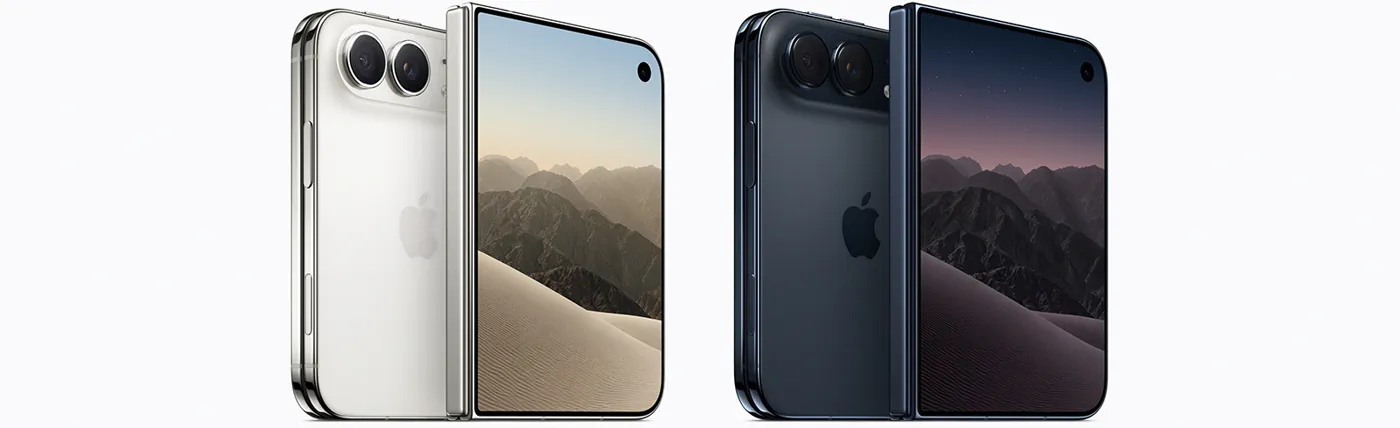 Photo: devicespecifications.com (source)
For more than half a decade, competitors in the Android ecosystem have grappled with the Achilles’ heel of foldable screens. In early generations of competing foldables, users who attempted to peel off the factory-applied protective film accidentally destroyed the display panel beneath it, prompting stern warnings and voided warranties. Even on modern Android foldables, bubbling along the crease line after twelve to eighteen months remains a standard customer complaint, requiring either specialized service center trips or complete display replacements.
Apple's choice to formally embrace the top film as a consumable, renewable component fundamentally re-architects customer expectations. Rather than treating the film as a permanent structural membrane that cannot be touched, Apple treats it similarly to an oil change or a battery replacement. It is crucial to note, however, that refreshing the top layer does not magically flatten the underlying physical hinge depression. The mechanical crease in the OLED substrate remains, but the visual haze, bubbling, micro-cracks, and tactile groove that develop on the surface film can be wiped clean with a factory reapplication.
Executive and Community Reaction
Reaction across the tech industry has reflected both relief and lingering scrutiny. Enthusiasts who balked at the iPhone Duo’s premium pricing praised Apple for avoiding exploitative out-of-warranty fees on routine screen wear. Tech commentators noted that offering a $49 standalone procedure signals confidence from Apple’s engineering team that the underlying panel will survive routine servicing without accidental delamination.
At the same time, some community skeptics expressed mild apprehension, questioning whether the inclusion of an officially documented replacement process indicates that Apple knows the inner crease will inevitably degrade faster than standard glass. As one widely shared reader response put it, the fact that Apple felt compelled to establish a dedicated service tier suggests long-term screen fatigue was an unavoidable reality during internal laboratory stress testing. Nonetheless, the consensus among prospective buyers is that having an explicit, low-cost fix is infinitely better than facing a $999 repair cliff.
The Buyer Calculus: Does Renewability Justify $2,000+?
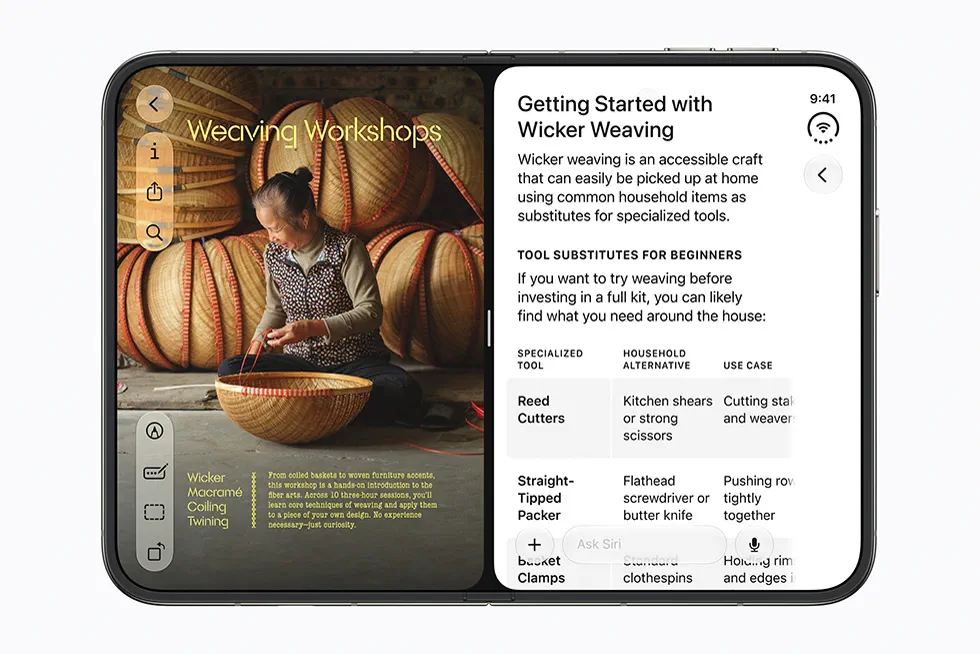 Photo: devicespecifications.com (source)
If you are on the fence about ordering an iPhone Duo, the $49 cover layer replacement significantly improves the math of device ownership. The biggest deterrent to buying first-generation foldable hardware has always been resale value and longevity: standard iPhones hold high trade-in value after two or three years, whereas used foldables often suffer dramatic depreciation once their screens show visible wear.
By keeping the out-of-warranty refresh price under $50, Apple provides an avenue to maintain the cosmetic health and resale value of the iPhone Duo. An owner planning to sell or trade in the phone after two years can simply spend $49 at an Apple Store to eliminate accumulated surface scuffs and restore factory clarity. For users considering Apple's monthly leasing or upgrade programs—where payments can be offset by keeping hardware in pristine condition—the renewable film operates as an inexpensive insurance policy against everyday cosmetic degradation.
Availability and What to Expect Next
The iPhone Duo officially launches with pre-orders beginning on Friday, October 16, 2026, with retail availability and shipments starting Friday, October 23, 2026, across more than 70 countries. The device is offered in two finishes, Star White and Night Sky, powered by the A20 Pro system-on-chip.
What remains to be detailed is the exact operational procedure for replacing the layer. While Apple has officially categorized the service in its pricing catalogs, the company has not yet clarified whether the procedure can be performed while you wait at an Apple Store Genius Bar, whether it requires automated alignment machinery, or whether self-service repair kits might eventually be offered to adventurous consumers. Those operational specifics will become apparent as units land in hands and service centers begin taking repair bookings later this month.
FAQ
Does replacing the cover layer completely remove the screen crease? No. The underlying OLED panel and hinge mechanism retain their physical fold contour, but replacing the nano-texture cover layer eliminates surface-level fatigue, micro-scratches, and optical distortion that make the crease look more severe over time.
Can customers peel off and replace the layer themselves at home? Apple has not announced a self-service option, and customers should not attempt to pull off the factory film with makeshift tools. The replacement is designed to be performed through Apple Retail Stores and Apple Authorized Service Providers.
How much does the cover layer replacement cost? The service costs $19 for customers who have an active AppleCare+ coverage plan and $49 for those seeking out-of-warranty service.
What are the storage tiers and starting prices for the iPhone Duo? The iPhone Duo starts at $1,999 for the 256GB base model, with higher storage capacities scaling up to $3,199 for the 2TB model.
When can I buy the iPhone Duo? Pre-orders open on October 16, 2026, and the device arrives in stores and ships to customers starting October 23, 2026.