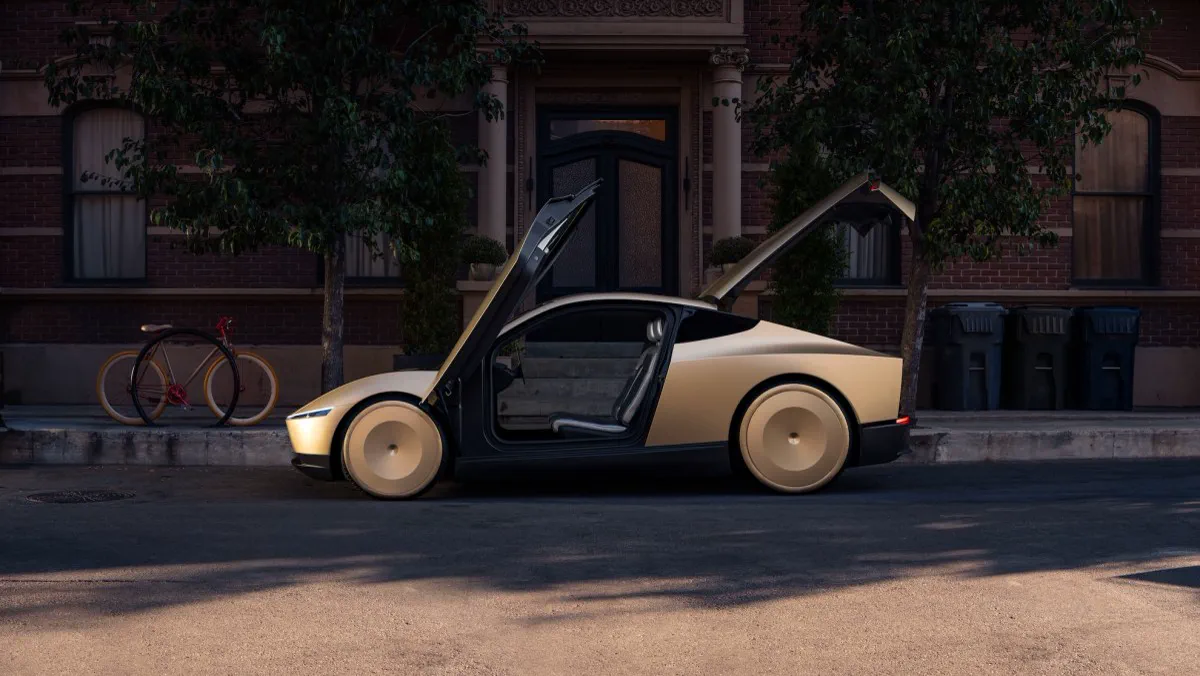
Tesla plans to begin delivering its purpose-built Cybercab robotaxi to retail customers before the close of 2026, executives confirmed during the company's third-quarter earnings call. The timeline moves the futuristic, control-free two-seater into customer hands far sooner than many industry analysts anticipated, even as federal auto safety regulators scrutinize whether the vehicle legally complies with federal design and crash standards.
Speaking to investors on October 21, Lars Moravy, Tesla's vice president of vehicle engineering, announced that while existing assembly lines at Gigafactory Texas are currently funneling vehicles into Tesla's internal commercial network, initial deliveries to private customers are scheduled to start at a modest scale before the calendar turns. The announcement puts a firm timeline on private sales of a vehicle that completely omits steering wheels, pedals, and mirrors, relying entirely on camera-based autonomous software.
What Tesla Announced on Its Q3 Earnings Call
During Tesla's third-quarter financial presentation, management outlined its roadmap for transitioning the Cybercab from an in-house development project to a commercially distributed vehicle. Lars Moravy confirmed that the company is actively preparing to place the first Cybercabs into consumer hands by the end of 2026.
"As Tesla grows, we'll mainly deliver fully designed autonomous vehicles to our customers and Cybercabs will be the first," Moravy told analysts. "We're trying to get Cybercabs to customers by the end of this year, 2026. As we start small this year, and we learn about delivery and ownership and fleet management of autonomous vehicles in customer hands, we'll continue to scale that."
Moravy clarified that every Cybercab rolling off the production line in Austin, Texas, is currently being routed into Tesla’s owned-and-operated ride-hailing fleet. Initial customer deliveries will serve essentially as an operational pilot, allowing Tesla to study delivery logistics, maintenance, customer ownership dynamics, and off-premise fleet management before opening the floodgates to mass retail volume.
Watch: World’s first public Tesla Cybercab ride no steering wheel

Video: Sawyer Merritt on YouTube
Concrete Details: Specs, Pricing, and Hardware
 Photo: TechCrunch (source)
The Cybercab differs fundamentally from standard Tesla passenger vehicles like the Model 3 and Model Y. Engineered from the ground up strictly as an autonomous platform, the vehicle eliminates human controls entirely.
Key design attributes and hardware specifications include:
- Cabin Architecture: A compact, two-passenger cabin with no steering wheel, accelerator pedal, brake pedal, or rear-view mirrors.
- Ingress and Styling: Upward-swinging butterfly doors and a distinct metallic gold exterior finish.
- Charging System: Complete omission of a standard NACS charging port in favor of high-power inductive wireless charging pads built into the underside of the chassis.
- Sensor Suite: An exclusively vision-based sensor array using exterior optical cameras paired with Tesla's custom AI inference computers, completely eschewing lidar, radar, and ultrasonic sensors.
- Target Pricing: CEO Elon Musk has previously targeted a retail base price of under $30,000, positioning the vehicle as an affordable transit solution.
- Software Timeline: Ashok Elluswamy, Tesla's head of AI, stated during the earnings call that broad Unsupervised Full Self-Driving (FSD) capability is anticipated to reach customer vehicles during Q2 2027.
| Specification / Feature | Tesla Cybercab | Tesla Model 3 (Standard RWD) | Waymo 6th-Gen (Zeekr Platform) |
|---|---|---|---|
| Seating Capacity | 2 passengers | 5 passengers | 4–5 passengers |
| Steering Wheel & Pedals | None (Fully removed) | Standard manual controls | None (Designed without controls) |
| Sensor Philosophy | Pure Vision (Cameras only) | Pure Vision (Cameras only) | Multimodal (Lidar, Radar, Cameras) |
| Charging Method | Inductive wireless | Wired (NACS port) | Wired / Depot automated |
| Target Price / Availability | Under $30,000; private sales late 2026 | From ~$39,000; available now | Fleet-only commercial operation (Not for sale) |
| Target Market | Robotaxi fleets & retail buyers | General consumer retail | Waymo One ride-hailing network |
The Federal Regulatory Hurdle: NHTSA's Active Audit
Tesla's ambitious delivery timetable faces an immediate roadblock in Washington. The National Highway Traffic Safety Administration (NHTSA) opened an active regulatory investigation—an Open Audit Query designated as AQ26002—into the Cybercab in early September 2026.
Under the United States regulatory framework, automakers self-certify that their production vehicles satisfy all Federal Motor Vehicle Safety Standards (FMVSS). Historically, these federal standards explicitly require foundational physical hardware designed around a human driver, such as foot brakes, steering columns, and optical mirrors. Competitors seeking to test or operate vehicles without manual controls have traditionally applied for federal regulatory exemptions, which limit deployment to caps of 2,500 vehicles per year.
Tesla, however, bypassed the exemption petition process, asserting that the Cybercab inherently meets all applicable FMVSS criteria through self-certification. NHTSA's Office of Defects Investigation launched its audit covering approximately 1,000 Cybercab vehicles just hours after Tesla launched commercial passenger service in Austin, Texas. Regulators are examining the specific technical data and engineering methodologies Tesla relied upon to certify a control-free vehicle as road-legal.
Until NHTSA completes its audit, it remains unresolved whether privately purchased Cybercabs can legally operate on public roads across all 50 states without human intervention mechanisms or state-specific autonomous vehicle permits.
Background: From Unveiling to Austin Commercial Rides
The road to private deliveries has unfolded rapidly over the past two years. After years of conceptual sketches and autonomy promises, Tesla formally unveiled the physical Cybercab prototype at its "We, Robot" showcase in Southern California. The company began pilot production on specialized assembly lines at Gigafactory Texas in early 2026.
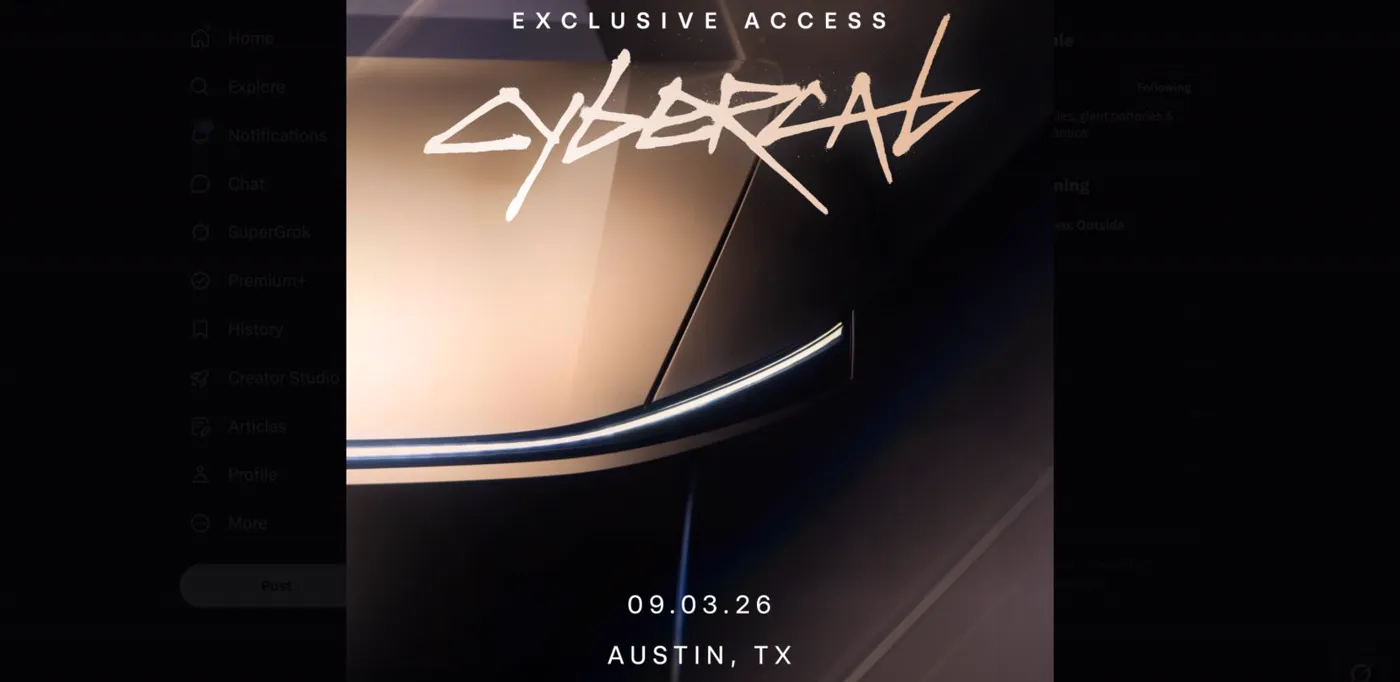
In early September 2026, Tesla transitioned the vehicle into active service by deploying dozens of Cybercabs onto public streets in downtown Austin, Texas. The program launched as a paid ride-hailing pilot available to selected shareholders, app users, and invitees. Following the Austin debut, Tesla introduced an online interest form on its website allowing private fleet managers and individual enthusiasts to sign up for potential allocations, signaling that retail distribution was under active consideration.
Musk indicated that the internal ride-hailing footprint will soon expand from Austin into Dallas and other metropolitan centers across Texas and Florida, establishing commercial operational data ahead of broad customer shipments.
Personal Ownership vs. Transport-as-a-Service
While Moravy’s announcement confirms that customer sales are on track, Elon Musk moved quickly to temper expectations regarding the volume of consumer deliveries. Throughout the earnings call, Musk reiterated that Tesla's overarching corporate focus remains a centralized "Transport-as-a-Service" (TaaS) business model.
"The vast majority of the Cybercab stuff will be Tesla-owned and transport-as-a-service," Musk stressed. Rather than flooding dealer channels with cheap consumer cars, Tesla intends to run a ride-hailing network structured similarly to Airbnb or Uber, maintaining ownership of the bulk of its fleet to capture high-margin recurring software revenues.
Musk highlighted that privately purchased Cybercabs will function within that ecosystem: individual owners can potentially list their vehicles on Tesla’s shared autonomous network when not in personal use, earning revenue while Tesla takes a platform commission.
What This Means for Prospective Buyers
For consumers interested in owning a Cybercab, the year-end delivery goal brings both practical possibilities and significant caveats:
- Patience with Small Batches: Early deliveries in late 2026 will be strictly restricted in volume. Early recipients will effectively act as beta testing partners as Tesla sorts out operational support.
- Geographic Constraints: Because state autonomous vehicle laws vary dramatically, early private owners will likely be confined to specific operational domains in states with permissive autonomous legislation, such as Texas and Arizona.
- Two-Seat Practicality: The Cybercab is explicitly designed as an urban commuter and taxi. With only two bucket seats and a hatchback luggage hold, it cannot serve as a direct family vehicle replacement for a Model Y or Model 3.
- Home Charging Upgrades: Because the Cybercab relies on inductive wireless charging, buyers may need specialized ground pad installations rather than conventional Level 2 NACS wall connectors.
Unanswered Questions and What Happens Next
Tesla’s announcement leaves several critical operational questions unanswered as the fourth quarter progresses:
- Pricing and Ordering: Tesla has not yet published an official order configurator, finalized options, or confirmed the final retail window sticker beyond the broad sub-$30,000 estimate.
- Regulatory Sanction: If NHTSA's safety audit concludes that self-certification does not exempt Tesla from physical control mandates, Tesla could face production pauses, recalls, or the requirement to pursue formal exemption waivers.
- FSD Unsupervised Validation: With full consumer rollout of Unsupervised FSD slated for Q2 2027, how early buyers will deploy Cybercabs in late 2026 without human controls remains an open engineering question.
Tesla will continue its initial fleet expansion in Texas through the remainder of the quarter while regulatory talks with federal officials proceed behind closed doors.
FAQ
When will customers actually receive their Cybercabs?
Tesla engineering vice president Lars Moravy stated that customer deliveries are slated to begin in small numbers by the end of 2026, with production scaling gradually into 2027.
How much will the Cybercab cost?
Elon Musk has previously targeted a retail starting price of under $30,000, though Tesla has not yet opened formal customer order banks or confirmed final pricing specifications.
Can you drive the Cybercab yourself if the software fails?
No. The Cybercab completely lacks a steering wheel, accelerator pedal, brake pedal, or mirrors, meaning human occupants cannot manually take over control of the vehicle.
Why is NHTSA investigating the Cybercab?
Federal regulators opened an audit in September 2026 to determine whether Tesla's self-certification complies with Federal Motor Vehicle Safety Standards, which historically require standard manual driver controls.
Will most Cybercabs be sold to regular drivers?
No. Tesla management clarified that the vast majority of Cybercab production will remain owned and operated directly by Tesla as part of its commercial autonomous ride-hailing service.