Book-style foldable smartphones now unfurl into screens reaching up to 8 inches, prompting many gadget owners to question whether carrying a dedicated tablet is still necessary. With modern foldables delivering expansive displays, stylus compatibility, and desktop-grade multitasking in a chassis that fits into a pocket, consolidating two mobile gadgets into one has never looked more practical. However, making the switch involves substantial compromises in ergonomics, battery endurance, software optimization, and price.
The Screen Size Convergence: Pocketable Panels Meet Mini Tablets
For years, the compact tablet market has been defined by 8- to 9-inch slabs, epitomized by Apple's 8.3-inch iPad Mini. That size offers enough digital real estate for reading books, browsing multi-column websites, and juggling split-screen apps without requiring a bulky backpack.
Modern book-style foldables—such as the Samsung Galaxy Z Fold series and the Google Pixel Fold lineup—have expanded their inner screens to 8.0 inches. When opened, the diagonal difference between an 8.0-inch foldable and an 8.3-inch iPad Mini is merely 0.3 inches. Because foldables feature ultra-thin bezels, the usable active area feels remarkably comparable in the palm.
The fundamental distinction lies in their physical footprints when not in active use. A traditional tablet remains a rigid sheet of metal and glass measuring around 5.3 inches wide and 7.7 inches tall. A book-style foldable snaps in half, transforming into a standard-profile phone that slides directly into a pocket or small clutch.
| Device | Unfolded Screen Size | Panel Type & Refresh Rate | Folded Dimensions / Thickness | Starting Price |
|---|---|---|---|---|
| Apple iPad Mini (7th Gen) | 8.3-inch (LCD) | 60Hz Liquid Retina | 7.69 x 5.3 x 0.25 in (Rigid) | $499 |
| Samsung Galaxy Z Fold 7 | 8.0-inch (AMOLED) | 1–120Hz Dynamic LTPO | 6.5-inch cover screen | $1,899 |
| Google Pixel 10 Pro Fold | 8.0-inch (OLED) | 1–120Hz Super Actua | 6.3-inch cover screen | $1,799 |
| Apple iPhone Duo / Foldable | 7.6-inch (OLED) | 1–120Hz ProMotion | Standard iPhone footprint | $1,999 (Est.) |
Portability and Connectivity: The Single-Device Advantage
 Photo: Engadget - Technology News & Expert Reviews (source)
The primary appeal of replacing a tablet with a foldable is convenience. Most tablet users do not bring their slates everywhere; tablets often remain on nightstands, coffee tables, or tucked away until boarding a flight. With a foldable, the large screen is always on your person. Whether sitting in an unexpected waiting room, commuting on transit, or reviewing a document at lunch, an 8-inch canvas is instantly available.
Cellular simplicity is another major benefit. Most standalone tablets are Wi-Fi-only models, meaning users outside home networks must deal with spotty public connections or toggle phone hotspots—a process that drains phone batteries and may incur mobile plan surcharges. Cellular-equipped tablets require purchasing a separate hardware model (usually a $150 premium) plus an additional monthly carrier line fee of $10 to $20. A foldable operates entirely on your primary mobile line, delivering continuous 5G access on both its cover screen and interior display without extra subscription costs.
Multitasking and Software: How Productivity Holds Up
Mobile operating systems have evolved to take advantage of foldable hardware. On Android foldables, features like persistent taskbars, three-app split-screen layouts, and floating window support make cross-referencing information fast. Users can keep Slack open alongside a Google Doc while referencing a browser window on a single panel.
Stylus support has also crossed the gap. Devices like Samsung's Fold line support the S Pen on their interior flexible glass, while Apple's emerging foldable tech integrates Apple Pencil input. Users can annotate PDFs, sketch diagrams, and sign contracts directly on the unfolded screen. Samsung's DeX desktop interface even lets users connect to an external monitor, mouse, and keyboard, effectively using the phone as a portable PC.
However, software optimization remains uneven. While tablet-native platforms like iPadOS feature extensive software libraries rebuilt specifically for larger layouts, many Android apps still stretch smartphone interfaces to fill square foldable aspect ratios.
Where Traditional Tablets Still Dominate
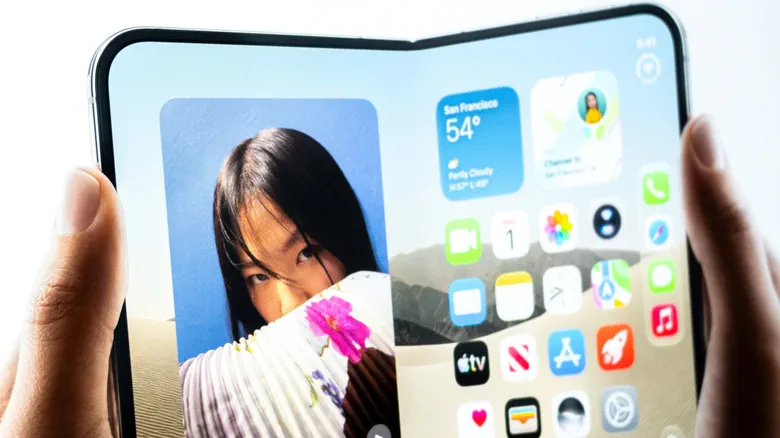 Photo: Engadget - Technology News & Expert Reviews (source)
Despite the impressive engineering of foldables, dedicated tablets maintain several structural advantages:
- Aspect Ratios and Video Playback: Foldables typically unfold into nearly square aspect ratios (such as 6:5 or 1:1). When watching standard 16:9 or 21:9 cinematic video, massive black bars (letterboxing) appear along the top and bottom. The actual video image on an 8.0-inch foldable screen is often no larger than the image displayed on an 8.3-inch tablet or even a large 6.9-inch slab phone held horizontally.
- Ergonomics and Creative Canvas: For intensive creative work—including professional illustration, graphic design, and 4K timeline video editing—tablets offer a much firmer surface. Drawing on rigid tempered glass feels vastly different from drawing on ultra-thin flexible glass, which still features a tactile central crease and softer surface coatings.
- Battery Compartmentalization: Running a massive 120Hz display, high-end modem, and desktop-style multitasking puts significant strain on a phone's battery pack (typically around 4,400 to 5,000 mAh). If heavy use drains a foldable by 3:00 PM, you lose your primary phone, communication tool, and navigation system. A dedicated tablet isolates media consumption and work, preserving your phone's battery for vital tasks.
- Durability and Longevity: Tablets sit in protective rigid shells without mechanical hinges or interior folding points. Foldable phones possess mechanical hinges and softer internal screens that remain more vulnerable to dust, grit, and drops over multi-year lifespans.
The Financial Calculation: All-in-One vs. Split Devices
Consolidating two gadgets into one does not automatically translate to financial savings. High-tier foldables remain among the most expensive consumer electronics on the market.
A typical flagship foldable retails between $1,799 and $1,999. Conversely, a consumer purchasing a premium traditional smartphone (such as a baseline iPhone 17 or Galaxy S26 for $799 to $999) alongside a dedicated mid-tier tablet (such as an iPad Mini for $499 or a 10th/11th-gen iPad for $349) spends between $1,150 and $1,499 in total. Opting for the two-device route often leaves $300 to $650 in your pocket while delivering two distinct batteries and larger dedicated screens.
Practical Buyer Guidance: Should You Make the Switch?
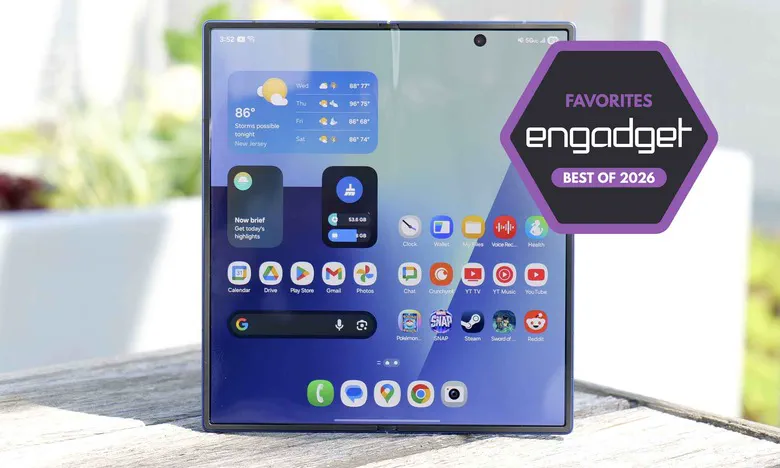 Photo: engadget.com (source)
Deciding whether to replace your tablet hinges entirely on your daily usage patterns:
- Switch to a foldable if: Your tablet use is primarily casual—reading eBooks, browsing the web, managing emails, triaging documents, and light multitasking on the go. If you frequently leave your tablet at home because it is too cumbersome to pack, a foldable puts that larger display in your pocket 24/7.
- Keep your tablet if: Your tablet is a critical creative or professional tool. Digital artists who rely on precision pressure sensitivity, professionals working with complex spreadsheets, video editors, and mobile gamers who prioritize 10-hour screen-on time will find foldables cramped and battery-constrained. Furthermore, if your tablet is shared among family members or children, handoff to a $1,800 phone is impractical.
What Comes Next for the Category?
The boundary between phones and tablets will blur further as manufacturing matures. Display makers are deploying titanium backplates and zero-gap hinge assemblies that virtually eliminate visible screen creases. Meanwhile, early tri-fold smartphones demonstrate that devices can expand from a standard phone profile into 10-inch displays, matching the size of full-sized tablets like the iPad Air rather than merely compact minis. Until manufacturing costs decrease and battery chemistry improves, the decision to ditch a tablet remains a personal trade-off between pocketable convenience and specialized endurance.
FAQ
Is an 8-inch foldable screen really the same size as an 8.3-inch iPad Mini?
Diagonal measurements are close, but aspect ratios differ. Foldables feature squarer proportions, offering similar vertical height for reading but slightly less horizontal width when viewing widescreen media.
Does drawing on a foldable feel like drawing on a tablet?
No. While foldables support active styluses, the screen surface uses flexible polymer-layered ultra-thin glass. It feels slightly softer under the pen tip than the rigid, chemically strengthened glass of a tablet, and you can feel the center crease when dragging across the middle.
Will using the large internal screen drain my phone battery too quickly?
Yes. Powering an 8-inch high-refresh-rate panel consumes significantly more energy than using an exterior 6-inch screen. Heavy productivity or gaming on the inner screen can deplete the battery well before the end of the day.
Can a foldable phone replace a 10-inch or 11-inch tablet?
No. Foldables directly challenge 8-inch compact tablets like the iPad Mini. Full-sized 10- to 13-inch tablets offer far more display surface area, making them vastly superior for split-screen desktop apps, external keyboard attachments, and sheet music display.
Is it cheaper to buy one foldable phone instead of a phone and tablet?
Generally, no. Most book-style foldables retail between $1,800 and $2,000. You can typically purchase a flagship slab phone ($800–$1,000) and an iPad Mini ($499) for several hundred dollars less.