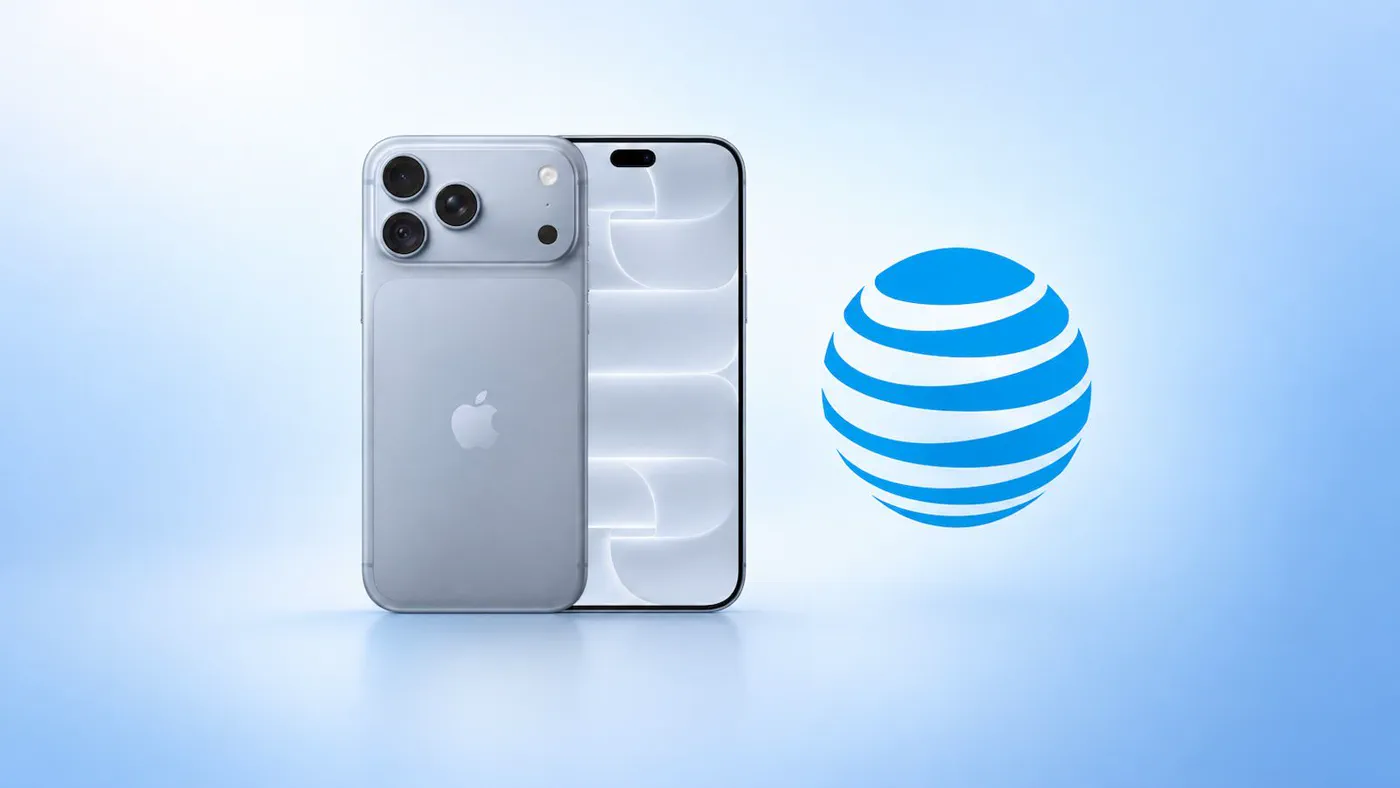
AT&T began issuing urgent alerts to wireless subscribers on Thursday, October 1, acknowledging that owners of Apple’s flagship iPhone 18 Pro Max are suffering severe cellular failures that can block phone calls, cellular data, and emergency calls to 911. The carrier is urging all affected device owners to install Apple's recently published iOS 27.0.1 update immediately to restore connectivity, but thousands of customers report that the software update fails to solve the breakdown.
The widespread disruption has left users across the United States locked out of mobile network services, with devices intermittently or permanently dropping into SOS mode. While AT&T points customers toward Apple’s software pipeline, Apple's official documentation for iOS 27.0.1 makes no mention of baseband or cellular fixes, creating widespread confusion among new device owners.
Inside AT&T's Urgent Alert to iPhone 18 Pro Max Owners
The formal confirmation from AT&T arrived via automated SMS messages delivered directly to affected customer accounts. The text warned that cellular functionality could degrade entirely without an immediate operating system update.
The full notice sent by the carrier states:
"Hi, it's AT&T. Action needed: An important Apple software update for your iPhone 18 Pro Max is available. Some phones may be unable to complete calls/text/data, including to 911. Update to iOS 27.0.1 immediately — Settings > General > Software Update. Please contact AT&T or Apple if you have questions."
Subscribers quickly pointed out the dark irony of the delivery mechanism: AT&T utilized text messaging to notify customers of a flaw that actively prevents devices from sending or receiving SMS messages. For subscribers whose devices had already dropped into SOS mode, the warning was impossible to receive over cellular channels, appearing only when users reconnected to local Wi-Fi networks.
Watch: iPhone 18 Pro Max Cellular Issues FIXED

Video: Technomentary on YouTube
The Problem: Persistent Disconnects and the SOS Trap
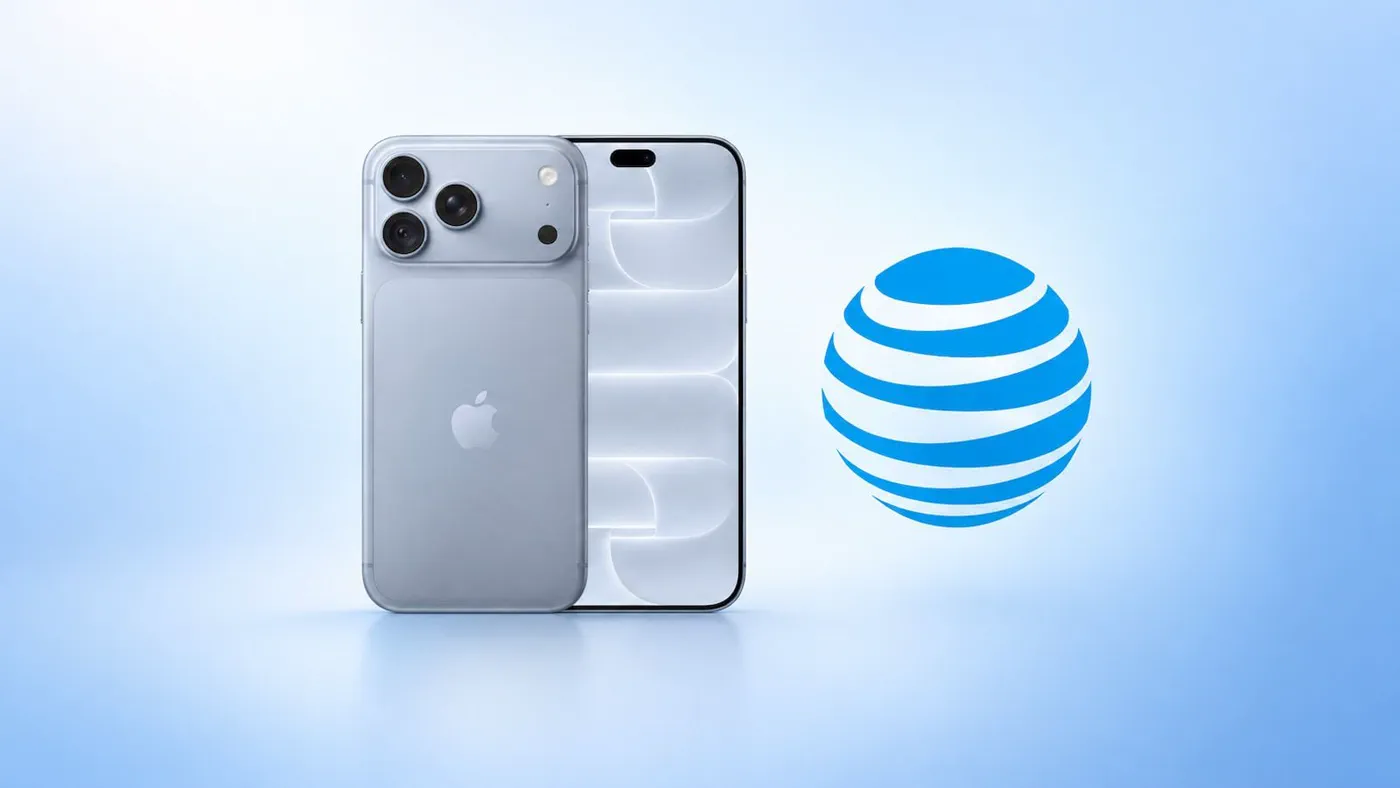 Photo: MacRumors: Mac News and Rumors - Front Page (source)
Symptoms began surfacing shortly after Apple launched its flagship hardware lineup in September. Affected customers report that their brand-new $1,299 handsets will suddenly drop all network bars, display "No Service," or enter satellite "SOS" mode.
For some users, the problem manifests as an intermittent network drop that temporarily resolves following a device reboot or an Airplane Mode toggle. For thousands of others, the failure is persistent, permanently barring them from reaching the AT&T network for voice calls, SMS, and high-speed data. Beyond daily communication hurdles, the inability to place outgoing calls to 911 has turned a hardware annoyance into a critical consumer safety hazard.
Discussion threads across the Apple Support Community, Reddit, and MacRumors Forums have accumulated thousands of identical complaints over the past week. Users have also documented severe eSIM activation failures, where attempts to reprovision or transfer an existing AT&T cellular plan to the iPhone 18 Pro Max hang indefinitely or report unresolvable server errors.
What iOS 27.0.1 Actually Fixes (and Why It Isn't Cellular)
AT&T’s insistence that customers install iOS 27.0.1 conflicts directly with Apple’s official release notes. When Apple shipped iOS 27.0.1 on September 28—two weeks after rolling out iOS 27—the maintenance release was narrowly targeted at a small handful of isolated bugs.
According to Apple's changelog, iOS 27.0.1 addressed three specific problems:
- An issue where the iPhone 18 Pro and iPhone 18 Pro Max may unexpectedly restart when Face ID fails to authenticate.
- A glitch causing a color artifact to appear on photos captured at 2x zoom under specific lighting conditions at f/1.48 on iPhone 18 Pro models.
- A bug where attempting to swipe down the Notification Center and Control Center simultaneously caused the touchscreen display to freeze.
The update included no modem firmware revisions, carrier bundle adjustments, or cellular protocol patches. Consequently, users who followed AT&T’s advice found that after downloading the roughly 1GB update and rebooting, their phones remained stranded in SOS mode.
The Hardware Factor: Qualcomm vs. Apple's C2 Modem
Industry observers and network engineers have pointed to an important hardware divergence in Apple's current product generation. The U.S. model of the iPhone 18 Pro Max is uniquely equipped with a discrete Qualcomm 5G cellular modem.
By contrast, every other handset in Apple's latest generation—including the smaller 6.3-inch iPhone 18 Pro, the foldable iPhone Duo, and even international variants of the iPhone 18 Pro Max—features Apple’s custom in-house C2 modem chip. The domestic iPhone 18 Pro Max was configured with Qualcomm silicon to support specific high-band millimeter-wave (mmWave) and carrier-specific 5G+ mid-band frequencies, such as AT&T's n77 C-band and n260 spectra.
| Device Model | Modem Silicon | AT&T Cellular Issue Reported? | Base Storage | Starting Price |
|---|---|---|---|---|
| iPhone 18 Pro (Worldwide) | Apple C2 Modem | No widespread reports | 256GB | $1,199 |
| iPhone 18 Pro Max (U.S.) | Qualcomm Modem | Yes (Thousands of confirmed cases) | 256GB | $1,299 |
| iPhone 18 Pro Max (Global) | Apple C2 Modem | No widespread reports | 256GB | Country Dependent |
| iPhone Duo (Worldwide) | Apple C2 Modem | No widespread reports | 256GB | $1,499 |
While neither Apple nor AT&T has confirmed whether the root cause lies within Qualcomm's baseband firmware, AT&T's network configuration profiles, or Apple’s low-level radio interface layer, the correlation has focused intense scrutiny on the U.S. baseband architecture.
Customer Outcry and Support Bottlenecks
Frustrated owners have flocked to carrier stores and Apple retail locations seeking warranty replacements, only to face mixed responses from frontline support teams. In multiple instances shared on public forums, users who received replacement iPhone 18 Pro Max units discovered the exact same cellular failures upon activating their new device on AT&T.
Customer service representatives have offered contradictory advice, ranging from manual network resets to swapping virtual eSIM profiles multiple times. AT&T’s internal escalation teams appear to have defaulted to pointing subscribers toward iOS 27.0.1 simply because it was Apple’s most recent software drop, leaving consumers trapped between a carrier that blames phone software and a device manufacturer that has remained officially silent.
What Affected Owners Should Do Right Now
If your iPhone 18 Pro Max is experiencing dropped connections or displaying "SOS Only" on AT&T, tech specialists recommend several practical steps to maintain basic communication:
- Enable Wi-Fi Calling Immediately: Connect to home or office broadband, navigate to Settings > Cellular > Wi-Fi Calling, and toggle the switch on. This routes voice calls and standard SMS messages through your internet connection, circumventing the broken cellular link.
- Install Available Updates: While iOS 27.0.1 does not fix the cellular bug, installing it eliminates the companion Face ID reboot bug and ensures your handset is ready for secondary carrier updates.
- Check for Carrier Settings Updates: Go to Settings > General > About. If AT&T pushes an over-the-air network profile fix, a pop-up prompting you to update carrier settings will appear after lingering on this screen for 15–30 seconds.
- Perform a Network Reset: Navigate to Settings > General > Transfer or Reset iPhone > Reset > Reset Network Settings. Note that this clears saved Wi-Fi passwords and Bluetooth connections, but it can occasionally jumpstart cellular handshakes.
- Contact Support for an eSIM Refresh: In some situations, asking an AT&T tier-2 technical agent to delete and reprovision the device's eSIM profile from the backend restores network registration.
What Happens Next: Waiting on iOS 27.0.2
Because iOS 27.0.1 has failed to resolve the connectivity loss, the burden now falls squarely on Apple and AT&T engineering teams. If the malfunction stems from software interaction between iOS 27 and the Qualcomm baseband, Apple will need to rush out a dedicated point release—likely labeled iOS 27.0.2—containing an updated cellular firmware image.
Alternatively, if the flaw is rooted in how AT&T towers authenticate device identification credentials across its 5G+ spectrum, a carrier bundle update pushed through cellular settings may resolve the dilemma without requiring a full operating system installation.
However, if the failure exposes an unexpected hardware-level flaw within the U.S. antenna assembly or modem integration, Apple and AT&T could face an expensive replacement or repair program. For now, buyers holding the company's flagship $1,299 smartphone must rely heavily on Wi-Fi connections while awaiting an official software remedy.
FAQ
Why did AT&T tell users to install iOS 27.0.1?
AT&T advised subscribers to update because iOS 27.0.1 is Apple's latest software release, but the carrier appears to have mistakenly assumed the update patched cellular faults. Apple's release notes confirm the patch only addresses Face ID restarts, camera artifacts, and touchscreen gestures.
Are other carriers like Verizon or T-Mobile affected?
The widespread dropped calls and SOS lockouts are isolated to AT&T's network. Verizon and T-Mobile customers utilizing the iPhone 18 Pro Max have not reported widespread cellular disconnects.
Does this issue affect the standard iPhone 18 Pro?
No. The standard iPhone 18 Pro uses Apple’s in-house C2 modem and has not exhibited the wide-scale cellular failure currently impacting the U.S. iPhone 18 Pro Max.
Can I still make emergency calls if my phone is in SOS mode?
While SOS mode is theoretically designed to allow emergency calls by roaming onto any available cellular network, AT&T explicitly warned that some affected devices are unable to complete calls to 911. Owners should maintain access to Wi-Fi Calling or a backup phone until the issue is patched.
When will a working fix be released?
Neither Apple nor AT&T has provided an exact release date for a cellular fix. If a baseband update is required, Apple will likely issue iOS 27.0.2 in the near future, alongside corresponding carrier profile updates.