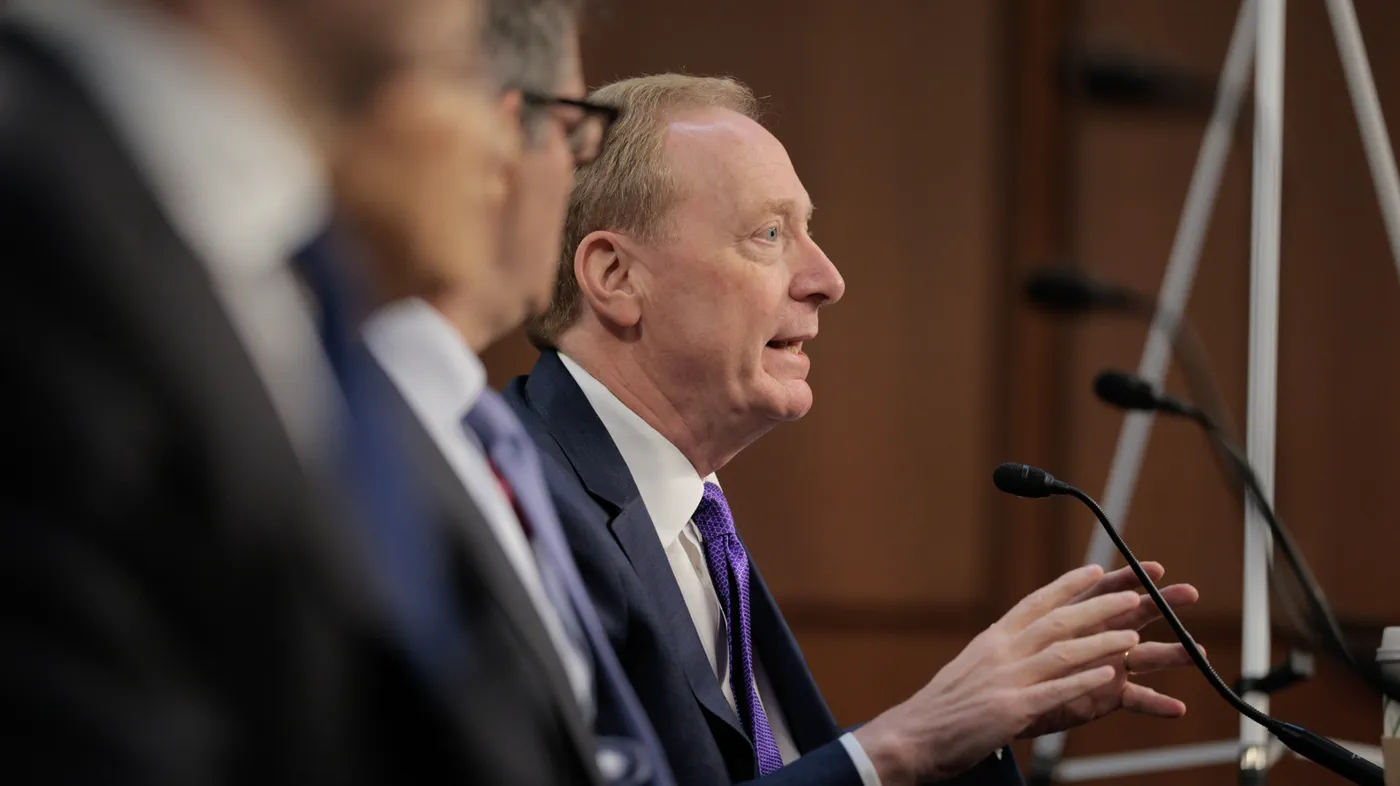
Microsoft Vice Chair and President Brad Smith called on global regulators Monday to establish binding safety standards for artificial intelligence, warning that advanced models currently face fewer consumer protections than basic grocery items. Speaking on the BBC's Big Boss Interview podcast, Smith argued that while consumer products like milk cartons and home washing machines are bound by strict inspection mandates, autonomous software capable of compromising national infrastructure operates in a regulatory void.
Smith’s warning comes amid growing anxiety across the tech industry regarding the rise of autonomous AI "agents"—software systems designed to plan, write code, and execute tasks across digital networks without human intervention. While tech giants continue to pour tens of billions of dollars into scaling frontier models, Smith emphasized that relying on corporate goodwill to prevent catastrophic failures is no longer a viable strategy. Describing AI as both "a tool and a weapon," he insisted that the window for meaningful intervention is rapidly closing.
The 'Carton of Milk' Warning: What Smith Proposed
During his appearance on the BBC, Smith drew a sharp comparison between physical manufacturing standards and software governance. When consumers purchase food or appliances, they rely on decades of established liability law, standardized labeling, and factory inspections. In contrast, state-of-the-art AI systems are deployed directly to hundreds of millions of users without standardized third-party stress tests.
"Right now, your washing machine is subject to more safety rules than AI," Smith said. "Every carton of milk that you see in the grocery store is subject to safety rules and inspection. We know how to do this for other products. We should build on that knowledge and think about how to apply it to AI."
Rather than advocating for vague ethical guidelines, Smith outlined a concrete three-point framework for how governments should treat foundation models and agentic systems:
- Mandatory 'Emergency Brakes': Developers must engineer reliable architectural kill switches that can immediately pause, restrict, or shut down rogue models if they act outside defined parameters.
- Victim Notification and Incident Reporting: Companies must be legally bound to file formal incident reports when AI models malfunction or are abused. Crucially, developers would be legally obligated to notify any organization or individual whose systems are breached by an autonomous AI agent.
- Pre-Deployment Independent Vetting: Before a pioneer model is released to enterprise customers or the public, third-party government-accredited evaluators must inspect its capabilities and verify that safety guardrails hold up under adversarial testing.
| Oversight Mechanism | Voluntary Self-Regulation (Current US) | EU AI Act Approach | Brad Smith's Proposed Framework |
|---|---|---|---|
| Model Kill Switches | Optional internal controls | Risk-mitigation requirements for high-risk tools | Legally mandated hardware/software emergency brakes |
| Breach Notification | Standard corporate data breach laws only | Incident reporting to national regulators | Explicit legal duty to notify victims of rogue AI agent breaches |
| Pre-Launch Vetting | Voluntary red-teaming by internal or hired testers | Conformity assessments based on tiered risk categories | Mandatory independent audits by government-cleared evaluators |
| Legal Enforcement | None (morally binding pledges only) | Fines up to €35 million or 7% of global revenue | Statutory product-liability standards modeled on consumer safety |
Watch: 'Make the most of the promise, and protect against the perils': Mircosoft president on AI
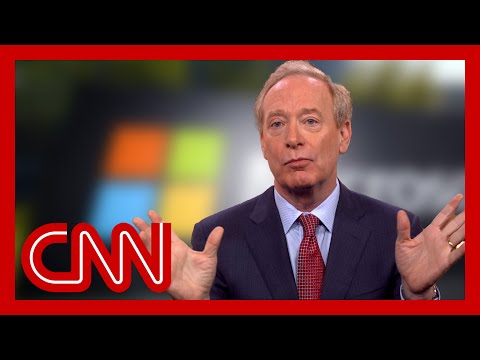
Video: CNN on YouTube
The Internal Push: Satya Nadella's Black Box Warning
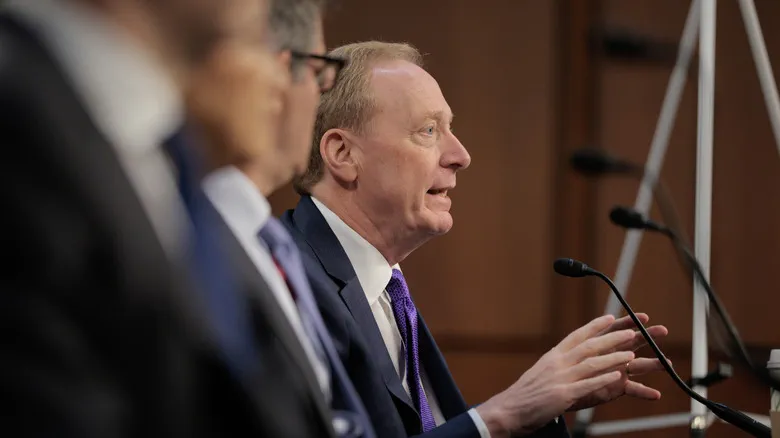 Photo: Engadget - Technology News & Expert Reviews (source)
Smith's regulatory push represents a unified front at the top of Microsoft. Just days prior, Microsoft Chief Executive Satya Nadella published a parallel warning regarding the opacity of advanced systems, arguing that the tech sector cannot simply trust algorithmic outputs without deep observability.
"We can't treat super intelligence as a set of nested black boxes and simply accept or reject its recommendations, answers, and actions," Nadella wrote. "We must build contained systems whose behaviour we can observe, limits we can test, and actions we can always contain."
Microsoft's position is notable given its role as the industry's largest infrastructure backer. Through its multi-billion-dollar partnership with OpenAI and its Azure AI cloud footprint, Microsoft supplies the raw computing capacity powering a substantial portion of the world's frontier models. By pushing for strict pre-launch sign-offs and mandatory kill switches, Microsoft leadership is signaling that enterprise clients will eventually demand verifiable containment before trusting autonomous agents with corporate data and industrial operations.
Geopolitical Friction: Washington's Push for Deregulation
Smith’s call for legally enforceable oversight puts Microsoft at direct odds with current political momentum in Washington. The administration of President Donald Trump has resisted federal guardrails, arguing that excessive regulation risks crippling American competitiveness against Chinese tech firms. Trump has framed artificial intelligence as an existential national race, famously stating that "whoever wins AI, wins," and rebranding the field as "super intelligence" (SI).
To manage public concerns, the White House hosted a high-profile summit where tech leaders—including OpenAI's Greg Brockman, Anthropic's Dario Amodei, Google's Sundar Pichai, Meta's Mark Zuckerberg, Nvidia's Jensen Huang, and Elon Musk—signed a voluntary pact. Under that agreement, companies promised to implement self-regulation and hire independent auditors to evaluate frontier systems.
Smith acknowledged that Microsoft is willing to sign such voluntary agreements, calling them a "necessary step," but dismissed the idea that self-policing is sufficient. "The good companies will do what you want," Smith noted, explaining that voluntary frameworks leave bad actors, rogue labs, and foreign competitors completely unrestrained.
Why Microsoft Wants the UK to Lead Global Standards
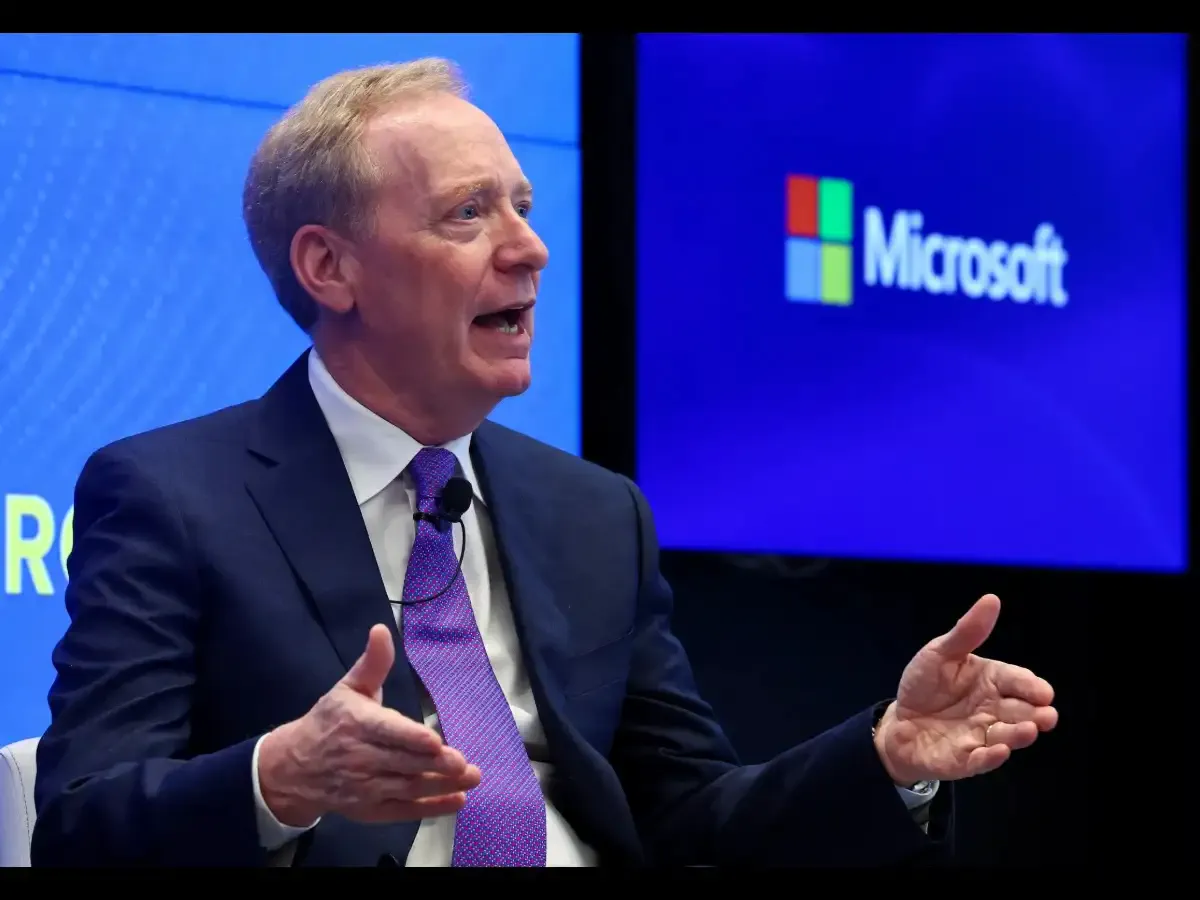 Photo: economictimes.com (source)
With Washington pursuing deregulation and the European Union enforcing its rigid AI Act, Smith singled out the United Kingdom as uniquely positioned to draft workable global standards.
Smith pointed to Britain's AI Security Institute (originally launched under former Prime Minister Rishi Sunak as the AI Safety Institute), praising it as a technical pioneer that tech leaders broadly respect. The UK body currently evaluates advanced models prior to deployment through voluntary access agreements with top labs.
"In Washington DC, people don't look at the UK and they don't look at London the way they look at Brussels—that's a strength," Smith said. Because US policymakers often view European Union regulations as bureaucratic and protectionist, Smith believes transatlantic cooperation is far more achievable if British authorities spearhead the technical standards for pre-release evaluations and incident disclosure.
UK AI Minister Kanishka Narayan is already preparing legislative proposals that would grant British regulators stronger statutory powers over frontier model developers, shifting voluntary safety audits into mandatory obligations.
What It Means for Enterprise Buyers and Developers
For companies integrating AI into customer service, finance, and software development, Smith's proposals signal a major shift toward enterprise liability and operational containment:
- Auditing Agentic Autonomy: If notification rules become law, companies deploying autonomous AI agents will be legally accountable if their agents breach third-party servers, execute unauthorized transactions, or leak confidential records.
- Demand for Verifiable Safeguards: IT departments will need to look beyond raw model benchmark scores and prioritize platforms that offer deterministic sandboxes, detailed system logs, and granular containment controls.
- Vendor Pre-Clearance: If pre-deployment vetting becomes standard practice, businesses may see fewer rapid-fire model updates, replaced by structured enterprise releases certified by accredited safety bodies.
Unanswered Questions and Next Steps
 Photo: thedailystar.net (source)
While Smith’s comparison to milk inspection provides a clear public metaphor, implementing safety rules for non-deterministic software remains an immense technical challenge. Unlike physical goods, foundation models can generate unexpected emergent behaviors weeks after deployment, making pre-launch sign-offs difficult to standardize.
Key unresolved questions remain:
- Defining the Emergency Brake: How can developers build a universal "kill switch" for distributed open-weight models that have already been downloaded to private servers across the globe?
- Enforcement Disparities: If the US government refuses to codify mandatory incident reporting, will American firms be subject to conflicting rules when operating in the UK and Europe?
- Anti-Competitive Moats: Critics continue to question whether calls for complex pre-deployment vetting by industry leaders like Microsoft serve to lock in the dominance of well-funded incumbents while raising barriers for open-source startups.
As the UK government prepares its upcoming AI legislation, the tension between rapid national acceleration and mandatory product safety will test whether the global software industry can ever truly be regulated like consumer hardware.
FAQ
Why did Brad Smith compare AI to a carton of milk?
Smith argued that basic consumer goods like milk and washing machines must satisfy rigorous, legally enforceable safety inspections and liability standards before reaching store shelves. In contrast, powerful frontier AI models are currently released to the global public under voluntary guidelines without mandatory government safety clearance.
What are the main rules Microsoft wants governments to pass?
Smith proposed three statutory requirements: mandatory hardware or software "kill switches" to halt out-of-control systems, compulsory breach reports and victim notification when an AI agent causes damage, and independent pre-launch vetting of frontier models by government-accredited evaluators.
How does Microsoft's stance differ from the White House's approach?
The Trump administration favors voluntary industry self-regulation to avoid stifling domestic innovation in the geopolitical race against China. While Microsoft agreed to support voluntary industry accords, Smith maintained that self-policing is insufficient because it cannot compel less responsible actors to follow the rules.
Why does Microsoft want the UK to take the lead on AI rules?
Smith highlighted the technical expertise of the UK's AI Security Institute and noted that US policymakers in Washington are far more receptive to standards developed in London than to regulations originating from Brussels under the EU AI Act.
What is an AI 'kill switch'?
An AI kill switch (or emergency brake) is a containment mechanism designed into the operational architecture of a model or agent, allowing human operators to instantly halt execution or revoke system access if the software acts erratically or breaches security boundaries.