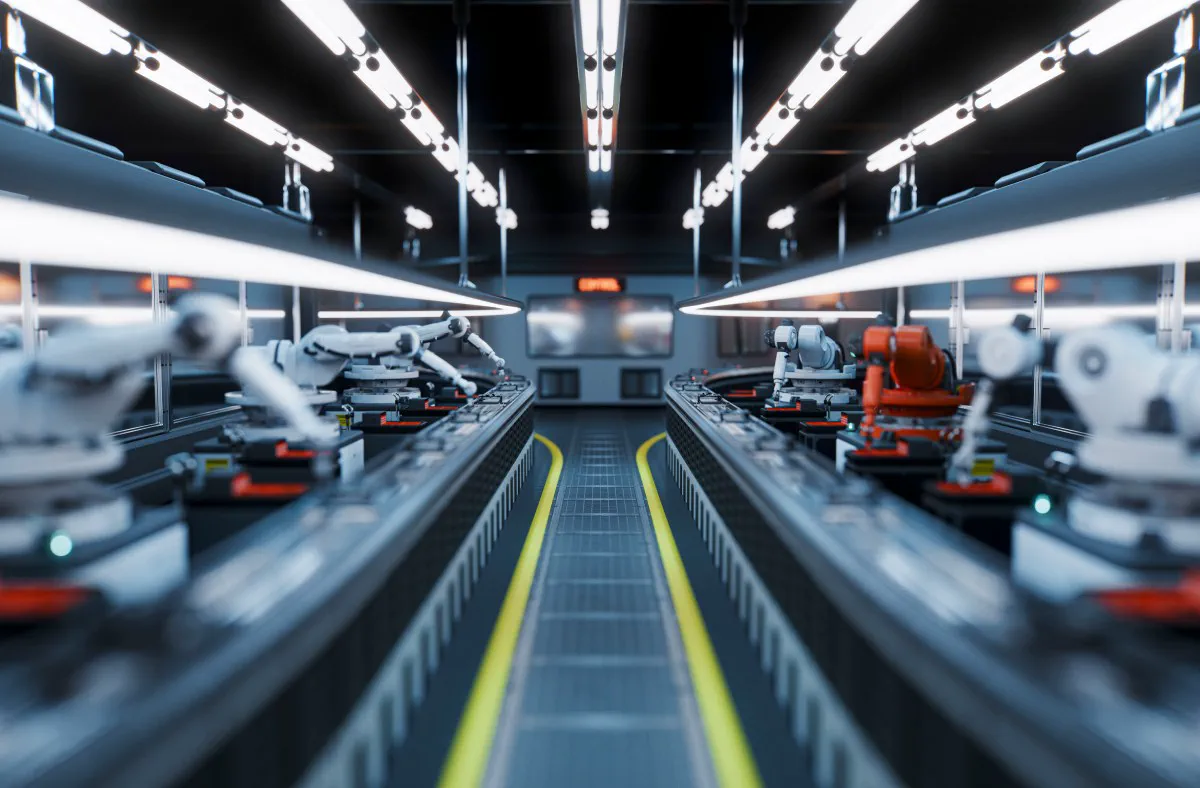
San Francisco robotics startup Industrial Next has unveiled new advancements in its AI-driven manufacturing platform, designed to let production line robots switch between complex assembly tasks in minutes instead of weeks. Founded by former Tesla and Waymo engineering leaders, the company is targeting delicate, contact-rich factory operations that have stubbornly resisted traditional automation and long forced manufacturers to rely on manual human labor.
While industrial robots have handled heavy lifting, spot welding, and spray painting for decades, adapting them to new product variants remains notoriously sluggish. Whenever a smartphone model tweaks its internal layout or an electric vehicle manufacturer updates an electronic harness, production lines typically stall while teams of software integrators spend weeks writing and debugging brittle motion scripts. Industrial Next aims to eliminate that reprogramming bottleneck entirely by combining proprietary vision-to-action foundation models with modular robotic work cells.
The Core Shift: Retooling Without Writing Code
Traditional industrial robotics relies on deterministic programming: an engineer hard-codes exact 3D coordinates into a controller, assuming every part will arrive in the exact same orientation every single cycle. If an incoming component is rotated by two degrees or slightly warped, the robot either halts or damages the assembly.
Industrial Next replaces hard-coded trajectories with a continuous perception-and-action loop trained via simulation and human demonstration. Instead of waiting for an automation engineer to spend weeks scripting thousands of lines of motion code, factory technicians can teach a work cell a new task through direct visual demonstrations and synthetic training data.
The system's core capabilities focus on:
- Rapid line changeover: Reconfiguring a work cell for a new component design in minutes rather than 4 to 8 weeks.
- Inherent tolerance handling: Absorbing real-world manufacturing variations—such as lighting shifts, component tolerances, and slight positional offsets—without stopping the line.
- Demonstration-based teaching: Allowing operators to guide the robot or feed it digital twins instead of programming low-level motion kinematics.
- Continuous 24/7 cycle tracking: Operating directly on high-speed production lines at speeds equal to or faster than experienced human line workers.
Solving the Delicate, Contact-Rich Assembly Problem
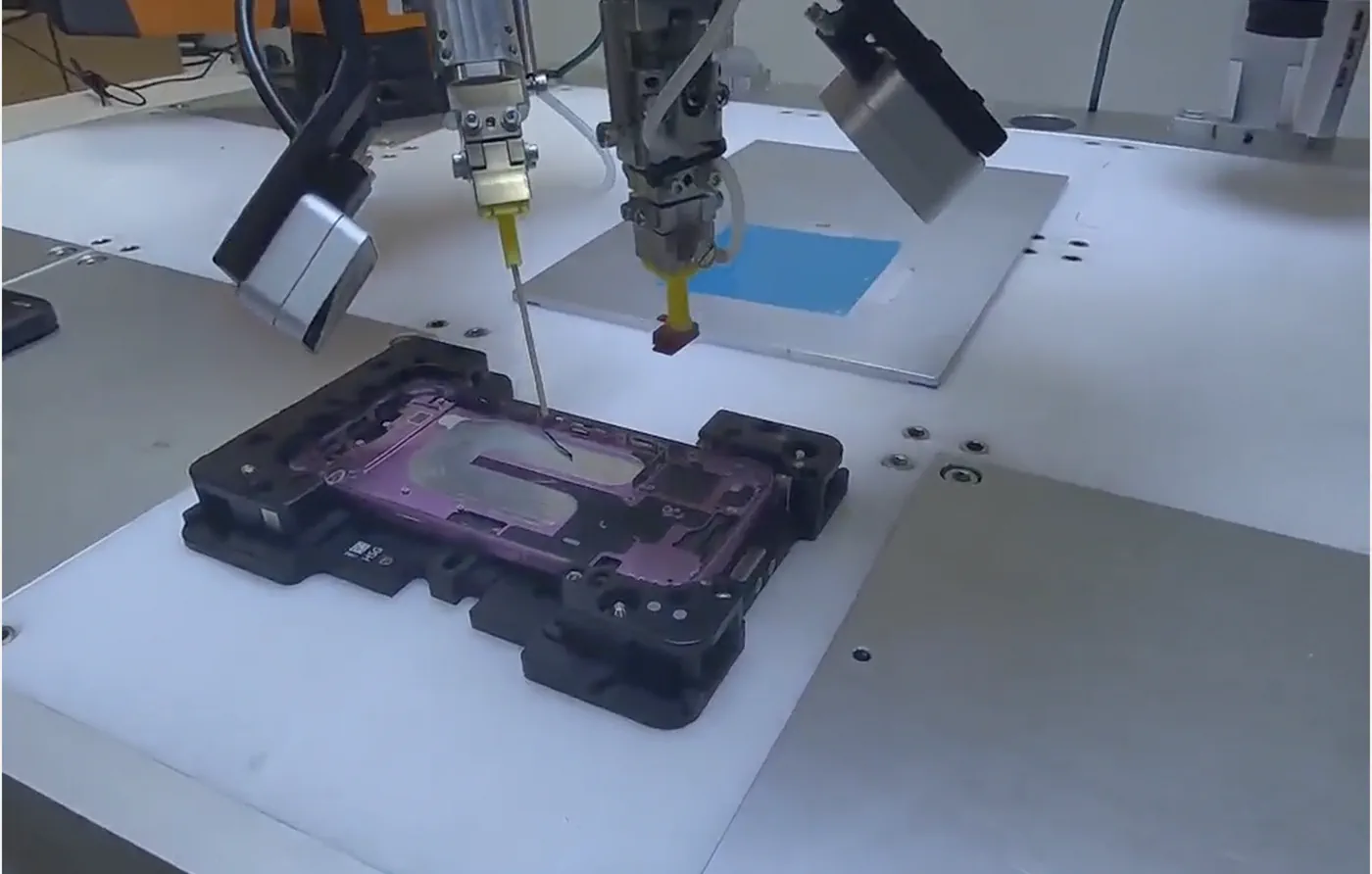 Photo: TechCrunch (source)
Industrial Next is focusing specifically on what robotics researchers call "contact-rich" manipulation—tasks that require physical touch, mechanical compliance, and micro-adjustments. In modern consumer electronics and automotive manufacturing, these tasks represent the majority of remaining manual jobs.
A primary example is the insertion of Flexible Flat Cable (FFC) connectors inside smartphones and dashboards. A millimeter-wide ribbon cable bends under slight pressure; forcing it at the wrong angle tears the connector pins, while hesitating slows down the line. Industrial Next's foundation models combine high-frequency visual feedback with force and torque estimation to align, insert, and lock delicate connectors with sub-millimeter precision within standard four-second manufacturing cycle times.
Other targeted applications include high-precision screw driving—where thread engagement and torque tolerances vary across part batches—as well as wiring harness routing, thermal paste application, and multi-sensor defect inspection.
The Hardware and Software Stack
Industrial Next does not rely purely on off-the-shelf components, arguing that software-only robotics platforms struggle to meet rigorous factory cycle times. The company integrates custom edge hardware with proprietary physical AI models.
- CyberSight and CyberSpawn Edge Systems: Custom smart cameras and compute units equipped with up to 30 TFLOPS of onboard processing power. By running neural network inference directly at the edge rather than over cloud connections, the system ensures deterministic, millisecond-level reaction times.
- Proprietary Vision-to-Action Foundation Models: Rather than mapping text prompts to language tokens, the company's foundation models map visual feeds and task context directly to robotic joint velocities and end-effector forces.
- Modular Production Workstations: Self-contained, standardized robotic cells that can be physically rolled into place along a conveyor line, plugged into standard plant power and networking, and reassigned as production demands change.
- Real2Sim2Real Framework: Supported by its 10,000-square-foot testing arena in San Francisco and its open benchmark initiative (sim2world.ai), the system bridges the gap between simulated physics and messy physical factory realities.
Comparing Modern Automation Paradigms
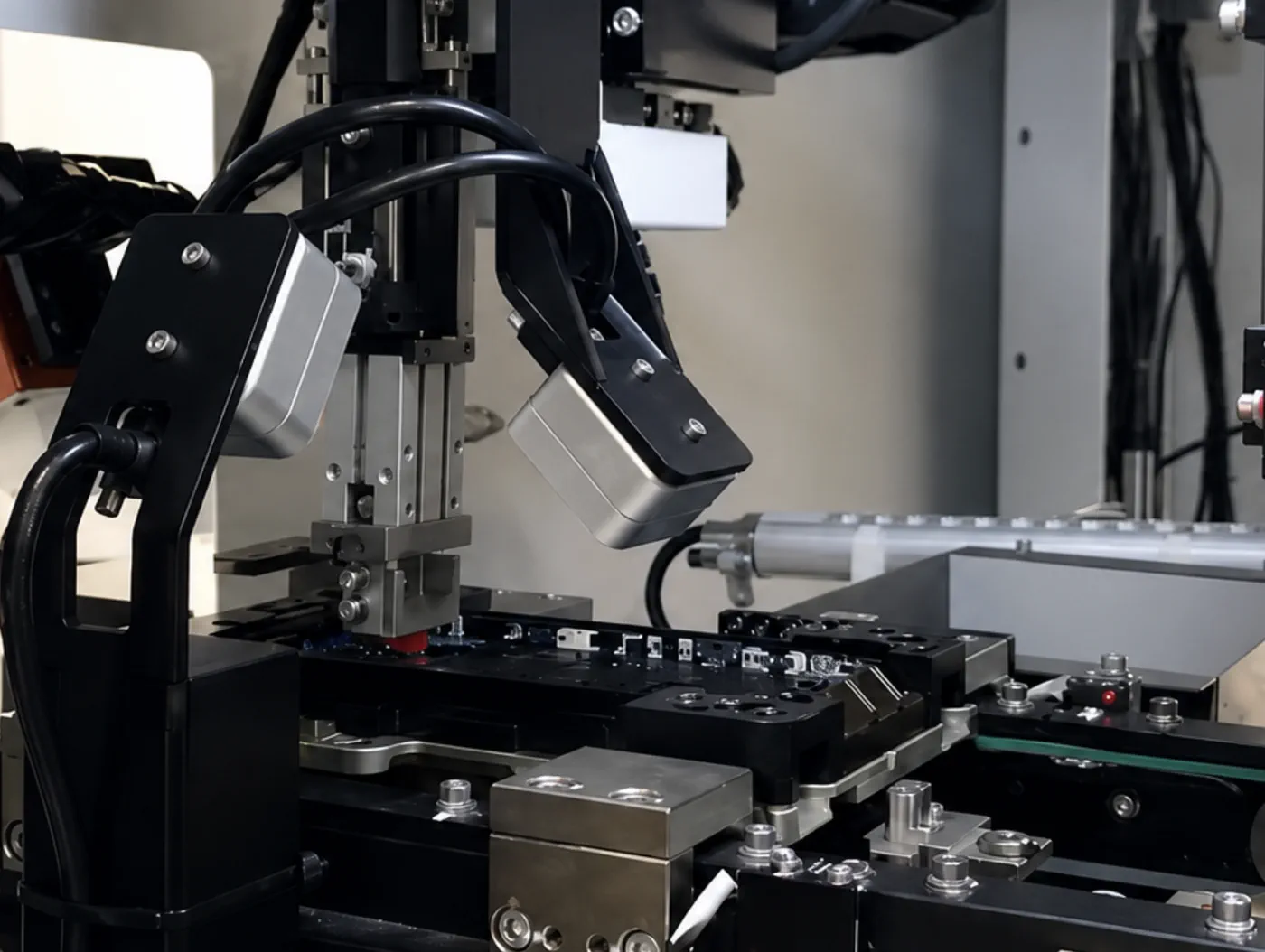 Photo: TechCrunch (source)
Manufacturers face competing approaches when seeking to automate high-mix, low-volume assembly lines. The table below contrasts traditional industrial robotics, general-purpose humanoid robots, and Industrial Next's modular AI work cells:
| Feature / Metric | Conventional Industrial Robots | General-Purpose Humanoids | Industrial Next AI Work Cells |
|---|---|---|---|
| Task Changeover Time | 2 to 8 weeks (code/fixtures) | Hours to days (emerging) | Minutes (demonstration/model) |
| Hardware Form Factor | Fixed cages, heavy 6-axis arms | Bipedal humanoid bodies | Modular edge workstations |
| Precision & Cycle Speed | Very high speed, rigid paths | Slower cycle times, experimental | Sub-millimeter, production cycle rates |
| Handling Part Variation | Extremely poor (fails on shift) | Moderate (vision-guided) | High (foundation model adaptation) |
| Programming Requirement | Specialized PLC/script coding | Natural language/teleoperation | Demonstration & simulation |
| Factory Integration | Extensive custom tooling | Floor roaming, battery swaps | Standard drop-in line integration |
Automotive and Big Tech Roots
Industrial Next was co-founded in late 2021 by Allen Pan and Lukas Pankau, both of whom previously spent years troubleshooting high-volume automation bottlenecks at Tesla. Pankau served as Tesla's lead electrical architect for the Model X, Model 3, and Model Y programs before joining Alphabet's Waymo to design sensor architectures. Pan led advanced manufacturing automation initiatives at Tesla's Fremont assembly plant after earlier engineering roles at General Motors.
Having witnessed firsthand how even minor changes on automotive lines could create weeks of costly downtime, the founders launched Industrial Next to create what they describe as software-defined, adaptive factories. The company graduated from Y Combinator's Winter 2022 batch and has raised roughly $22 million in venture funding to date, led by Khosla Ventures with backing from Lenovo Capital, AlphaX Partners, and Plug and Play.
Industry Deployment and Practical Reality
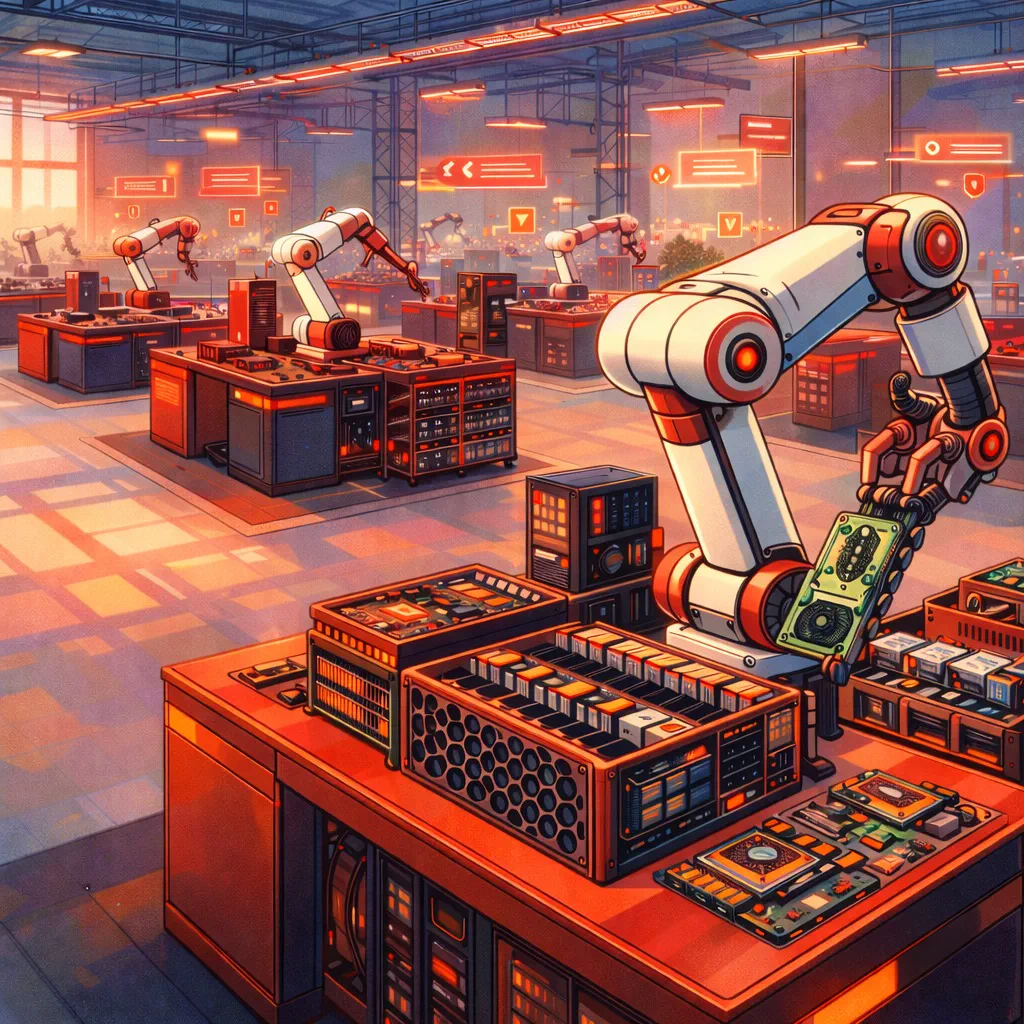 Photo: industrialnext.ai (source)
Rather than confining its systems to lab demonstrations, Industrial Next already operates live units on production floors with global contract electronics manufacturers and automotive suppliers. Company leadership notes that deploying physical AI in factories demands far greater discipline than deploying software chatbots, because an edge model cannot trade sub-millimeter accuracy for generic approximations.
Factory operators interviewed at manufacturing forums emphasize that while generative AI demonstrations look impressive on video, the single deciding factor for adoption on assembly lines remains return on investment (ROI). If an automated cell misses one connector out of a thousand or adds two seconds to a takt time, plant managers will pull it off the line. Industrial Next's focus on maintaining strict cycle times while slashing retooling overhead addresses the primary financial obstacle preventing flexible automation.
What Happens Next: Reshoring and the Future of Manufacturing
As manufacturers in North America and Europe face skilled labor shortages and push to reshore critical supply chains, flexible automation will be vital. Building dedicated, single-purpose assembly lines in domestic facilities is often cost-prohibitive unless production runs last several years without design changes.
By enabling existing work cells to pivot between different parts and device revisions with minimal intervention, platforms like Industrial Next could make regional, high-mix assembly economically competitive with overseas mass production. Looking ahead, Industrial Next is working to expand its open benchmark community via sim2world.ai and scale its multi-robot testing arena to over 50 robot stations, accelerating how quickly foundation models can absorb new physical skills before ever setting foot in a customer's factory.
FAQ
What does Industrial Next do? Industrial Next develops AI-powered robotic work cells and smart cameras that can be retasked to handle delicate manufacturing assembly jobs in minutes using demonstration and simulation rather than custom code.
Why can't traditional factory robots already switch tasks quickly? Traditional factory robots rely on hard-coded motion scripts and fixed mechanical tooling designed for exact dimensions. Introducing a new part or slightly altering a design usually requires automation engineers to spend weeks rewriting trajectories and adjusting sensors.
How are Industrial Next's robots trained? Instead of manual line-by-line coding, the company's robots learn tasks through physical human demonstrations and synthetic physics simulations, allowing its underlying foundation model to generalize to variations in lighting, part positions, and tolerances.
Why not just use humanoid robots for these factory jobs? Humanoids carry significant mechanical complexity, higher costs, and slower cycle times that are often impractical for contact-rich, millisecond-dependent assembly lines. Industrial Next relies on purpose-built modular workstations that fit directly into existing factory conveyors.
Who is funding Industrial Next? The San Francisco-based startup has secured approximately $22 million in capital from backers including Khosla Ventures, Y Combinator, Lenovo Capital, AlphaX Partners, and Plug and Play.