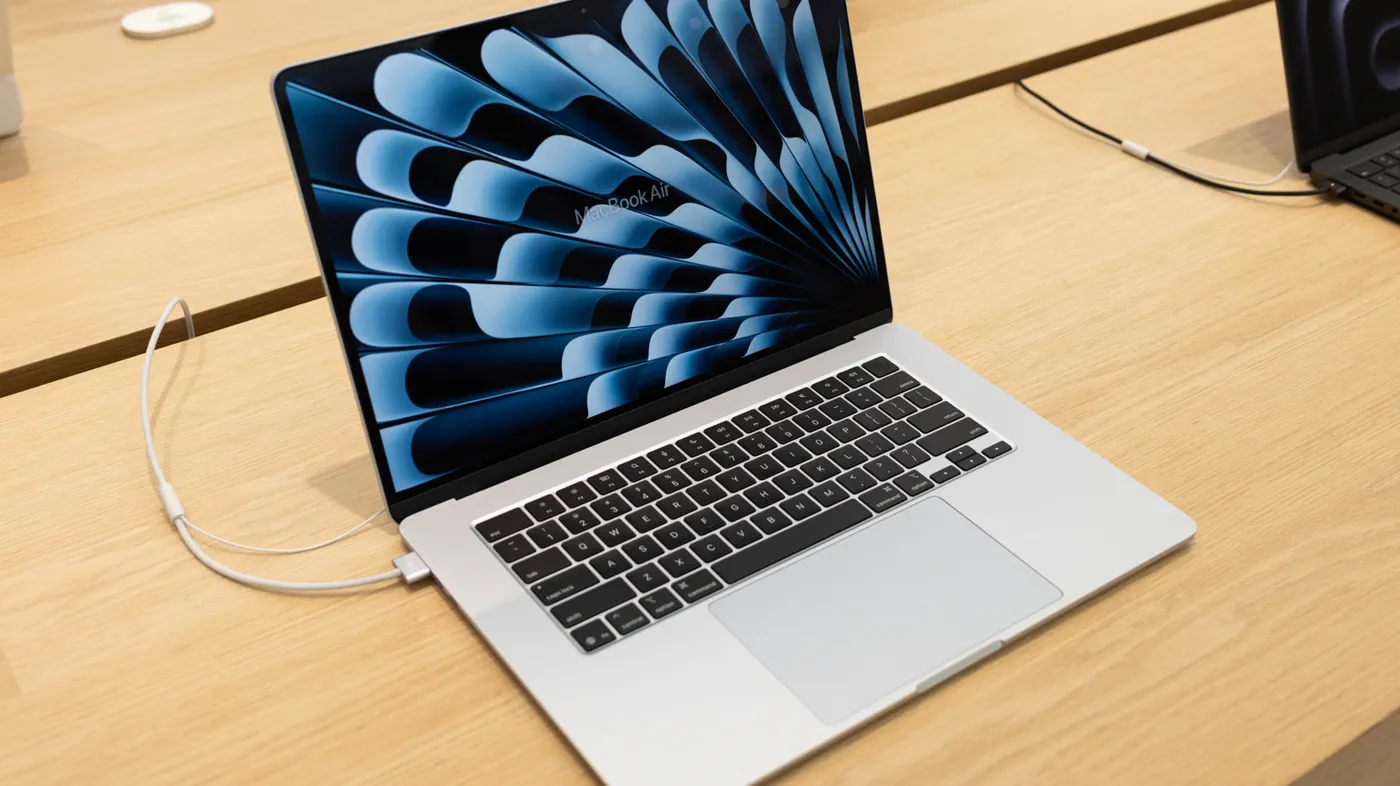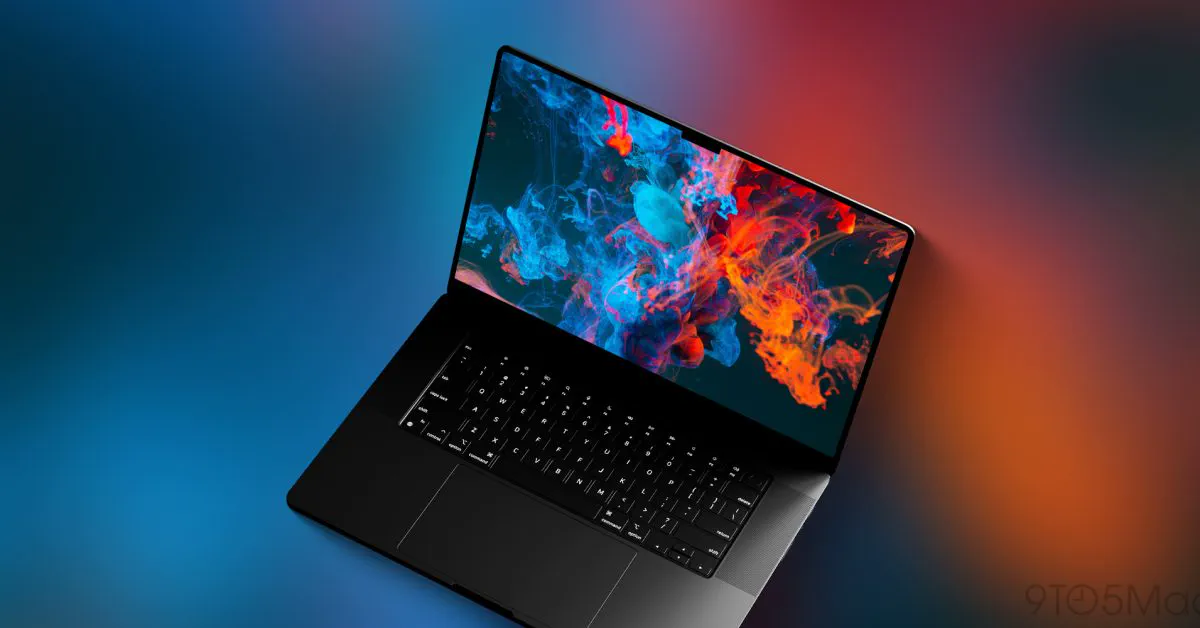
Apple is preparing to bring its next major MacBook Pro chassis redesign down to its entry-level portable far faster than previously anticipated, collapsing what has historically been a multi-year trickle-down cycle into a matter of months. According to reporting from Bloomberg's Mark Gurman, an all-new 14-inch entry-level MacBook Pro powered by the next-generation M7 processor is slated to arrive in spring 2027, inheriting the ultra-thin aesthetic and enclosure overhaul planned for Apple's high-end notebooks.
For Mac consumers, the expedited roadmap represents a dramatic strategic shift. Historically, budget-conscious professional buyers had to wait two to three years—or settle for recycled enclosures—before benefiting from flagship industrial redesigns. With the impending hardware overhaul, Apple aims to modernize its portable lineup almost simultaneously across both price brackets.
The Accelerated Roadmap: From M6 to M7
The unexpected acceleration centers around an internal project codenamed K104. Gurman reports that this machine is an entry-level 14-inch MacBook Pro scheduled for the first half of 2027. What makes the laptop noteworthy is not merely its silicon bump to the vanilla M7, but its complete physical overhaul. The machine will adopt the unified industrial language Apple is introducing on its upcoming flagship portable tier.
However, reaching that spring 2027 milestone involves navigating one of the most unusual transition schedules in Mac history:
- Fall 2026 Transition: Apple plans to update the entry-level 14-inch MacBook Pro (codenamed J804) with standard M6 silicon while keeping the existing unibody chassis intact. Alongside it, Apple is debuting its redesigned flagship MacBook tier.
- Spring 2027 Overhaul: Barely six months later, Apple will replace the standard model with the redesigned K104 model, packing the upgraded M7 chip inside the new, slimmer chassis.
- Late 2027 Flagship Refresh: Apple will round out the transition by releasing flagship tiers featuring high-performance M7 Pro and M7 Max silicon.
| Tier / Model | Code Name | Target Window | Processor | Chassis Design | Display Tech |
|---|---|---|---|---|---|
| Entry-Level Base | J804 | Fall 2026 | Standard M6 | Current (2021 era) | 14.2" Mini-LED Liquid Retina XDR |
| Flagship Tier | K114 / K116 | Late 2026 / Early 2027 | M5 Pro / M5 Max | Redesigned Ultra-Thin | 14" / 16" Tandem OLED (Touch-enabled) |
| Revamped Entry | K104 | Spring 2027 | Standard M7 | New Redesigned Enclosure | 14" Refined Panel (OLED unconfirmed) |
| Pro / Max Refresh | TBD | Fall 2027 | M7 Pro / M7 Max | Redesigned Ultra-Thin | 14" / 16" Tandem OLED Touchscreen |
Breaking Precedent: How Apple Historically Handled Redesigns
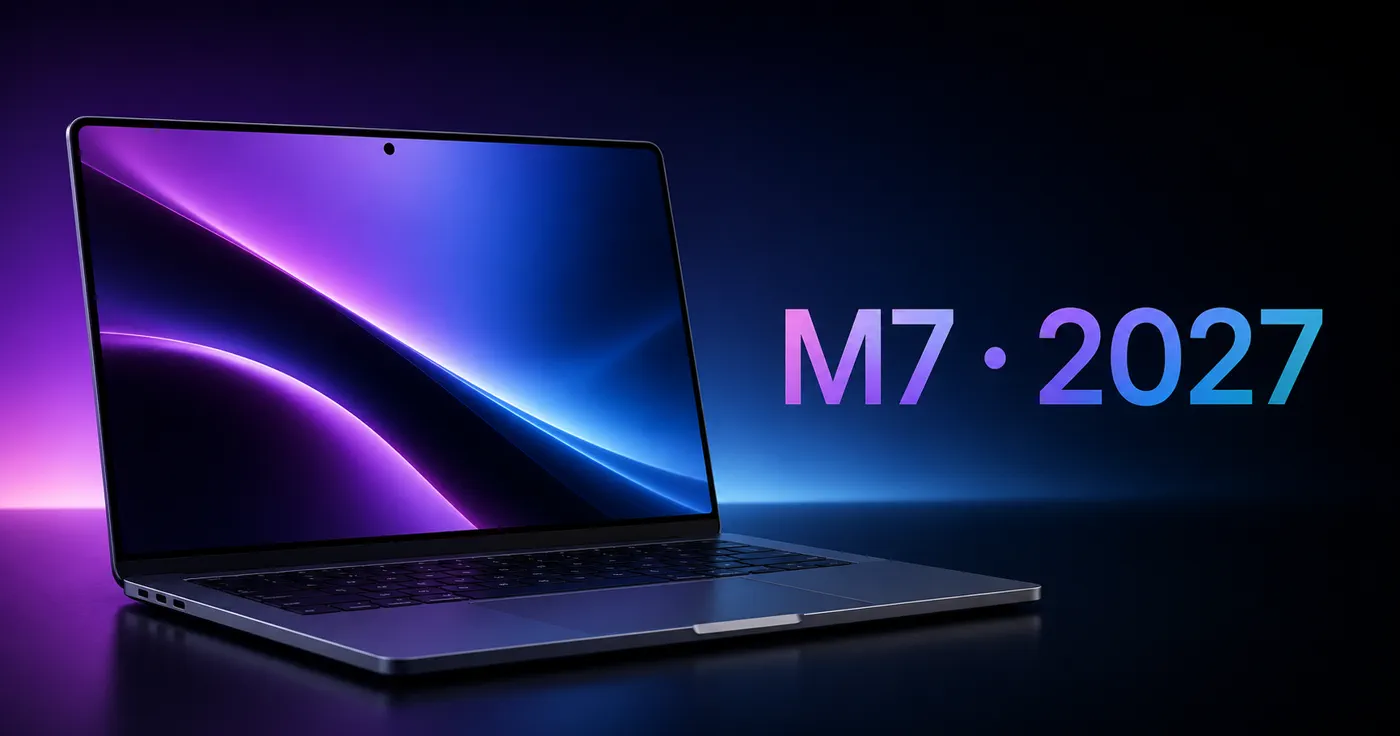 Photo: techable.com (source)
To appreciate why a six-month trickle-down is generating buzz, consider Apple’s historical behavior across the last three major Mac hardware eras. Apple typically preserves outgoing tooling for entry-level models to maximize profit margins and clear legacy components.
- The 2012 Retina Shift: When Apple unveiled the high-end unibody Retina MacBook Pro in 2012, it kept the thick, non-Retina 13-inch MacBook Pro with an optical drive in the lineup at entry-level pricing until 2016.
- The 2016 Touch Bar Redesign: When Apple shifted to Thunderbolt 3 unibodies with the Touch Bar in late 2016, the budget two-port MacBook Pro retained physical function keys and older internals until mid-2019, waiting nearly three years for cosmetic parity.
- The 2021 Apple Silicon Enclosure: When the squared-off 14-inch and 16-inch chassis with ProMotion displays launched in October 2021 (housing the M1 Pro and M1 Max), the entry-level tier languished in the ancient 13.3-inch Touch Bar chassis through both the M1 and M2 generations. It took until late 2023—over two years later—for the base tier to inherit the modern 14-inch enclosure alongside the M3 chip.
By contrast, the jump from the outgoing enclosure to the new form factor for entry-level buyers in 2027 is projected to happen in a window of roughly six months.
The Silicon Puzzle: Bypassing High-End M6 for M7
Compounding this design acceleration is an equally unorthodox chip rollout. Apple's silicon engineering teams reportedly chose to bypass development of the M6 Pro and M6 Max tiers entirely, choosing instead to channel high-performance resources into accelerating the M7 architecture.
The move creates an inverted dynamic in late 2026: entry-level buyers will receive standard M6 silicon built on advanced 2nm-class processing, while early adopters buying redesigned flagships will receive M5 Pro and M5 Max chips. The subsequent release of the M7 in early 2027 is intended to quickly align the hardware roadmap around next-generation microarchitectures optimized heavily for on-device generative AI matrix calculations and deep neural workloads.
Because the M6 cycle for Mac portables will be shorter than any previous Apple Silicon generation, Apple is positioning the spring 2027 K104 machine to quickly establish a baseline standard across its entire professional portable fleet.
What the Overhaul Brings to the Table
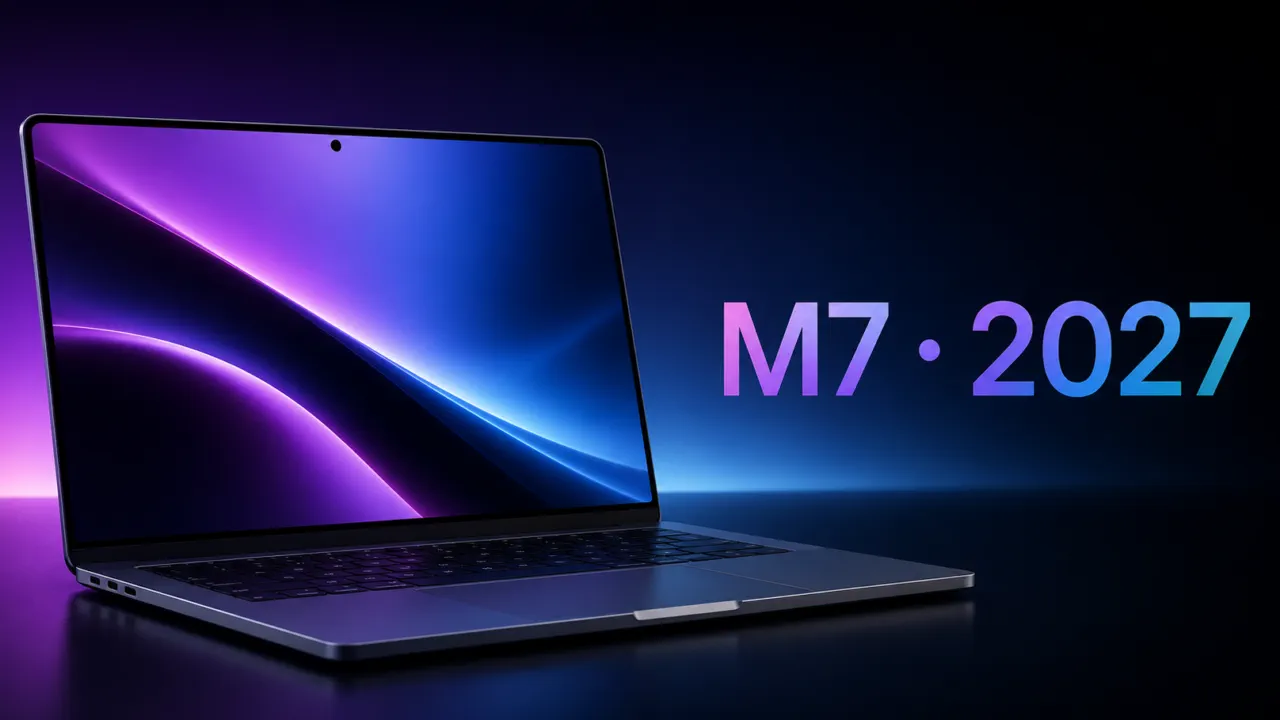 Photo: techable.com (source)
While the upcoming flagship MacBook Pro models (widely rumored to adopt the "MacBook Ultra" moniker) introduce radical hardware shifts, the new entry-level chassis directly inherits key cosmetic and structural benefits:
- A Major Chassis Diet: Apple engineers have re-engineered the interior layout, miniaturizing internal components to cut overall weight significantly. Current 16-inch MacBook Pros weigh up to 4.8 pounds, and the 14-inch sits at roughly 3.5 pounds. The redesign aims to reduce carry weight closer to modern MacBook Air standards.
- Punch-Hole Cutouts and Dynamic Island: Rumors indicate Apple is eliminating the display notch introduced in 2021, moving toward a streamlined camera cutout or a macOS-adapted Dynamic Island interface for real-time background tasks.
- Display Distinctions: Flagship models are slated to adopt dual-stack tandem OLED touchscreens featuring on-cell touch integration supplied by Samsung Display. For the entry-level K104, however, supply chain analysts suggest Apple may retain an upgraded mini-LED LCD panel to maintain the lower starting price point while matching the exterior slimness.
- Port Layout Revisions: The slimmer profile will introduce a revised perimeter port configuration, modernizing USB-C/Thunderbolt placement while preserving core functionality like MagSafe.
What This Means for Buyers: Wait or Buy?
This rapid turnaround creates a distinct timing trap for prospective Mac buyers.
If you are planning to purchase a standard 14-inch MacBook Pro during the upcoming late-2026 product wave, caution is warranted. Purchasing the entry-level M6 model means investing in an enclosure that will be cosmetically outdated within roughly two quarters. The machine will still deliver solid processing gains, but it will carry the bulkier weight and older display cutout of the 2021 generation.
For users who value portability, chassis longevity, and maximum resale value, the prudent play is waiting until spring 2027. Holding off until early 2027 guarantees the slimmer unibody, reduced travel weight, and the generational benefits of the AI-optimized M7 chip without paying flagship premiums.
What’s Next and the Unanswered Questions
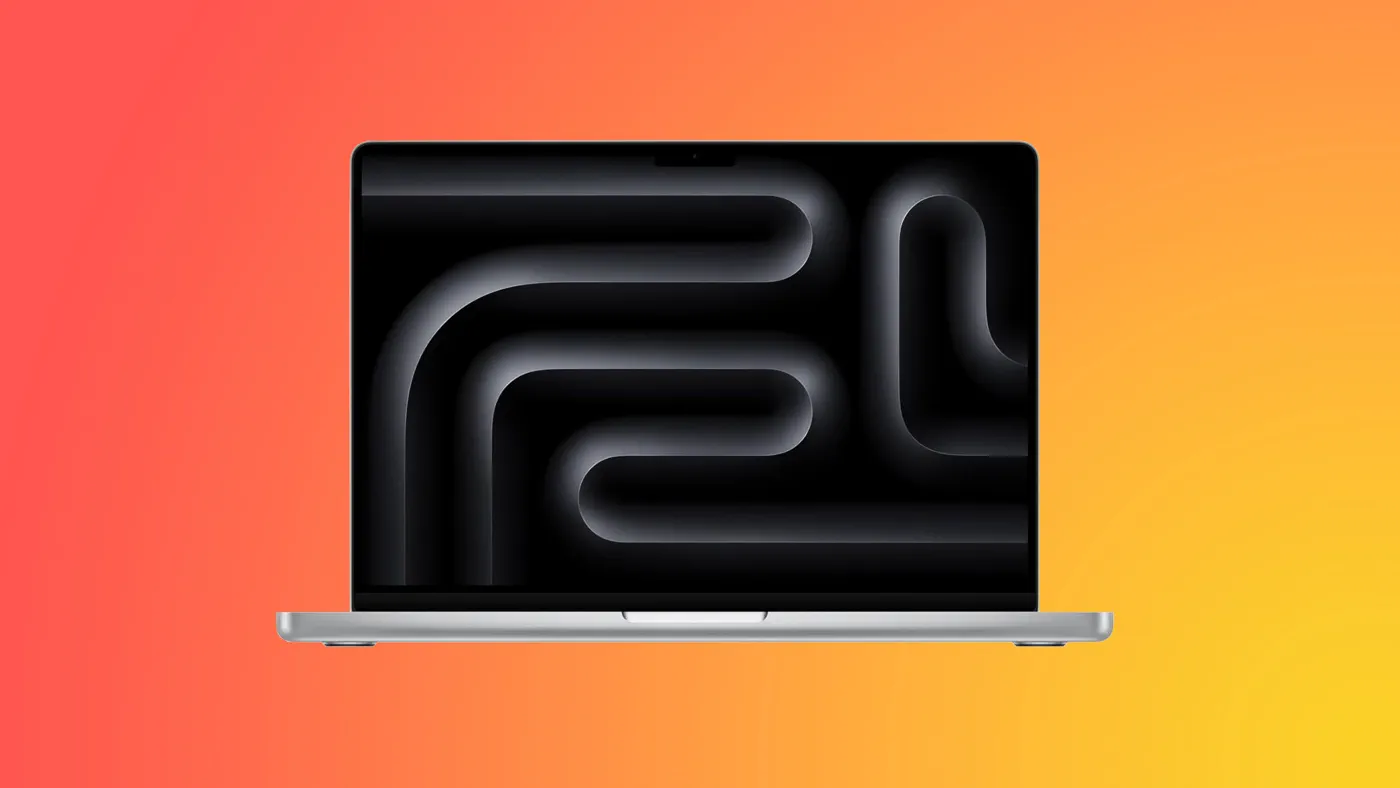 Photo: macrumors.com (source)
Apple has not officially announced event dates, but supply chain signals point to an October hardware presentation setting the multi-stage rollout in motion. What remains unanswered is whether Apple will bring touchscreen input down to the entry-level model. While touch functionality is all but confirmed for the high-end OLED tier, industry analysts like Ming-Chi Kuo expect Apple to segment touch input as an exclusive flagship luxury initially.
Pricing also remains a wildcard. Current 14-inch MacBook Pros start at $1,599. If component costs surrounding 2nm fabrication and re-engineered enclosures create margin pressure, Apple could nudge the entry-level price higher upon the M7 redesign's launch in 2027.
FAQ
When will the redesigned entry-level MacBook Pro arrive?
Bloomberg reports that the redesigned entry-level 14-inch MacBook Pro (codenamed K104) is scheduled for release in the first half of 2027, most likely around spring.
Will Apple release an entry-level M6 MacBook Pro first?
Yes. Apple is projected to launch an entry-level 14-inch model powered by the standard M6 chip in late 2026, but it will retain the existing unibody design introduced in 2021.
What are the main physical changes in the MacBook Pro redesign?
The overhaul introduces a lighter and thinner unibody enclosure, a rearranged internal architecture, thinner bezels, and a Dynamic Island or punch-hole camera cutout replacing the display notch.
Will the cheaper entry-level M7 model get an OLED touchscreen?
It is currently unlikely. OLED panels and touchscreen capabilities are expected to debut exclusively on high-end configurations (or the "MacBook Ultra"), while the entry-level M7 model will adopt the slimmer chassis with a revised LCD or mini-LED display.
Why is Apple skipping the M6 Pro and M6 Max processors?
Apple is reportedly bypassing high-end M6 chips to streamline resources and accelerate the launch of the M7 architecture, which incorporates architectural enhancements specifically optimized for heavy AI workloads.