A federal jury in San Diego has ordered Apple to pay $5,721,961,750 to haptics specialist Taction Technology after finding that Apple's signature Taptic Engine infringed two tactile transducer patents. The decision, reached after two days of deliberations, marks the largest patent infringement damages verdict in United States history and places a massive financial cloud over the hardware that generates subtle vibrations inside hundreds of millions of iPhones and Apple Watches.
Apple immediately rejected the outcome, announcing that it intends to appeal the decision. While the jaw-dropping headline figure captures the scope of Apple's global hardware footprint, the legal struggle is far from concluded. Here is everything you need to know about the record-setting judgment, the disputed technology, and what the ruling means for consumers and the tech industry.
The Record-Breaking $5.7 Billion Verdict
The verdict was handed down at 1:15 p.m. PT on Friday in the U.S. District Court for the Southern District of California. After a trial that began on September 14 before a seven-member jury, the panel concluded that Apple infringed two distinct patents held by Taction Technology.
The jury verdict form specifically detailed:
- Patent Infringement: Jurors found that Apple infringed two separate patent claims in the first patent and one claim in the second patent.
- No Willfulness: The jury determined that Taction did not prove Apple acted willfully, meaning Apple was not deemed to have knowingly infringed. This spared Apple from statutory enhanced damages, which under federal patent law could have reached up to three times the initial award.
- Patent Validity Upheld: Apple asserted that the three asserted patent claims were legally invalid, but the jury rejected Apple's defenses across every single claim.
- Total Damages Award: The jury calculated total compensatory damages at exactly $5,721,961,750, covering unauthorized use of the technology across millions of sold devices.
Watch: Apple faces $5.7 billion-plus patent verdict over Taptic Engine

Video: Signal Brief on YouTube
Inside the Patents: Transducers and the Taptic Engine
 Photo: The Verge (source)
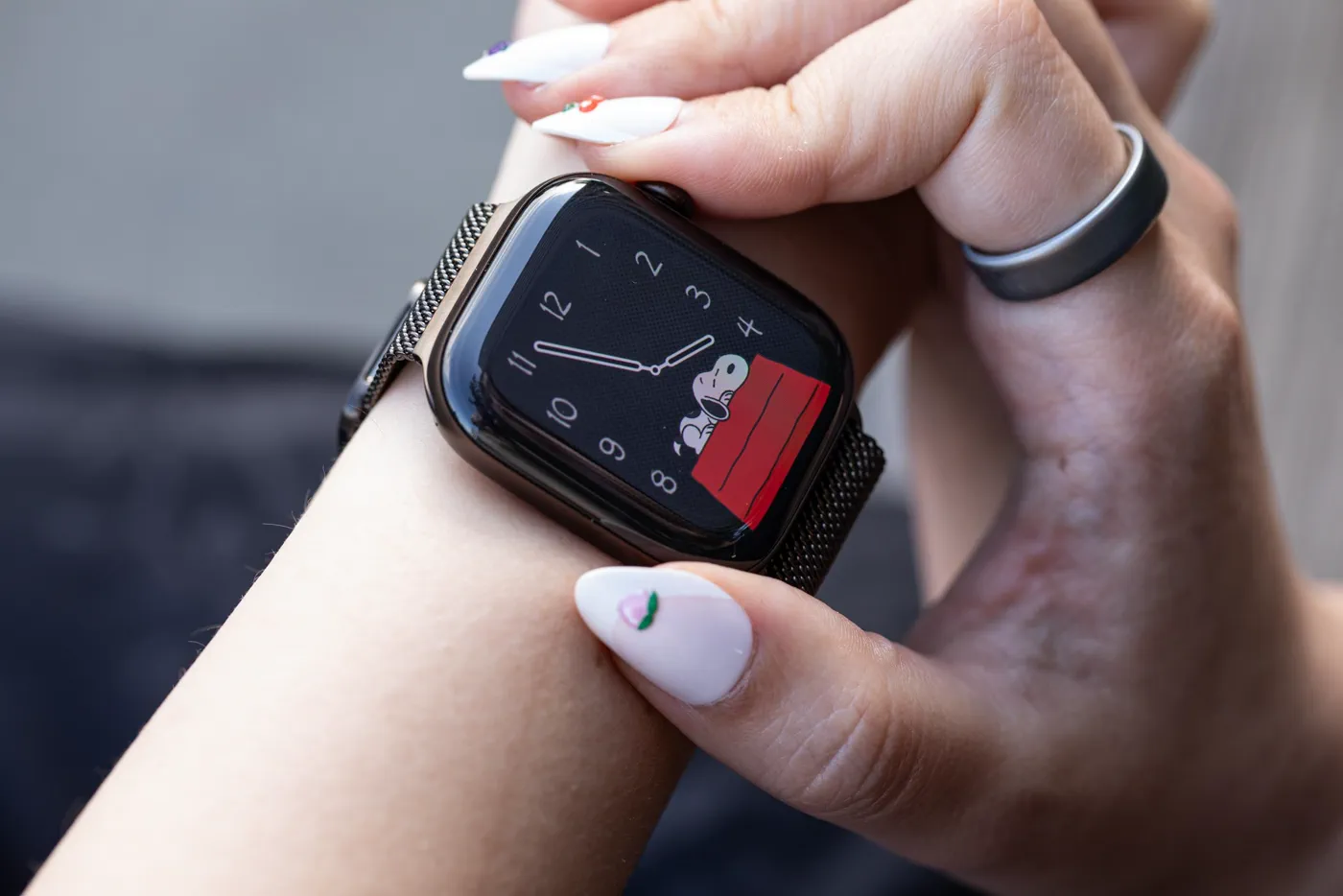
At the center of the dispute is the tactile feedback mechanism that has defined the Apple hardware experience for nearly a decade. When an iPhone user types on the virtual keyboard, clicks the virtual Home button on legacy models, feels an incoming call vibration, or receives a notification tap on an Apple Watch, those physical sensations are produced by Apple's proprietary Taptic Engine.
Taction Technology, a San Diego firm known for engineering specialized tactile transducers for high-end audio gear and gaming headsets, initiated the action claiming Apple's Taptic Engine directly appropriates its intellectual property. The trial centered around two key patents:
- U.S. Patent No. 10,659,885: Covers vibration-based tactile transducers configured to produce targeted physical feedback, particularly in low and bass frequency bands.
- U.S. Patent No. 10,820,117: Pertains to related tactile transducer architectures designed to convert electrical impulses into precise mechanical movements within compact enclosures.
Taction asserted in court filings that Apple achieved the ultra-responsive, localized physical response of the Taptic Engine by capitalizing on Taction's patented electromechanical innovations rather than developing the architecture independently. Apple counter-argued that its linear resonant actuators and related hardware operate on fundamentally different physics and mechanical configurations.
A Five-Year Legal Saga: From Dismissal to Trial
Reaching Friday's mega-verdict took more than five years of contentious legal maneuvering. Taction first filed its patent infringement complaint in April 2021. Over the subsequent years, the case traversed the federal court system through several critical phases:
- Initial Complaint (April 2021): Taction sued Apple in the Southern District of California, alleging widespread, unauthorized commercial use across iPhones and Apple Watches.
- District Court Dismissal (2023): A federal district judge granted summary judgment in favor of Apple before the dispute could go to a jury trial, holding that Apple did not infringe and excluding key Taction expert testimony.
- Federal Circuit Appeal (August 2025): The U.S. Court of Appeals for the Federal Circuit overturned the lower court's dismissal. The appellate bench ruled that the trial judge misread the patent claims and improperly excluded technical expert testimony, vacating the summary judgment and remanding the case for trial.
- Jury Trial (September 2026): Proceedings finally commenced before a jury, culminating in the $5.72 billion verdict in favor of Taction.
Landmark Tech Patent Verdicts: How Taction vs. Apple Compares
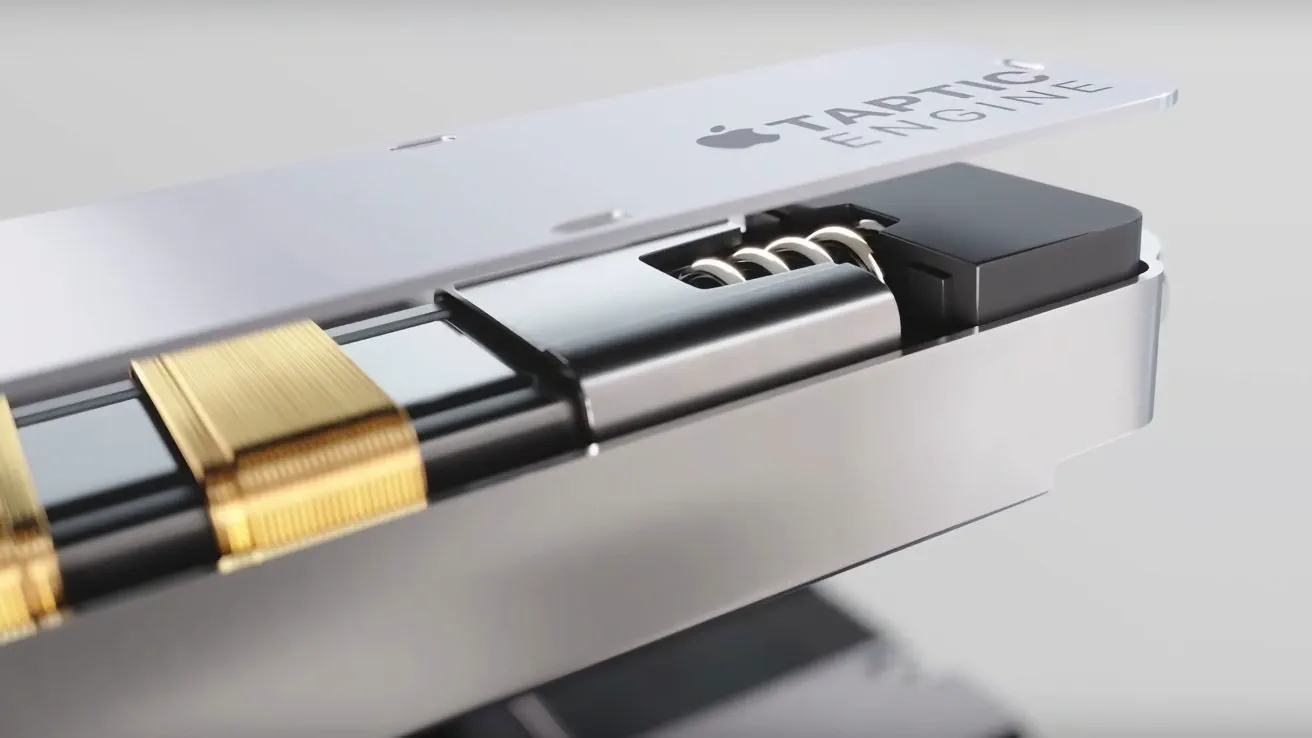 Photo: appleinsider.com (source)
Patent infringement trials involving mass-market consumer electronics frequently involve eye-watering figures, but the $5.72 billion award surpasses previous U.S. court records. The following table shows how this verdict compares to other major technology intellectual property awards in recent U.S. history:
| Case / Dispute | Involved Companies | Key Technology / Subject | Verdict / Initial Award | Eventual Status / Outcome |
|---|---|---|---|---|
| Taction v. Apple (2026) | Taction Technology & Apple | Tactile transducers (Taptic Engine) | $5.72 billion | Apple announced planned appeal |
| VLSI Technology v. Intel (2021) | VLSI & Intel | Microprocessor power & speed patents | $2.18 billion | Overturned / reduced in ongoing appellate litigation |
| Caltech v. Apple & Broadcom (2020) | Caltech, Apple & Broadcom | Wi-Fi data transmission chips | $1.10 billion | Vacated on appeal; settled out of court in 2023 |
| Masimo v. Apple (2024) | Masimo & Apple | Pulse oximetry (blood-oxygen tracking) | $634 million | Appealed; led to U.S. sales ban on pulse-oximeter features |
| Centripetal Networks v. Cisco (2020) | Centripetal & Cisco Systems | Network security & packet inspection | $1.90 billion | Vacated on appeal due to judicial conflict-of-interest |
Historically, trial verdicts exceeding the billion-dollar mark are vulnerable during post-trial motions and appellate review, with awards often vacated, reduced, or settled for substantially lower figures.
Industry and Corporate Reactions
Taction's legal team hailed the jury's verdict as a crucial validation for independent hardware innovators facing off against the world's most valuable tech corporations.
"We're happy the jury found for Taction and vindicated its patent rights," said Lance Yang, lead trial attorney representing Taction.
Apple quickly rebuked the verdict and the financial penalty, affirming its intention to take the battle to the appellate level.
"Apple's Taptic Engine is fundamentally different from Taction's technology, which Taction's own testing of Apple's products confirmed during trial," Apple said in an official statement. "Apple does not use Taction's technology, and we will appeal. While we thank the jury for their consideration, we strongly disagree with today's verdict and the damages awarded, which are entirely unsupported by the facts."
Financial analysts note that while a $5.7 billion bill would bankrupt most consumer hardware firms, Apple's balance sheet—regularly generating well over $20 billion to $30 billion in quarterly net income—can absorb the financial liability if enforced, though it remains a substantial one-time hit.
What the Ruling Means for iPhone and Apple Watch Owners
 Photo: briefs.co (source)
If you own an iPhone or Apple Watch, this ruling will not alter how your device functions right now. Here are the concrete takeaways for consumers:
- No Sudden Device Bans: Unlike Apple's battle with Masimo—which involved the U.S. International Trade Commission (ITC) and prompted the immediate software removal of blood-oxygen sensors from the Apple Watch Series 9 and Ultra 2 in the U.S.—this lawsuit took place in federal district court focusing strictly on monetary compensation. No immediate injunction or retail halt has been ordered.
- Vibrations and Feedback Remain Active: Users do not need to worry about upcoming iOS or watchOS updates disabling system haptics, keyboard vibration, or watch taps.
- Device Pricing: Analysts do not anticipate immediate retail price hikes for the current iPhone or Apple Watch lineups as a direct result of this ruling. However, should Apple fail to overturn the judgment, prolonged IP licensing costs across the industry could subtly affect future component margins.
What Happens Next in the Appeals Process
Apple will not be writing a $5.7 billion check anytime soon. The case now enters a protracted post-trial and appellate phase that could extend for another two to three years.
First, Apple will file post-trial motions with the presiding district judge requesting Judgment as a Matter of Law (JMOL) or a remittitur, which asks the court to reduce the award on the grounds that the $5.72 billion figure is speculative or disproportionate to the value of the components.
If the district court upholds the jury's verdict, Apple will petition the U.S. Court of Appeals for the Federal Circuit. Because the Federal Circuit has historically scrutinized multi-billion-dollar patent calculations rigorously—often sending oversized awards back for recalculation—industry observers expect Apple to argue aggressively that the damages formulation lacked sufficient evidentiary basis. If appellate review drags on, both companies may ultimately negotiate a confidential, private settlement to eliminate risk, mirroring Apple's past resolutions with Qualcomm and Immersion.
FAQ
Did Apple knowingly steal Taction's haptic technology? No. The federal jury explicitly answered "no" on the verdict sheet when asked if Apple's infringement was willful. The court ruled that while Apple infringed valid patent claims, it did not do so deliberately or intentionally.
Will Apple have to turn off haptic feedback on iPhones or Apple Watches? No. The lawsuit is a monetary damages action in federal district court, not an ITC trade injunction. Taptic Engine features such as keyboard haptics and notification taps will continue functioning as normal.
Does Apple have to pay the $5.7 billion immediately? No. Apple has formally announced it will appeal the verdict. The financial judgment is stayed pending post-trial motions and proceedings before the U.S. Court of Appeals for the Federal Circuit.
Which specific products were cited in the lawsuit? The dispute targets devices utilizing Apple's Taptic Engine hardware, notably modern iPhone lineups and Apple Watch models that rely on tactile transducers for system feedback.
Why was the damage amount set so extraordinarily high? Damages were calculated based on the hundreds of millions of iPhone and Apple Watch units sold over the life of the patents. Even a small estimated royalty per device aggregates into billions of dollars given Apple's vast hardware shipping volume.