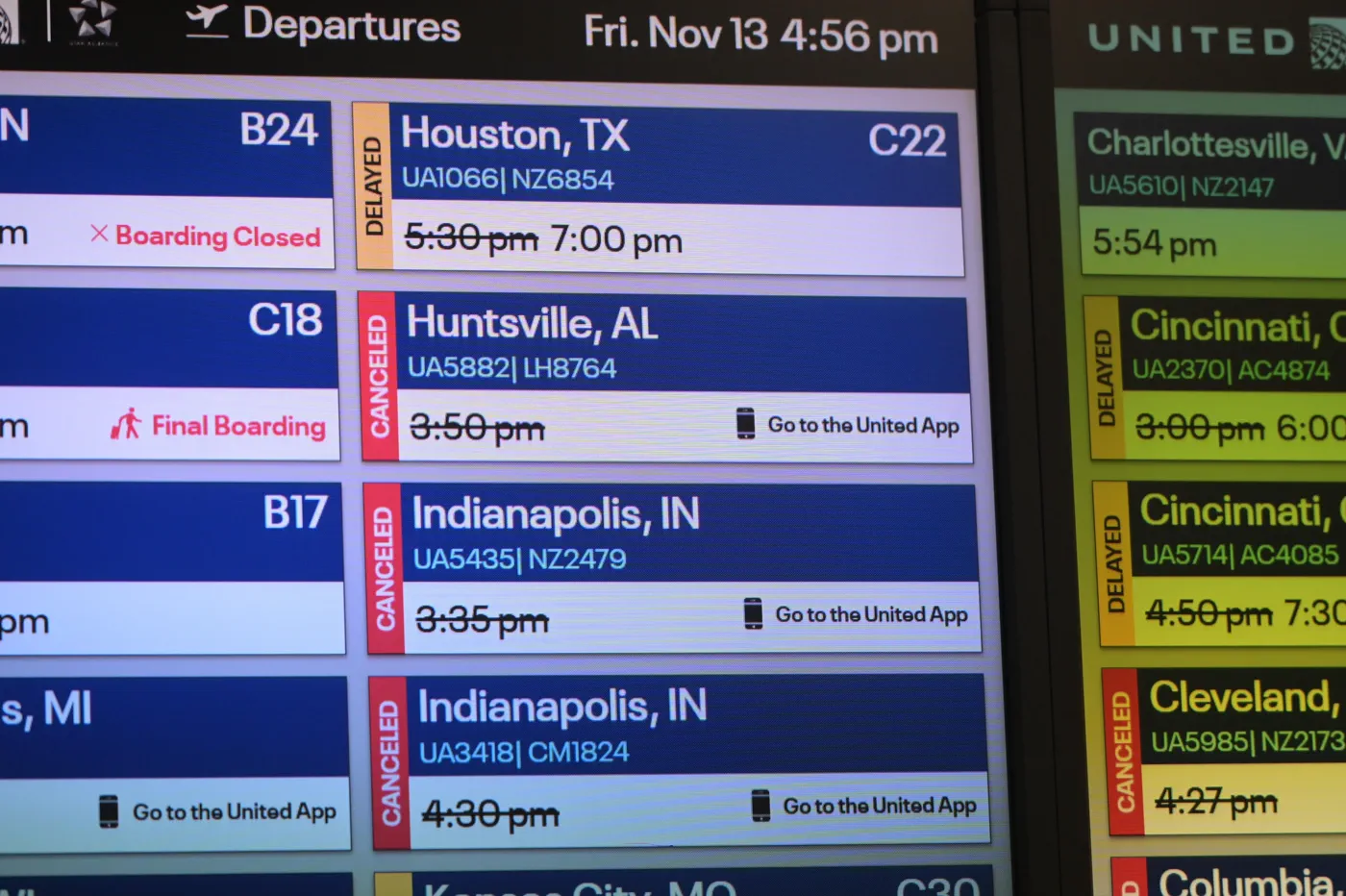
The Federal Aviation Administration lifted an extraordinary nationwide ground stop on Friday night after a catastrophic telecommunications failure crippled communications across America’s air traffic control network. The order, which took effect at 3:44 PM ET on November 13, 2026, forced airports across the United States to halt all departing flights while allowing airborne planes to land.
By the time federal authorities reopened U.S. airspace at 8:15 PM ET, the outage had delayed or canceled more than 11,000 flights and disrupted travel for roughly 1.5 million passengers. The stoppage paralyzed commercial, regional, and cargo operations from coast to coast, stranding travelers on tarmacs and inside terminals as officials rushed to isolate the cause.
What Triggered the Unprecedented Nationwide Halt
The crisis began on Friday afternoon when air traffic controllers noticed intermittent communication dropouts and radar glitches. Shortly before 3:45 PM ET, the FAA Air Traffic Control System Command Center broadcast a severe advisory stating that "due to extraordinary circumstances and for reasons of safety," all departing aircraft at all U.S. airports were ordered to remain on the ground until further notice.
The agency’s Command Center classified the incident as a "nationwide comms failure" affecting all 22 regional Air Route Traffic Control Centers (ARTCCs), the high-altitude facilities responsible for guiding passenger jets en route between airports.
Crucially, the FAA kept arrivals active: an estimated 3,500 commercial aircraft in the sky when the ground stop was issued were permitted to continue to their destinations, though many were forced into holding patterns or redirected. According to aviation data firm Cirium, at least 827 flights were diverted during the freeze, with 670 turning back to their departure airports and 157 redirecting to alternate runways.
Watch: FAA orders nationwide ground stop due to ‘extraordinary circumstances’
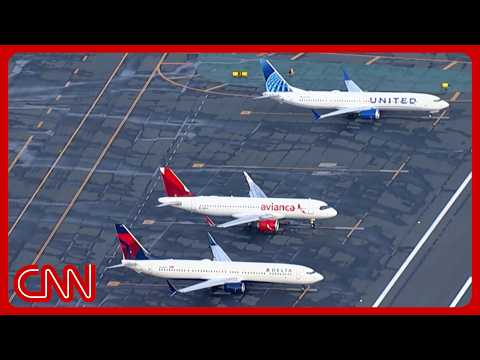
Video: CNN on YouTube
Inside the Tech Failure: Overloaded Routers and Legacy Infrastructure
 Photo: The Verge (source)
During a joint White House briefing late Friday evening, U.S. Transportation Secretary Sean Duffy and Homeland Security Secretary Markwayne Mullin clarified the technical root of the failure. Officials revealed that the breakdown was caused by network switches and routers buckling under severe data congestion.
"What we have is an incredibly old air traffic control system," Secretary Duffy told reporters. "Our switches, our routers, actually got overloaded with data. They started to give us inconsistency in the data from those routers. And because of that, we shut the system down."
According to industry reports and preliminary agency briefings, the cascade began following an update to the dedicated private network connecting national air route centers. A router fault that initially disrupted flight plan processing at Chicago Midway International Airport quickly rippled into regional hubs. As systems attempted to fail over, data loads backed up, causing controllers to experience intermittent loss of flight data strips and communication links.
Both agencies strongly dismissed speculation regarding foul play. "There was no indication as of yet that this was a nefarious attack against us," Secretary Mullin said, stressing, "This isn't another 9/11. I just can't repeat that enough." Microsoft also released a public statement confirming the incident had no relation to any of its enterprise or Azure cloud services.
How the Outage Paralyzed Air Traffic
Because the ground stop hit during the peak Friday afternoon travel rush, airline operations deteriorated rapidly. Tracking platform FlightAware recorded national flight disruptions spiking past 11,000 delays and cancellations before midnight.
- Planes Grounded at Gates: Jets already pushed back from boarding gates were ordered to hold on taxiways or return to terminals to deplane passengers.
- Airspace Evacuation: Flight tracking radar visualized a dramatic thinning of the skies; the count of airborne passenger airliners plummeted from roughly 2,500 at the onset of the stop to under 700 just two hours later.
- International Containment: Inbound international flights were handled on a case-by-case basis. While some long-haul flights from Europe and Latin America were accepted, several transatlantic departures were paused at their origins. Limited Pacific-bound flights to Asia and Hawaii from San Francisco were permitted to depart late in the afternoon once controllers verified oceanic links.
Historical Context: A Rarity Reserved for Extreme Crises
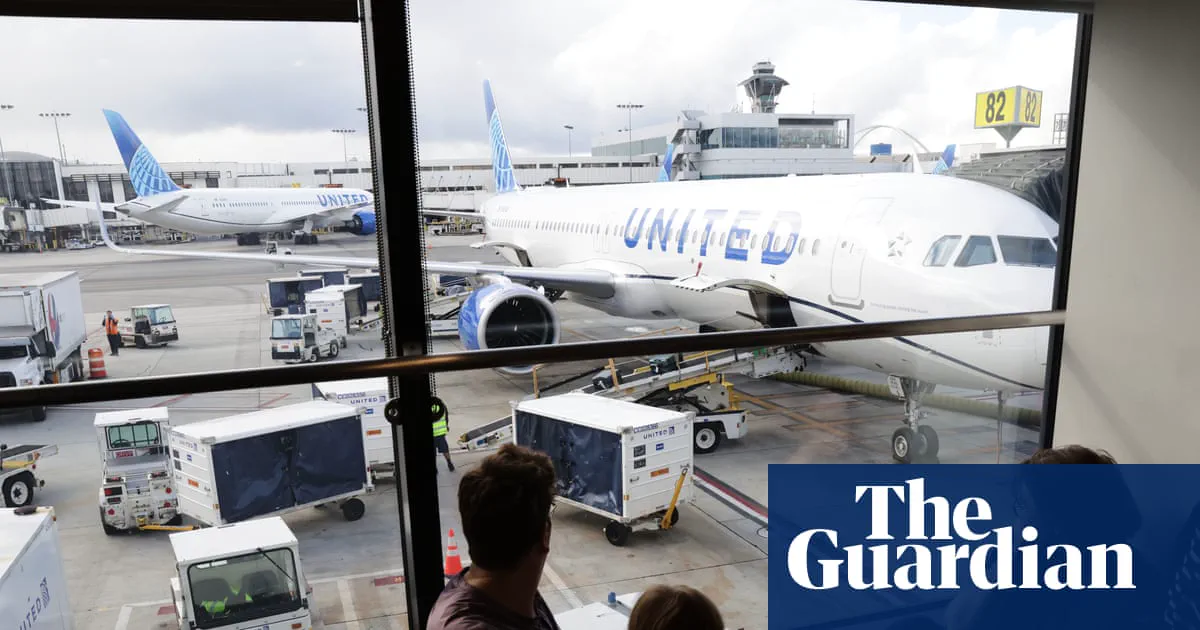 Photo: theguardian.com (source)
A nationwide, blanket ground stop across the entire United States is an exceedingly rare regulatory action. Prior to Friday, an all-aircraft shutdown had occurred only twice in modern aviation history:
- September 11, 2001: Under Operation Yellow Ribbon, the FAA grounded all civilian aircraft following coordinated terrorist attacks.
- January 11, 2023: A corrupt database file crashed the FAA's Notice to Air Missions (NOTAM) system, halting national departures for approximately 90 minutes.
Friday's four-and-a-half-hour freeze marks the longest system-wide technology shutdown the FAA has ever executed. It also follows a localized regional breakdown in September 2026, when a severed backup fiber-optic cable in New Jersey took down communications for the Philadelphia Terminal Radar Approach Control, stranding Northeast travelers for eight hours.
| Outage Event | Scope | Duration | Primary Root Cause | Flight Impact |
|---|---|---|---|---|
| Nov. 13, 2026 (Current) | Nationwide (All U.S. Airports) | ~4.5 Hours | Overloaded routers/telecom switching failure across ARTCCs | 11,000+ flights delayed/canceled |
| Jan. 11, 2023 | Nationwide (All U.S. Airports) | ~1.5 Hours | Corrupted database file in the legacy NOTAM system | 10,000+ flights delayed/canceled |
| Sept. 22, 2026 | Regional (Northeast Corridor) | ~8 Hours | Primary circuit failure and severed backup fiber line | 7,000 flights delayed/canceled |
Government and Industry Reaction: The $30 Billion Push
The technological breakdown immediately reignited political battles over the modernization of federal infrastructure. In an ironic twist of timing, the nationwide failure occurred less than 24 hours after Transportation Secretary Duffy formally submitted a request to Congress for $30 billion to replace America’s aging air traffic management systems.
At the Friday evening press briefing, Duffy pointed directly to the afternoon’s gridlock as proof that the agency can no longer patch half-century-old foundations. Air traffic controllers' union representatives echoed these concerns, pointing out that controllers are increasingly operating on legacy copper networks and outdated communications gear that lack redundant modern throughput.
Major carriers—including American Airlines, Delta, and United—issued statements noting they had activated "all-hands-on-deck" recovery plans while calling for expedited federal investments to ensure system reliability.
What Stranded Travelers Need to Know
 Photo: madechango.com (source)
Although the FAA officially lifted the ground stop at 8:15 PM ET, lifting the order does not mean flights immediately returned to normal. Aviation networks operate on tight interdependencies, meaning disruptions will persist for days.
- Check Your Flight Status Before Leaving: Aircraft and flight crews are out of position across the country. Do not head to the airport without verifying your flight on your airline’s mobile app.
- Travel Waivers Are Active: Major airlines have issued weather-and-emergency travel waivers, allowing passengers scheduled to fly between Friday and Sunday to rebook without paying fare differences or change fees.
- Understand Compensation Rights: Under Department of Transportation rules, federal air traffic control ground stops are legally classified as "extraordinary circumstances" or uncontrollable events. Airlines are generally not required to provide cash compensation, though major carriers will rebook stranded passengers on the next available flight or issue travel credits upon request.
What Happens Next: Unraveling the Cascade
The immediate challenge facing airlines through the weekend is logistically reassembling their fleets. Hundreds of flight crews hit their federally mandated duty-time limits while sitting on grounded planes, leaving aircraft without legal personnel to operate them even after airports reopened.
Federal investigators from the FAA, alongside Department of Transportation network engineers, are conducting a forensic audit of the router configurations that triggered Friday's data overload. Technicians must still explain why secondary and tertiary failover circuits failed to absorb the traffic spike before an entire agency shutdown became the only safe choice. Congressional oversight committees have already announced plans to hold hearings on the failure in the coming weeks.
FAQ
Why did the FAA ground all flights nationwide? The FAA issued a ground stop after network routers and switches across all 22 regional air traffic control centers became overloaded with data. The resulting telecommunications failure caused intermittent communication and radar inconsistencies, prompting regulators to halt departures out of safety.
Was the FAA ground stop caused by a cyberattack? No. Both the Department of Homeland Security and the Department of Transportation confirmed there is no evidence of a cyberattack or malicious activity. Microsoft also confirmed the disruption was unrelated to its cloud services.
Were planes in the air at risk during the outage? Planes already in flight were not grounded mid-air; controllers safely directed them to continue toward their destinations or land at diversion airports. More than 3,500 planes were airborne when the ground stop took effect, and all landed without incident.
How long will flight delays and cancellations last? While the airspace reopened late Friday evening, residual delays are expected to ripple through the weekend. Because hundreds of planes and crews were left out of position, airlines will spend days repositioning aircraft and rebooking stranded passengers.