Defense contractor Anduril Industries has pledged that its upcoming BlueChip rugged laptop will meet strict federal Buy American Act requirements when orders open in 2027, guaranteeing that at least 65% of the computer's component costs are manufactured in the United States. The clarification follows scrutiny over earlier remarks by founder Palmer Luckey, who had initially hesitated to commit to a specific domestic parts percentage during the device's public unveiling alongside chip partner Qualcomm.
The joint venture represents one of the most aggressive private-sector efforts in decades to challenge Asia's near-monopoly on personal computer manufacturing. By engineering a military-grade, Arm-based machine designed specifically around existing American industrial capabilities, Anduril and Qualcomm aim to supply secure, verifiable computing hardware to the Department of Defense, federal intelligence agencies, and local emergency personnel.
What Anduril and Qualcomm Announced
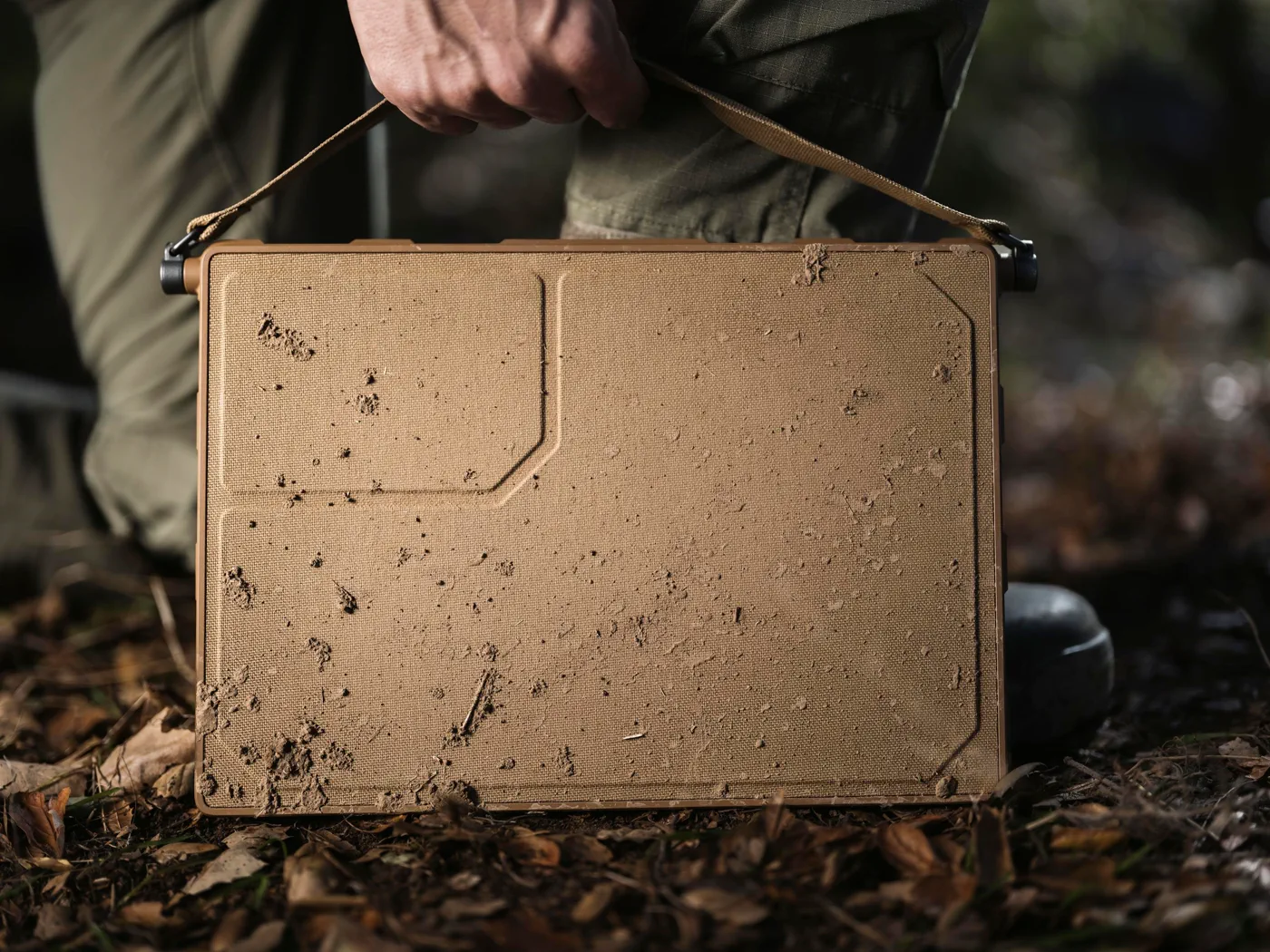
On October 27, 2026, Anduril and Qualcomm officially unveiled BlueChip, a new hardware product line aimed at reviving American electronics manufacturing. The initiative starts with a hardened laptop engineered to operate in punishing environments, surviving exposure to torrential rain, dust storms, and extreme temperatures.
Unlike traditional defense acquisition projects that depend on government research-and-development grants, BlueChip is entirely self-funded by Anduril and Qualcomm. The companies have already built working prototypes and stated they plan to open preorders to institutional clients in 2027. While consumer sales have not been ruled out for the distant future, the machine is strictly targeted at four high-security sectors:
- Department of Defense and armed services
- Federal civilian and intelligence agencies
- Law enforcement and border security
- First responders and public safety organizations
Watch: Anduril's Luckey Partners With Qualcomm to Build American-Made Laptop

Video: Bloomberg Tech on YouTube
The Buy American Threshold Controversy
 Photo: The Verge (source)
The announcement quickly drew skepticism when reporters pressed executives on what "Built in America" actually means on the factory floor. When asked during a virtual media briefing what percentage of launch components would be domestically made, Luckey initially demurred, stating the exact share was "TBD" and depended on when domestic fabrication lines come online. He singled out non-silicon elements like display glass, internal frames, and ribbon cables as parts secured for domestic production, leading to questions over whether the initial run could legally qualify as American-made.
Under the Buy American Act and updated Federal Acquisition Regulation (FAR) rules, manufactured products sold to federal buyers must clear a strict domestic content test based on component cost. For deliveries through 2028, at least 65% of the product's component costs must originate in the United States, a threshold scheduled to jump to 75% in 2029.
Following initial reports questioning whether BlueChip would miss that standard, Luckey clarified his remarks on X, explaining that his earlier comments addressed specific display assembly challenges rather than the total bill of materials. Anduril then formally confirmed that BlueChip will clear the statutory 65% domestic cost threshold by launch, ensuring agencies will not need to request Buy American waivers to deploy it.
Inside the Hardware: Specs, Assembly, and Architecture
At the center of BlueChip is Qualcomm's Snapdragon X Series platform. The Arm-based system-on-a-chip (SoC) handles CPU compute, Adreno graphics processing, and local AI workloads through an integrated neural processing unit (NPU). Qualcomm CEO Cristiano Amon confirmed that the chips destined for BlueChip are slated to be manufactured stateside at TSMC's advanced semiconductor fabrication facility in Phoenix, Arizona.
Final system integration and surface-mount printed circuit board assembly (PCBA) will be carried out at Anduril's Arsenal-1 manufacturing facility in Ohio, the same plant where the company produces its autonomous Fury combat aircraft.
Key physical and technical attributes include:
- Silicon: Qualcomm Snapdragon X Series processor with integrated NPU, fabricated in Arizona.
- Board Manufacturing: Surface-mount PCB soldering and final assembly at Arsenal-1 in Ohio.
- Rugged Enclosure: Precision-milled American metals, sealed ports, and an integrated tactical rifle-strap-style carrying handle.
- Display Stack: Domestically sourced protective cover glass bonded to an internal display panel.
- Power System: Domestic lithium-ion cells and custom American-engineered power management circuitry.
- Operating System Support: Windows 11 on Arm, along with mission-critical Linux distributions commonly used by military and defense clients.
The Bill of Materials: What Is U.S.-Made vs. Imported?
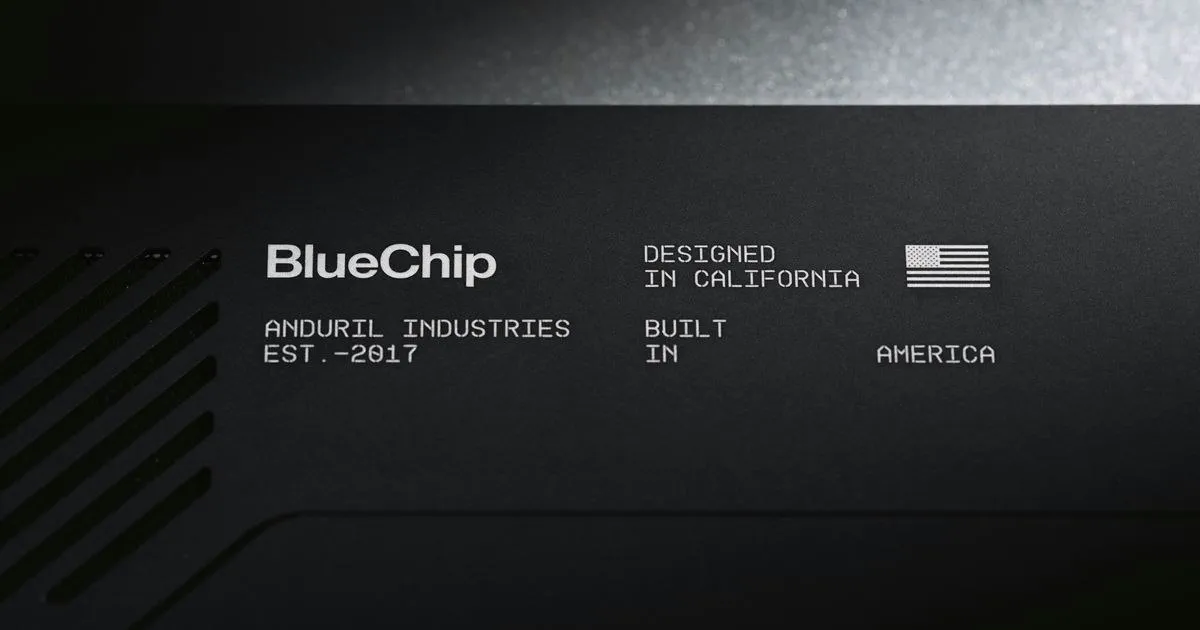 Photo: dealroom.co (source)
Creating an end-to-end domestic supply chain for modern computing is an immense engineering hurdle. The United States currently produces less than 4% of the world's printed circuit boards, down from nearly 30% in the late 1990s, and domestic production of active matrix flat-panel displays is virtually nonexistent.
To bridge the gap, Anduril has adopted a hybrid sourcing strategy. According to the company, over 90% of the prototype's procurement spending flows to vendors in the U.S. and qualifying allied nations recognized under the Defense Federal Acquisition Regulation Supplement (DFARS). However, the active display panel remains one of the critical components that must still be imported from Asia.
| Subsystem / Component | Current Prototype Sourcing | 2027 Production Target | Long-Term Strategic Roadmap |
|---|---|---|---|
| Core Processor (SoC) | Qualcomm Snapdragon X | TSMC Fab 21 (Arizona) | 100% Domestic fab & advanced packaging |
| PCB Assembly (PCBA) | U.S. / Allied prototypes | Arsenal-1 facility (Ohio) | Arsenal-1 facility (Ohio) |
| Chassis & Structural Metals | U.S. milled alloys | U.S. milled alloys | 100% Domestic extraction & milling |
| Display Glass | Domestic specialty glass | Domestic specialty glass | Domestic glass & bonding |
| Display Panel (OLED/LCD) | Imported (China/East Asia) | Imported (Allied/Asian sources) | Domestic panel manufacturing line |
| Battery Cells & Electronics | Domestic / Allied mix | U.S. pack & cell assembly | 100% Domestic cell chemistry |
| Memory & Storage | Allied-sourced modules | Allied / Emerging U.S. fabs | 100% Domestic NAND and DRAM |
| Regulatory Qualification | ~90% U.S. + Allied cost | ≥65% Domestic (Buy American) | ≥75% Domestic (2029 Buy American standard) |
How BlueChip Compares to Rugged PC Competitors
BlueChip enters an entrenched, $5 billion annual global market for rugged enterprise and tactical computing, currently dominated by Panasonic's Toughbook line, Dell Latitude Rugged machines, and Getac. While those manufacturers assemble some systems in allied nations such as Taiwan or under Trade Agreements Act (TAA) guidelines, their supply chains remain heavily tied to East Asian electronics hubs.
Luckey acknowledged that domestic sourcing carries a cost penalty, estimating BlueChip will retail for roughly 20% more than comparable high-end commercial rugged laptops. Industry analysts expect that premium to position BlueChip between $3,000 and $4,000, well within standard procurement allowances for specialized military gear.
| Feature / Metric | Anduril BlueChip (2027) | Panasonic Toughbook 40 | Dell Latitude 5430 Rugged |
|---|---|---|---|
| Primary Processor | Qualcomm Snapdragon X (Arm) | Intel Core Ultra / 13th Gen (x86) | Intel Core 11th–13th Gen (x86) |
| On-Device AI Engine | Integrated Qualcomm NPU | Intel AI Boost NPU | Integrated Intel NPU / Discrete GPU |
| Primary Assembly Site | Arsenal-1 (Ohio, U.S.) | Taiwan / Japan | Taiwan / China |
| Buy American Content | ≥65% guaranteed at launch | Relies on TAA / waivers | Relies on TAA / waivers |
| NDAA / Chinese Chip Ban | Verified zero banned silicon | Audited vendor tracking | Audited vendor tracking |
| Estimated Price | $3,000–$4,000 (~20% premium) | ~$3,500–$4,500 base | ~$2,500–$3,500 base |
Reactions and Industry Pushback
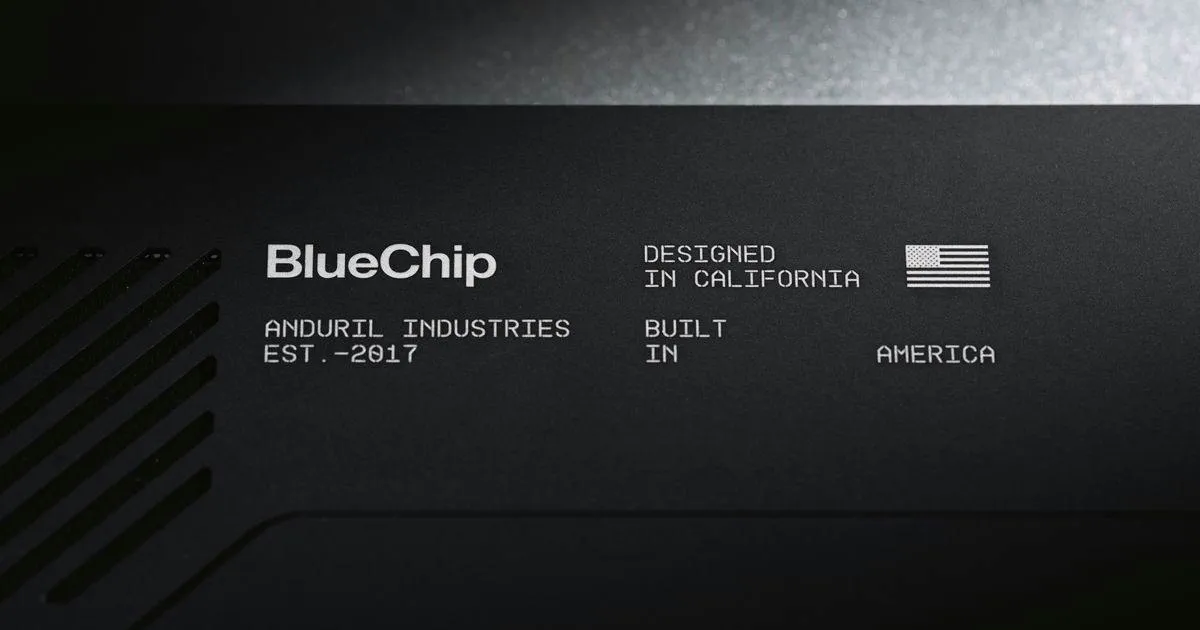 Photo: dealroom.co (source)
The initiative has triggered intense discussion across both the defense and consumer electronics sectors. Supply chain analysts praise the project as a necessary demand signal for domestic manufacturing. By committing commercial volume to American machine shops, glass bonders, and board assemblers, Anduril creates steady revenue that helps suppliers justify capital expenditures.
However, skeptics caution that laptops are among the hardest electronic products to reshore entirely. Modern notebooks contain thousands of discrete passive components—capacitors, resistors, power controller chips, and complex ribbon cables—most of which have no mass-production footprint in the Western Hemisphere. Ensuring software compatibility between Qualcomm’s Arm-based chips and legacy Windows or defense Linux systems that were built for legacy x86 architecture also presents an ongoing engineering task.
What This Means for Government Buyers and the Tech Industry
For federal program managers, BlueChip offers an answer to tightening procurement mandates. Under Section 889 of the National Defense Authorization Act (NDAA) and rules taking effect on December 23, 2027, federal agencies are legally barred from purchasing electronics containing semiconductors from blacklisted Chinese entities, including SMIC, CXMT, and YMTC.
Currently, many agencies routinely request Buy American waivers because fully compliant, rugged laptops simply do not exist in the commercial market. If Anduril delivers a machine that meets the 65% domestic threshold with end-to-end supply chain traceability, it could become the default mandatory choice across dozens of federal procurement schedules.
For general consumers, BlueChip will not replace standard MacBooks or ThinkPads anytime soon. But if Anduril and Qualcomm succeed in establishing a viable ecosystem of U.S. circuit board fabricators, connector makers, and enclosure millers, other PC manufacturers could eventually leverage those same suppliers for consumer-facing lines.
What Happens Next and Unanswered Questions
Anduril has begun accepting expressions of interest through its portal ahead of full order availability in 2027. Between now and commercial rollout, several critical milestones remain:
- Silicon Timeline: Qualcomm must validate that commercial Snapdragon X processors can be packaged and delivered at volume from TSMC's Arizona facilities.
- Arsenal-1 Tooling: Anduril must scale its SMT board assembly lines in Ohio to handle complex multi-layer laptop motherboards alongside its aerospace programs.
- Final Price and Battery Benchmarks: Anduril has not released exact dimensions, battery runtimes, or official MSRP figures.
- The 2029 Cliff: While BlueChip will hit the current 65% domestic requirement, Anduril must continue expanding its supplier base to meet the higher 75% domestic requirement that takes effect on January 1, 2029.
FAQ
Will consumers be able to buy the Anduril BlueChip laptop? While consumer availability has not been ruled out over the long term, Anduril is prioritizing military, federal government, law enforcement, and first responder orders when the laptop ships in 2027.
Why is the 65% Buy American threshold significant? Federal procurement laws mandate that manufactured goods sold to the government must contain at least 65% domestic components by cost to be classified as American-made. Reaching this standard allows federal agencies to deploy the hardware without applying for regulatory waivers.
What operating system does BlueChip run? BlueChip is engineered to support Windows 11 on Arm, alongside mission-specific Linux distributions commonly utilized across military command systems and government infrastructure.
Are all parts of the laptop made in the United States? No. While Anduril targets a 100% domestic supply chain in the future, the initial 2027 model relies on overseas suppliers for components like the display panel, though more than 90% of prototype costs come from the U.S. and allied countries.
How much will the BlueChip laptop cost? Anduril has not published formal pricing, but founder Palmer Luckey estimates the device will carry a 20% premium over high-end commercial rugged laptops, putting analyst expectations in the $3,000 to $4,000 range.