Apple has officially launched Apple Pay in India, bringing its contactless payment and digital wallet platform to the world’s most populous country after more than a decade on the sidelines. The rollout marks a significant expansion for Apple Services in South Asia, allowing compatible iPhone, Apple Watch, and iPad users to authenticate tap-to-pay and online transactions using Face ID and Touch ID instead of manually entering card details or one-time SMS passcodes.
However, the rollout arrives with notable constraints. Apple is launching exclusively with a single banking partner—Axis Bank—and is initially limiting transactions to credit cards on the Visa and Mastercard networks. Furthermore, Apple Pay does not yet integrate with India’s dominant Unified Payments Interface (UPI) or the indigenous RuPay payment network, while several of the country’s largest card issuers remain on the sidelines.
The Launch: Apple Pay Arrives via Axis Bank
The service went live across India on Wednesday, September 30, 2026, making India one of the final major smartphone markets to receive native Apple Wallet payment functionality. Axis Bank, India's third-largest private lender and fourth-largest credit card issuer, serves as Apple’s exclusive launch partner.
At launch, customers holding Axis Bank-issued credit cards built on the Visa or Mastercard rails can add their cards directly into the Apple Wallet app on supported iPhones and Apple Watches. Once provisioned, users can complete contactless point-of-sale (PoS) retail purchases at any merchant with an NFC-enabled terminal. Unlike standard domestic card payments in India, which traditionally require a physical PIN or an SMS-based One-Time Password (OTP) for authentication, Apple Pay relies on device-level biometric verification through Face ID, Touch ID, or a passcode to validate transactions.
To drive merchant acceptance, Apple has partnered with major Indian payment aggregators and terminal providers, including Pine Labs, Razorpay, PayU, Paytm, Cashfree, JusPay, Mswipe, and Worldline. At launch, in-app and in-store Apple Pay checkout is supported across multiple nationwide retail and digital brands, such as Zomato, Blinkit, Tata 1mg, Croma, Chaayos, Ixigo, Comet, Le15 Patisserie, Interflora, Reliance retail outlets, and Apple’s own brick-and-mortar stores in Mumbai and Delhi.
Watch: Apple Pay To Enter India’s UPI-Dominated Payments Market | Here's How It Will Work | FP Explains

Video: Firstpost on YouTube
Device Compatibility, Features, and Launch Restrictions
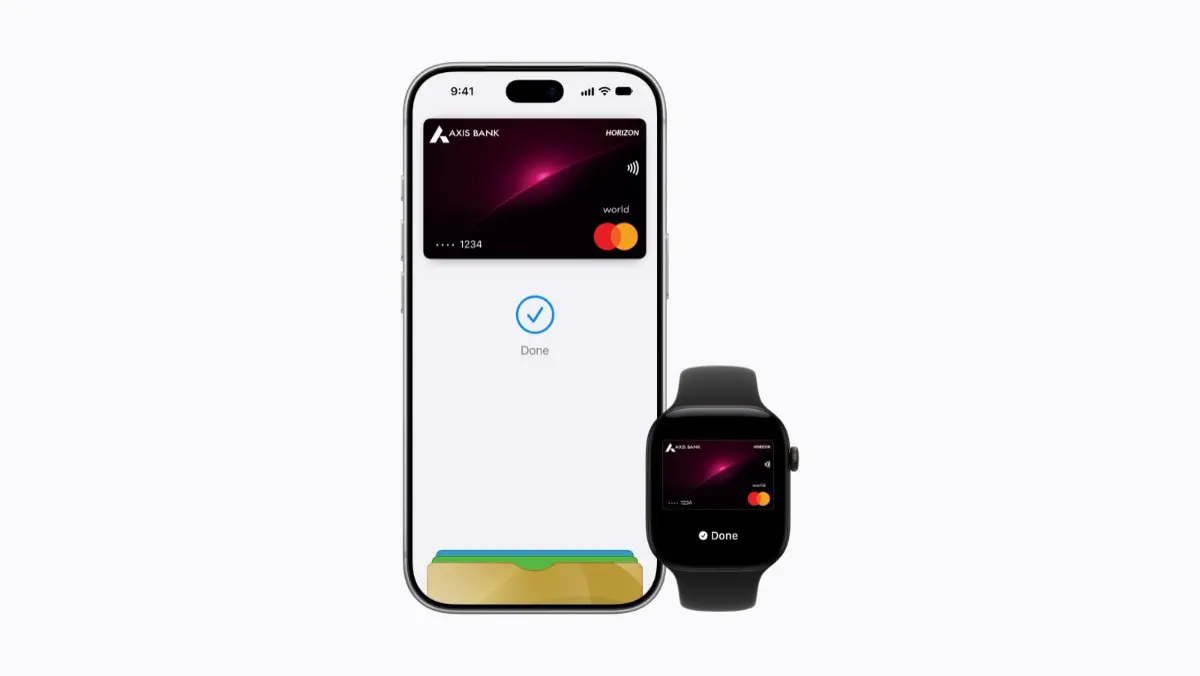 Photo: indiatoday.in (source)
Apple Pay in India operates identically to its implementation in other international markets, tokenizing physical card credentials inside the device’s dedicated hardware Secure Element. Rather than storing primary account numbers (PAN) on Apple servers or sharing them with merchants, each transaction utilizes an encrypted, device-specific Device Account Number alongside a dynamic security code.
- Biometric Authentication: Replaces SMS-based two-factor authentication and payment PINs with Face ID or Touch ID.
- NFC Tap-to-Pay: Works at standard contactless PoS terminals in brick-and-mortar stores.
- Web and App Checkout: Integrates into Safari and mobile apps to bypass repetitive manual entry of shipping and billing addresses.
- Rewards Continuity: Axis Bank cardholders retain existing reward points, cashback, and purchase protections tied to their underlying accounts.
- Hardware Ecosystem: Functional immediately on iPhone, Apple Watch, and iPad, with Mac web checkout scheduled to roll out in an upcoming update.
| Category | Supported at Launch | Not Supported at Launch |
|---|---|---|
| Issuing Banks | Axis Bank | HDFC Bank, ICICI Bank, SBI Card, Kotak Mahindra |
| Card Types | Axis Bank Credit Cards | Debit cards, prepaid cards, corporate cards |
| Card Networks | Visa, Mastercard | RuPay, American Express, Diners Club |
| Payment Rails | NFC Contactless, In-App, Safari Web | Unified Payments Interface (UPI), QR-code scanning |
| Eligible Devices | iPhone XR or later (iOS 18+), Apple Watch Series 6 or later (watchOS 11+), iPads with Touch ID/Face ID | Mac computers (support arriving later) |
Background: A Decade-Long Road to India
Apple Pay debuted in the United States in September 2014. Over the subsequent 12 years, Apple expanded the service to more than 90 countries and regions, onboarding over 11,000 bank and network partners worldwide. Yet India remained a glaring absence on Apple's global coverage map.
The prolonged delay stemmed from a combination of strict local financial regulations, infrastructure mandates, and the unique economics of Indian fintech. The Reserve Bank of India (RBI) instituted stringent data localization directives requiring all payment data to be stored exclusively on domestic servers within India. Furthermore, Indian payment rules historically mandated explicit two-factor authentication (AFA) for domestic card transactions, complicating Apple’s zero-friction, biometric-only checkout model.
Over the past several years, the RBI introduced standardized tokenization frameworks, permitting financial institutions to tokenize card data across mobile devices without breaching localization rules. Additionally, Apple's commercial footprint in India has surged dramatically. Apple's share of India's smartphone market rose from 4% in 2022 to roughly 8% in 2026, driven by expanded local manufacturing, the opening of flagship retail stores, and strong iPhone adoption among urban consumers. This growing hardware base created the critical mass necessary for Indian financial institutions to justify integration costs.
The UPI Hurdle: Apple Pay vs. India's Payment Giant
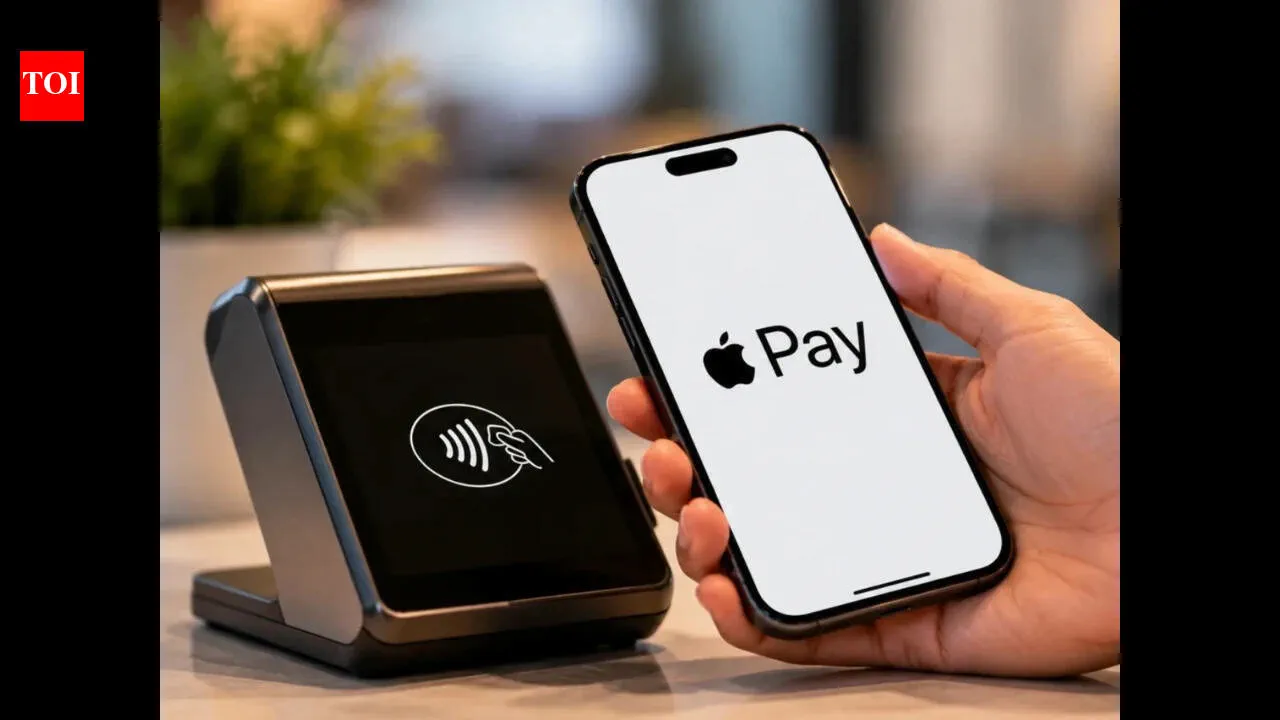 Photo: indiatimes.com (source)
Apple Pay enters a landscape fundamentally different from any Western market. In India, plastic card transactions represent only a small fraction of digital commerce. The ecosystem is almost entirely driven by the government-backed Unified Payments Interface (UPI), managed by the National Payments Corporation of India (NPCI).
UPI accounts for approximately 84% of India's total digital payment volume, processing over 24.5 billion transactions valued at nearly Rs 30 lakh crore ($360 billion) in a single month across more than 750 connected banks. Consumers and merchants rely on UPI for everything from street-vendor transactions to high-value purchases, powered primarily by third-party apps like PhonePe, Google Pay, and Paytm.
Google Pay and Samsung Wallet adapted to the Indian landscape years ago by implementing direct UPI bank linking and QR-code scanning alongside tokenized card storage. By contrast, Apple Pay launches strictly as a closed card-tokenization utility. It does not scan ubiquitous Bharat QR codes, does not transfer money between checking accounts, and cannot process peer-to-peer transfers. While NPCI has rolled out "UPI Tap & Pay" for contactless NFC terminals, Apple's decision to bypass UPI at launch isolates the service to higher-income cardholders transacting at formal retail PoS registers.
Industry Reactions: Why Other Big Banks Are Holding Out
While Axis Bank moved quickly to secure launch partner status, India’s top credit card issuers—including HDFC Bank, SBI Card, and ICICI Bank—have not enabled Apple Pay. Axis Bank held roughly 16.3 million active credit cards as of August 2026, representing about 13% of the country’s 124 million credit cards in circulation. The three larger rival issuers command far larger card portfolios.
Sources indicate that commercial discussions between Apple and lenders such as HDFC Bank and ICICI Bank remain ongoing. In international markets, Apple typically levies an interchange fee cut (historically around 0.15% on credit transactions) from issuing banks. In India, where merchant discount rates (MDR) and card profit margins are under heavy regulatory pressure, agreeing on fee-sharing models and technical integration timelines has created friction.
Despite the standoff with other lenders, Apple expressed optimism regarding the launch. “Apple Pay makes everyday payments with a card easy, secure, and private — from simply tapping to pay in stores without an extra app, PIN, or OTP to checking out online without repeatedly entering payment information,” said Jennifer Bailey, Apple's vice president of Apple Pay and Apple Wallet.
Merchant payment processors also welcomed the frictionless checkout. “PayU is proud to bring Apple Pay to lakhs of Indian merchants, enabling a new era of secure and seamless authentication solutions for digital payments,” said Nikhil Mehta, Senior Vice President at PayU, noting that removing manual form fields materially increases e-commerce checkout completion rates.
What It Means for Indian iPhone Users
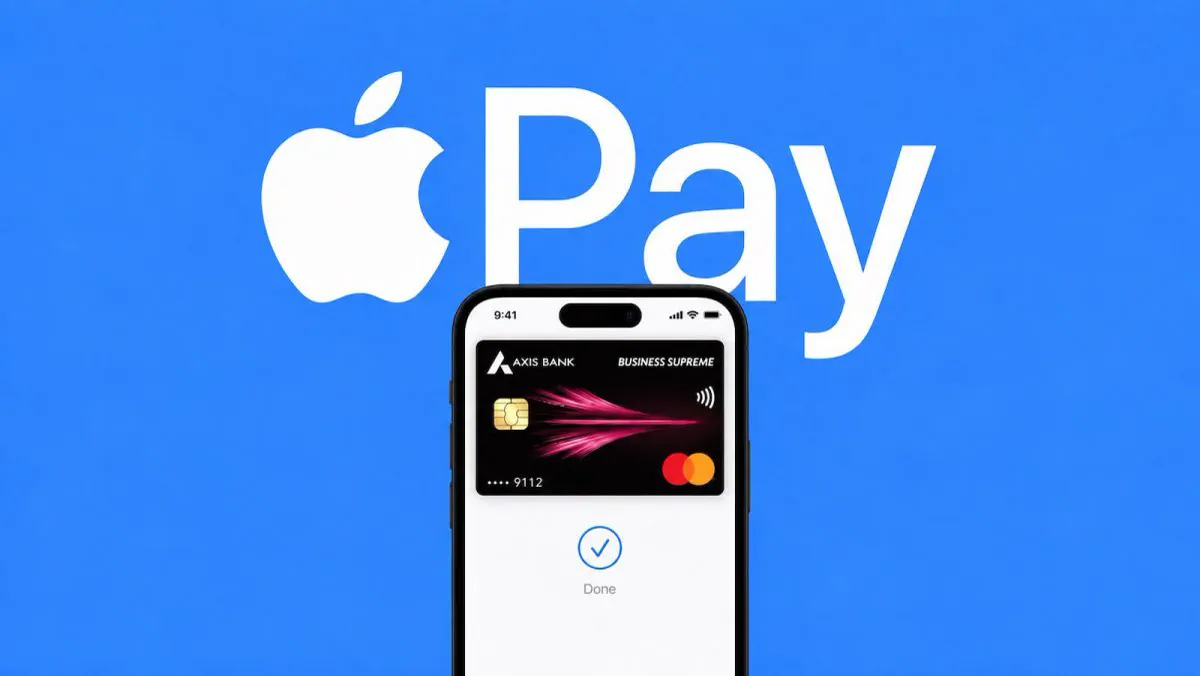 Photo: smartprix.com (source)
For an Indian consumer holding an eligible Axis Bank credit card, Apple Pay provides a dramatic quality-of-life upgrade for daily retail and web spending:
- Setting Up the Card: Users can add an Axis Bank card directly inside Apple Wallet by tapping the "+" icon, scanning or typing the card details, and authenticating via the Axis Bank mobile banking app.
- In-Store Purchasing: When checking out at a contactless terminal, the user double-clicks the side button on an iPhone or Apple Watch, glances at Face ID (or rests a finger on Touch ID), and holds the device against the payment reader. The transaction completes instantly without requiring an SMS OTP or typing an account PIN on the merchant terminal.
- Online Spending: On participating websites and apps in Safari, clicking the "Buy with Apple Pay" button populates shipping and contact details automatically, eliminating repetitive data entry.
However, users must understand the boundaries of the launch. Debit cards cannot be registered, cards issued by other institutions will fail to add, and users cannot scan standard merchant UPI QR codes displayed on shop counters. For everyday small-ticket spending at local shops, iPhone users in India will still need to keep PhonePe, Google Pay, or Paytm installed.
What’s Next: Expanding Banks, RuPay, and Future Software
Apple's current rollout mirrors its historical playbook in emerging markets: launch with an agile early-adopter partner, demonstrate transaction volume, and use customer demand to incentivize competing institutions.
The immediate question facing Apple is whether it can finalize commercial agreements with HDFC Bank, ICICI Bank, and SBI Card in the coming months. Without these lenders, Apple Pay remains inaccessible to roughly three-quarters of India's credit card customer base.
Beyond bank partnerships, industry observers will watch whether Apple eventually compromises on its global card-centric architecture to embrace domestic infrastructure. Enabling RuPay credit card tokenization is an obvious next operational milestone. Whether Apple will ever build native UPI payment support into Apple Wallet—or open up the iPhone's NFC antenna for third-party UPI apps under global regulatory pressure—remains the defining question for the platform's long-term scale in India.
FAQ
Which cards work with Apple Pay in India right now? At launch, Apple Pay exclusively supports Visa and Mastercard credit cards issued by Axis Bank. Debit cards, corporate cards, and cards issued by any other bank are not currently supported.
Does Apple Pay support UPI or QR-code scanning? No, Apple Pay does not integrate with the Unified Payments Interface (UPI) or scan UPI QR codes. It is strictly a card tokenization service that works with NFC tap-to-pay terminals and supported online checkouts.
Do I need to enter an OTP or ATM PIN when paying with Apple Pay in India? No, Apple Pay bypasses traditional SMS OTPs and terminal PINs. Authentication is handled directly on your Apple device using Face ID, Touch ID, or your device passcode.
When will banks like HDFC, ICICI, and SBI support Apple Pay? Apple has held ongoing discussions with major issuers including HDFC Bank and ICICI Bank, but commercial agreements have not been finalized. Additional bank partnerships are expected to roll out gradually in subsequent phases.
Which Apple devices are compatible with the service? Apple Pay requires an iPhone XR or later running iOS 18 or later, or an Apple Watch Series 6 or later running watchOS 11 or later. It is also supported on modern iPads, with Mac Safari support scheduled for a future update.