Apple has officially acknowledged a serious cellular connectivity bug affecting a subset of iPhone 18 Pro Max owners on AT&T across the United States, confirming that devices that have already dropped offline cannot be repaired with software. In an announcement following weeks of customer complaints, the company disclosed that while a pairing of iOS 27.0.1 and a new carrier settings update can prevent the glitch on working units, any device that has already lost cellular service requires a complete hardware replacement.
The issue leaves Apple's premier $1,299 flagship unable to place calls, send SMS text messages, or connect to mobile data, stranding users in an emergency-only state. Because the bug can also disable outgoing emergency calls to 911 over the carrier's towers, both Apple and AT&T are urging all iPhone 18 Pro Max owners to take preventive action immediately.
The AT&T SOS Bug and Apple's Hardware Replacement Policy
The defect first caught widespread attention shortly after the iPhone 18 series launched, as AT&T customers began noticing their cellular reception suddenly vanish, replaced by the dreaded "SOS" indicator in the iOS status bar. In this state, the phone disconnects entirely from AT&T's cellular infrastructure, rendering mobile voice, text, and 4G/5G data unusable. While Wi-Fi and satellite SOS functions remain operational, the core cellular functionality of the smartphone effectively dies.
In an official statement shared with media outlets, Apple addressed the failure directly:
"We have identified an issue affecting a small number of iPhone 18 Pro Max users on the AT&T network that may cause a device to lose service and be unable to make calls. We released iOS 27.0.1 earlier this week and strongly encourage all iPhone 18 Pro Max users to update now, and are also issuing a carrier settings update today. These updates together are meant to help prevent this issue from occurring."
Crucially, Apple clarified a critical distinction that left early troubleshooters baffled: the software patches are solely preventive. If an iPhone 18 Pro Max has already suffered the network drop and entered SOS mode, no amount of firmware restoring, eSIM reprovisioning, or network resets will revive cellular connectivity. For those customers, Apple confirmed it will provide a free hardware replacement through Apple Support, Apple Store Genius Bars, or authorized AT&T retail locations.
Watch: If Your iPhone 18 Pro Max Says SOS, Apple Just Admitted The Update Won't Save It

Video: Both Sides of the Tech on YouTube
Which Devices Are Impacted: Specs, Modems, and Configurations
 Photo: Engadget - Technology News & Expert Reviews (source)
One of the most peculiar aspects of this outage is its narrow scope. The bug does not appear to affect any other carrier in the United States, nor does it impact other models in Apple's 2026 smartphone portfolio. The smaller iPhone 18 Pro, the standard iPhone 18 lineup, and Apple's upcoming foldable iPhone Duo remain entirely free of this cellular failure.
Furthermore, the issue is restricted strictly to the United States edition of the iPhone 18 Pro Max. Industry teardowns and technical specifications highlight a notable hardware divergence inside Apple's latest lineup: the domestic iPhone 18 Pro Max uses a discrete Qualcomm modem, whereas other variants across the family rely on Apple's proprietary silicon.
| Model | Cellular Modem | Starting US Price | AT&T Bug Status |
|---|---|---|---|
| iPhone 18 Pro Max (US) | Qualcomm Snapdragon X80 | $1,299 | Affected (Requires fix or swap) |
| iPhone 18 Pro Max (Global) | Apple In-House C2 Modem | Varies by country | Unaffected |
| iPhone 18 Pro (US & Global) | Apple In-House C2 Modem | $1,099 | Unaffected |
| iPhone 18 / Duo (US & Global) | Apple In-House C2 Modem | Varies | Unaffected |
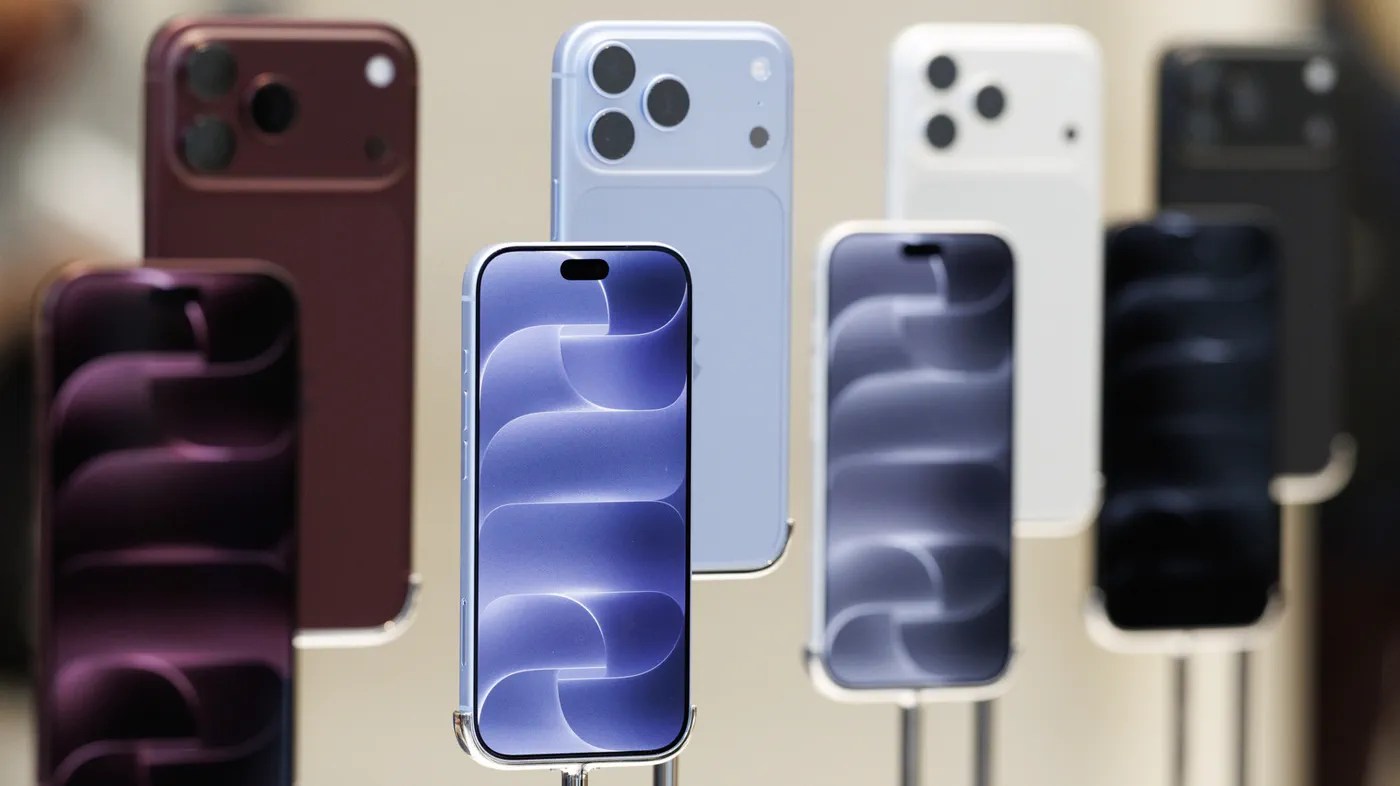
The US iPhone 18 Pro Max is sold in four distinct finishes—Burgundy, Glacial, Silver, and Slate/Space Black—and across storage capacities running from 256GB up to 1TB. Apple has stated that the failure is isolated solely to this specific US SKU running on AT&T's network, with no reports emerging from Verizon or T-Mobile subscribers.
The Timeline: From Launch Day Frustrations to Carrier Alerts
Trouble began brewing immediately after the iPhone 18 Pro Max officially arrived on retail shelves on September 18, 2026. Within days, community discussion threads on Reddit and the official Apple Support forums accumulated thousands of reports from subscribers detailing identical symptoms.
Initially, users assumed the problem stemmed from digital SIM provisioning errors. Early troubleshooting loops typically involved customers spending hours on support calls with AT&T technicians, attempting repeated eSIM downloads, verifying IMEI and EID serial numbers, and toggling airplane mode or Wi-Fi Calling. When none of these standard operating procedures worked, AT&T representatives began escalating tickets to dedicated network engineering teams.
By early October, the severity of the issue became critical as AT&T initiated an automated SMS campaign sent directly to registered iPhone 18 Pro Max owners. The urgent carrier text warned:
"Hi, it's AT&T. Action needed: An important Apple software update for your iPhone 18 Pro Max is available. Some phones may be unable to complete calls/text/data, including to 911. Update to iOS 27.0.1 immediately — Settings > General > Software Update."
When early adopters installed iOS 27.0.1 on already-bricked phones only to find the SOS symbol unchanged, confusion spiked—forcing Apple and AT&T to publicly acknowledge that software alone could not resurrect a dead cellular baseband.
Why the Qualcomm X80 Modem Is Under the Microscope
 Photo: Engadget - Technology News & Expert Reviews (source)
While Apple has declined to specify the root engineering flaw behind the bug, technical analysts and RF engineers have turned their attention toward the modem architecture. In Apple's 2026 portfolio, the company transitioned the vast majority of its smartphone lineup—including all global models and the domestic 6.3-inch iPhone 18 Pro—to its second-generation in-house baseband chip, the Apple C2 modem.
However, the US variant of the larger iPhone 18 Pro Max remained on Qualcomm's Snapdragon X80 modem, likely due to specific millimeter-wave (mmWave) band configurations and carrier aggregation agreements negotiated for North American networks.
Because the bug uniquely strikes the Qualcomm-equipped variant on AT&T, hardware engineers speculate that an unpatched bug in initial iOS 27 builds caused an abnormal power state during baseband negotiation with AT&T cell towers. In weak-signal scenarios, an aggressive transmission command or firmware lockup may permanently compromise the modem's front-end module or baseband non-volatile memory, creating a permanent hardware failure that a soft reboot or OS update can never reverse. Unaffected devices updated in time avoid entering this destructive routine.
Apple, AT&T, and Customer Reactions
The handling of the defect has drawn widespread scrutiny from the mobile community, particularly due to the safety implications of losing 911 access. In an official statement, an AT&T spokesperson stressed the urgency of customer safety, stating:
"Our top priority is ensuring customers can stay connected when they need it most, and we are working with Apple to make it right."
Despite the carrier's efforts, early affected buyers expressed deep frustration with the initial customer service disconnect. In interviews with tech publications, several owners reported spending entire afternoons swapping eSIMs and visiting carrier storefronts before Apple's hardware exchange policy was clarified.
Others noted logistical hurdles at Apple Stores, where high launch-window demand meant replacement units were sometimes constrained. Nevertheless, community reports confirm that Apple retail stores have begun prioritizing impacted AT&T customers at the Genius Bar, providing expedited swaps for brand-new replacement handsets.
Practical Guide: What to Do If You Own an iPhone 18 Pro Max
 Photo: theapplepost.com (source)
If you have an iPhone 18 Pro Max running on the AT&T network, your required course of action depends entirely on whether your cellular connection is currently functioning.
If Your Phone Still Has Cellular Service
- Install iOS 27.0.1 Immediately: Go to Settings > General > Software Update and download the patch over a secure Wi-Fi network.
- Manually Force the Carrier Update: The AT&T carrier profile update installs automatically over a 14-day cycle, but you should apply it right away. Navigate to Settings > General > About. If a carrier update prompt appears, tap Update. If no prompt appears after several seconds, your phone already has the latest carrier profile.
- Restart Your iPhone: Perform a standard restart to ensure the baseband reinitializes cleanly with the new parameters.
If Your Phone Is Already in "SOS" Mode
- Do Not Waste Time Troubleshooting: Resetting network settings, wiping the device, or generating new eSIMs will not restore service.
- Contact Apple or AT&T: Schedule a Genius Bar appointment at your nearest Apple Store, visit an official AT&T retail branch, or open a case via Apple Support online.
- Request a Free Hardware Replacement: Inform the specialist that your iPhone 18 Pro Max has experienced the confirmed AT&T baseband failure. Under Apple's replacement directive, the device will be swapped for a new unit at no charge.
Lingering Questions and What Comes Next
While Apple's dual updates appear to halt the bug from propagating to healthy hardware, questions linger regarding the scope and permanence of the resolution. Apple has not yet launched a formalized, publicly branded "Apple Service Program" page on its website, though consumer advocates anticipate one may appear if replacement claims continue to climb.
Furthermore, neither Apple nor Qualcomm has issued a detailed technical post-mortem identifying whether the baseband component itself suffered silicon damage or if a microcode bug burned out an antenna switch. For prospective buyers who have not yet upgraded, the AT&T iPhone 18 Pro Max remains fully on sale, with newly shipped units arriving with iOS 27.0.1 and updated carrier configurations pre-installed at the factory.
FAQ
Does this AT&T network bug affect the standard iPhone 18 or iPhone 18 Pro? No, the issue is exclusively confined to the US variant of the iPhone 18 Pro Max. The smaller iPhone 18 Pro and other models utilize Apple's in-house C2 modem and do not experience this network failure.
Will updating to iOS 27.0.1 fix my iPhone if it is already stuck in SOS mode? No, Apple has confirmed that software updates can only prevent the problem from happening on healthy units. If your device has already lost cellular service, it has suffered an irreversible failure and must be physically replaced.
Do I have to pay for the replacement iPhone 18 Pro Max? No, Apple and AT&T provide hardware replacements free of charge for customers affected by this specific cellular defect. You can initiate the exchange through an Apple Store Genius Bar, Apple Support, or an AT&T location.
Are Verizon or T-Mobile iPhone 18 Pro Max models affected? No, Apple stated that the bug has only been observed on the AT&T network within the United States. Subscribers using the iPhone 18 Pro Max on Verizon, T-Mobile, or international carriers have not encountered this issue.
How do I check if my AT&T carrier settings are updated? Open Settings, tap General, and select About. If an update is available, a pop-up prompt will appear asking you to update your carrier settings immediately.