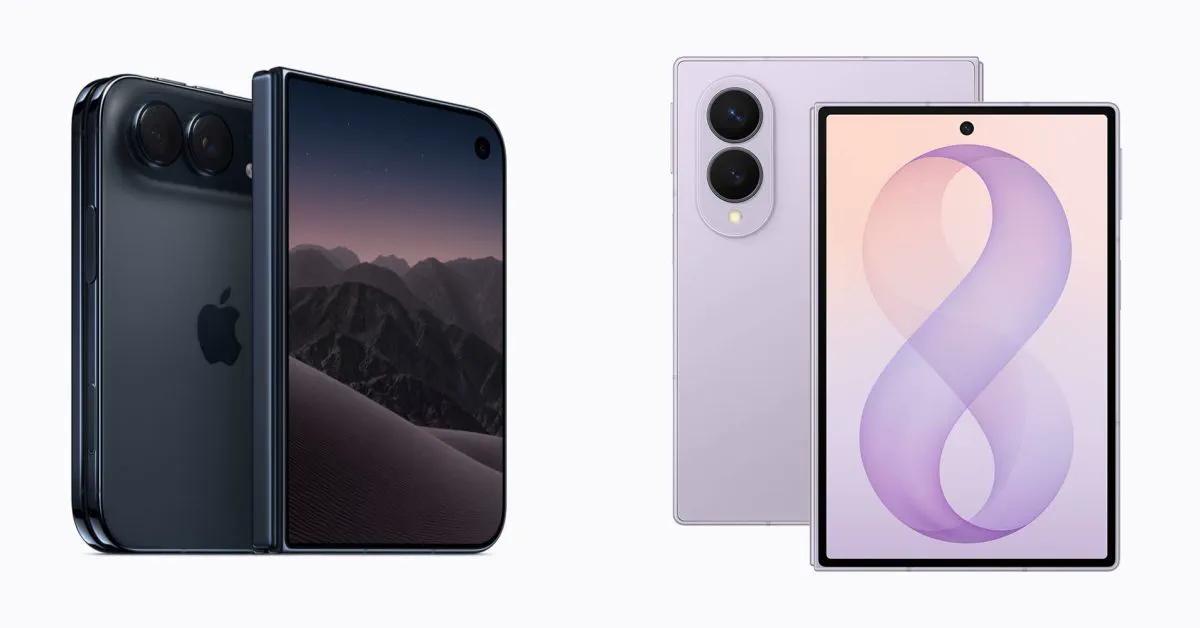
Official regulatory filings published on October 19, 2026, confirmed that Apple's upcoming iPhone Duo houses a rated battery capacity of 4,883 mAh, outmuscling primary US competitors Samsung and Google in raw cell capacity. While the device carries a noticeably thicker and heavier profile than rival foldables, newly documented energy testing shows Apple repurposed that internal chassis space to prioritize real-world longevity over paper-thin aesthetics.
Apple rarely publishes specific milliamp-hour metrics during product keynotes, preferring instead to highlight active usage metrics like video playback. However, mandatory filings within the European Product Registry for Energy Labelling (EPREL) database have stripped away the mystery, establishing a definitive baseline for how the iPhone Duo stacks up against the Samsung Galaxy Z Fold 8 and Google Pixel 11 Pro Fold.
Official Regulatory Filings Reveal Apple's Dual-Cell Architecture
The details came to light as Apple completed regional product documentation ahead of the phone's global October 23 retail release. In the European Union, electronics manufacturers must disclose the rated capacity of rechargeable cells, alongside standardized energy efficiency and longevity metrics.
According to the official database listings, the iPhone Duo utilizes an internal dual-battery configuration that yields a rated capacity of 4,883 mAh. That figure sits higher than initial industry estimates, which hovered around the 4,700 mAh mark following the handset's initial September unveiling. Because rated capacity reflects the absolute minimum guaranteed capacity of the cells under strict manufacturing tolerances, the device's typical capacity—the marketing metric frequently advertised by Android device makers—is expected to land closer to 5,000 mAh.
Beyond raw capacity, the database awarded the iPhone Duo an endurance score of 51 hours and 30 minutes per charge cycle under standardized testing scripts. This score confirms that Apple's first book-style foldable will comfortably outlast typical enterprise and media workloads on a single charge.
Watch: iPhone 18 Pro/Duo Impressions: Mogged

Video: Marques Brownlee on YouTube
Comparing the Numbers: Battery, Dimensions, and Specs
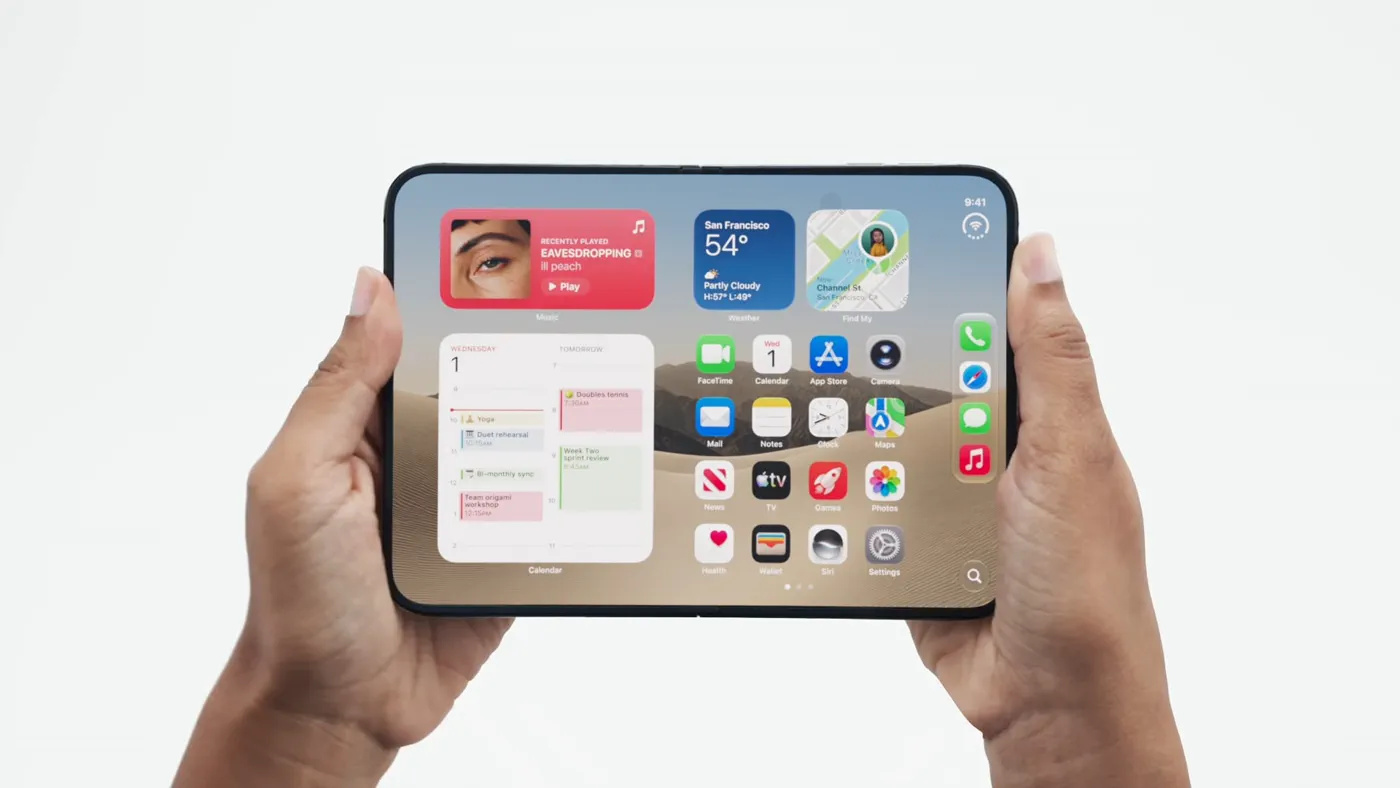 Photo: sammobile.com (source)
When held up against its primary market challengers, the iPhone Duo's rated battery capacity puts it ahead of both the Galaxy Z Fold 8 and the Pixel 11 Pro Fold. Apple even narrowly edges out Samsung's enlarged Galaxy Z Fold 8 Ultra in rated cell capacity.
| Specification | Apple iPhone Duo | Samsung Galaxy Z Fold 8 | Samsung Galaxy Z Fold 8 Ultra | Google Pixel 11 Pro Fold |
|---|---|---|---|---|
| Rated Battery Capacity | 4,883 mAh | 4,660 mAh | 4,854 mAh | 4,658 mAh |
| Typical / Marketed Capacity | Not marketed (~5,000 mAh) | 4,800 mAh | 5,000 mAh | 4,806 mAh |
| EU Rated Endurance | 51h 30m | 49h 10m (varies by test) | 51h 10m | Unlisted in test cohort |
| Weight | 254 g | 201 g | 215 g | 239 g |
| Thickness (Folded) | 11.3 mm | 9.7 mm | 8.9 mm | 10.1 mm |
| Thickness (Unfolded) | 5.2 mm | 4.5 mm | 4.1 mm | 5.0 mm |
| Processor | Apple A20 Pro (2nm) | Snapdragon 8 Elite Gen 5 | Snapdragon 8 Elite Gen 5 | Tensor G6 |
| Internal Display | 7.6-inch OLED (120Hz) | 7.6-inch OLED (120Hz) | 8.0-inch OLED (120Hz) | 8.0-inch OLED (120Hz) |
| Cover Display | 5.4-inch OLED (120Hz) | 5.5-inch OLED (120Hz) | 6.5-inch OLED (120Hz) | 6.5-inch OLED (120Hz) |
| Water & Dust Ingress | IP68 | IP48 | IP48 | IP68 |
| Starting Price | $1,999 (256GB) | $1,899 (256GB) | $2,099 (256GB) | $1,899 (256GB) |
The Trade-Off: A Thicker, Heavier Passport Form Factor
Securing that extra battery capacity did not come without physical compromises. Apple did not chase the razor-thin engineering race that has defined recent foldable releases from Samsung and Honor.
At 254 grams, the iPhone Duo is substantially heavier than the Galaxy Z Fold 8 (201 grams) and the Pixel 11 Pro Fold (239 grams). When closed, it measures 11.3 mm thick, making it distinctly bulkier in a pocket than Samsung's flagship, which measures just 9.7 mm when folded.
Apple's form-factor design explains much of this divergence. While Google selected a traditional, tall smartphone aspect ratio for its cover screen, Apple adopted a compact, passport-style shape. The iPhone Duo features a shorter, broader 5.4-inch cover screen and a squarish 7.6-inch inner canvas, both maintaining an identical 1.41:1 aspect ratio. To make the titanium frame rigid enough to support this wide hinge geometry and survive harsh drops, Apple added structural thickness, allowing internal engineers to insert a split dual-cell pack without reducing thermal headroom.
Silicon Efficiency and Charging Architecture
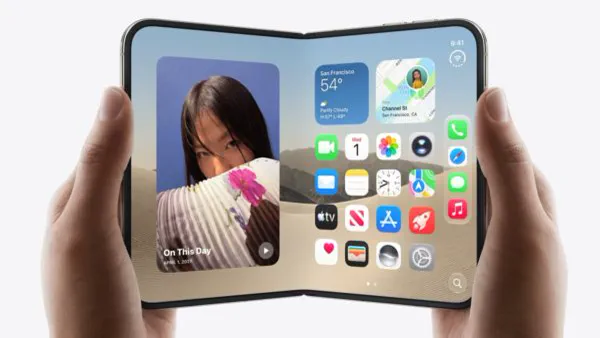 Photo: bundle.app (source)
Capacity is only half the battle; system power draw dictates whether extra milliamps translate into real-world uptime. The iPhone Duo runs on Apple's A20 Pro chip, built on a cutting-edge 2nm process node. Early Geekbench 7 benchmarks indicate the chip offers unmatched single-core and multi-core efficiency curves compared to the Snapdragon 8 Elite Gen 5 and Google Tensor G6.
To keep performance steady during extended dual-screen use, Apple integrated a custom internal vapor chamber alongside its dual-cell battery. Power delivery specifications include:
- USB-C Fast Charging: Supports rapid top-ups of up to 50% in approximately 20 minutes using Apple's 60W or higher power adapters.
- Wireless Standards: Full compatibility with Qi2 and MagSafe wireless charging pads.
- Video Playback Ratings: Apple claims up to 24 hours of mixed active screen use across both displays, and up to 44 hours of offline video playback when using solely the 5.4-inch outer cover screen.
Where Apple Trumps Rivals—and Where It Falls Behind
While the iPhone Duo's battery numbers represent a technical win against Samsung and Google in Western markets, global competition paints a more nuanced picture.
In Asian markets, manufacturers like Xiaomi and Huawei have shifted toward silicon-carbon battery chemistries that pack unprecedented energy density into ultra-thin profiles. Devices such as the Xiaomi 18 Fold (6,000 mAh) and Huawei Pura X Max (5,300 mAh) offer substantially larger batteries while matching or beating Apple's thickness.
Closer to home, the EPREL filings highlight key longevity areas where Samsung still holds an advantage. Samsung rates the Galaxy Z Fold 8 battery for 1,200 charge cycles before it degrades to 80% original capacity. Apple's iPhone Duo is certified for 1,000 charge cycles to reach the same threshold. Furthermore, Samsung's hinge and chassis scored a Class B rating in standardized free-fall drop testing, while the heavier iPhone Duo earned a Class C rating.
However, Apple scores a critical durability point with ingress protection: like Google, Apple managed full IP68 water and dust resistance, besting Samsung's IP48 rating, which leaves the Galaxy more vulnerable to fine grit and dust.
Practical Advice for Prospective Buyers
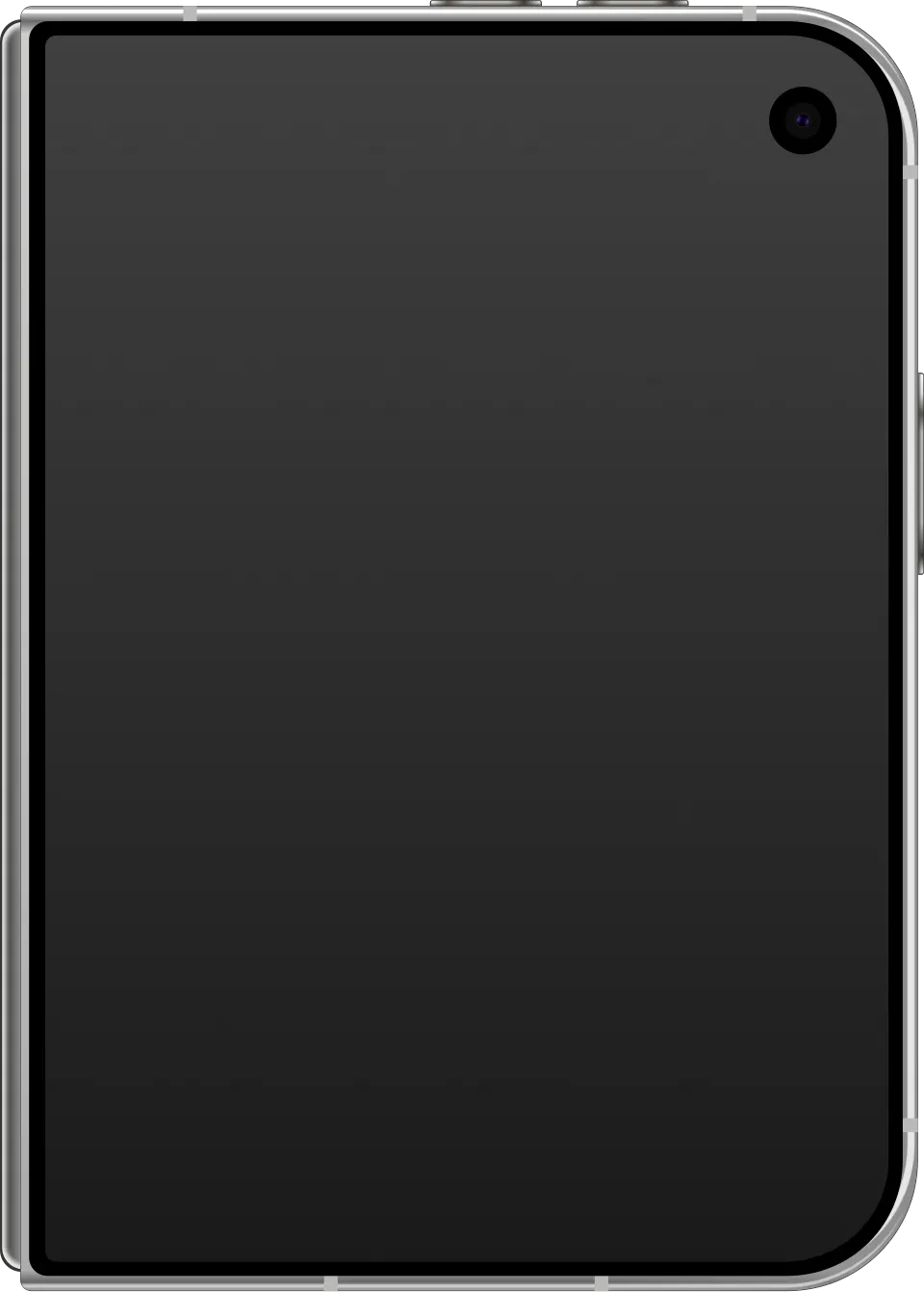 Photo: wikipedia.org (source)
For consumers deciding whether to spend $1,999 on Apple's first foldable, the battery revelations provide clear trade-off boundaries:
- Prioritize the Duo if screen longevity and Apple integration matter most: If you already own an Apple Watch or Mac and were hesitant about foldables due to battery anxiety, the 4,883 mAh cell and A20 Pro efficiency remove battery life as a pain point.
- Opt for Samsung if pocket comfort is paramount: If you wear fitted clothes or hold your device for hours with one hand, the Galaxy Z Fold 8's 201g footprint is vastly easier on your wrist than Apple's 254g slab.
- Consider camera utility: Unlike Samsung's 200MP sensor or Google's 5x telephoto lens, the iPhone Duo omits a dedicated optical telephoto camera in favor of a dual 48MP main and ultrawide setup. Buyers who depend on long zoom will find more versatility in Android foldables.
Availability, Pre-Orders, and the Road Ahead
Pre-orders for the iPhone Duo went live on Friday, October 16, 2026, starting at $1,999 for the base 256GB storage tier and climbing across 512GB, 1TB, and 2TB options. The device officially ships in two colorways—Night Sky and Star White—on October 23, 2026.
High initial preorder demand has already pushed shipping estimates for select configurations well past launch day. As review units reach hands in the coming days, independent battery stress tests will determine whether Apple's real-world software optimization can translate this paper capacity lead into undisputed foldable battery supremacy.
FAQ
What is the exact battery capacity of the iPhone Duo?
Official EU regulatory documents confirm the iPhone Duo features a rated combined battery capacity of 4,883 mAh across its dual-cell internal layout.
Does the iPhone Duo have a larger battery than the Galaxy Z Fold 8?
Yes. The iPhone Duo's rated capacity of 4,883 mAh exceeds the standard Galaxy Z Fold 8's rated capacity of 4,660 mAh (marketed as 4,800 mAh typical) and edges past the Galaxy Z Fold 8 Ultra's rated capacity of 4,854 mAh.
How fast does the iPhone Duo charge?
Using a compatible 60W or higher USB-C power adapter, the iPhone Duo can fast-charge up to 50% in approximately 20 minutes, alongside support for Qi2 and MagSafe wireless charging.
How many charge cycles is the iPhone Duo battery rated for?
The iPhone Duo is certified in the EU database for 1,000 charging cycles before its maximum health drops below 80%, compared to 1,200 cycles on the Galaxy Z Fold 8.
Is the iPhone Duo thicker and heavier than other foldable phones?
Yes. Weighing 254 grams and measuring 11.3 mm folded, the iPhone Duo is heavier and thicker than both the Samsung Galaxy Z Fold 8 (201g, 9.7 mm) and Google Pixel 11 Pro Fold (239g, 10.1 mm).