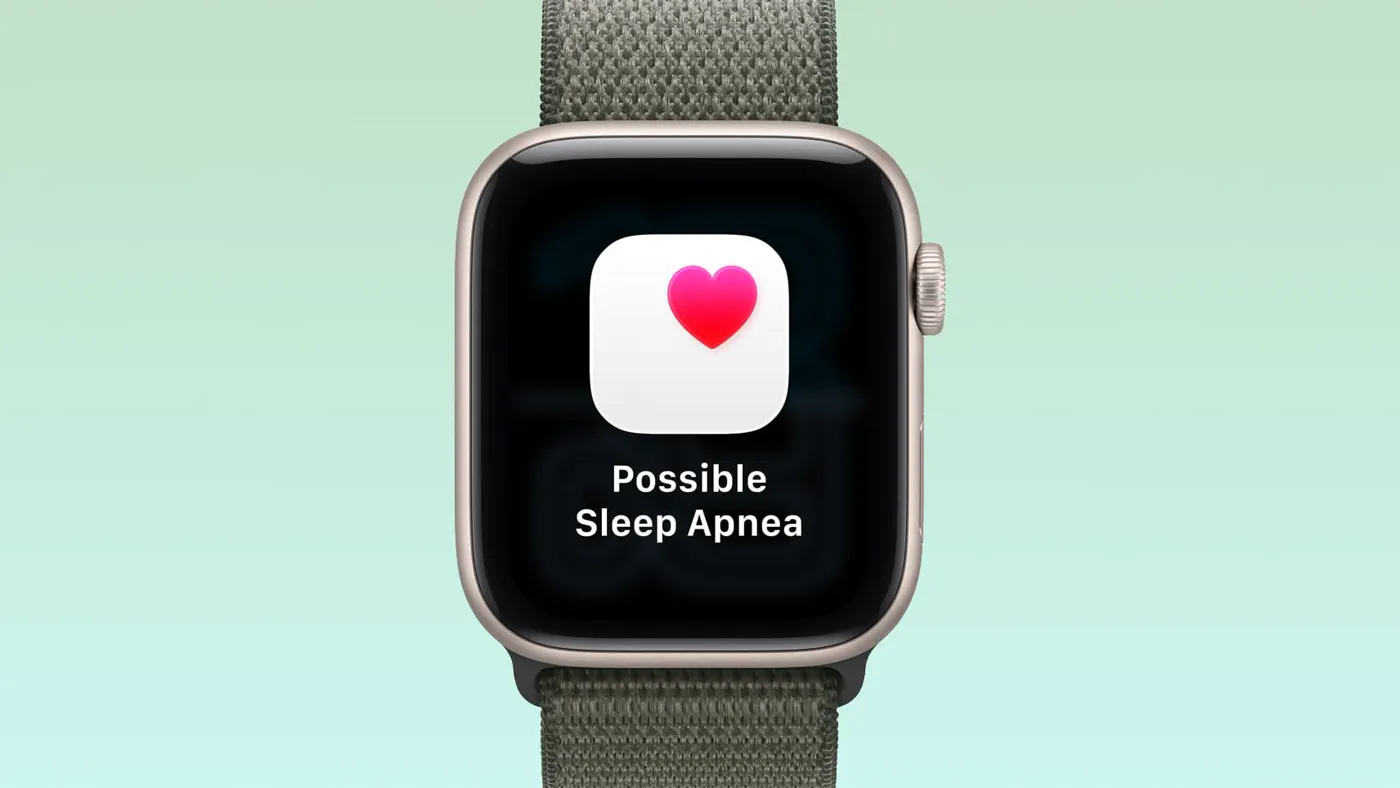
Apple has officially launched sleep apnea notifications for Apple Watch users in mainland China, activating a vital health-tracking tool that had been awaiting local clearance for over two years. Rolled out via software updates following formal regulatory certification from China’s National Medical Products Administration (NMPA), the feature expands Apple’s suite of consumer medical utilities in one of its most critical international markets.
The software-driven capability works on modern Apple Watch hardware to monitor sleep-related respiratory irregularities. By tracking physical wrist motions linked to interruptions in normal breathing patterns, the watch alerts undiagnosed individuals to potential signs of moderate to severe obstructive sleep apnea. The arrival of the feature bridges a significant functional gap between international and mainland Chinese hardware versions, unlocking clinical-grade health monitoring for millions of active smartwatch owners.
Medical Clearance and the China Rollout
The rollout arrived alongside over-the-air operating system updates for Chinese users. While Apple originally unveiled sleep apnea notifications at WWDC 2024 and launched the capability across more than 150 countries following U.S. Food and Drug Administration (FDA) clearance, the mainland Chinese version required standalone regulatory review.
That hurdle was cleared when China's National Medical Products Administration granted the software a Class II medical device registration certificate. Listed under official regulatory filings as "Mobile Sleep Apnea Sign Detection Software," the approval allows Apple to market and distribute the feature legally as a certified health screening tool in mainland China.
Unlike traditional lifestyle health tracking, Class II certification signifies that the software meets specific clinical accuracy benchmarks and safety criteria set by Chinese health regulators. This makes sleep apnea notification one of Apple's few officially regulated health features operating in China, joining the wrist-based electrocardiogram (ECG) app.
How the Apple Watch Detects Sleep Apnea
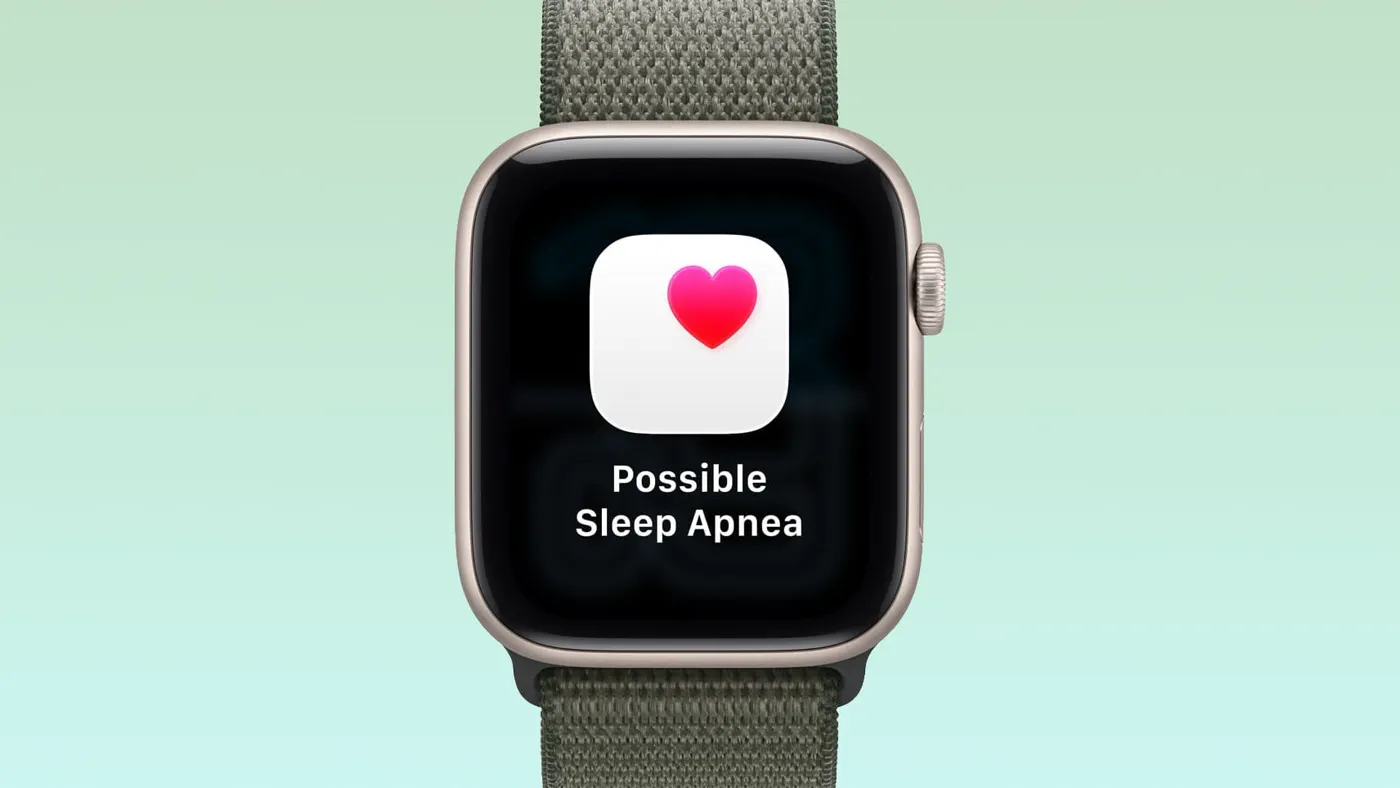 Photo: MacRumors: Mac News and Rumors - Front Page (source)
The sleep apnea detection engine does not rely on real-time acoustic recording or the blood oxygen sensor. Instead, it uses the Apple Watch’s high-precision accelerometer. As users sleep, the sensor measures subtle wrist motions caused by breathing interruptions when relaxed soft tissues in the throat temporarily collapse and obstruct the upper airway.
Apple packages these physiological measurements into an ongoing metric called Breathing Disturbances. The system operates under strict analytical parameters:
- Long-Term Observation: The watch is not an immediate alarm; it will not vibrate or sound an alert during an active apnea event. It serves as a longitudinal health monitor.
- Data Threshold: Users must wear the smartwatch to sleep for at least 10 nights within a rolling 30-day evaluation window to supply enough data points.
- Risk Identification: If at least 50% of valid tracking nights during the 30-day assessment exhibit "elevated" breathing disturbances, the software flags potential signs of moderate to severe sleep apnea.
- Clinical Reporting: Users who receive a notification can review their disturbance history in the Health app and export a detailed PDF summary spanning up to three months of sleep data to share with a physician.
Device Support, Compatibility, and Pricing
Apple has avoided locking the feature behind its top-tier flagship hardware. The algorithm is supported across standard, rugged, and budget models, provided they house the necessary motion processing architecture.
To run the feature, users must update their paired iPhone and Apple Watch. The capability is restricted to individuals aged 18 and older who have not received a previous clinical diagnosis of sleep apnea.
| Model Family | Minimum Supported Model | Starting Retail Price (Approx.) | Sensor Pipeline Required |
|---|---|---|---|
| Apple Watch SE | Apple Watch SE 3 | ~1,000–1,500 RMB / $249 | Accelerometer & S-series SiP |
| Apple Watch (Standard) | Apple Watch Series 9 & newer | 2,999 RMB / $399 | Accelerometer & S9 SiP or newer |
| Apple Watch Ultra | Apple Watch Ultra 2 & newer | 6,499 RMB / $799 | High-precision motion processing |
By including the entry-level Apple Watch SE 3, Apple has minimized the financial threshold required for users to access long-term overnight breathing screening.
The Road Through China’s NMPA Regulatory Approval
 Photo: 36kr.com (source)
The two-year gap between Apple’s global debut of the technology and its arrival in mainland China underscores the complexities of medical software governance. Unlike standard wellness trackers that display general sleep stages, any algorithm claiming to notify users of signs tied to a specific pathology must undergo clinical validation.
Under NMPA rules, digital therapeutics and diagnostic-assist software are heavily vetted for sensitivity, specificity, and false-positive rates. Apple conducted clinical validation studies comparing its motion-based algorithms against the clinical gold standard: in-lab polysomnography (PSG) tests. Once regulatory authorities confirmed that the software demonstrated sufficient clinical relevance without endangering patients through misclassification, the Class II certificate was issued, clearing the way for the operating system update.
Apple Watch vs. Competitors and Clinical Sleep Studies
Obstructive sleep apnea is a pervasive public health challenge. Clinical estimates indicate that roughly 80% of sufferers worldwide remain undiagnosed, frequently dismissing symptoms as harmless snoring. Untreated apnea significantly increases the long-term risk of hypertension, type 2 diabetes, cardiac arrhythmias, and stroke.
In China, domestic tech giants have also pursued this space. Huawei integrates sleep breathing health research into its TruSleep framework across devices like the Watch GT and Watch 4 series, working through partnerships with local medical research institutions. Similarly, Samsung secured FDA and regional clearances for sleep apnea detection on its Galaxy Watch lineup using photoplethysmogram (PPG) optical heart-rate sensors rather than pure motion capture.
Apple’s implementation distinguishes itself through its passive background approach. It does not require starting an ad-hoc clinical study app each evening. However, Apple explicitly cautions that the watch is an observational risk indicator, not a replacement for traditional diagnostic workflows such as overnight home sleep tests or laboratory polysomnography.
Step-by-Step: Enabling Sleep Apnea Alerts and Reading Results
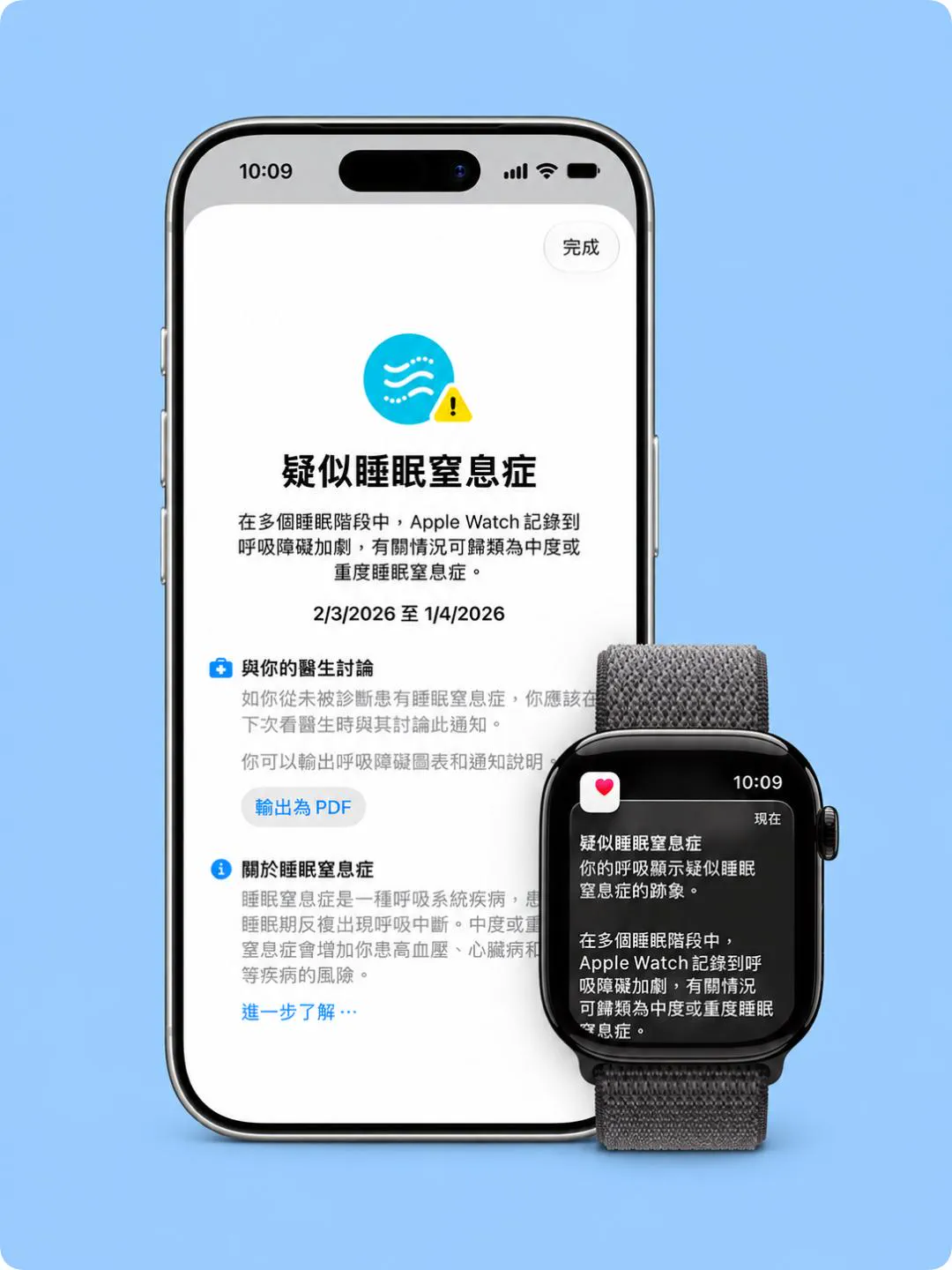 Photo: 36kr.com (source)
Setting up the feature requires a few configuration steps within iOS and watchOS:
- Update Firmware: Update your paired iPhone to the newest software build and install the companion watchOS update on your Apple Watch.
- Enable Sleep Tracking: Open the Health app on your iPhone, select the Browse tab, tap Sleep, and verify that Track Sleep with Apple Watch is toggled on.
- Access Health Checklist: In the Health app, tap your profile picture in the top-right corner, navigate to Health Checklist, locate Sleep Apnea Notifications, and select Set Up.
- Verify Eligibility: Confirm that you are at least 18 years old and that you have never been clinically diagnosed with sleep apnea.
- Sleep with the Watch: Wear the watch snugly to bed for at least 10 nights during a 30-day span to allow the baseline evaluation algorithm to populate.
Disturbance ratings are cataloged as either "Elevated" or "Not Elevated". Users can view daily fluctuations in their breathing baseline through the Respiratory section of the Health app.
What It Means for Chinese Consumers and Global Health Tech
For Apple, activating this feature in mainland China strengthens its ecosystem defense against formidable domestic competitors like Huawei, Xiaomi, and Honor. Health features represent one of the primary drivers of smartwatch upgrades, particularly among adult consumers purchasing wearables for preventative care or for aging parents.
By democratizing access to clinical-grade screening on mass-market wearables, public health experts note that devices like the Apple Watch can fundamentally flatten the screening curve. Rather than requiring a patient to experience severe daytime fatigue before consulting an ear, nose, and throat specialist, an automated wearable notification prompts an earlier, proactive medical intervention.
What Comes Next for Apple’s Medical Ambitions
With sleep apnea screening cleared in China, industry attention turns toward other pending wearable capabilities. Apple continues to allocate engineering resources toward non-invasive glucose monitoring, cuffless blood pressure trend detection, and deeper systemic wellness tracking.
However, expanding regulated medical software across global borders remains a territory-by-territory campaign. Each localized approval provides a clearer blueprint for how consumer electronics companies must interface with public health bodies, proving that wearable diagnostic tools will increasingly shape modern preventative medicine.
FAQ
Does the Apple Watch wake you up when your breathing stops? No, the Apple Watch does not act as an immediate alarm and will not vibrate during an apnea event. It evaluates cumulative breathing disturbances over a rolling 30-day window to detect recurring patterns.
Can people who already have sleep apnea use this feature? No, the feature is designed exclusively for adults aged 18 and older who have not been diagnosed with sleep apnea. Users with a prior diagnosis should follow care plans prescribed by their physician.
Do I need an Apple Watch Ultra to use sleep apnea notifications? No, the tool works across multiple tiers, including Apple Watch Series 9 and newer, Apple Watch Ultra 2 and newer, and the affordable Apple Watch SE 3.
How many nights do I have to wear the watch before getting results? You must wear your Apple Watch to sleep for at least 10 nights within a 30-day period. The nights do not need to be consecutive, but fewer than 10 nights will prevent the algorithm from completing an evaluation.
Does a notification mean I definitely have sleep apnea? No, the notification indicates potential signs of moderate to severe sleep apnea and is not a formal diagnosis. You should export the PDF health report from the Health app and consult a healthcare provider for proper diagnostic testing.