
A pair of critical vulnerabilities in PHP, the server-side programming language that powers roughly 70% of the world's websites, triggered a frantic global cybersecurity scramble this week. Disclosed on October 21, 2026, the flaws allow unauthenticated attackers to execute arbitrary code remotely, prompting national security agencies, cloud giants, and digital infrastructure operators to issue emergency warnings as millions of automated exploit attempts flooded the internet.
Dubbed "PHP2Shell" by researchers and rapidly christened the "PHP-ocalypse" across tech forums, the incident forced major web properties and European government portals to take their systems offline defensively. The crisis has laid bare both the fragility of the web's foundational software and the disruptive speed of artificial intelligence in uncovering and weaponizing security flaws.
What Happened: An Emergency Patch for 70% of the Web
The PHP Foundation and the PHP Group published an emergency security release on Wednesday, October 21, at 14:00 UTC, following an unplanned leak of vulnerability details the day before. Security researchers at cybersecurity startup Calif, cloud security firm Wiz, and OpenAI had spent weeks coordinating disclosure for two underlying defects found inside the core C code of the PHP engine.
The coordinated embargo collapsed early when vulnerability identifiers and high-level descriptions surfaced publicly on developer discussion boards. The disclosure leak turned a orderly patching schedule into an immediate operational crisis. Within hours of the leak, internet monitoring firms registered massive spikes in malicious scanning, forcing the PHP security team to accelerate their release schedule to protect exposed infrastructure.
Because PHP underpins content management systems like WordPress, Drupal, Joomla, and Magento—alongside custom enterprise architectures—the blast radius encompasses tens of millions of public-facing web servers. Censys identified approximately 2.58 million direct internet-facing hosts and 54.9 million web properties running PHP at the time of the release.
Watch: PHP2Shell - The PHP Flaw That Took Government Websites Offline, Explained

Video: Refreshing AI Latest on YouTube
Technical Breakdown: Inside CVE-2026-109618 and CVE-2026-109619
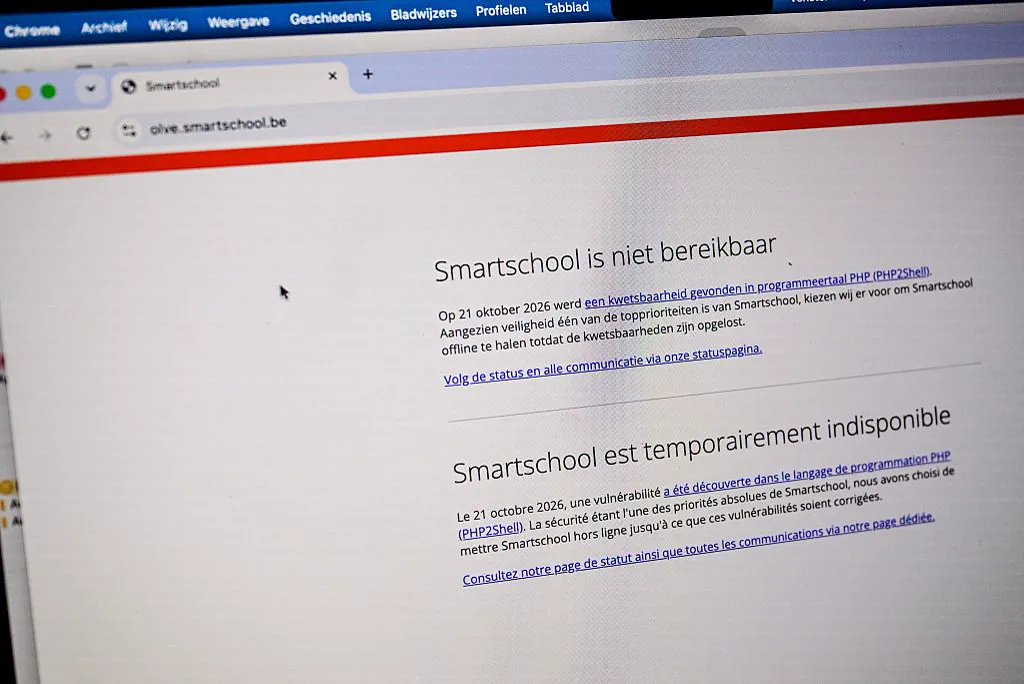 Photo: TechCrunch (source)
Both vulnerabilities earned a Common Vulnerability Scoring System (CVSS v4.0) rating of 9.2 out of 10, reflecting severe consequences paired with zero requirement for authentication. Rather than sitting inside third-party plugins or application-level PHP code, both defects reside in PHP's internal request processing and memory management routines.
- CVE-2026-109618 (Out-of-Memory Corruption): Occurs when the PHP interpreter runs out of memory while handling an incoming web request. If an out-of-memory exception abruptly halts processing before internal data structures are properly initialized, PHP's cleanup handler incorrectly treats that uninitialized memory state as valid, allowing an attacker to hijack control flow.
- CVE-2026-109619 (Stale Global State / Use-After-Free): Occurs when a fatal error terminates a request, leaving residual pointers and memory structures intact instead of properly discarding them. When the shared PHP worker process picks up subsequent incoming requests, it can follow those dangling references into released memory, allowing attackers to manipulate internal state and execute arbitrary system shell commands.
Critically, on web servers running Apache with the legacy mod_php module, an attacker's crafted payload can trigger this memory corruption before any application code or WordPress security plugin even starts running. Setups utilizing PHP-FPM, LiteSpeed, and FrankenPHP are also vulnerable, though Apache mod_php represents the path of least resistance for arbitrary command execution.
Affected Versions and Patch Matrix
The PHP security team shipped point releases across all four currently maintained release branches. However, the broader ecosystem faces a steep uphill battle: security firm Melurna estimated that approximately 49% of active PHP deployments worldwide run legacy, end-of-life (EOL) releases that do not receive automated downstream package updates.
| PHP Branch | Pre-Patch Status | Patched Release | Official Support Status |
|---|---|---|---|
| PHP 8.5 | Vulnerable (8.5.0–8.5.11) | 8.5.12 | Active Support |
| PHP 8.4 | Vulnerable (8.4.0–8.4.26) | 8.4.27 | Active Support |
| PHP 8.3 | Vulnerable (8.3.0–8.3.35) | 8.3.36 | Active Support |
| PHP 8.2 | Vulnerable (8.2.0–8.2.34) | 8.2.35 | Security-Only Support |
| PHP 8.1 & earlier | Vulnerable (5.4–8.1.x) | None (Source backports only) | End of Life (EOL) |
For administrators stuck on PHP 7.4, 8.0, or 8.1, the PHP team published minimal source-level backport patches, but automated package managers will not deliver these fixes without custom upstream repositories or vendor-provided operating system updates.
The Role of AI: Discovery and Weaponization
 Photo: sumsub.com (source)
A defining characteristic of the PHP2Shell incident is how the bugs were discovered. While human developers wrote the flawed C logic more than a decade ago, artificial intelligence discovered the path to exploit it. Calif initially identified the vulnerability pattern on August 1 using OpenAI's GPT-5.6 Sol. Simultaneously, Wiz uncovered the flaws using its autonomous vulnerability analysis platform, Wiz Atlas, assisted by Google's Gemini 4 Argon.
Wiz researchers noted that the vulnerabilities required an exceptionally delicate sequence of memory allocations that had pushed them past "the edge of what human researchers could practically achieve" during manual source auditing. Frontier AI models, however, rapidly modeled the memory structures, simulated crashes, and identified repeatable avenues to achieve remote execution.
Yet this breakthrough highlighted the stark asymmetry of automated offensive tooling. Security analysts reported that almost as soon as the CVE identifiers and technical summaries leaked, threat actors were using code-generation models to reverse-engineer working exploit scripts in a fraction of the time human exploit writers typically require.
Global Fallout: Takedowns, Cloudflare Surges, and Government Alerts
The immediate aftermath mirrored a major infrastructure blackout. Several national governments elected to pull citizen-facing digital services completely offline rather than risk catastrophic database compromises. Municipal websites across the United Kingdom—including portal servers for councils in Edinburgh, Bristol, and Oxford—shut down, while national agencies in Finland, the Netherlands, France, and Belgium temporarily withdrew affected online portals.
Prominent online platforms felt the impact as well. The Wikimedia Foundation took specific internal and public systems dark to apply updates, while sites including 4chan and DeviantArt experienced prolonged downtime.
Telemetric data proved the threat was far from theoretical:
- Amazon Web Services (AWS): Chief Security Officer CJ Moses confirmed that AWS honeypots detected live exploit probes targeting the bugs on October 17, four days before the public announcement, suggesting sophisticated actors had acquired details while the flaw was under embargo.
- Cloudflare: Chief Executive Matthew Prince announced that Cloudflare's network absorbed tens of thousands of exploit attempts within 45 minutes of the early leak, surging past millions of automated attacks over the following 24 hours. Cloudflare pushed global Web Application Firewall (WAF) mitigations on October 21 at 03:02 UTC.
- Federal Warnings: The Cybersecurity and Infrastructure Security Agency (CISA), the FBI, and the National Security Agency (NSA) released urgent directives advising organizations that could not patch immediately to disconnect internet-facing PHP systems entirely.
How PHP2Shell Compares to Log4Shell and Heartbleed
 Photo: sumsub.com (source)
Cybersecurity researchers immediately drew comparisons between PHP2Shell and historic watershed moments like 2014's Heartbleed and 2021's Log4Shell.
Like Log4Shell, PHP2Shell sits inside a deeply entrenched open-source software component that enterprises rarely audit directly. However, while Log4j required triggering specific Java logging actions inside specialized enterprise services, PHP sits directly at the web's front door. An HTTP POST request sent to an unpatched server can trigger arbitrary execution without passing credentials, filling out forms, or hitting valid endpoints.
Unlike Heartbleed—which was primarily a memory disclosure bug that allowed eavesdropping—PHP2Shell grants immediate remote command execution. Attackers can drop web shells, siphon database contents, extract credentials, deface content, or recruit host machines into botnets for DDoS attacks and unauthorized cryptocurrency mining.
Practical Action Plan for Site Owners and Developers
For everyday internet users, there is nothing to download or install, as the vulnerability affects web servers rather than client browsers or operating systems. For system administrators, web developers, and site owners, immediate action is non-negotiable:
- Upgrade Core PHP Instantly: Apply the official patched binary for your release line (PHP 8.5.12, 8.4.27, 8.3.36, or 8.2.35) and fully restart the underlying web services (
php-fpm, Apache, or NGINX). - Decommission mod_php: Transition legacy environments from Apache's
mod_phpmodule toPHP-FPMrun behind a hardened reverse proxy, significantly reducing raw request memory exposure. - Audit Outdated Servers: Systems running PHP 8.1 or older must be upgraded to a supported branch immediately. If rapid migration is impossible, organizations should implement aggressive vendor backports or sever external internet routing to the host.
- Enable Edge WAF Filtering: Ensure edge proxies and content delivery networks (Cloudflare, AWS CloudFront, Fastly) have active, automated signature rules deployed to intercept malformed request headers.
- Inspect for Web Shells: System operators should run file integrity monitoring across document roots to verify that malicious actors did not drop backdoors during the pre-patch exposure window.
What Comes Next and Unanswered Questions
The PHP-ocalypse serves as a canary in the coal mine for software maintenance in the age of artificial intelligence. While OpenAI announced a broader "Patch the Planet" coordinated defense initiative offering subsidized security tools to critical software maintainers, the structural issues remain unresolved.
Two critical questions linger: First, who leaked the vulnerability details and triggered attacks ahead of the official disclosure window? AWS's discovery of pre-disclosure attacks indicates that embargo integrity is nearly impossible to maintain across sprawling ecosystems.
Second, how many more decades-old bugs are waiting to be uncovered? With AI models now capable of scanning billions of lines of legacy open-source code in minutes, defenders must realize that security through obscurity is definitively dead. The time window between a bug's discovery and its active weaponization has effectively collapsed to zero.
FAQ
Does this vulnerability affect my personal computer or smartphone? No. CVE-2026-109618 and CVE-2026-109619 are server-side vulnerabilities that impact machines hosting web applications; individual home computers and mobile devices do not run PHP web servers.
If I run a WordPress site on managed hosting, what should I do? Most reputable managed hosts (such as WP Engine, Automattic, or GoDaddy) deploy platform-level patches automatically. You should verify with your hosting provider's status page that your server's underlying PHP version has been upgraded to a patched release.
Can a WordPress security plugin block this exploit? Generally, no. Under many configurations—particularly Apache setups running mod_php—the memory corruption occurs within the PHP interpreter before application-level scripts and security plugins can execute. You must patch the core PHP binary or filter requests using an edge Web Application Firewall (WAF).
Why did older PHP versions like PHP 7.4 and 8.0 not get official binary updates? PHP releases have strict lifecycle schedules and lose official support after three years. Because PHP 7.4 through 8.1 are officially end-of-life, maintainers provided only raw source code backports, leaving compiled package updates to Linux distributions and downstream vendors.
Why is artificial intelligence central to this incident? Advanced AI models—including OpenAI's GPT-5.6 Sol and Wiz Atlas—were used by security teams to discover the memory defects that human auditors overlooked for more than a decade. However, the same capabilities enable bad actors to rapidly generate exploit scripts once vulnerability summaries surface.